Skip to content
The Mechanics of Magic

The Mechanics of Magic

Game Design Writings by Students at Stanford taking 247G and 377G

  • Library
    • CS247G Community Game Design Resources
    • Game Design Resources
    • Graphic Design for Game Designers
    • Graphic Design Resources
    • Chapter 11 from Game Balance
  • Read Write Play
    • Hollow Knight: RWP 4 2023
    • Mystic Messenger: RWP 6 2023
    • Undertale: RWP 3 2023
    • What Remains of Edith Finch: RWP 5 2023
    • Catan: RWP1 2023
    • 80 Days: RWP 2 2023
  • 247G Syllabus
    • The Formal Elements of Game Design
    • Design for Play | Week One | Lecture A
    • Design for Play | Week One | Lecture B
    • Design for Play | Week Two | Lecture A
    • Design for Play | Week Two | Lecture B
    • Design for Play | Week Three | Lecture A
    • Design for Play | Week Three | Lecture B
    • Design For Play | Week Four | Section A
    • Design For Play | Week Four | Section B
    • Design for Play | Week Five | Class A
    • Design for Play | Week 5 | Class B
    • Design for Play | Week 6 | Class A (no class)
    • Design for Play | Week 6 | Class B
    • Design for Play | Week 7 | Class A
    • Design for Play | Week 7 | Class B
    • Design for Play | Week 8 | Class A
    • Design for Play | Week 8 | Lecture B
  • Serious Play Study Group Overview
    • Study Group Week by Week Breakdown
      • Formal Elements of Games
      • Final Reflection Essay
    • [Optional Material] What is fun?
    • Project 1: Those Who Play, Teach
      • READING Visual Design of Board Games
      • Pitch Your Teaching Game
      • Sketchnote: Playtesting Boardgames
      • Sketchnote: Erin Hoffman // Wind, Not Sand: Mapping Dynamic Emotion Across a Product Landscape
      • SketchNote: MDAO
      • Critical Play: Write up your game of FLUXX
      • [Optional Material] Playtesting
      • OPTIONAL Board Game Usability
    • P2: The Future We Deserve
      • Critical Play: A Mechanic and a Story to Tell
      • Interactive Fiction: Tiny Playable Prototype
      • Introducing Interactive Fiction
      • Map and Premise
      • Critical Play: Story AND Storytelling games
      • Essay or Sketchnote: Rise of the Video Game Zinesters
      • Sketchnote: Art of game design- Story
      • [Optional Material] Emergence and Progression
      • Essay or Sketchnote: Rise of the Video Game Zinesters
      • Project 2 Reflection Essay
      • Share what you Learned: Writing Excuses Podcast
      • Values at Play & P2 Peer Grading
    • P3: The Game of Unexpected Consequences
      • P3 Concept Doc
      • Playable prototype
      • Working With System Dynamics (mindmap the reading, apply it to your game)
      • Mapping Systems
      • Sketchnote/Response for Rules & Tutorials
      • Project 3 Check-in
      • Project 3 Reflection Essay
    • P4: Refine a game
      • Sketchnote/Response for Playtesting with Strangers
      • Read: Mechanic is the Magic
  • On Sketchnotes
  • Printing at Stanford

Month: April 2026

Maybe We Should Be Evil: Slay the Princess

April 17, 2026

I used to think that however horrible the content in novels, it wasn’t really possible for a book to be evil, per se: its contents…

The Princess You Get Is the One You Believe In

April 17, 2026

Video games are so well known, loved, hated, and conflicting because of their very purpose to give players an opportunity to immerse themselves and…

The Art of Hopeless Surrender to Artistic Violence

April 17, 2026

From the get-go, Sarah Stang takes on a strong stance on how she believes that “interactivity is a debatable concept which has been so…

Critical Play: For the Queen

April 17, 2026

For the Queen, designed by Alex Roberts (II) in 2019, is a story-building card game in which players collaboratively construct a narrative centered around…

Fiona – Critical Play: Competitive Analysis

April 17, 2026

Social deduction games thrive on suspicion, performance, and incomplete information. As someone drawn to these mechanics, my team’s prototype, tentatively titled The Murder Game,…

Choosing Evil in Slay the Princess

April 17, 2026

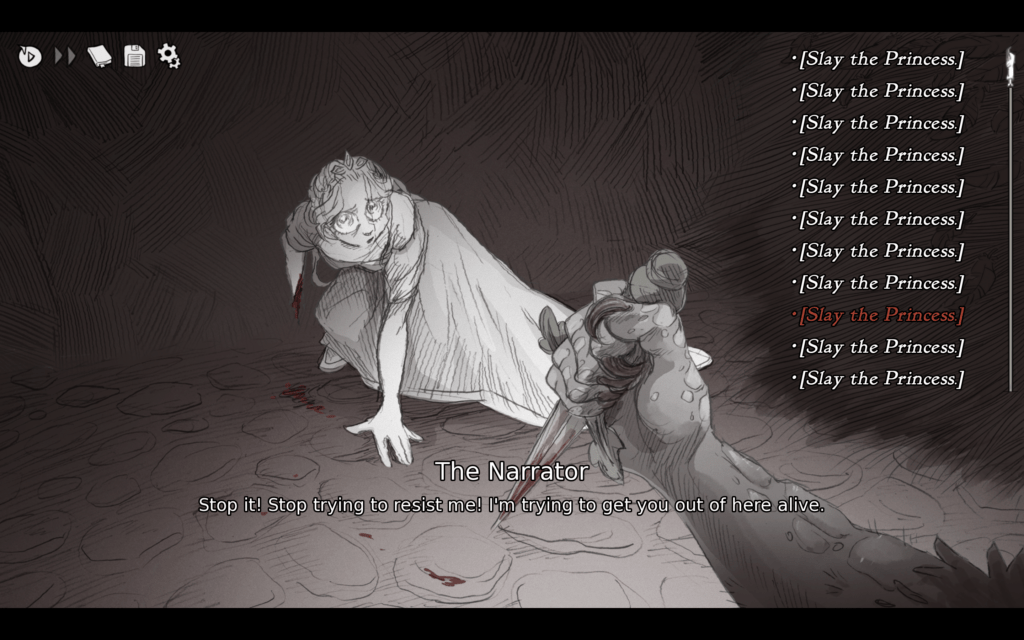
Slay the Princess is a game that allows, no encourages its players to perform acts of evil. It at first offers justification for these…

Absurdity in Slay the Princess: An Essay on Violent Contrasts

April 17, 2026

Introduction “This is a love story”, proclaims the trigger content warning screen as the game opens. Haunted by lilting piano melodies – us, the…

Mayowa – Critical Play: Competitive Analysis

April 17, 2026

My team’s game, tentatively referred to as ‘The Murder Game,’ is a social deduction game where one’s actions and theatrics are used to catch…

How ‘Slay the Princess’ Undermines Its Violence’s Meaning

April 17, 2026

[Beware spoilers for Slay the Princess.] You’re on a path in the woods. And at the end of that path is a cabin. And…

The Neutral Option

April 17, 2026

Obviously, you are not going to slay her after only just meeting her because you were told to, and the game is called Slay…

Critical Play: Competitive Analysis of Dealbreakers and Poll Mine

April 17, 2026

For this week’s Critical Play, I played Jackbox.tv’s Poll Mine at the CS247G game night. Poll Mine was created by Jackbox Games, a Chicago-based…

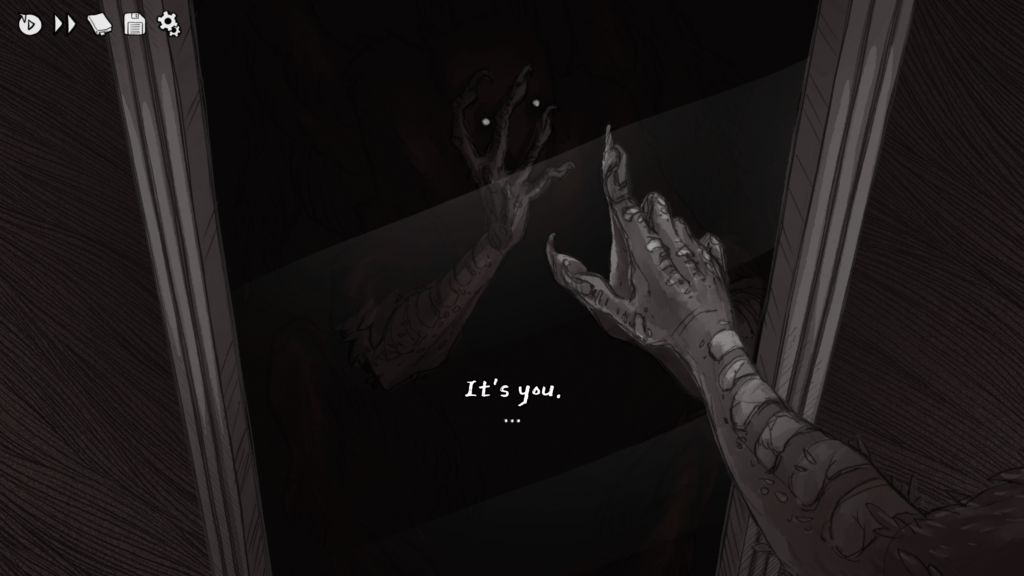
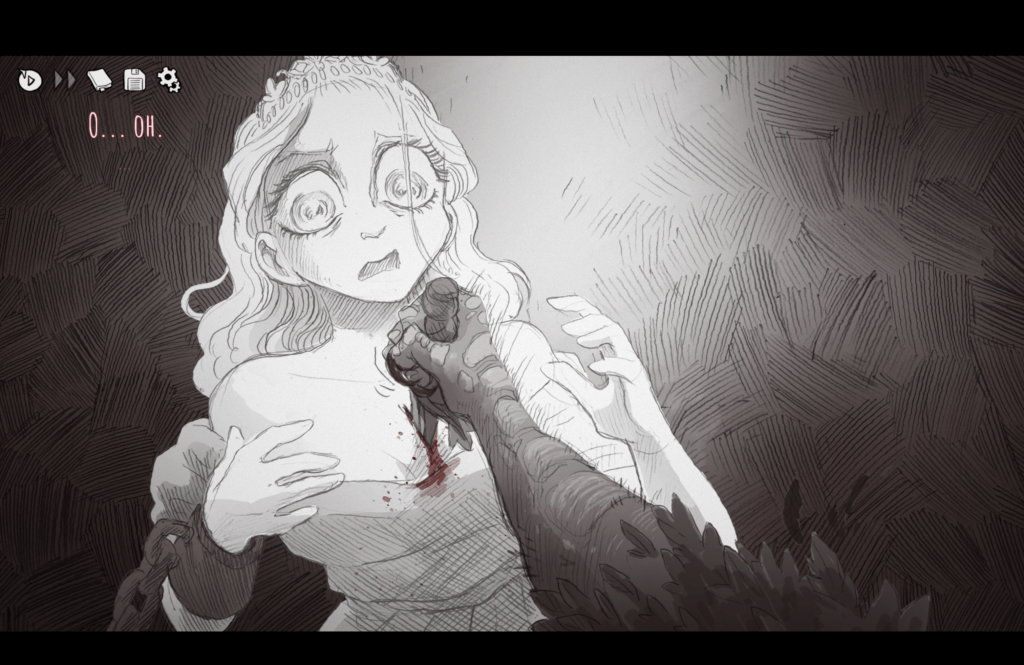
An outline of a mirror from the game "Slay The Princess: stands in the center of the screen. In first-person POV, an taloned humanoid avian hand reaches out to the mirror. The mirror's reflection shows the hand, and a bird-like monstrous creature staring back. Captioned text states "It's You."

Monsters of the Mirror (RWP)

April 17, 2026

“He who fights with monsters should look to see that he himself does not become a monster. And if you gaze long into an…

Ryan Li, Critical Play: Competitive Analysis

April 17, 2026

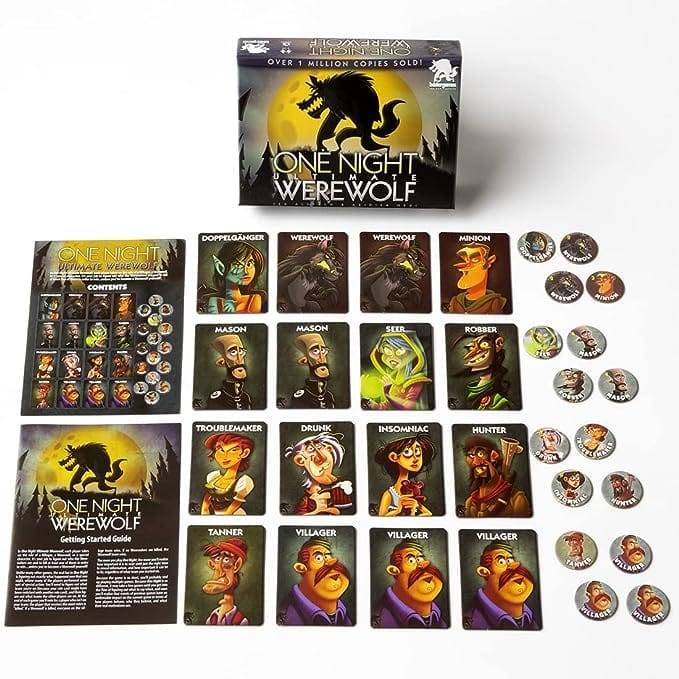
I played One Night Ultimate Werewolf, a modded, fast-paced Mafia-based social deduction game designed by Ted Alspach and Akihisa Okui and published by Bezier…

Critical Play: Competitive Analysis – Kelvin

April 17, 2026

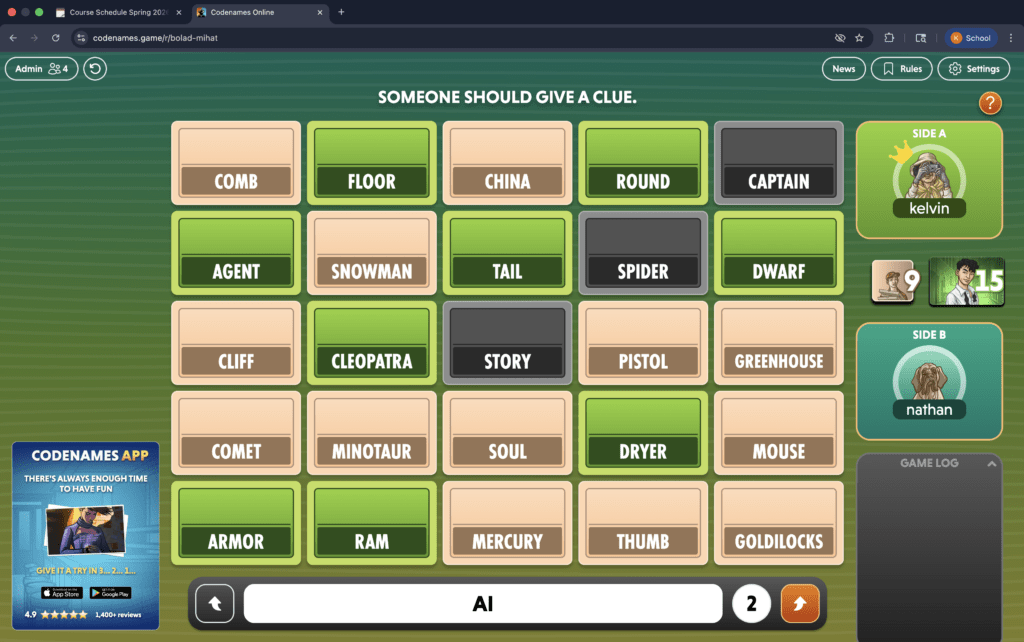
Game: Codenames Duet Creator: Vlaada Chvátil Platforms: Physical board game, online website Target audience: Casual or strategic players (roughly teen and up) who enjoy…

Brooke Ballhaus Critical Play: Competitive Analysis

April 17, 2026

The Resistance: Avalon, originally released in 2012, is a social deduction board game designed by Don Eskridge and published by 18 publishers, including Indie…

The Risk of Forcing Violence, Player Experience of “Slay The Princess”

April 17, 2026

The visual experience of “Slay the Princess” shows that while games prompt meaningful reflection on morality by asking players to engage with violence and…

Critical Play: Jackbox Talking Points

April 17, 2026

Jackbox Talking Points is a game that is available on STEAM designed for 3-8 Players. The game includes a simple mechanic of players improvising…

The Narrator Lied to You: Slay the Princess and the Ethics of the Impossible Choice

April 17, 2026

There is a moment in Slay the Princess that arrives like a trapdoor. You descend into the basement, knife in hand, the Narrator’s voice…

Sosi Day Critical Play 2

April 17, 2026

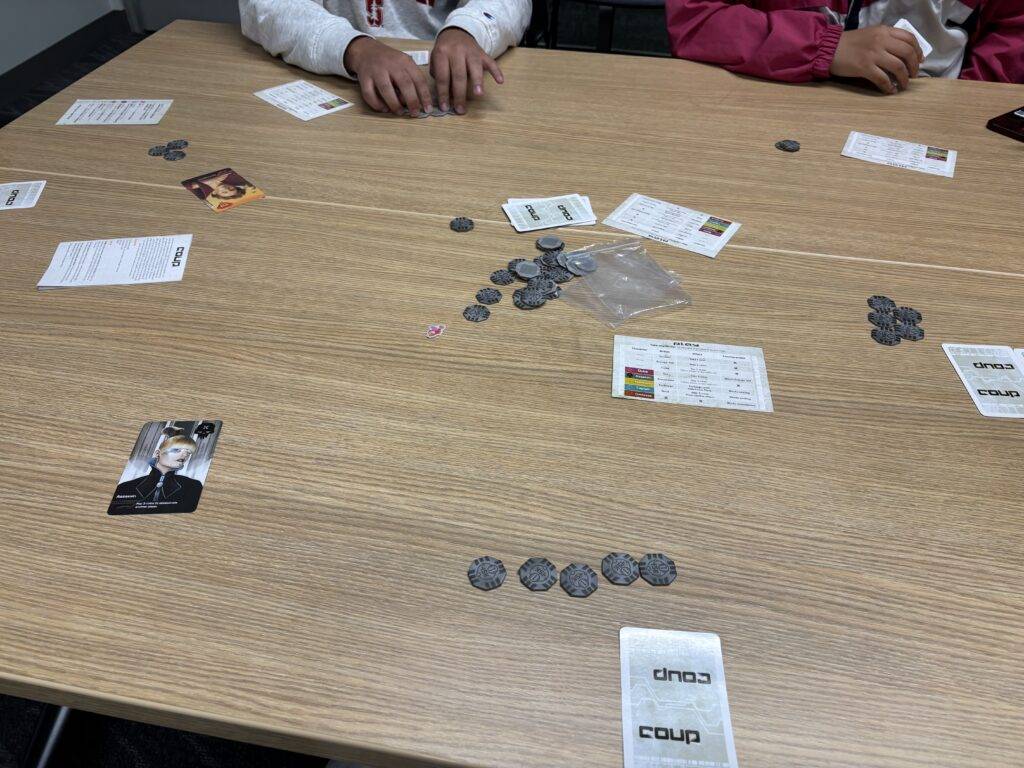
For this week’s critical play, I played Coup during game night. Coup is similar to our game design because it uses the core mechanic…

Critical Play – Competitive Analysis

April 16, 2026

Understanding the Mechanics of The Murder Game through Online Town of Salem Town of Salem, originally created and published by BlankMediaGames and now owned…
Posts pagination

Previous 1 … 12 13 14 … 35 Next

Welcome to the Stanford HCI Game Design Blog.

Currently this blog holds two formal classes being taught by Christina Wodtke as well as Independent Study Work. In winter of 2022, cs377g was cancelled because of covid-19 uncertainty, and became a study group. You can follow along by looking at the SGSG syllabus and weekly break down.

CS 247G: Design for Play(SYMSYS 195G)

A project-based course that builds on the introduction to design in CS147 by focusing on advanced methods and tools for research, prototyping, and user interface design. Studio based format with intensive coaching and iteration to prepare students for tackling real world design problems. This course takes place entirely in studios; please plan on attending every studio to take this class. The focus of CS247g is an introduction to theory and practice of the design of games. We will make digital and paper games, do rapid iteration and run user research studies appropriate to game design. This class has multiple short projects, allowing us to cover a variety of genres, from narrative to pure strategy. Prerequisites: 147 or equivalent background.

CS 377G: Designing Serious Games

Over the last few years we have seen the rise of "serious games" to promote understanding of complex social and ecological challenges, and to create passion for solving them. This project-based course provides an introduction to game design principals while applying them to games that teach. Run as a hands-on studio class, students will design and prototype games for social change and civic engagement. We will learn the fundamentals of games design via lecture and extensive reading in order to make effective games to explore issues facing society today. The course culminates in an end-of- quarter open house to showcase our games. Prerequisite: CS147 or equivalent. 247G recommended, but not required.

SGSG: Serious Games Study Group

  • Library
    • CS247G Community Game Design Resources
    • Game Design Resources
    • Graphic Design for Game Designers
    • Graphic Design Resources
    • Chapter 11 from Game Balance
  • Read Write Play
    • Hollow Knight: RWP 4 2023
    • Mystic Messenger: RWP 6 2023
    • Undertale: RWP 3 2023
    • What Remains of Edith Finch: RWP 5 2023
    • Catan: RWP1 2023
    • 80 Days: RWP 2 2023
  • 247G Syllabus
    • The Formal Elements of Game Design
    • Design for Play | Week One | Lecture A
    • Design for Play | Week One | Lecture B
    • Design for Play | Week Two | Lecture A
    • Design for Play | Week Two | Lecture B
    • Design for Play | Week Three | Lecture A
    • Design for Play | Week Three | Lecture B
    • Design For Play | Week Four | Section A
    • Design For Play | Week Four | Section B
    • Design for Play | Week Five | Class A
    • Design for Play | Week 5 | Class B
    • Design for Play | Week 6 | Class A (no class)
    • Design for Play | Week 6 | Class B
    • Design for Play | Week 7 | Class A
    • Design for Play | Week 7 | Class B
    • Design for Play | Week 8 | Class A
    • Design for Play | Week 8 | Lecture B
  • Serious Play Study Group Overview
    • Study Group Week by Week Breakdown
      • Formal Elements of Games
      • Final Reflection Essay
    • [Optional Material] What is fun?
    • Project 1: Those Who Play, Teach
      • READING Visual Design of Board Games
      • Pitch Your Teaching Game
      • Sketchnote: Playtesting Boardgames
      • Sketchnote: Erin Hoffman // Wind, Not Sand: Mapping Dynamic Emotion Across a Product Landscape
      • SketchNote: MDAO
      • Critical Play: Write up your game of FLUXX
      • [Optional Material] Playtesting
      • OPTIONAL Board Game Usability
    • P2: The Future We Deserve
      • Critical Play: A Mechanic and a Story to Tell
      • Interactive Fiction: Tiny Playable Prototype
      • Introducing Interactive Fiction
      • Map and Premise
      • Critical Play: Story AND Storytelling games
      • Essay or Sketchnote: Rise of the Video Game Zinesters
      • Sketchnote: Art of game design- Story
      • [Optional Material] Emergence and Progression
      • Essay or Sketchnote: Rise of the Video Game Zinesters
      • Project 2 Reflection Essay
      • Share what you Learned: Writing Excuses Podcast
      • Values at Play & P2 Peer Grading
    • P3: The Game of Unexpected Consequences
      • P3 Concept Doc
      • Playable prototype
      • Working With System Dynamics (mindmap the reading, apply it to your game)
      • Mapping Systems
      • Sketchnote/Response for Rules & Tutorials
      • Project 3 Check-in
      • Project 3 Reflection Essay
    • P4: Refine a game
      • Sketchnote/Response for Playtesting with Strangers
      • Read: Mechanic is the Magic
  • On Sketchnotes
  • Printing at Stanford

Archives

  • August 2026
  • July 2026
  • June 2026
  • May 2026
  • April 2026
  • March 2026
  • December 2025
  • November 2025
  • October 2025
  • September 2025
  • June 2025
  • May 2025
  • April 2025
  • February 2025
  • December 2024
  • November 2024
  • October 2024
  • September 2024
  • June 2024
  • May 2024
  • April 2024
  • December 2023
  • November 2023
  • October 2023
  • September 2023
  • August 2023
  • June 2023
  • May 2023
  • April 2023
  • March 2023
  • February 2023
  • January 2023
  • December 2022
  • September 2022
  • August 2022
  • July 2022
  • June 2022
  • May 2022
  • April 2022
  • March 2022
  • February 2022
  • January 2022
  • June 2021
  • May 2021
  • April 2021
  • September 2020
  • February 2017

Recent Posts

  • Final CS247G Reflection
  • Critical Play on WorldBuilding: Cyberpunk’s Night City Doesn’t Have Races — It Has Lifepaths
  • Critical Play: Puzzles — EXIT: The House of Riddles
  • Critical Play: Mysteries & Escape Rooms — Cube Escape: Paradox
  • Protected: Independent Study Final Reflection

Recent Comments

  • Christina Wodtke on Personal Reflection
  • Christina Wodtke on Final Class Reflection – Nicholai K.
  • Christina Wodtke on 247G Final Class Reflection
  • Christina Wodtke on Final Class Reflection – Joseph Gu
  • Christina Wodtke on Final Class Reflection

Categories

  • P2: The Empathy Machine
  • Featured
  • Project One
  • milestone
  • P2: The Future We Deserve
  • mindmap
  • P1: Social Games
  • CS247G
  • Assignments
  • P1: those who play, teach
  • Lectures
  • P2: Games In Space
  • Critical Play
  • P3: The Game of Unexpected Consequences
  • Project Two
  • Project Four REFINE
  • P4: Refine a Game
  • Sketchnotes
  • Project Two: The Future We Deserve
  • From the Instructor
  • Project Three: The Game of Unexpected Consequences
  • ReadWritePlay
  • 377G: Serious Games
  • SGSG

Meta

  • Register
  • Log in
  • Entries feed
  • Comments feed
  • WordPress.org

Meta

  • Register
  • Log in
  • Entries feed
  • Comments feed
  • WordPress.org
Copyright The Mechanics of Magic. All rights reserved. | Theme by SuperbThemes