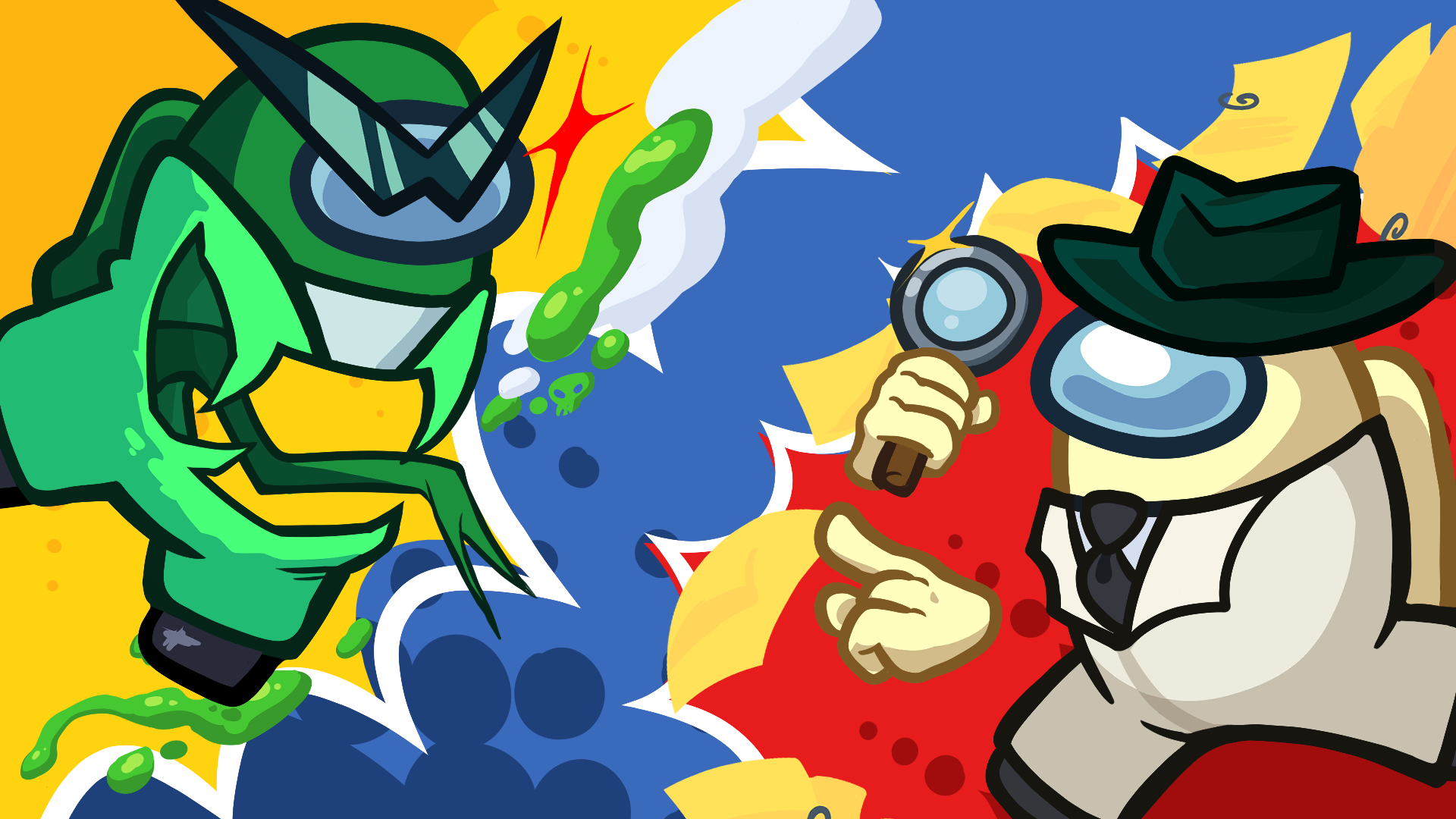
My team’s game, tentatively referred to as ‘The Murder Game,’ is a social deduction game where one’s actions and theatrics are used to catch a traitor. As such, I thought the perfect game to contrast it with was Among Us, a social deduction game where you do the same – through a different framework. Among Us, a party game developed by Innersloth for most major platforms, takes place on a ship in space and focuses its gameplay on two teams: the crewmates and the imposters. Crewmates are assigned tasks to complete around the ship while imposters are tasked with sabotaging the ship as well as killing crewmates. However, after every killing there is a chance to vote a player off the ship and based on killed crewmates’ locations, alive crewmates can collude and come together to deduce who the imposters are. The fun comes in when imposters are thrown into the conversation as well, trying to clear their names. The Murder Game, on the other hand, highlights a specified target. The target has to be killed, but they are allowed to use clues as well as act out their death in a fashion that suggests who the killer is. Both The Murder Game and Among Us have gameplay loops based on deducing a killer based on the hints that the victims leave behind. However, I think the main difference between the two are their agency. Among Us and The Murder Game both are structured around a framework where clues are left behind by the killed; however while in Among Us clues are passively left behind, The Murder Game’s design philosophy is that clues are actively left behind. While both games have the same framework, this gives The Murder Game a dimension from the perspective of the killed that we believe will provide for a compelling game.
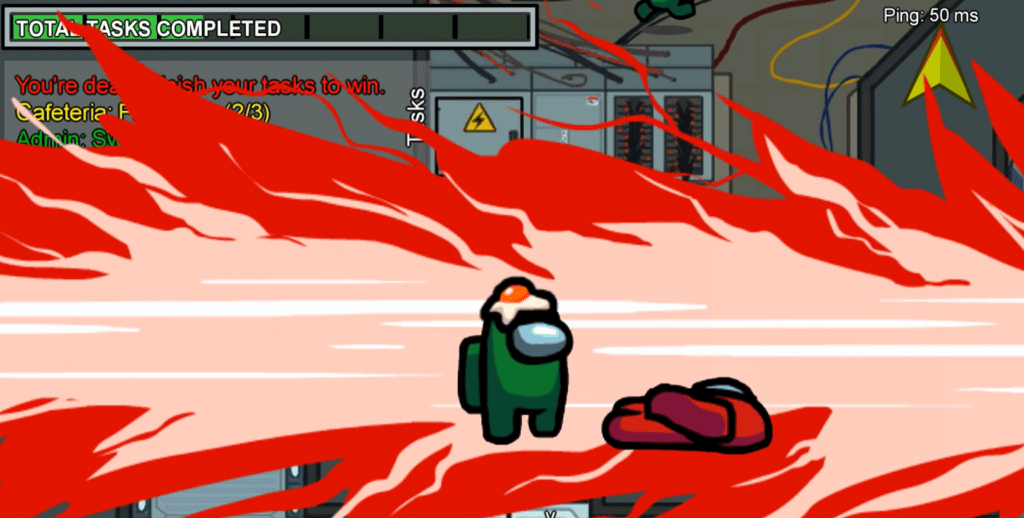
My experience playing Among Us for this assignment immediately put me in the position I was intending to explore for this assignment, as I was swiftly the first one killed. I think the mechanics of this game are designed for the first one to be killed to get the short end of the stick, and I definitely saw that in my play. Among Us balances the gameplay between the action phase and the social deduction phase smoothly, and so the killings are quick and unexpected to always allow the murderer some plausible deniability. Furthermore, the game requires a player to notice the body and choose to report it for the social phase to happen. After I was killed, two other players passed me (😭) without reporting, which I imagine was because they looked too suspicious. Nonetheless, I felt like I was just waiting for a while until two players came by me together, and one reported the body. These quick killings created dynamics of information asymmetry and profiling, which the players in my lobby were taking into account while in the social phase. I think this explains how, when I observed the chat, people immediately talked about their alibis. My murderer stayed silent except to say they wanted to skip. I felt powerless as the senses of asymmetry prevented any real accusations and my murder was chalked up to being “an information round.”
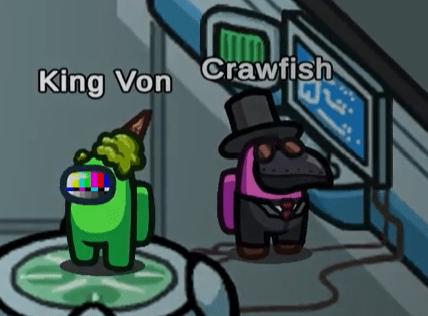
I definitely think this type of gameplay created the aesthetics of Fellowship fun. As a ghost, I followed the players and many would do tasks around each other to serve as alibis. I was in a random lobby, so I could imagine how it would be nice to feel connected enough to ally with other players and vouch for each other, and the betrayal when someone you thought was your ally ends up being the imposter. The next 2 rounds played out with the imposters being found each time through people’s social reasoning. However, as the first victim, I felt like the game passed me by and I was only really operating as an observer. This is where I think the differences with The Murder Game are apparent. With The Murder Game, the victim is known from the beginning, which creates different dynamics: instead of trying to make deductions based on an environmental aspect, players are trying to scout out other players from the start so they know how to best interpret the victim’s clues. It also creates the aesthetic of Fellowship for the victim, as they want to create the best hint for their fellow teammates, as well as Expression since the victim chooses how to represent their own death. I believe the Murder Game serves the interests of the Victim better than Among Us, guaranteeing they are part of the experience as well.
Furthermore, I think the differing audiences, aims, and circumstances of the games contribute to the dynamics and aesthetics the games try and represent. Among Us is a game developed to create revenue, and costs money to purchase. Even on mobile, where the game is free, there is a notion of buy-in players have with the game, a buy-in that has only increased with the game’s popularity. The game is free to operate off the assumption that players will play multiple rounds to get their money’s (or their time’s) worth. If players get screwed over, they will play until they get to screw someone else over. Therefore, it does not matter as much if the victim does not get to participate for a round, since they’ll get their share of Fellowship in the next one. Comparatively, The Murder Game is for class and is not being sold. While we are designing for infinite replayability, players will most likely play a few rounds either for testing or for grading. Because of the class setting, our game has to be fun initially, or we lose out on engagement.

Overall, even within our similar gameplay structure, there our evident differences in the agency of the victim in Among Us and The Murder game, which allows both games to usher in different aesthetics for the players.