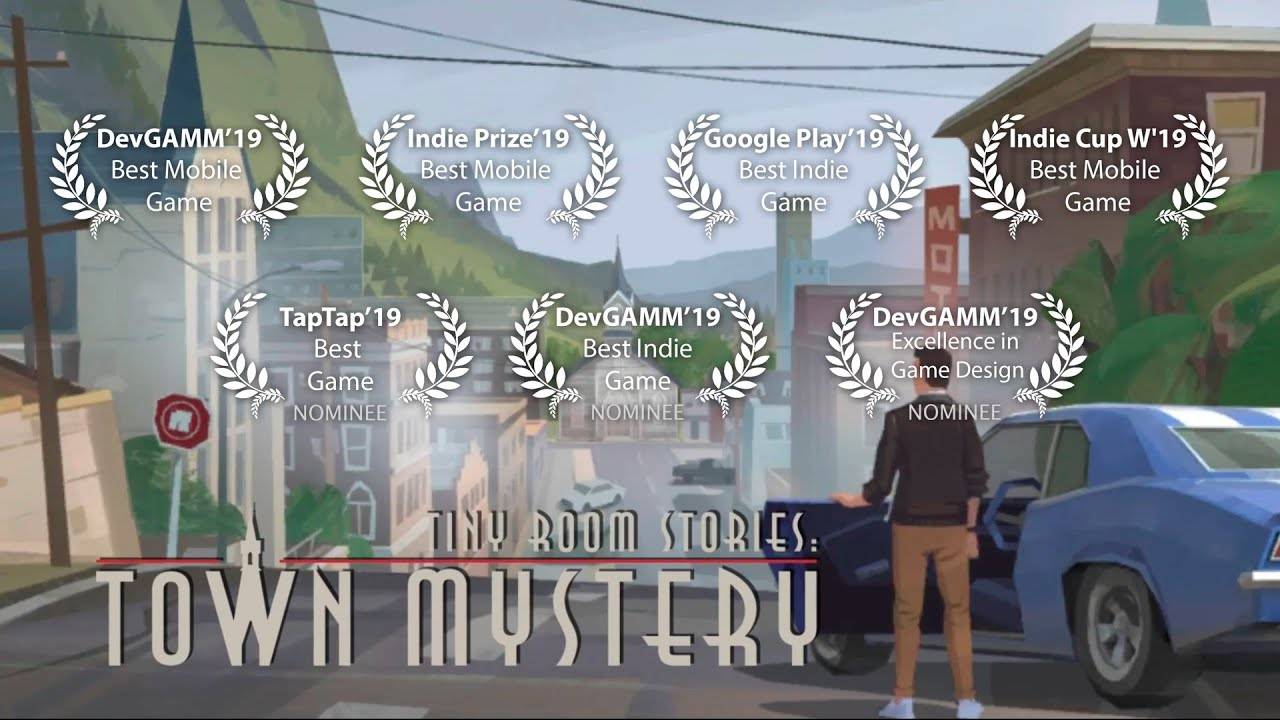
Tiny Room Stories: Town Mystery is an escape room style mobile app designed by Kiary Games Ltd. The game welcomes a wide range of players aiming at age 13+. The app is available on the App Store for iOS and Android, targeting people who like detectives, mystery, puzzle solving, and environmental architecture in games. Tiny Room Stories is a strong example of how embedded and environmental architecture and pacing mechanics gets integrated in a mystery narrative.
The advantage of a digital game is that not as much premise information had to be laid out, compared to analog games that usually come with a thick user instruction manual. The story begins with a short note clarifying the mission of the player to visit their hometown Redcliff, which is now abandoned, to discover a hidden truth. This sets the aesthetic of mystery and immediately invites players to be immersed in the narrative before diving into challenging puzzles.
There are many smart designs in this game, particularly in the game’s strategy of dividing and conquering the story. Playing this game did not make me feel tired at all because of the way the chapters are broken down and there are small points of satisfaction players can achieve by solving small puzzles. Also, when collecting clues, rather than allowing players to accumulate an inventory of items, the game enforces a clean progression through disappearing evidence. From a designer’s perspective, this is a great pacing mechanism: it signals to the player that a puzzle has reached resolution, reduces cognitive load, and prevents the stress of an overwhelming inventory common in adventure games. The mechanic also encourages the feeling of forward momentum, which sustains engagement across what might otherwise feel like a repetitive loop.
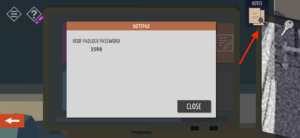
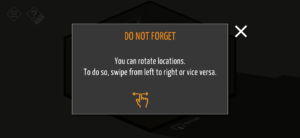
The narrative architecture is also nicely implemented. Each room in Tiny Room Stories operates as an embedded narrative space, filled with story information that players surface through spatial interaction rather than dialogue, which is more interactive. I enjoy how the architecture is not just decorative. Players must actively rotate the room by swiping the screen to access the fourth wall, which is an intuitive design that also adds to the realism of the game. Items in the rooms directly control what the player can know, which is a form of architectural narration as well.
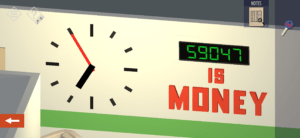
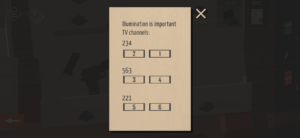
Puzzles are greatly diversified in the game: number sequences, geometry derivation, collecting clues, sequence decoding, assembling gathered pieces. The diversity of puzzle types maintains the aesthetic of challenge and keeps players attentive throughout gameplay.
The missed opportunity of this game is a slight disconnect between narrative content and puzzle design. The story of Redcliff’s abandonment is a great hook, yet not every puzzle draws any meaning from or incorporates much related to the narrative. I was expecting some more themed, creative puzzle designs where important facts are revealed indirectly through the puzzle pieces, maybe a puzzle where the finished product revealed the reason why the townspeople were gone. As of now, the mystery unfolds beside the puzzles rather than through them.
The game’s spatial mechanics may present some accessibility challenges though. Players with cognitive disabilities may struggle with the mechanic of multiple rotated isometric views of a room. Player with visual processing conditions and motor impairment may find the rotation disorienting. The game offers no accessibility menu, font size adjustment, or colorblind mode, all of which are now considered baseline considerations in accessible game design. From a design standpoint, these omissions are not inevitable given the genre. Introducing an optional static map or navigation aid could help the game become more accessible to a wider audience. The design principle appears to have prioritized aesthetic cleanliness over inclusive access.
Tiny Room Stories has beautiful environmental architecture and narrative consistency exceeds the expectations of traditional mobile escape rooms. From a designer’s perspective, I would fill the gap between the game’s narrative and puzzles and resolve the accessibility limitation to push it further towards perfection.