
Playing BOKURA: Planet began as a cooperation-based puzzle solving game but quickly evolved into something more nuanced and even unsettling. I went in expecting that my partner and I would rely primarily on critical thinking and communication skills as we played as two crew members trying to escape the planet we crash-landed on. But very quickly, the game ended up being much more than sheer problem solving and critical thinking. It became something that constantly made me think about perspective, trust, skepticism, and eventually, how fragile all of those things actually are. What stood out to me the most is that while trust can be built through cooperation, it is ultimately limited by the fact that you can never fully understand the other person’s experience.
In the initial thirty minutes of playing Bokura, the buildup of trust felt organic. My partner and I were learning the mechanics at the same time, figuring out how to climb, push objects, and work with systems we had never seen before. But alongside that, we were also figuring out how each other thinks. Because I didn’t know her well before the game, a lot of that early gameplay was spent trying to understand how she approached problems, what details she focused on, and how she explained what she was seeing. I could tell that she was trying to understand the same about me. These interactions allowed us to find a shared rhythm to problem solving, where we would describe, test, and adjust based on feedback. Our interactions reflect the cooperative dynamics from The Evolution of Cooperation, where authors Axelrod and Hamilton introduce the idea that trust forms through repeated interactions that are mutually beneficial to the individuals involved. Like the Tit-for-Tat strategy, we began by cooperating, and as this continued, we deepened our trust in each other.
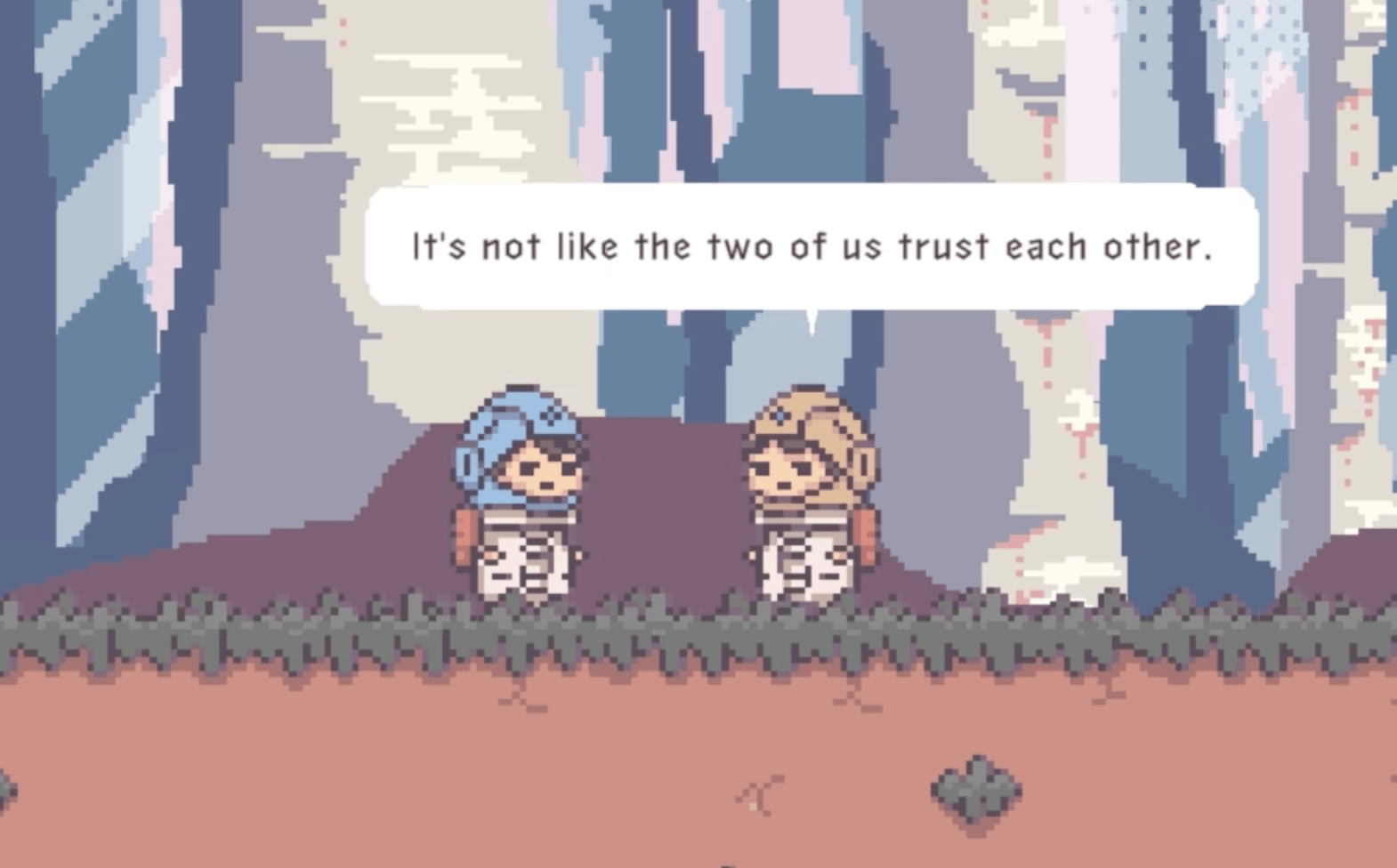
That being said, what felt like peaceful cooperation and head down problem solving quickly shifted into doubting the trust between the players. I remember a moment when the yellow player said to the blue player, “it’s not like we trust each other,” which felt like a turning point where trust turned into doubt. Up until then, trust was implied. We were solving these puzzles together and emerging successfully, so why wouldn’t we trust each other? But as the game progresses, the environments we each perceive begin to diverge more and more, and the understanding that we were working toward a shared goal became questionable. The game designers specifically embed moments where players realize they aren’t a united force like they once thought. This was reinforced in an instance where my partner said, “Who on earth are you?!”, which made our identities and perceptions of each other questionable. At this point, the game is no longer just about coordinating actions, but about questioning whether the other player’s perception, shaped by their intentions, can be trusted at all.

Image 1: Turning point where cooperation shifts to doubt
This shift made Nagel’s argument easier to understand: there will always be limits to understanding the subjective experience of another individual. Even though my partner and I are technically playing the same game, I can never fully know what she is seeing, interpreting, or prioritizing. Her version of the world is shaped by information I do not have access to, and no amount of explanation fully closes that gap. When the game shifted from just puzzle solving to understanding the other’s intentions, this gap became much more noticeable. There were points where I wondered if I could act on instructions grounded in a reality that I could not verify, which reinforced Nagel’s argument even further. At one point, I received a warning that said, “Let Rika run free, and your beloved son might be the first victim.” This message introduced personal consequences, and the cost of blind trust and generosity toward the other player felt much higher. This connects back to The Evolution of Trust, where cooperation and trust disintegrate when incentives drift apart. The trust that once felt organic was now breaking down.
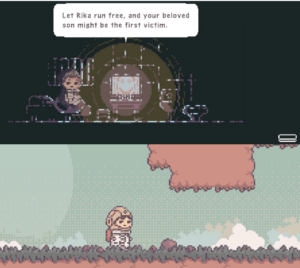
Image 2: When the stakes are higher, incentives conflict and trust erodes.
Zooming out, the game reveals that trust is not just about believing that someone will act in your best interest, but about choosing to rely on a perspective that you will never have full visibility into. By playing Bokura, I realized that trust is more fragile than I initially thought, and it is fundamentally limited by what we can know about others.