
Among Us: The Silence of Strategy
Game: Among Us
Creator: InnerSloth
Platform: PC
Target Audience: Social deduction game fans
Playing Among Us revealed a communication pattern of mine: silence. Whether as crewmate or impostor, my instinct was to observe, synthesize, and speak only when necessary. The game’s mechanics did not merely accommodate this tendency; they actively shaped it, transforming quietness from a personality trait into a strategic posture.
Silence as Strategy
My communication style leaned heavily toward information preservation rather than active accusation. As a crewmate, I focused almost exclusively on completing tasks, rarely checking security monitors or tracking suspicious movement. During emergency meetings, I provided factual observations, such as “I was in Admin,” “I saw Pink leave Cafeteria”, but resisted pointing fingers. This passivity was not hesitation; it was a calculated choice to avoid misinformation. I preferred synthesizing others’ reasoning over trusting my own intuition.
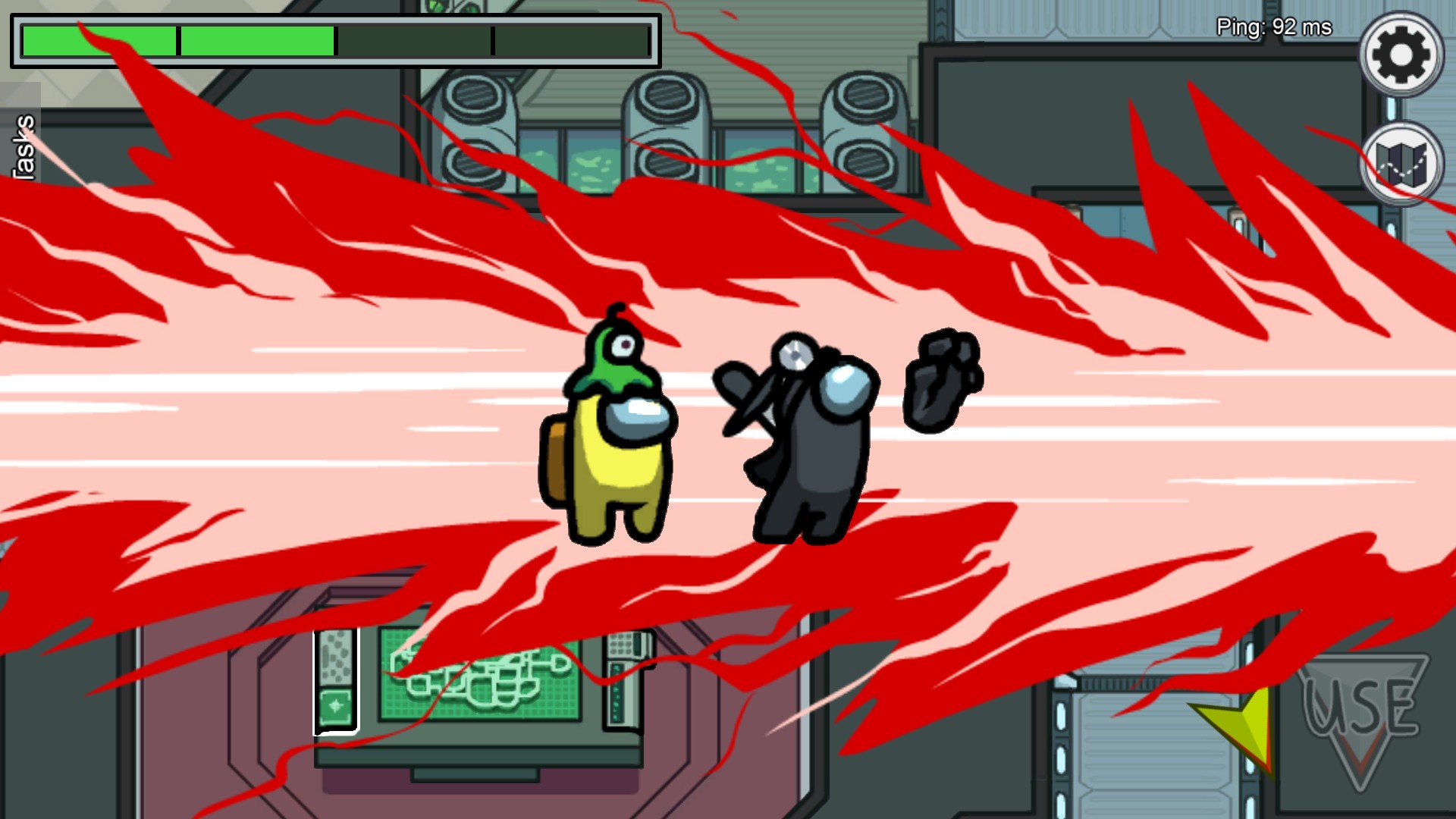
One round exemplifies this tendency. I witnessed someone flee the scene of a kill, yet two impostors coordinated their testimony seamlessly, redirecting suspicion toward an innocent crewmate. Despite my visual evidence, I voted with the crowd, because their narrative felt more coherent than my fragmented memory. The mechanics of the voting system, which rewards consensus over individual conviction, had shaped my decision-making into a pattern of conformity. I valued group harmony over personal certainty.
As an impostor, my silence intensified. I knew that more words meant more weak points. I kept alibis deliberately vague: “I was doing tasks somewhere”, and only defended myself when directly accused. Lying felt uncomfortable, even within the game’s fiction.
MDA Analysis Comparing with Werewolf
The game’s mechanics define its dynamics, which in turn generate its aesthetics. Among Us operates on a visual map with security monitors, creating a dynamic where impostors can be observed without their knowledge. Consequently, crewmates gain concrete visual evidence to anchor their accusations. The aesthetic that emerges is one of challenge: impostors must craft lies consistent with observable space, a cognitively demanding task.
Comparing this to Werewolf clarifies the design trade-off. In Werewolf, all actions occur blindly at night, creating a dynamic where evidence exists only in discussion. Besides, tone, facial expression, and gesture also become the sole clues. Deception is linguistically easier because no visual record contradicts the liar. In Among Us, however, the visual map raises the bar: the spatial mechanics ensure that even successful lies must withstand scrutiny against what others might have seen.
Yet this strength introduces a limitation. Crewmates possess no functions beyond task completion, producing a dynamic where all crew members are functionally equivalent targets for impostors. The hunter-hunted relationship lacks the complexity found in Werewolf, where clergy roles (prophet, witch, hunter) create intricate alliances and hidden identities. In one Werewolf round, I declared myself prophet to protect the real prophet, only to be voted out when the genuine prophet misunderstood my intention. That depth of social complexity is absent in Among Us. The crew-impostor dynamic, despite clarity, reduces the proportion of reasoning in discussions, as fellowship among crewmates remains shallow and trust difficult to establish.
Ethical Reflection: Is Lying in Games Wrong?
Lying as a part of Among Us does not constitute a wrong action. The game is a cosplay of intrigue—a bounded space where deception creates cooperation and conflict alike. Players enjoy the aesthetics of fellowship and challenge precisely because lying makes victory uncertain. In real life, deception erodes trust and damages relationships. In games, it mimics conflict scenarios that rarely occur outside, producing excitement without consequence. What makes games special is consent: when I join a lobby, I agree to be deceived. My friends are not betraying me; they are performing roles within a magic circle where lying is the point. Thus, deception in games has nothing to do with ethics; instead, it has everything to do with fun.
Conclusion
Among Us taught me that my default role is observer, not accuser. Silence is not absence; it is a strategy of information control. And within the game’s bounded space, even deception becomes an expression of trust, because we play together, not against each other. That, perhaps, is the deeper lesson: the game does not change who we are. It reveals who we already were.