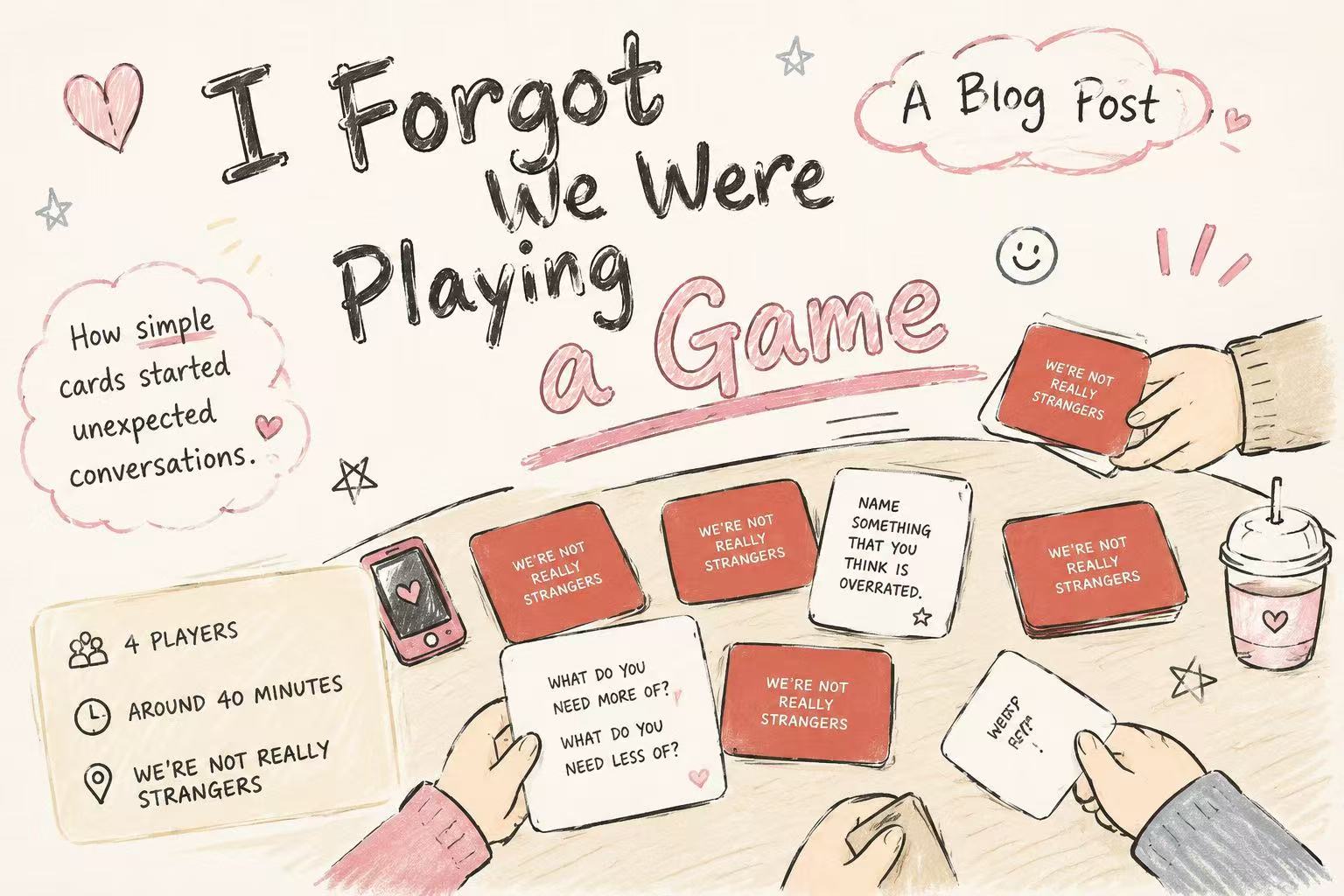
I Forgot We Were Playing a Game
Game: We’re Not Really Strangers
Players: 4
Playtime: Around 40 minutes

Before playing We’re Not Really Strangers, I honestly thought it would just be a card game where people answered random questions. I expected us to laugh a little, answer a few cards, and then move on. Instead, the four of us ended up talking for almost forty minutes. At some point, I even forgot we were playing a game because our conversations became much more interesting than the cards themselves. Looking back, I realized the game wasn’t just about answering questions, it was about how simple game mechanics gradually changed the way we communicated.
Finding My Place in the Conversation
I’m usually not the first person to start talking in a new group. That was exactly what happened during this game. My first few answers were short because I wasn’t ready to share too much about myself.
As the game went on, everyone became more relaxed. People laughed, shared stories, and reacted to each other’s answers. The atmosphere made me feel comfortable enough to stop worrying about whether my answers were “good” enough. Instead, I answered honestly and even started asking other people questions after they finished speaking.
Looking back, I don’t think I suddenly became more outgoing. The game made it easier to decide how much I wanted to share as I gradually trusted the group more. By the end, it wasn’t really about answering cards anymore—it was about having a conversation.
Small Questions Started Bigger Conversations
The question I remember most asked us to guess what kind of TV show someone would watch or what food they usually ate on campus based only on our first impression. Everyone laughed because we knew we were only guessing, but after sharing our answers, we all wanted to explain our reasons. Those explanations became much more interesting than the answers themselves. We started talking about our personalities, daily routines, and small habits that normally wouldn’t come up in an ordinary conversation.
Looking back, the cards simply started the conversation, but the discussions afterward were what I remembered most.
Looking Back at the Game with MDA
After we finished playing, I started thinking about why such a simple game could keep four people talking for almost forty minutes. The rules were simple—we only needed to read a card and answer a question.
Because there wasn’t any pressure to “play well,” everyone focused on listening and responding to each other. Looking back, the MDA framework helped me understand why such simple rules led to much deeper conversations.
Another idea from class that came to mind was the Magic Circle. If someone I had just met asked me these questions in everyday life, I would probably think they were too personal. During the game, though, the same questions felt completely normal because everyone understood that opening up was part of the experience.
Thinking About the Ethics of the Game
As an international student, I noticed that some questions felt more personal than what I would normally ask someone I had just met. In my experience, conversations in China usually take more time before people begin sharing personal thoughts or feelings. Because of that, I can imagine some players feeling uncomfortable, especially during the first few rounds.
What I appreciated about our group was that nobody pressured anyone to answer. If someone wanted to keep their answer short, everyone respected that. I think this made the atmosphere feel safe and welcoming.
If I could improve the game, I would make it even clearer that skipping a question is always okay. The goal is to help people connect, not to make anyone feel pressured.
Compared with Another Conversation Game
Unlike Wavelength, where players try to understand how another person thinks so they can work toward the same answer, We’re Not Really Strangers focuses more on understanding who another person is.
One improvement I would make is adding one final reflection card after the game. It could ask something simple like, “What surprised you today?” or “What’s one thing you’ll remember about someone in this group?” I think it would give players one last chance to think about what they learned from the conversation.
Conclusion
Before playing We’re Not Really Strangers, I thought I was just going to answer a few cards with my classmates. What stayed with me wasn’t one specific question—it was the feeling that everyone became more comfortable talking as the game went on.
For me, that’s what makes We’re Not Really Strangers memorable. It doesn’t need points, winners, or complicated rules. It simply gives people a reason to start talking—and sometimes that’s enough to help strangers feel a little less like strangers.