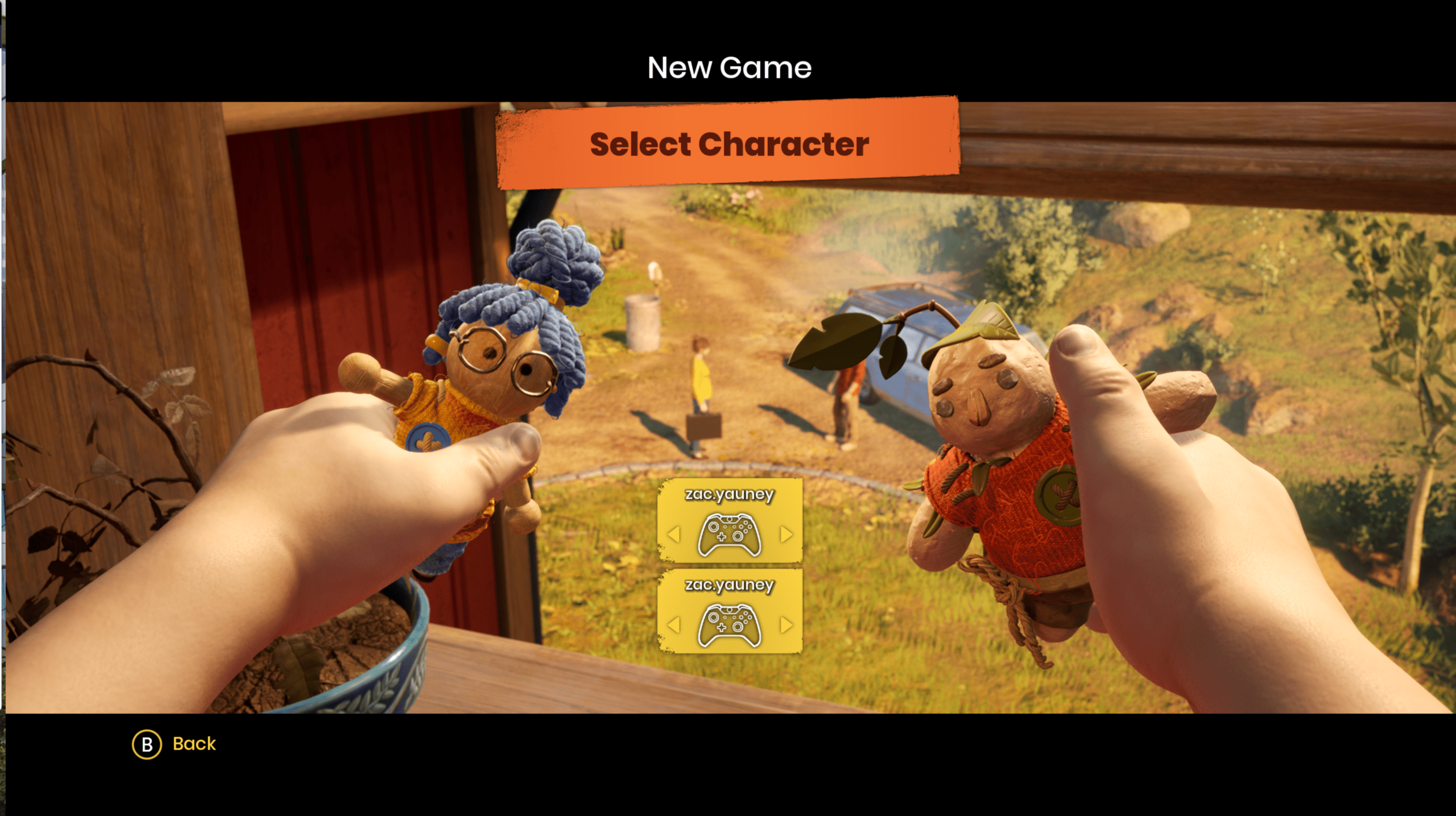
“It Takes Two” is a video game designed for cooperative play between two people. It was created by Hazelight Studios and published by Electronic Arts. It is available for PlayStation, Xbox, PC, and Nintendo Switch. We played on my husband’s PC. It is rated T officially because of Animated Blood, Comic Mischief, Fantasy Violence, and Language but I would argue that the adult themes around relationships are stronger reasons for game play to be limited to teens and adults.
Playing “It Takes Two” as a feminist means asking whether the game merely uses marriage, parenting, and domestic labor as a cute narrative premise, or whether it actually helps players see those roles differently. There are many mechanics and narrative elements that are feminist when they turn ordinary family conflict into cooperative embodied play. It aims to make emotional labor, housework, fear, resentment, and parenting into shared obstacles that both players must negotiate together. However, the game also falls short of feminist ideas. While one could argue that 50% of players being female is feminist, the fact that its central relationship is strongly heteronormative, and some of its gendered imagery leans on exaggerated stereotypes rather than fully reimagining them.

The game begins with a familiar domestic crisis. The first cutscene, taking out the trash, is not abstract but one most adults have empathy for. Their relationship is built out of ordinary frustrations, I know too well as a mom:
- “Rose refused to eat her vegetables”
- “don’t tell me you forgot about the dentist appointment”
- “I know I’ve got to work overtime”
- “I’m not in the mood for this discussion again”
These lines establish a feminist concern with invisible labor (who remembers appointments/ whose work counts). In this sense, it positively affirms familiar roles without simply accepting them. It acknowledges that emotional labor and household labor are real, but then gives them a magical, playful form. A conversation about vacuuming becomes a level built around a furious magical vacuum cleaner. This is where Scott Kim’s claim that a puzzle can take something familiar and give it a novel twist, invites us to become playful with what might otherwise be tedious. Kim even asks whether washing dishes is a chore or a game. It Takes Two uses exactly that move as chores become absurd cooperative challenges rather than background work.
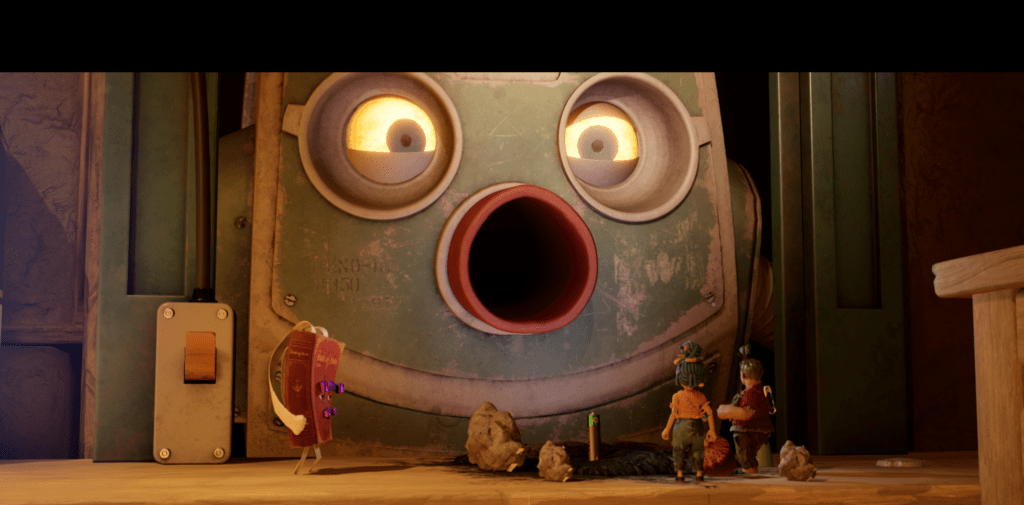
The game’s feminism is also visible in its empathy building. Cody and May are repeatedly forced to inhabit each other’s vulnerability. The game avoids stereotypes when Cody panics and says “but those fuses they just they just ran away i mean did you see them on their little fuse legs.” Hints come from both sides when Cody says “May, jump inside the hose,” and May says “try not to drop me” which situates capacity equally. The game’s cooperative structure matters here. Neither player is the helper and neither is the main hero. The mechanics require both players to act, wait, listen, and trust.
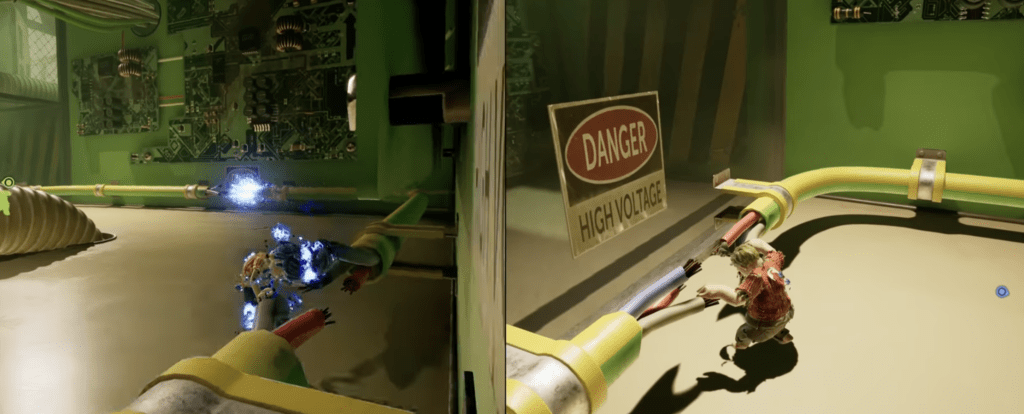
In the MDA framework, mechanics give rise to dynamics, which then produce aesthetic experiences for players. It Takes Two uses asymmetrical mechanics (i.e. one player holds a hose, one rides inside it) to create dynamics of dependence. Those dynamics produce aesthetics of fellowship. The puzzle design reinforces this. Bob Bates argues that good puzzles should contribute to plot, character, and story development, while bad puzzles feel intrusive and pull the player out of the fictional world. It generally succeeds because its puzzles are narratively appropriate. The vacuum level, fuse level, and household-machine challenges are not random obstacles. They externalize the couple’s neglected home and relationship.
However, the game is not automatically feminist just because it is about cooperation. MDA also reminds us that mechanics do not fully determine aesthetics. Players create dynamics too. The game includes an artful play through tutorial that incrementally introduces mechanics creating loops that teach actions and possibilities. However the skill difference between my husband and I still led to his taking charge of progress even though Cody did not.The game requires collaboration, but when my husband chose to smush me, Cody said “That was kind of fun actually.” That moment reveals a tension. The formal design pushes players toward care, but the possibility space still allows teasing, sabotage, and playful cruelty. This does not ruin the game, but it complicates its feminist reading. A game can require cooperation and still let players reproduce less collaborative relationship dynamics.
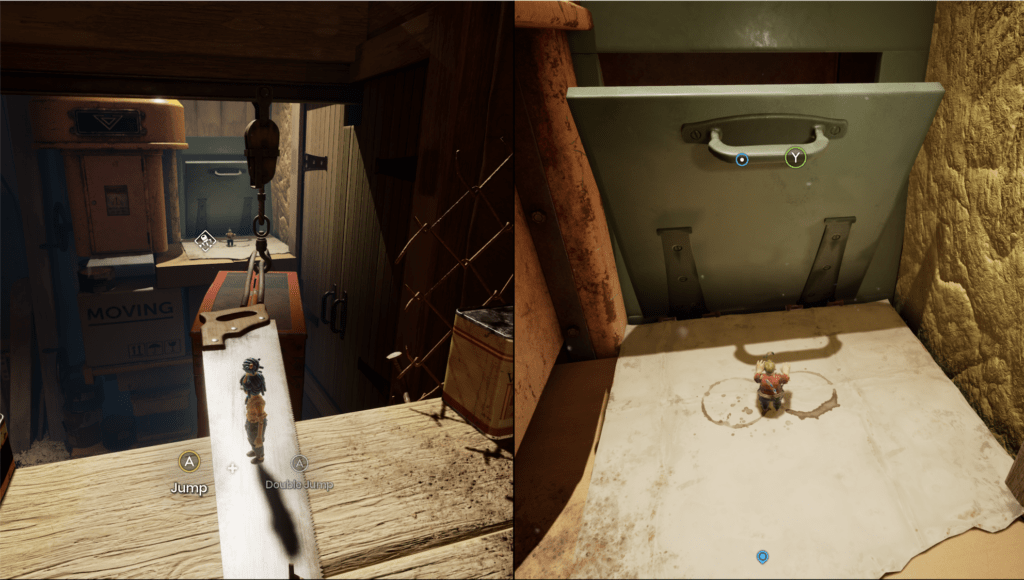
The game also falls short in its framing of love and gender. Cody and May’s relationship is strongly heteronormative. There is nothing wrong with telling a heterosexual story. The Book of Love intensifies the problem. His design depends on a flamboyant, exaggerated stereotype with a comic accent, performative romance, and intrusive advice. While he is memorable and funny, he turns love into a caricature rather than a deeper feminist exploration of partnership. The game’s profound one-liner, “ask yourself can you really own the people you love”, suggests a more radical theory of love based on freedom rather than possession but the Book’s stereotyped presentation sometimes undercuts that insight.
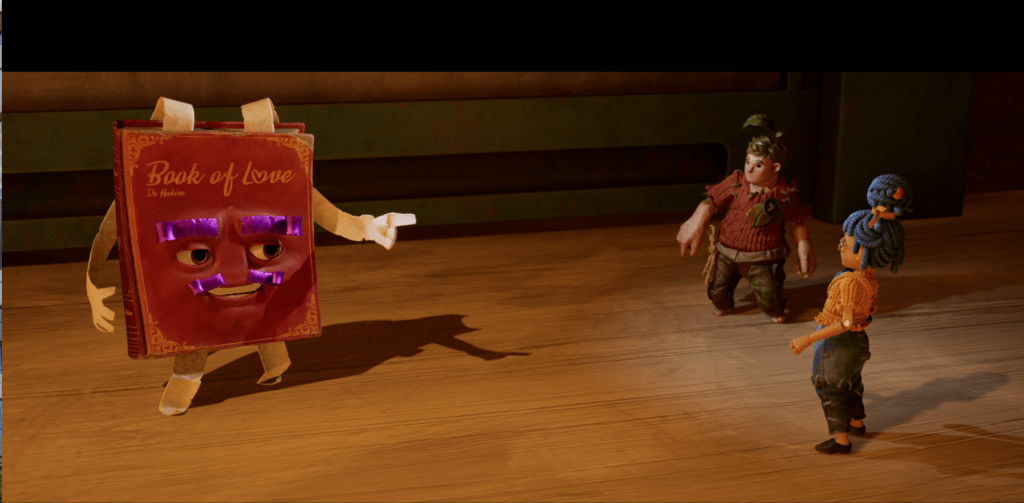
Expanding feminist perspectives could improve the game by broadening what repair and family can look like. It could include moments where Cody and May explicitly renegotiate responsibilities, not just rediscover affection. It could also avoid making the heterosexual nuclear family feel universal by acknowledging other forms of kinship, care, and co-parenting. Still, It Takes Two is heartfelt because both characters are motivated by Rose. Their love for their child gives emotional weight to the mechanics. At its best, the game is feminist not because it perfectly represents gender, but because it makes care playable.