
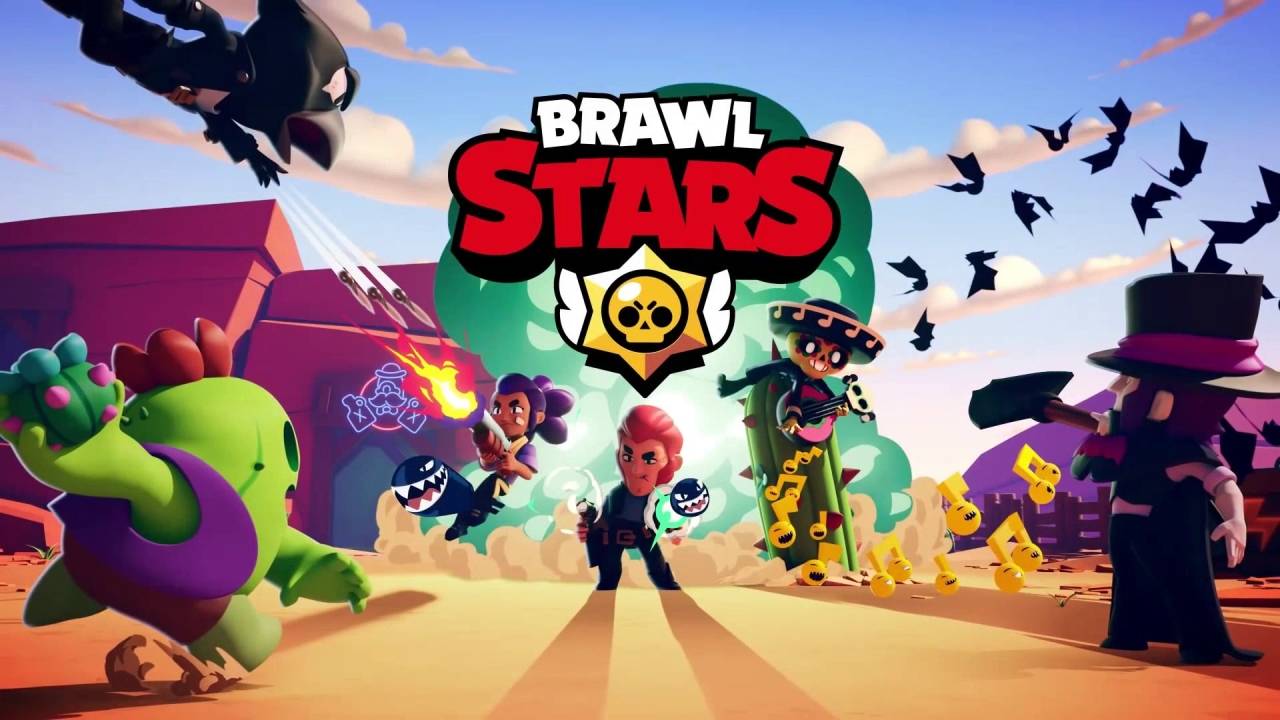
For this week’s critical play I played Brawl Stars, a free-to-play top-down mobile arena brawler made by Supercell and released in 2018. It was primarily aimed at teens and younger players (rated 12+), and available on iOS, Android, and PC. I downloaded it for free and played on my iPhone. What surprised me was the thing pulling me back each day wasn’t the matches; it was the little chest-opening animation that fired after my first win every morning. I caught myself opening the app for the drop, not the brawling, and that’s the gap I want to dig into.
I believe that Brawl Stars is the rare live-service game that publicly renounced chance-based monetization, then quietly rebuilt it in a gentler, more defensible costume. Its “Starr Drops” reproduce almost exactly the slot-machine logic Schull documents in “Addiction by Design” – predetermined outcomes dressed up as live rolls, near-miss anticipation, obfuscated value, while dodging the now-toxic “loot box” label. The danger here isn’t that the matches are rigged; they’re genuinely skill-based. It’s the reward layer wrapped around the skill that runs on the enchantment-by-design Schull comments makes slot machines so difficult to put down.

The match layer is honest. Outcomes here come down to aim, positioning, and reading the bushes; chance barely registers, exactly as the lecture’s “chance should not play a role so great that player skill is irrelevant” balance principle would want. The interesting question is what gets built around this clean core.
This case is unusual because the designers told on themselves. In December 2022 Supercell removed loot boxes (“Brawl Boxes”) entirely, promising no more probabilities, and replaced them with the deterministic “Starr Road,” where you spend Credits to unlock the specific brawler you want. The motivation was part ethics, part business: under the old gacha system even highly engaged players needed roughly ten months to unlock a Legendary, and loot boxes were drawing regulatory heat. But here is the inconvenient part for any clean morality tale; the deterministic version backfired with players, not just revenue. Supercell later admitted it had been “naive” to remove all randomness, daily active users kept sliding, and a vocal share of the community said the random collection had been the most exciting thing about the game. In June 2023 chance returned as Starr Drops. So the arc that defines this game is exactly the one in my thesis: a public renunciation of chance-based monetization, followed – once determinism proved duller and less sticky – by a quiet rebuild of chance in a new, more defensible form. The question for the rest of this critique is how much gentler that costume really is.
Where I found chance, pressure, and obfuscation
The chance itself is actually the most defensible part. A Starr Drop opens at “Rare” and may “upgrade” up the ladder, with published odds of roughly 50% Rare, 28% Super Rare, 15% Epic, 5% Mythic, and 2% Legendary. The detail that jumped out at me is that the rarity is locked the moment the drop is awarded, not when you tap to open it- so the dramatic “upgrade” animation is just a reveal of an outcome that already exists, the same structure as a slot where pulling the handle stopped being gambling because you’re “simply activating the readout.” But I’ll push back on my own comparison: Schüll’s machines hide their odds; Brawl Stars prints them. The near-miss of a drop almost hitting Legendary made me want to go again, but it cost nothing and can’t be paid to escalate. I found this to be a genuinely gentler instrument than the one in the reading.
Where the worry actually lives is the cadence around the drops. I got up to three free drops a day, for my first, fourth, and eighth wins- refreshing every 24 hours, and that’s the part that started running my schedule. It isn’t a lie about odds; it’s an engine of habit. The daily reset leans on loss aversion (don’t break the streak), and tying drops to wins turned a reward into a reason to keep queuing past the point of fun- the on-ramp to what Schüll calls the “zone,” where continuing to play displaces winning. This is what I’d flag hardest, precisely because it doesn’t depend on deceiving anyone. The free chance also normalizes the mechanic, so when the store sells against the same loop- the premium Brawl Pass, time-limited skins, reworked Mega Boxes; paid randomness already feels native.

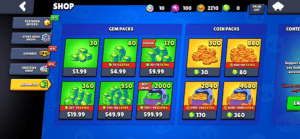
I realized obfuscation was simply relocated, not entirely removed from when I played the game in 2022. Brawl Stars is actually more transparent than a casino –the odds are printed, a real concession. But it obscures value the way Schüll’s “mystery chip” obscures the process. Premium currency (Gems) is sold in bundles that never map cleanly onto what you want, decoupling price from value. When the tutorial pushed me to buy a gadget, I clicked where it pointed, was told I didn’t have enough, and got funneled to “Get Gems” – which meant real money.
Comparison & the Ethics of Chance
The sharpest comparison is Fortnite, the live-service game that proves chance is optional at scale. Epic monetizes Battle Royale almost entirely through direct, fixed-price purchases. You spend V-Bucks on the exact skin or emote you want in the Item Shop, and the Battle Pass hands out a known, ordered list of rewards. There is no spin, no reveal, no “upgrade” animation; you see precisely what your money buys before you buy it. Fortnite is essentially the deterministic endpoint Brawl Stars reached in 2022 and then retreated from. That contrast is the whole force of my thesis: a billion-dollar competitor demonstrates you can drop chance entirely and still thrive, which means Brawl Stars’ decision to rebuild randomness was a choice, not a necessity even if it rebuilt that randomness in a far more transparent form than it once used.
Brawl Stars’ former Brawl Boxes were textbook gacha, but its Starr Drops have fixed the three things that made loot boxes predatory: the odds are public, you can’t pay to pull, and progress is never gated behind the randomness (the Starr Road still lets you buy the exact brawler you want, Fortnite-style). On the narrow question of monetized chance, that hybrid is one of the more responsible designs on the market.
So when is chance permissible? I believe when its odds are disclosed, you can’t pay to escalate the pull, nothing essential is locked behind it, and it adds surprise without building a loop you can’t step out of. By that standard the rebuilt Starr Drops sit largely on the right side of the line. A genuinely gentler, more defensible costume for chance than the loot boxes they replaced. But “costume” is the operative word in my thesis; fixing the gamble was the easy, visible part, while the daily habit loop and the deliberately unpriceable currency stack – neither of them a chance mechanic at all – quietly survived underneath the friendlier surface.