For this critical play I played Brawl Stars, a mobile ‘battle royale’ esque game by Supercell. I have been a long time player of Brawl Stars and other Supercell games, and I have noticed how they’ve sneakily monetized their games. In particular for Brawl Stars, the game’s gacha system works in conjunction with the game’s mechanics in order to encourage players to spend money. In addition, manufactured discontent in the form of less free items similarly promotes spending.
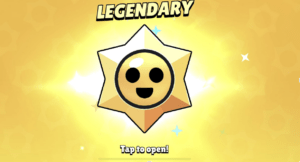
Firstly, Brawl Stars’ gacha system, in the form of ‘Star Drops,’ feeds into the enchantment that drives addiction. Currently, there are eight different variants of ‘Star Drops’ that players can obtain. Each is wrapped in a different skin, but they essentially perform the same thing: tap/hold/slice the loot box and it will give rewards. Most of the time, they will be garbage, like resources, but sometimes you can get higher tier awards such as new brawlers or upgrades. And in those few times that you get good awards, the game makes you feel like a winner. Players will chase after the high of hearing the announcer say ‘LEGENDARY!!’ with their screen turning yellow signifying they just won something big.

In addition, the game gives players the illusion of control over the rarity they obtain. Many Star Drops have an ‘upgrade chances’ bar in the bottom: you tap it four times and in each tap there is a ‘chance’ that you upgrade to a higher level drop, reminiscent of the handles in casino slots, where the player feels as though they are manipulating the probability but in reality the outcome was determined as soon as they paid the machine. The Star Drops do the exact same thing: they give players the illusion of control, and players chase the high of possibly getting something great from them as they tap their screens.
Brawl Stars also manufactures discontent through the Brawl Pass, pressuring players to spend by showing them what they could have. Like the Fortnite Battle Pass, the Brawl Pass has a free tier and a paid tier per season, giving players resources for playing. The Brawl Pass menu practically screams at you to buy it.
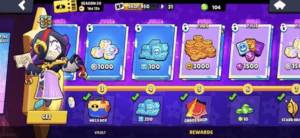
Notice that everything in the paid tier is Larger than the free tier, both in size and value? At the start of the season, players are bombarded with these higher numbers in larger boxes, seemingly promising far higher awards than the free tier IF you buy the pass. But the numbers drop in the later tiers, more resembling the free tier than at the beginning.
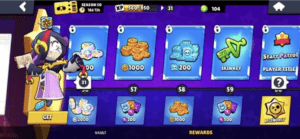
Frontloading all the higher-value resources at the start of the pass, where ALL players must see at the start of each season, pressures players into purchasing the Brawl Pass by showing them what they are missing out on. In addition, purposefully obscuring the price of the pass also contributes to the pressure. Players don’t immediately see a ‘$8.99’ price tag: they only see ‘GET,’ making it more likely they’ll press it, see the buy page, and be swayed to purchase.
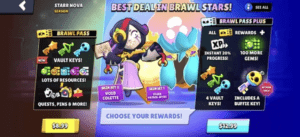
Then, there are the ‘PLUS’ resources. These are only for buyers of the Brawl Pass+, an even higher tier of the Brawl Pass. Again, most of the PLUS resources are frontloaded to the earlier tiers, enticing free-to-play and Brawl Pass users alike to upgrade to the higher tier. The Brawl Pass buy page also hammers this message down.
The Brawl Pass+ takes up the majority of the screen and is advertised in big prismatic text. Even when players spend money on the Brawl Pass, they will be encouraged to spend until they obtain the ‘BEST DEAL IN BRAWL STARS!’ And due to Brawl Stars’ live business model, the same tactics are used per season to encourage players to cough up $12.99 for the newest cosmetics and greatest resources.
In comparison to other gacha games, Brawl Stars is on the more generous side. It provides players with tons of resources and opportunity to obtain new brawlers and upgrades, and the sheer amount of Star Drops you can obtain make the randomness a little less impactful. Even so, with each new update bringing new content, the game continues to put pressure on players to spend money. New brawlers are introduced every season, and fully upgrading them costs 20k coins and 10k powerpoints (estimated), in which most rewards may give you only 1k of each if you are lucky. In addition, brawler cosmetics can be relatively pricey and hard to get, with the recent ‘Oddities Shop’ update making their previous model appear more akin to Fortnite’s rotating item shop.

The shop rotates every two days and bundles skins with progression items at the cost of Bling. The shop rotation pressures players to want to spend their Bling on the bundles because who knows when those skins will be offered again? Whereas before this update you could buy any skin for any brawler at any time, now you must wait for them to appear here if you want to purchase them freely. And what if you are out of bling? It all returns to spending money on Star Drops. Brawl Stars gives tons of resources, but also pressures players to spend them all, bringing them back to spending on gems/lootboxes once they run out.
I find that chance is only permissible in one of two ways: either in lootboxes for cosmetic purposes only (which don’t give players unfair advantages ingame, like Among Us’s hats), or when chance is part of the gameplay (such as in roguelite/roguelike games). Locking progression elements behind chance can put those with money to spend at an unfair advantage, which to me feels like an exploitative way to generate revenue.