League of Legends and the Architecture of Addiction
League of Legends is a free-to-play multiplayer online battle arena game developed by Riot Games. Two teams of five players compete to destroy the opposing team’s base, selecting from a roster of hundreds of unique characters called champions. The game has been running since 2009, making it one of the longest-standing live service games in existence.
My Experience Playing League of Legends
I came to League for the first time recently, and the barrier to entry is genuinely steep. The champion pool is enormous, the mechanics are complex, and the learning curve is unforgiving (thankfully, I had a friend at Platinum to guide me through the very beginning, so I could avoid a lot of beginner pitfalls). Even so, I found myself hooked almost immediately and have already spent money on cosmetic skins. That tension between frustration and compulsion is worth examining.
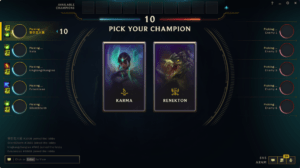
Chance operates in League in ways that are easy to miss at first. In standard modes, you submit your top two preferred positions but are not guaranteed either one. Your teammates are assigned randomly, and that randomness has real consequences. In one session, I waited through a long matchmaking queue only to enter a game where my team played poorly and refused to coordinate. The loss took nearly forty minutes. Rather than logging off, I queued again immediately. The logic felt familiar in hindsight: if the team was the problem, the next one might be better. That reasoning kept me there for hours. There is something particularly frustrating about losing a long game to factors that feel entirely outside your control, and yet that frustration does not push you away from the game. It pulls you back in, because the randomness that caused the bad outcome is the same randomness that promises a better one next time.
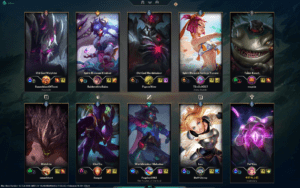
The ARAM mode makes this dynamic even sharper. In ARAM, your champion is selected entirely at random from the full roster, removing even the partial control that standard modes allow. The map funnels both teams into constant combat from the start, games are shorter, and the random champion selection means every match feels genuinely different. The faster turnover and built-in unpredictability made it the most addictive mode by far. You finish a game, get assigned a champion you have never played before, and the curiosity alone is enough to keep you in the queue. The loop is tight and the randomness is overt, which paradoxically makes it harder to stop.
Connection to Class Concepts and Readings
In MDA terms, the mechanics of random matchmaking and role assignment generate a dynamic of uncertainty and recovery that produces the aesthetic of compulsion. Schüll’s “Programming Chance” describes how slot machine designers engineer unpredictability not to reduce player engagement but to sustain it. The random number generator cycling through billions of values per second is the hidden engine beneath an interface that looks responsive and skill-based. League works similarly. The matchmaking system is opaque. You cannot see your teammates’ recent performance, the exact logic behind role assignment, or how the game weights its randomness. What you experience is a surface that feels fair and skill-driven while the variables shaping each game remain out of view. Schüll’s point that the gambling machine’s enchantment comes precisely from the concealment of its inner workings applies here too.
The Evans-Thirlwell piece gives this structure a useful name: the zombie live service model, where progression is endless by design and the promise of a better outcome is always just one more match away. League’s ranking system, champion mastery scores, and seasonal rewards all function this way. There is always another tier to climb, which means there is never a natural stopping point.
Ethics
The ethics of using chance in games are not straightforward. Schüll draws a meaningful line between chance as a design feature and chance as a mechanism of manipulation. In League, chance is partly structural and partly concealed. Players know their team is random but cannot assess the true distribution of outcomes or how matchmaking decisions are weighted. The skin purchasing system adds another layer. Older monetization systems in League used loot boxes, where players spent money for a randomized reward. Even the current system nudges players toward cosmetic purchases through champion-specific unlock paths. Riot profits from the gap between what players believe their agency is and what it actually is.
When it is morally permissible to use chance in games, I think the answer has to involve transparency and the absence of financial stakes attached to randomized outcomes. Randomness that generates surprise and variety in a game you have already paid for is meaningfully different from randomness engineered to extract additional spending. League has moved away from its most predatory monetization, but the core loop still depends on manufactured uncertainty to keep players in queue.