For my Critical Play, I chose to write about Tiny Room Story: Town Mystery. Tiny Rooms Story: Town Mystery is a free point and click mystery game. It was created by Kiary Games using Unity on June 19, 2019. The game is available on Google Play, the App Store, and Steam; I chose to play it on iOS. The target audience of the game is anyone that enjoys mystery games or puzzles. The game does not necessarily require the player to have prior knowledge of or experience with escape rooms; the designers added features to steer the player in the right direction if they have reached a “dead end” and need to adjust their strategy to progress.
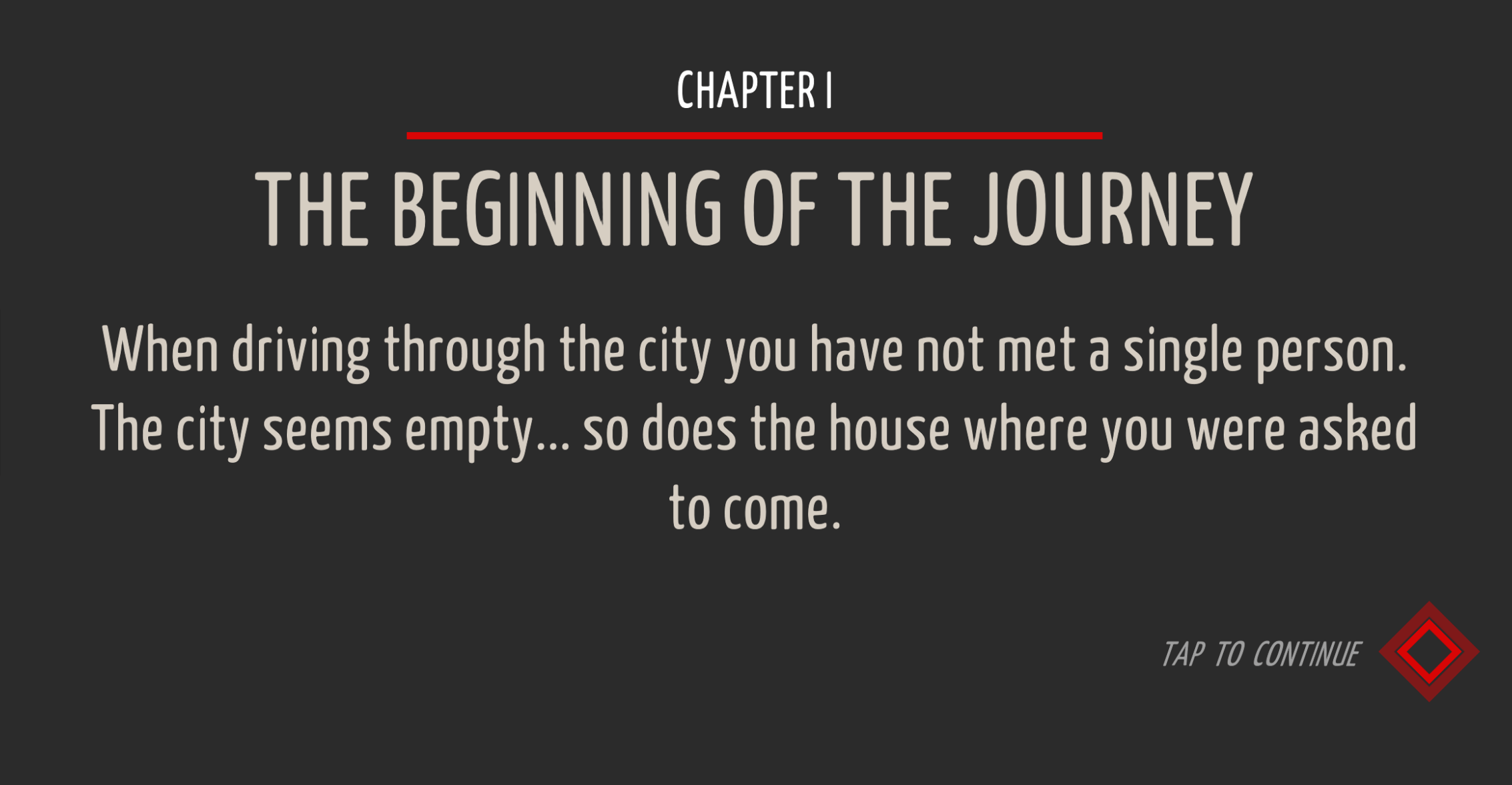
The game begins with a prologue explaining the background of the characters. We play as a private detective having received a letter from our father, who asks us to come urgently to a blocked off nearby town. The designers chose to include this screen of background information to provide the player with more context about the world of the game.
Tiny Room Story: Town Mystery is essentially a virtual escape room. Tiny Room Story: Town Mystery also has several mechanics that shape the game’s structure and tie in the mystery element. The narrative of Tiny Room Story: Town Mystery is woven into the mystery through the inventory and point and click mechanics. These mechanics can be seen in how the player interacts with the scenery to advance through the game’s story. Similarly to a real life escape room, the user can explore the scene to find hints and tools. The user also has an inventory where they can store these tools and hints to refer to later. If the player clicks a section without any useful hints, a message will pop up telling the player to look elsewhere.
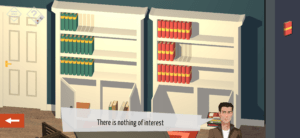
The inventory weaves in the narrative because it allows the user to keep track of the story so far and remember any relevant details, passwords, codes, or locks that they need to return to. The point and click format of the game ties in the narrative element by only allowing the player to access certain information and locations at a time. Advancing to a new location by unlocking a door, for example, lets the narrative progress when the player steps into the next room.
Being able to use the tools and objects from the inventory advances the narrative by revealing more hints, tools, and objects that can be of assistance in the future. In the picture below, the player cuts into a secret panel in the back of the couch using a previously found knife to reveal a hidden book.

These mechanics are all critical to helping the player uncover the mystery and continue the narrative.
Ethics Question:
One accessibility barrier from Tiny Room Story: Town Mystery is the potential difficulty for colorblind players. Some of the hints and clues are dependent on color coded objects, so it could prove impossible for colorblind people to solve these puzzles. Adding a symbol or description to these objects could help mitigate this barrier. One accessibility concern that Tiny Room Story: Town Mystery addresses is deafness. The game is not dependent on audio; players that are hard of hearing or deaf should not have any additional difficulty completing it.