

For this week’s critical play I chose to play Life is Strange, developed by Dontnod Entertainment and available on PlayStation, PC, Xbox and mobile. I played the original version on PC (as opposed to the remastered version). It is a single player episodic story game targeted at young adults where the player takes the perspective of high schooler Max Caulfield who develops the ability to rewind time. Importantly, the gameplay takes place in high school where Max is given the ability to rewind time to change choices and set in motion differing scenarios, which the game follows the consequences of. Life is Strange weaves narrative into the mystery of Max’s newfound ability through it’s time travel mechanic, in turn highlighting the narrative mystery of whether we can or should accept the consequences of our actions. The architecture of the high school setting controls its story by further supporting the game’s main themes of responsibility and those with the lack thereof.
The game initializes its setting through the first element of gameplay presented to me as the player: the menu of the game. It was important to illustrate the menu with the aesthetics of high school because it’s one of the first things players will have to interact with. It serves the purpose of dynamically putting the player in the headspace of Max. The function of this aesthetic choice is to create atmosphere and familiarity within the young adults playing this game, who ostensibly spent time in a high school setting.
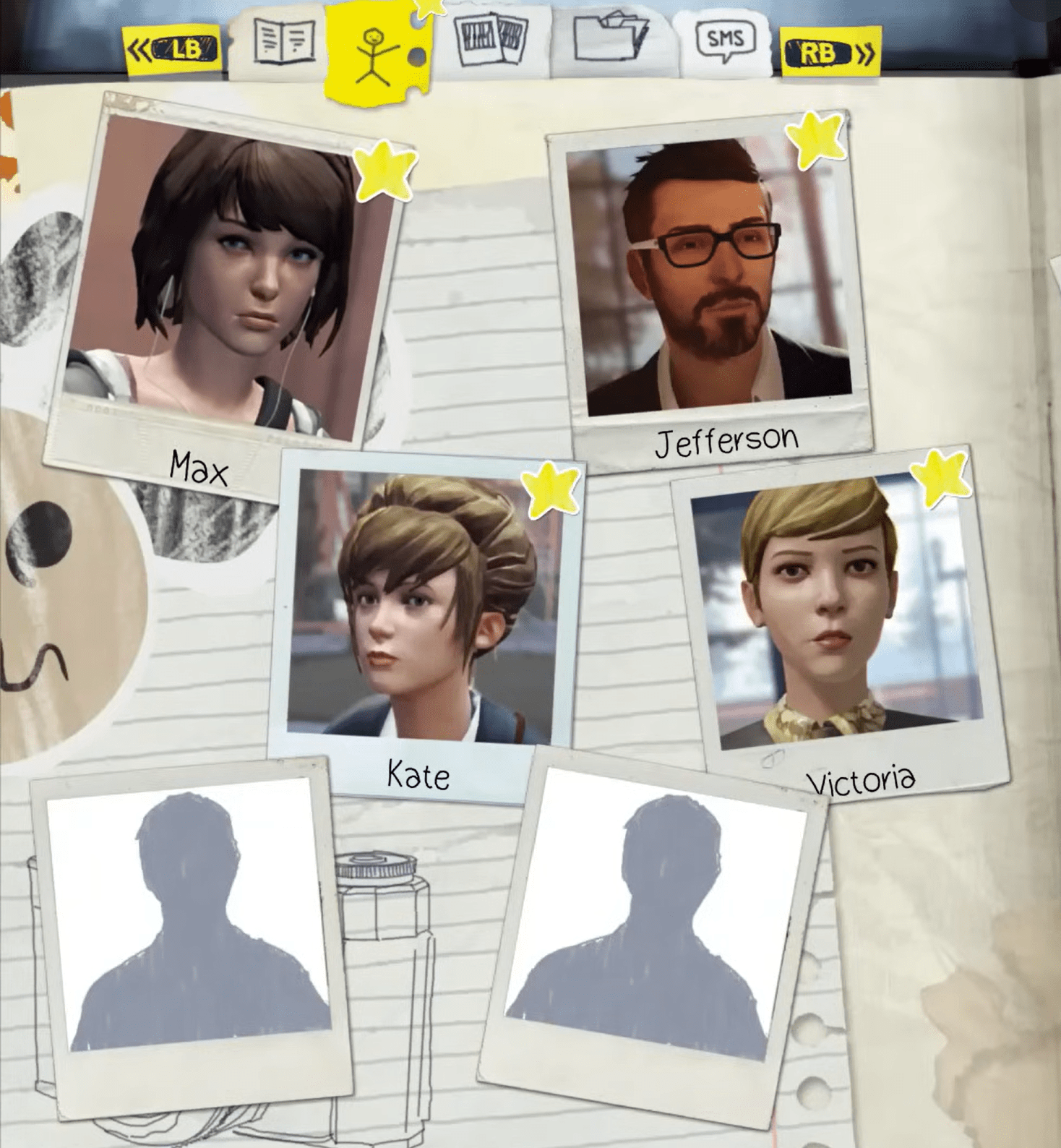
The next gameplay element is one of choices. The player is presented with decisions that they can make on Max’s behalf, alluding to similar situations the audience might have needed to make in their high school lives. For me these included talking with teachers and students both having a slightly condescending tone that made me as a player feel like I stood out just as much as Max would have. Importantly, none of these early choices led to any ‘good’ dialogue choices, and so even though mechanically the game gave me choices, dynamically the game was showing me that the choices I made did not yet matter.


The aforementioned choice in design is immediately used to, what I felt, create emotional stakes to the next mechanic introduced to me as a player – the main one driving both the gameplay and the narrative mystery. This is the rewind feature, which also comes in the high school class. The point of this mechanic is that Max is able to rewind time after a player choice is made in order to correct it or choose a better option. I think the timing of this feature being introduced is why it is so effective in creating mystery: it challenges the player’s preconceived notions that actions have consequences by previously introducing a scenario where that was not the case, and then introducing a mechanic that dynamically tells the player that Max is able to overcome the idea that actions don’t have consequences. The player is introduced to what Jenkins refers to as an emergent narrative. With this mechanic, the player is able to define their goals, actions, and the narrative the play within.

Because this narrative is so counter to what the audience would be expecting with a storytelling game, it creates mystery both inside and outside the game. These mechanics work together to create a paradox in the player’s mind: If actions are supposed to have consequences, why am I able to ignore those consequences to pick new actions? With these thoughts, both Max and the player are emotionally linked within the first few phases of the gameplay, allowing the player to be more invested in Max’s narrative and the way it intersects with their own narrative as a player as they navigate through the game.
Furthermore, this empathy for Max is created through the architecture of the game. The entire section of the game I played was an architectural cliched version of high school, with lockers and classrooms with blackboards. It immediately signals to the player the energy of the game, the moodiness of the characters, and the uncertainty of the time period (high school).
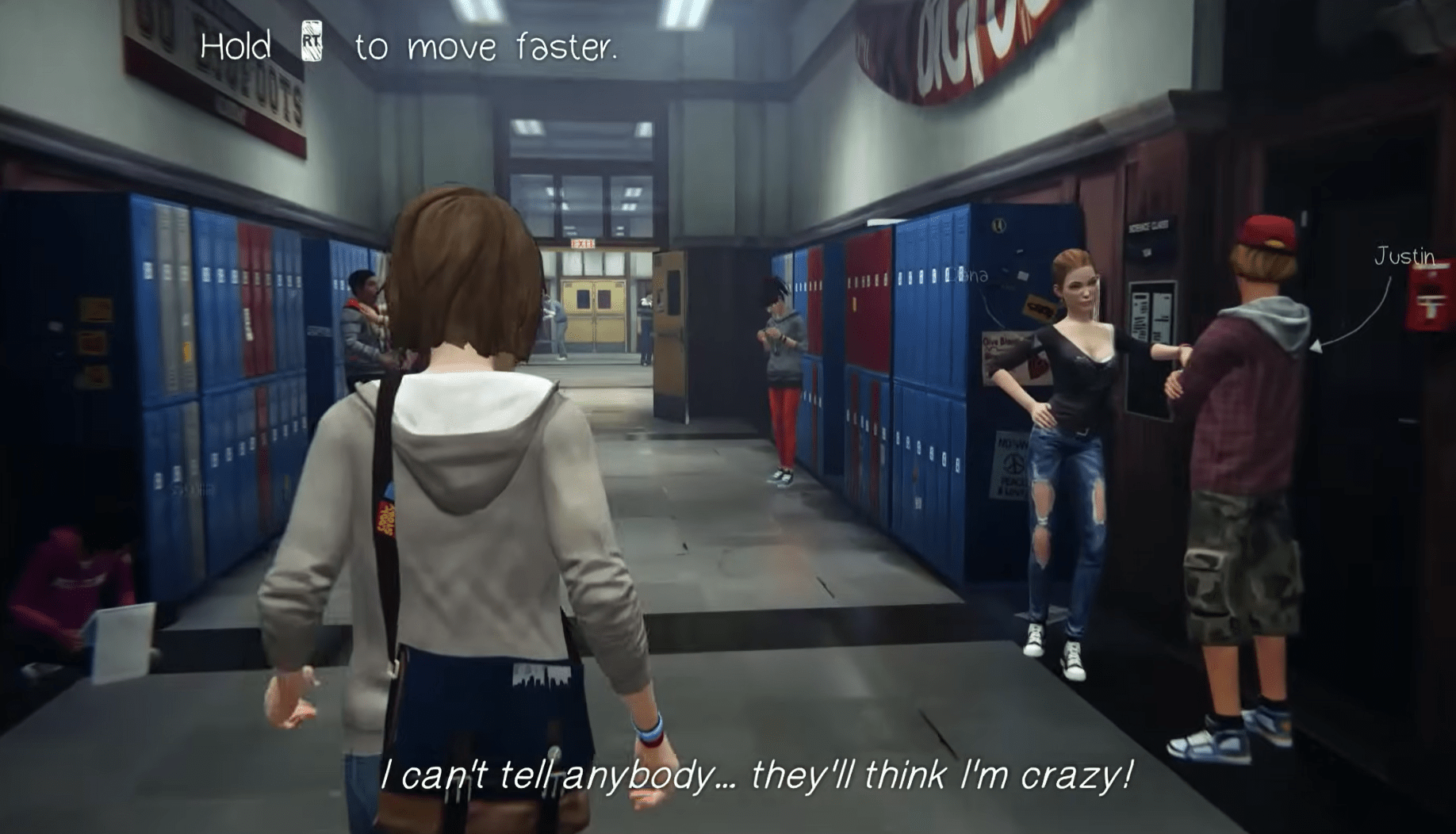
This puts the player in Max’s narrative journey, constraining the player to a space that they are used to and know the boundaries of without explicitly having to state those boundaries. For example, even though this was my first time playing the game I knew exactly what spaces I could and could not enter because I have been through a similar high school experience. If I tried going somewhere I, as a high schooler, wouldn’t be able to go, it’d be the same in the game. The familiarity the game is able to instill within its audience through the design of the high school creates a mood for the player, one where you feel trapped in the constraints of an 18 year old, one where an ability such as being able to rewind time and ignore consequences becomes much more of a freeing skill.
Overall, the player is able to feel the limitations Max feels in a short time due to the mechanics and architecture presented in the beginning of the game. Because of this, the rewind mechanic and the other mechanics around it create exploration for the player, facilitating a sense of mystery and moral uncertainty that the player will continue to unravel throughout the game.
Ethically, there were many visual barriers that existed in the game that I feel like there weren’t accessible options for. Conversing with a friend who identifies as visually disabled, I asked them if they were able to view some of the UI elements in the game’s artstyle, to which they said no. These included the hand-drawn text, and interactable objects. There was no option in the settings to highlight these objects or change the text to one that is more widely accepted to be accessible. I think if this game wanted to be remade into one that was more accessible to visually impaired players, these features could be added.