

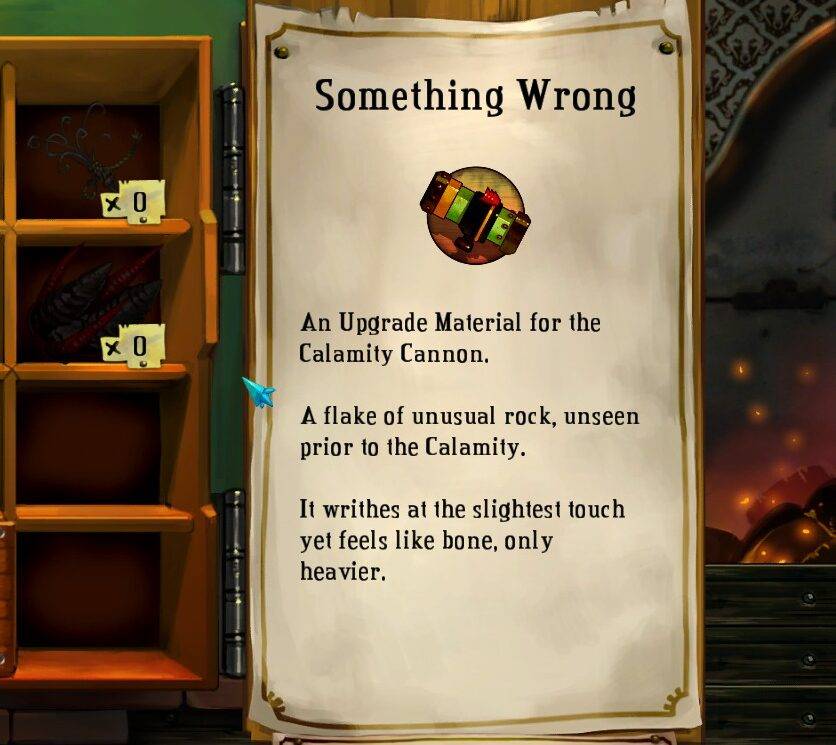
When my dad tells stories about his childhood, I imagine his words through my vision. The wondrous experiences that existed then but not now give me a sense of longing; a nostalgic feeling for something I’ve never encountered—things that may just be modified, blurred, or downright lies. I never really question whether they’re real, and even if I wanted to, I couldn’t truly determine if his stories are fully truthful. In Bastion, a similar sense of anemoia presents itself, as narrator Rucks tells the wonderful history of Caelondia before The Calamity. Unlike my father, Bastion supplies the player two differing stories: one heard, and one seen/enacted. In doing so, the player is presented with the troublesome realization that the narration told is of a warped perspective. By being forced to enact colonialist crimes and witness their horrors being narratively justified, players can realize that what they were longing for was a lie. This longing acts as the primary mechanism by which Bastion implicates players in cycles of colonial violence—justifying genocide for a paradise that the player never experienced, and which possibly never truly existed. Only by rejecting the narrator’s promise of restoration can the player finally reckon with what was lost and come to terms with the blood on their hands.
Bastion initially leans into mystery, as the player is thrown into a new world and learns about its past. While players explore, traces of disaster and early poking at The Calamity lends an enticingly sorrowful overtone to the artifacts one finds. As the player encounters mementos and statues of what life once was, they begin longing for a world that no longer exists. More pressingly, as the world did not exist to the player prior, all information by the narrator is perceived as truth.
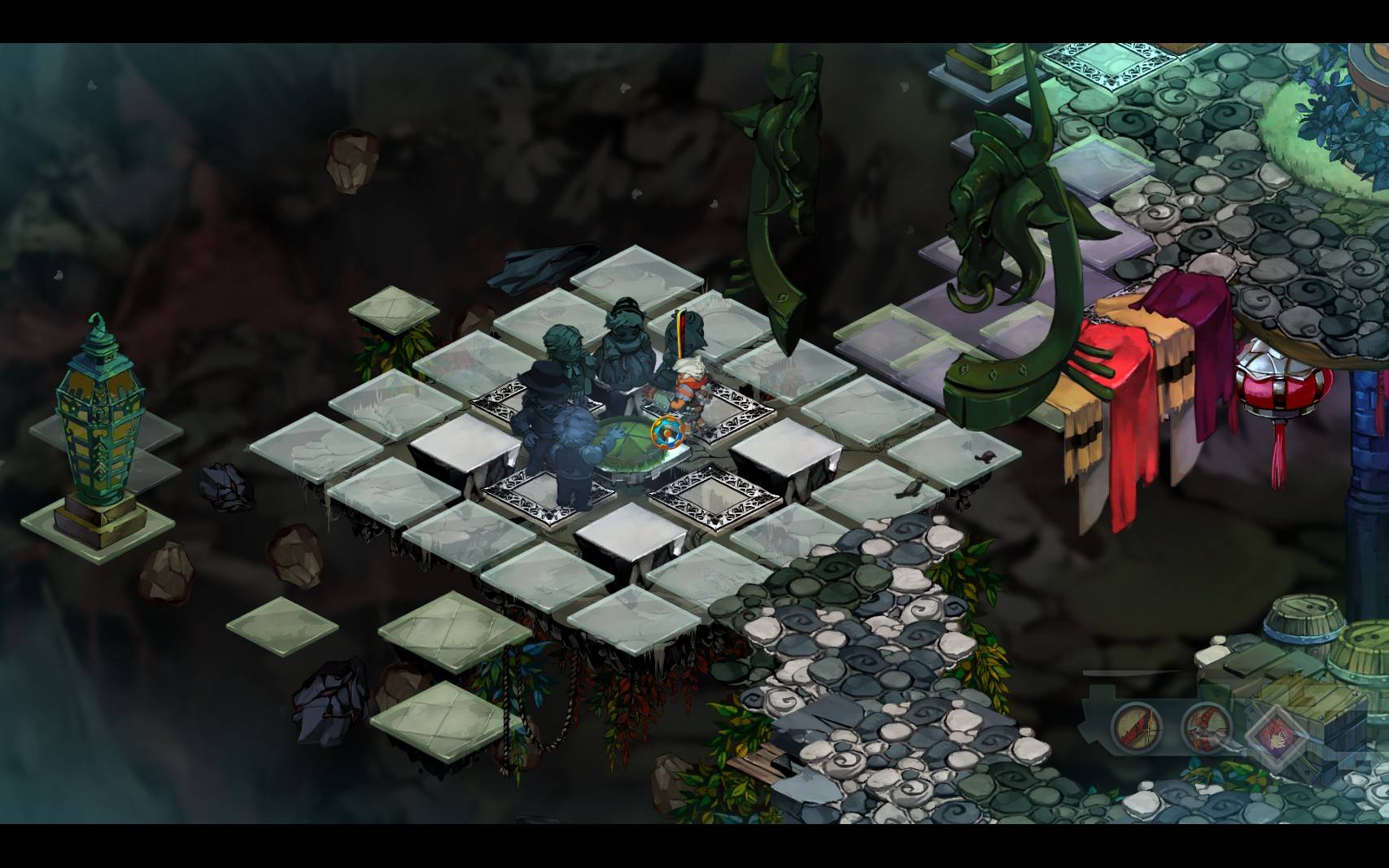
After the player explores deeper, and the narrator is given both a body and name, the cracks in his story start to manifest. As the player starts killing floating ghost spirits, then animals, plants, and finally people, Rucks justifies their slaughter. As Mitchell states, “Rucks desperately wants to undo his contribution to The Calamity, and in that desire to undo it, he claims he feels no concern from the beasts and the people who need to die because they are in the way.” Bastion manipulates players’ senses of nostalgia, trust, and tactile pleasure (while slaughtering enemies) to seemingly minimize the harms of their slaughter. While a baseline level of slaughter is strictly necessary to advance, Bastion‘s permission of the player to exercise significantly higher power relative to their enemies makes mass slaughter the easiest choice. This, as well as the stealing of cores and shards the beasts attempt to use for their own protection, mirrors colonialist justifications for genocide and resource-gathering, respectively.
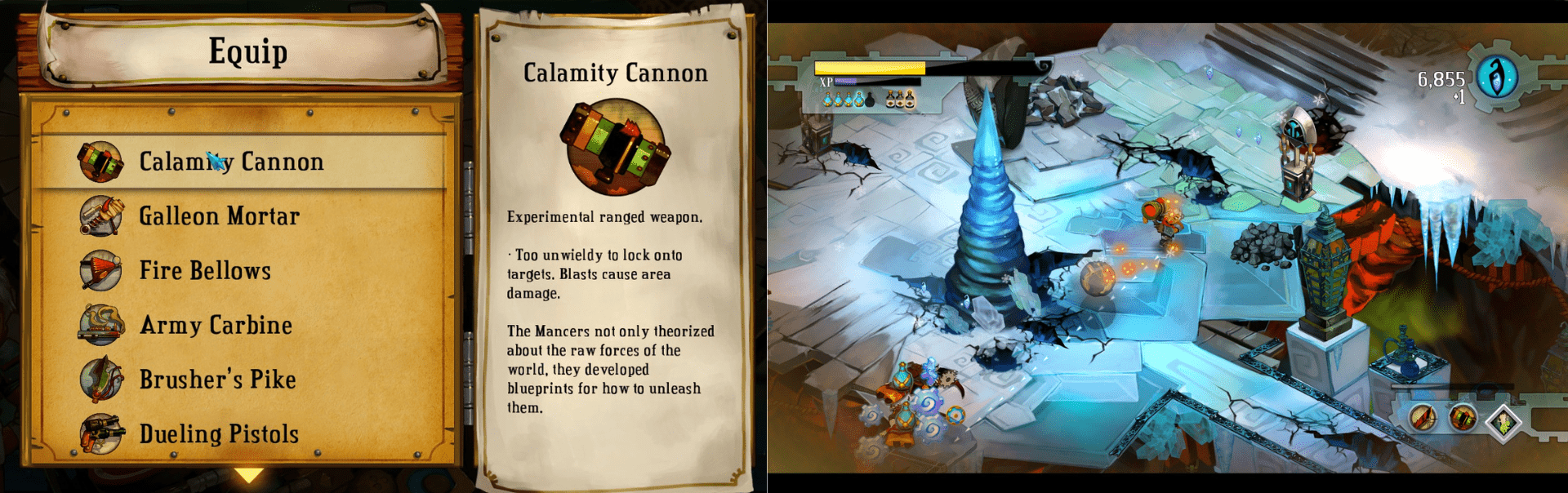
Regarding this feeling of control and power, Mitchell believes that “designers can deliberately break with this tendency to make players feel disempowered.” Ironically, Bastion‘s lack of meaningful choices turns the feeling of power over enemies into an implicit lack of control: despite having power to defeat enemies, players lack the ability to avoid deploying said power for slaughter. Similar to what I discussed concerning Slay the Princess, Bastion removes player agency so that the player must witness the horrors of colonialism and its perspective firsthand, to ultimately have to actively seek out change. Even if a player realizes that what they’re doing is wrong, they must act with horror and continue with their colonialist approach for the majority of the game.
This colonialist approach aligns with Bastion‘s restoration ending. As Clarkson points out—at first, “the nostalgia for the city’s way of life… pushes [restoration] as the desired ending…” However, it’s revealed that restoration simply resets time for The Calamity to occur again. While Clarkson attributes this a design failure due to divergence from the narrative being told throughout the story, Mitchell likewise considers the restoration ending a failure, but does so through highlighting the “devaluation of this present,” Mitchel reads Rucks as a nihilist unwilling to assign worth to what is rather than what was or what ought to be. I disagree with both Clarkson and Mitchell; Clarkson overlooks the power of a coerced enactment within a complaint about the lacking impact of player choice, and Mitchell’s nihilist reading is used to justify relinquishment of attempts to reset as “acceptance” of fate.
On the contrary, the restoration’s true indictment is most present within the forced act of resetting: in attempting to remove history of their sins, the cycle simply restarts, and the sins necessarily must be committed again. The player’s impulse to reset mirrors the colonial desire to erase rather than confront historical atrocity, perpetuating the violence they sought to undo. Restoration’s futility exposes how only by acknowledging those sins, evacuating, and refusing the nostalgic longing for a lie, can the cycle finally break and a better start begin.
