What Remains of Edith Finch (WREF) was developed by independent studio Giant Sparrow and was directed by creative director Ian Dallas. The game was developed by Annapurna Interactive in 2017. WREF is targeted primarily at adults and young teenagers (13+) who appreciate narrative-driven, slow paced exploration games. WREF prioritizes atmospheric, emotional storytelling over traditional action mechanics, and the gameplay is extremely simple. I would argue that this simplicity is WREF’s greatest strength, as even in the maze-like Finch house that serves as the setting, the player never feels lost, and is constantly driven forward by the stellar story, which won best narrative at the the Game Awards in 2017.
WREF employs an embedded narrative as the driving force of the game, where the player moves through the decrepit Finch manor, uncovering clues as to what happened to each family member. The design of the game uses simple, clever moves to create a sense of mystery. For example, each bedroom has the dates of life (Lewis Finch, 1988-2010). Every single character has a death date in the past. As I realized this in my playthrough, the first question that popped up was “is everyone dead?”. As I progressed through the rooms, the question evolved to “how did everyone die?”. These two questions are never forced on the player, but are rather elicited using the environment.
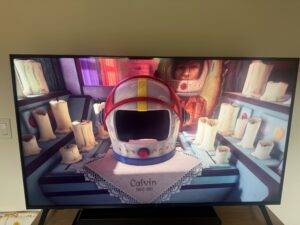

Calvin and Barbara’s rooms with birth and death dates
The game’s simplicity is most apparent in its mechanics, as the only controls are movement and one “interact” button. By stripping away all other mechanics like jumping, crouching, running, etc, the game allows the player to focus on the story without ever being confused about what to do. For example, the same interact button is used to unlock doors, dive bomb as an owl in a dream sequence, and turn the pages of a journal. The PC’s movement was dictated by the story, meaning that she would crouch or run where appropriate, and all the player had to do was move. This allowed game designers to control the story pacing at all times without having players rush through a section that needed more time, or get stuck in an area that was meant to be blitzed through. This pacing control through environmental storytelling reminded me of Firewatch, where violence against campers is implied and Henry moves through the forest uncovering clues. By gating the paths available, Firewatch designers could create an environmental puzzle that players could work their way through while letting the story unfold.
Interaction with the world in WREF is further simplified by the use of a glowing white dot which transforms into a helpful icon when approached. For example, the dot may become a hand if you need to open a door, or a book if you need to turn a page. This scaffolds the player so that there is always forward momentum. This momentum is further supported by the way the designers manage spatial literacy. Apart from the white dot, the house corridors represent the paths the player can take, and the woods outside are the edges of the experience. The most unique guiding dynamic though, was the floating text. As the player moves through the world, some of the PC’s narration appears as text hanging in the air. Moving through that text orients the player on a direction to move in, with the text being affected by the player moving through it as a confirmation of the correct direction. For example, text might warp around the player as they move, or might get scattered in the ground. Again, this assists in pacing the game appropriately, as a player who feels lost can seek the text for guidance.

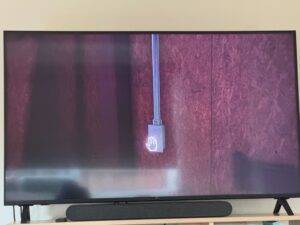
White dot guide that transforms into an interact prompt
Pace control is especially important in a narrative driven game like this, and the level design supports this brilliantly. In WREF, each family member room can be considered its own level, with distinct aesthetics and experiences unique to that space. Calvin and Sam’s room is space and military themed, while Barbara’s room is Hollywood themed, for example. Even the gameplay in each level is completely different. In exploring Molly’s room, we go into a dream sequence where she transforms into a cat, owl, shark and monster, all trying desperately to eat everything. In Calvin’s room, we play a simple swing simulator where he goes higher and higher until he flies off to his death. With all these branching narratives, the pause screen also plays a critical role in keeping the story straight, as it is a visual family tree that updates based on the stories uncovered so far.

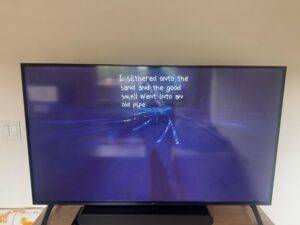
Floating text that guides the player through the game
Overall, WREF’s designers made clever decisions to keep the game as simple as possible while investing heavily in the narrative, mystery and environment and this restraint was a key factor behind the games playability and success.

Family tree image that updates as you progress
On the topic of violence, I found the biggest difference between this and other games was the level of abstraction of the violence enacted. In WREF, violence is implied throughout the game as part of the story: tens of family members died, many of them violently, and yet the PC does not directly enact any of this violence. Where other games rely on violence as the means for overcoming obstacles, WREF takes a different approach by having the PC uncover the mysteries around violence that happened in the past. The game does have you play through violent memories or dreams, such as Molly’s dream where she is a sea monster eating ship crew alive. Even here, the player experience consists of slowly stalking along the ground as a tentacle, before whipping up to grab sailors and kill them offscreen. The player is never shown the violence directly, which makes the game more accessible to a younger (teen) audience than would have been otherwise possible. Violence is a part of the story, but is not centered. Themes of grief, regret and depression are centered instead, and these could be harmed by graphic violence being directly shown.