Artist’s statement:
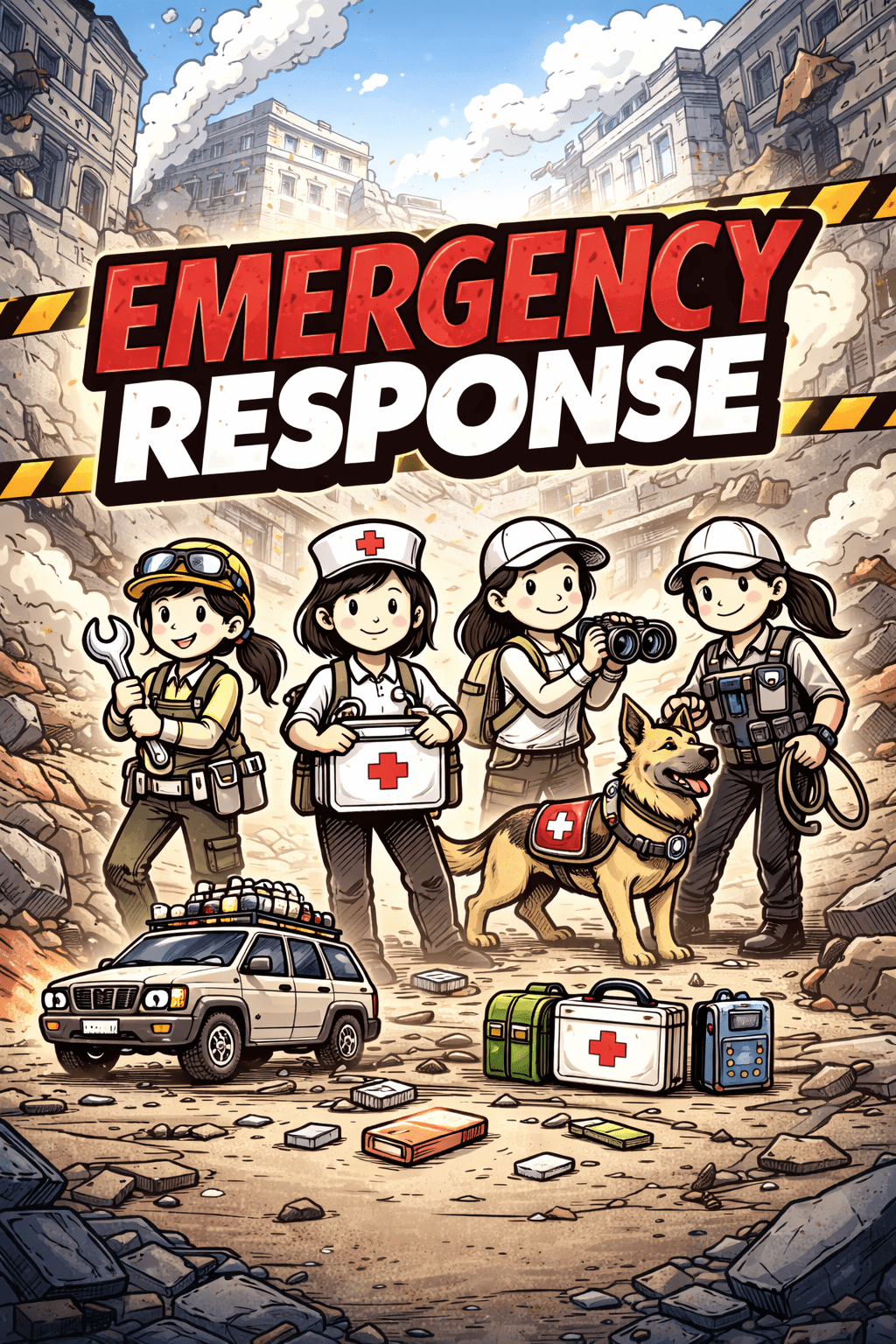
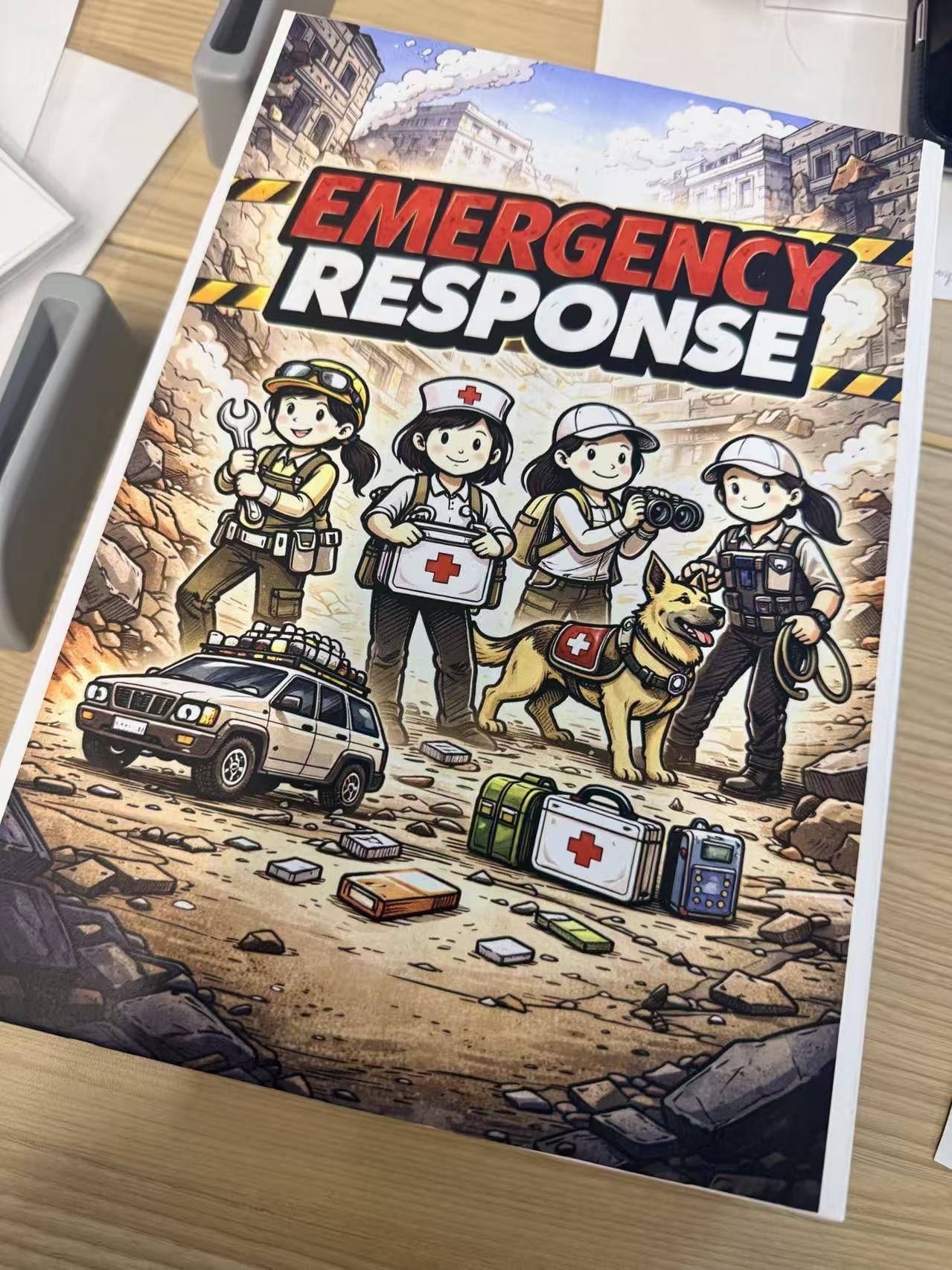
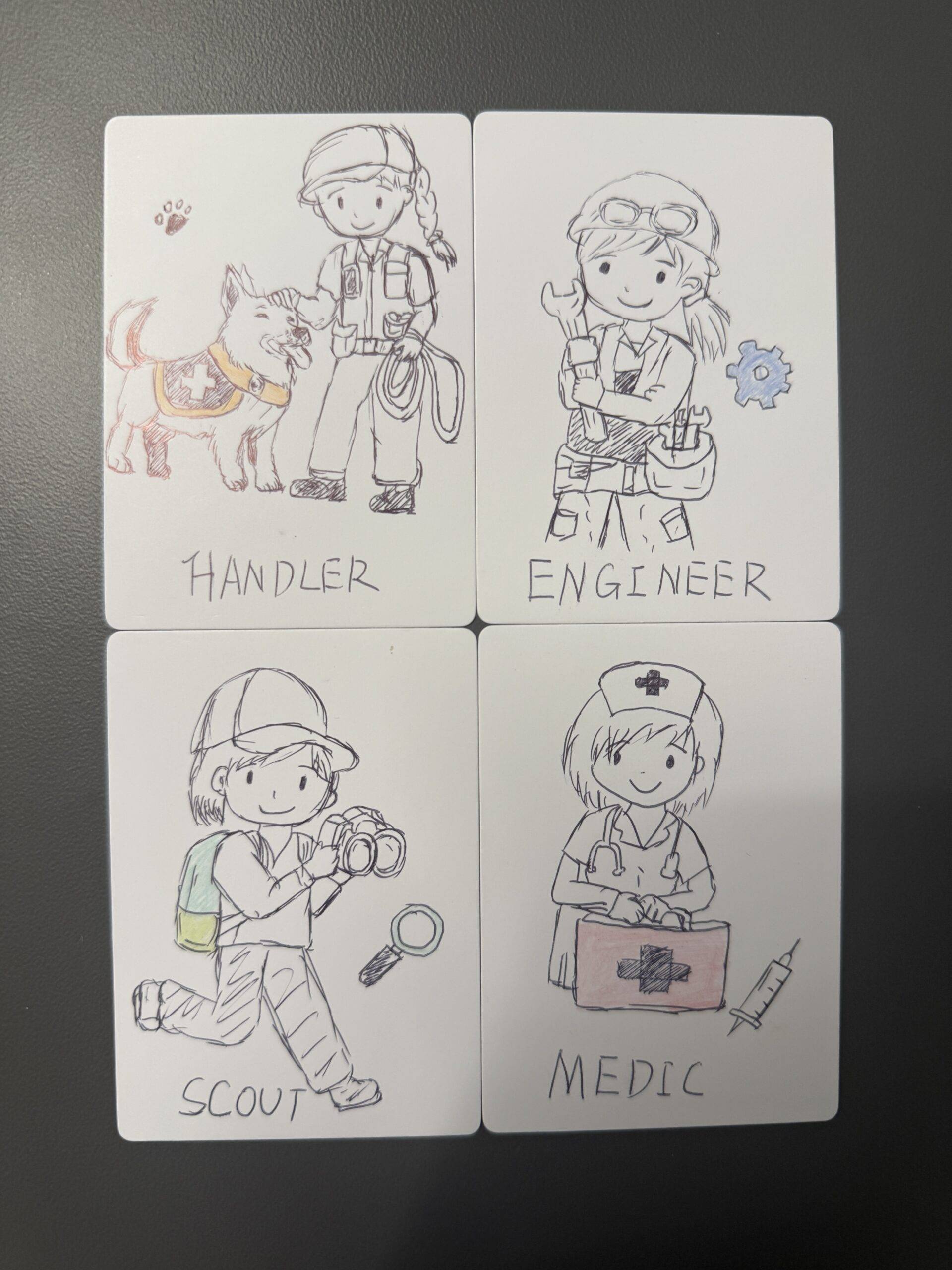
Emergency Response is a multiplayer cooperative social game designed around teamwork, communication, and shared responsibility. The core idea of the game is to make players work together as a rescue team, with each player takes a unique role such as Medic, Engineer, Handler, or Scout. Each role contributes a specific ability that the group must rely on to succeed. They save survivors and pets while removing hazards from a shared space. However, what makes the experience different from other social simulation games is that people have to rely on each other.
We targeted a system where success is based on cooperation rather than competition. Instead of players trying to defeat one another, winning depends on how well players communicate and respond to changing situations. The intention was to avoid competition and focus on shared responsibility. Random events such as stepping on a danger tile introduce chaos and unpredictability, forcing players to communicate quickly, adapt their strategies, and make group decisions under pressure. This creates moments of tension, discussion, and sometimes playful disagreement, which we believe are central to social fun.
At the same time, we aimed for the mechanics to be intuitive and accessible. We reduced complexity and kept the number of physical game materials to five, which are action cards, role cards, play cards, tokens, and wooden chips. Through the game, players will be asked to find collaborative solutions that can benefit everyone. We believe even strangers can get closer together while they work together against a common enemy, the game system itself!
Concept Map and Ideation Exploration:
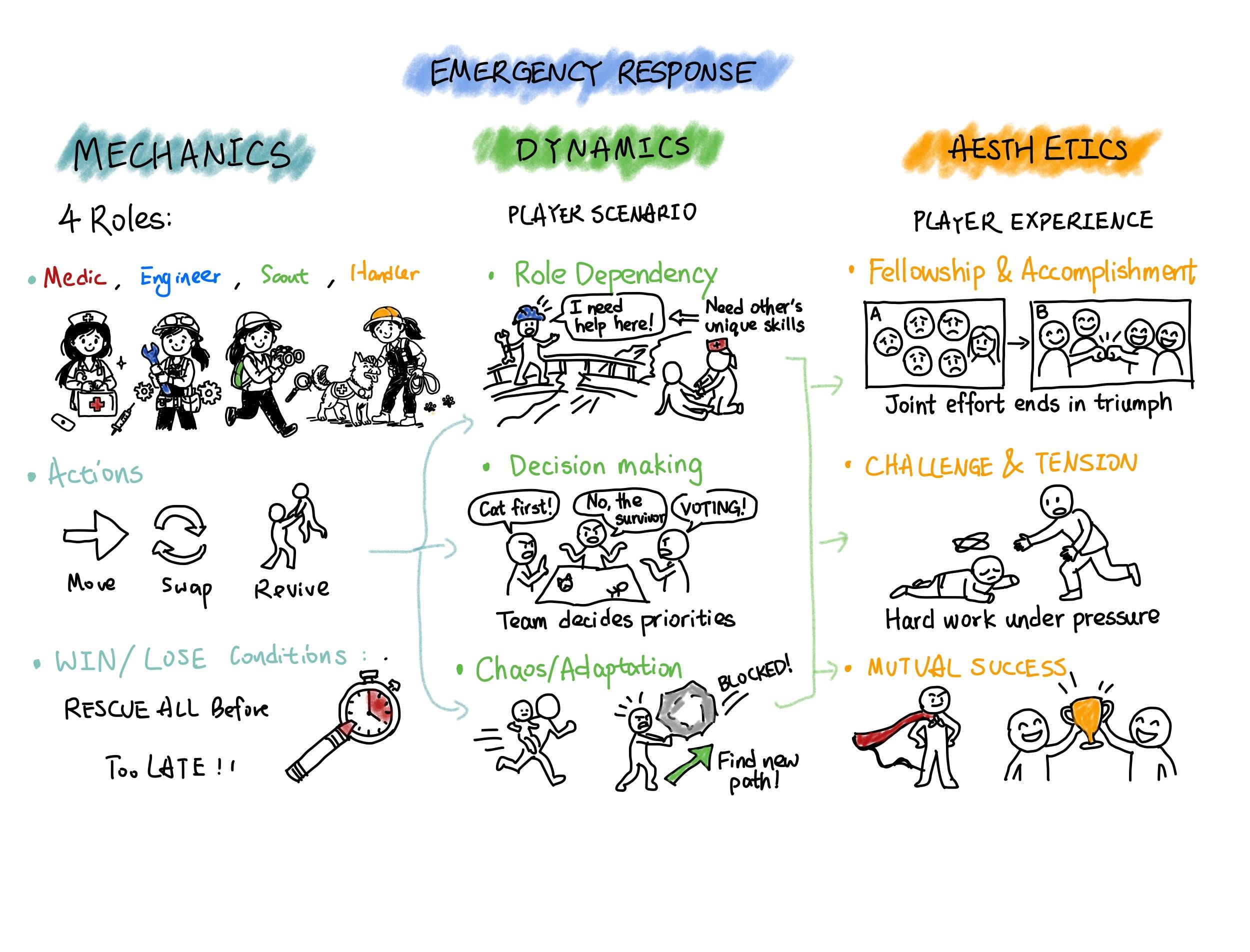
Our game is a non-competitive, non-zero-sum cooperative game where four players work together against the game system. The main value we wanted to emphasize is communication under pressure. Players must constantly discuss priorities, divide responsibilities, and react to random events. Because each role has unique abilities, success depends on players trusting one another and combining their strengths. The game is intentionally designed as a players-vs-system experience, where tension comes from uncertainty and teamwork rather than direct player conflict.
Our target audience is small groups of people in social settings, especially players who enjoy teamwork-based games and collaborative problem solving. The game is designed to be accessible to both experienced and casual players, with simple rules that allow people to quickly start playing while still creating meaningful social interaction. We especially wanted the game to help players build connection and trust through shared challenges, making it a good fit for icebreaker settings, game nights, and classroom playtests.

Our mechanics in the game are intentionally structured around role-based cooperation, time pressure, and random events. Each of the four players takes on a unique role with distinct abilities and responsibilities. The Engineer clears hazards, the Medic saves survivors, the Scout explores and swaps positions with others, and the Handler helps rescue pets. The random placement of the cards introduces unpredictable obstacles or new rescue calls, forcing players to constantly adapt their strategies.
These mechanics create strong dynamics centered on communication, teamwork, and decision-making under pressure. Because no single player can complete all tasks alone, players must discuss priorities, divide responsibilities, and trust each other’s expertise. The random event system creates uncertainty and tension, leading to rapid coordination and real-time problem-solving. During playtests and CA observations, players naturally engaged in frequent verbal communication, such as assigning tasks, discussing strategies, and negotiating which rescue objectives should be prioritized first.
The resulting aesthetics focus primarily on tension, strategy, and fellowship. The unpredictability generate suspense and urgency, while the cooperative role system creates strategic planning and problem-solving. Most importantly, the game emphasizes the feeling of fellowship and shared achievement, as success depends on collective effort rather than individual competition.
Playtest & iteration:
Our first playtest revealed that the game was mechanically more confusing than we expected. Originally, we designed 7 different action card types, but each card only displayed the action name without explanation or visual support. Players frequently forgot what each card did and had to repeatedly ask for clarification, which interrupted the flow of gameplay.
Another issue was that players could choose whether or not to flip the tile they stepped on. While this was intended to add strategic choice, in practice, it made the rules harder to explain and slowed down decision-making. We found that players have no intention to flip the card if they are not engineers.
Our major changes after iteration are to reduce the action cards from 7 types to 4, add short function descriptions and visual drawings on each card, and change tile flipping into an automatic action to simplify rules and speed up the game. These changes were aimed at making the game more intuitive and faster-paced.
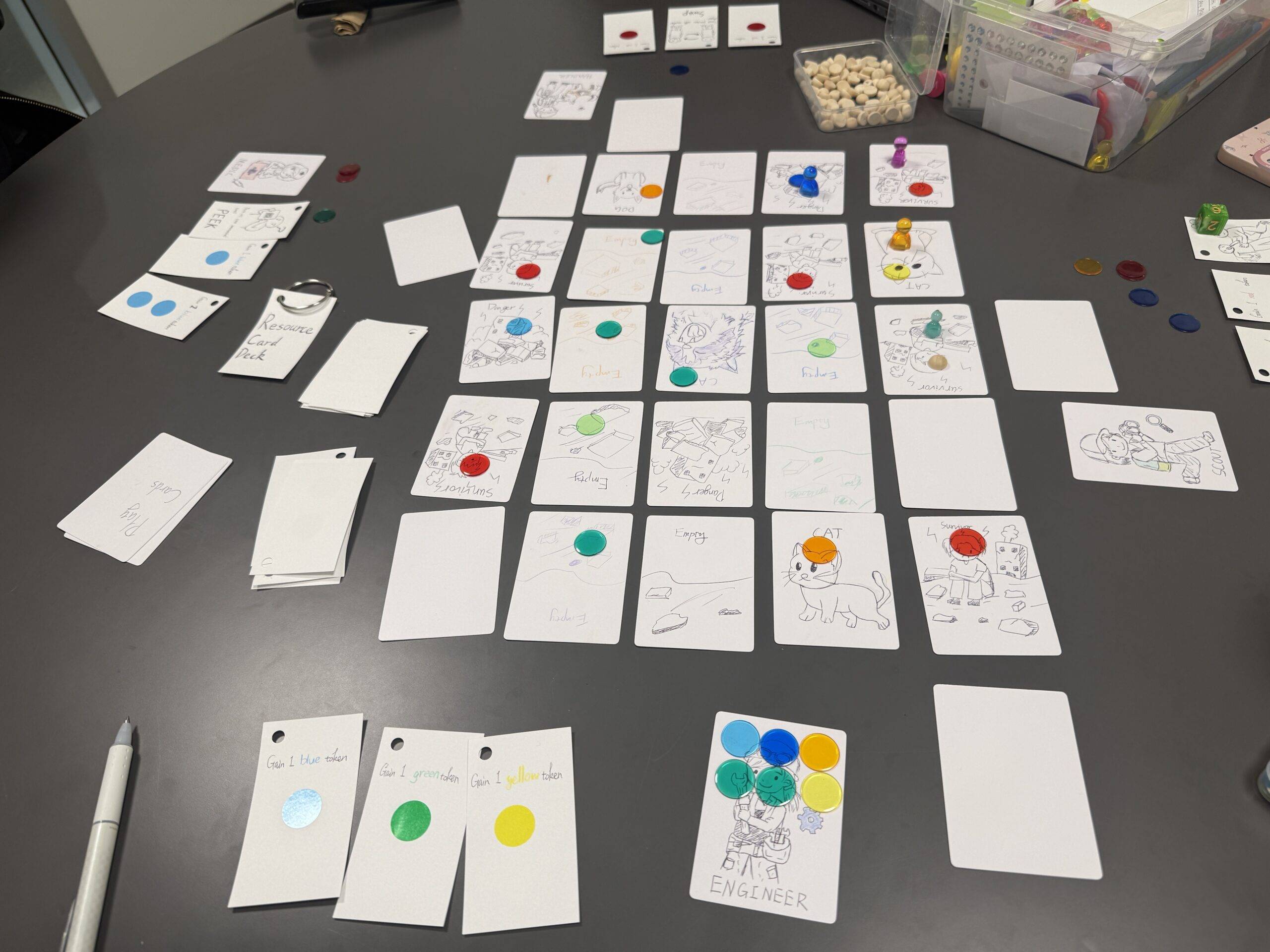
The second playtest showed significant improvement in gameplay flow. Players reported that they enjoyed the cooperative experience, especially the moments where they had an unexpected moment where multiple danger cards were revealed at consecutive rounds. The main feedback we received was about the rulebook presentation. Although the rules themselves were simple, the written instructions felt visually overwhelming because the page layout made it seem longer and more complex than it actually was. Also, we noticed that there’s someone who can barely distinguish the colors yellow and green.
The major changes after iteration are to reduce pages so rules feel less intimidating. This iteration focused on improving accessibility and onboarding rather than changing the core mechanics, and we not only color-coded the rules, but we also used different shapes for different rules.
Link to final prototype & print n play:
Emergency response print n play
Video of what’s in the box (for extra credit section, we submitted the physical game)
Link to final playtest video:
Final Playtest Video for Emergency Response – P1 Lemur
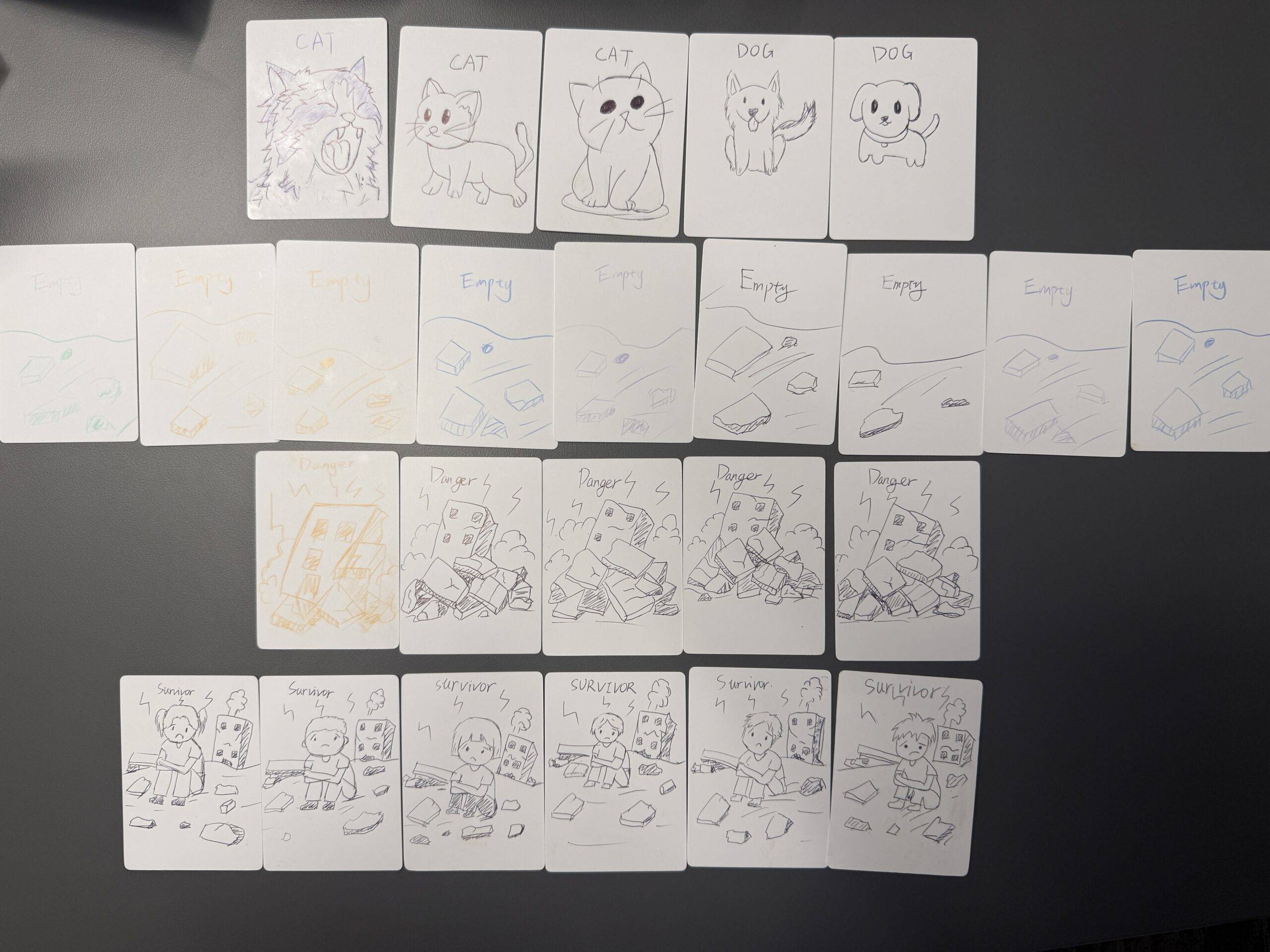
Side note for TA: When we hand over the game box, we forgot to change the name of the “Resource cards deck” to “Action cards deck”, so don’t get confused, It is the Action cards!