[Spoilers Warning! Key details about A Short Hike’s plot are shared below]
I played A Short Hike by Adam Robinson-Yu on MacOS. The game is a casual single-player game designed for players of all ages. In A Short Hike, you play as a character going on a hike up a mountain, overcoming physical barriers while meeting fellow hikers on the way. A Short Hike’s core mechanic of walking combined with varied character interactions encourages the player to explore their environment and the people within it in depth. Additionally, by through its largely optional embedded narrative, the game teaches us that while our struggles may not be obvious, we are not alone in them.
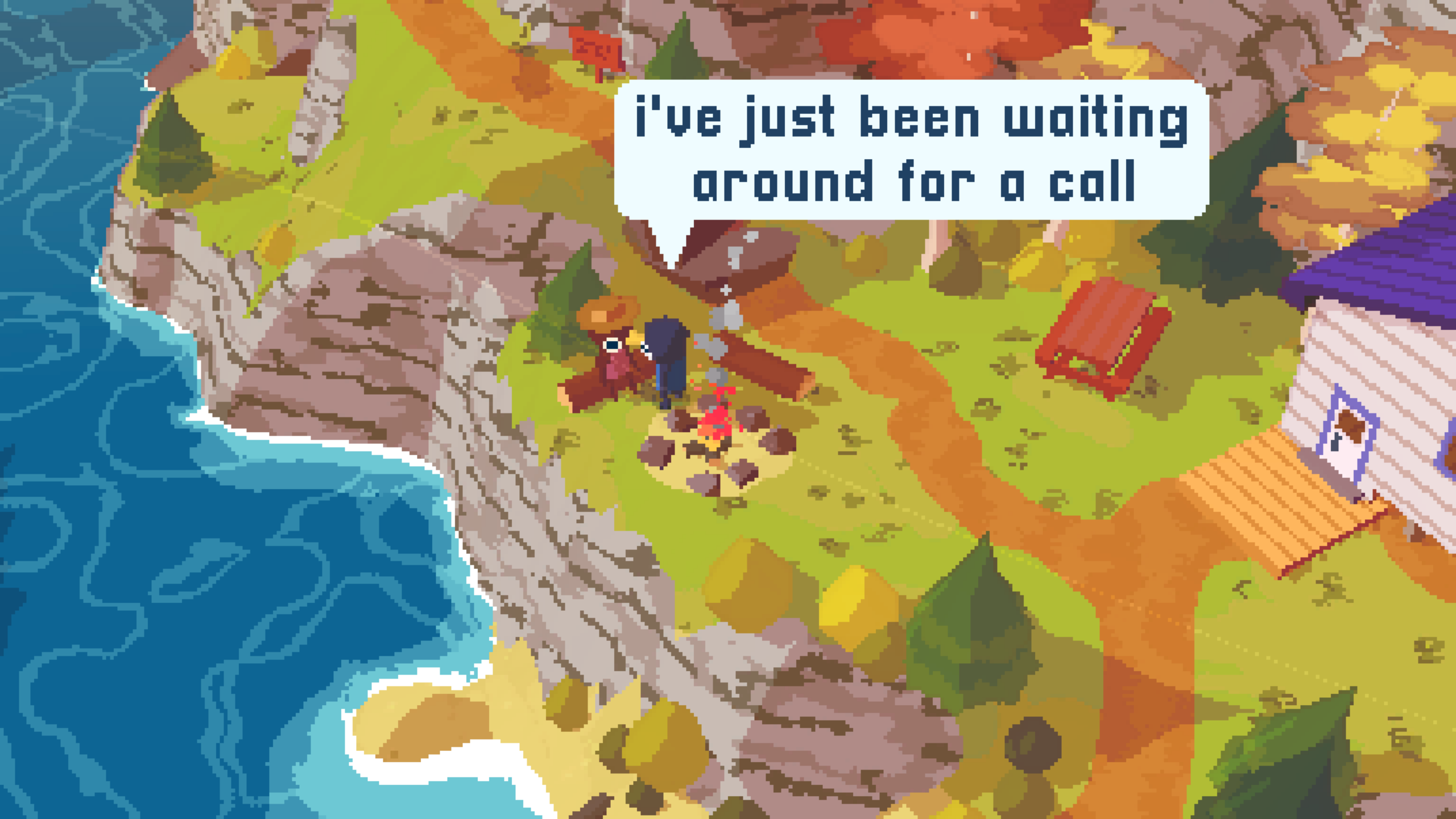
We begin the game by learning that the character, Claire, is awaiting an important phone call, but there’s no signal except at the very top of Hawk Peak: setting up both the main objective of the game and the beginning of the narrative: you’re left wondering what the phone call Claire is waiting for is about. In order to progress both in the game and in the story, your only option is to walk.
Along the way, you encounter characters which provide you helpful tips to help reach the top: you must collect Golden Feathers which cost coins in order to climb the mountain, you can buy Golden Feathers by collecting coins or through exploration. This mechanic of using Golden Feathers to climb creates the dynamic where players are encouraged to explore to find the necessary coins, which helps aid fun through discovery. Additionally, as you explore, you have the option to meet more characters or discover other parts of the island. In fact, sticking to the directed path will lead you to a dead end.
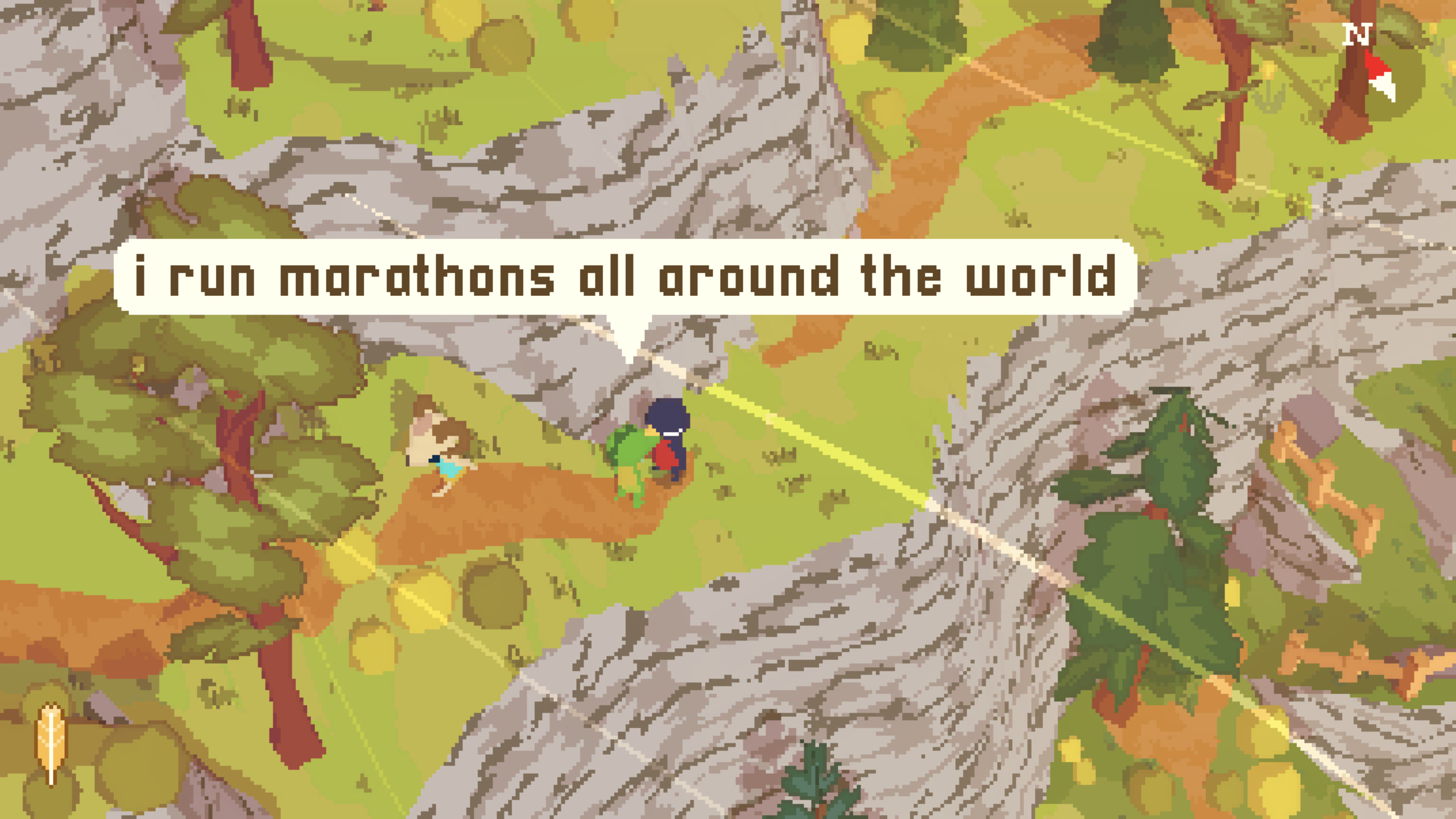
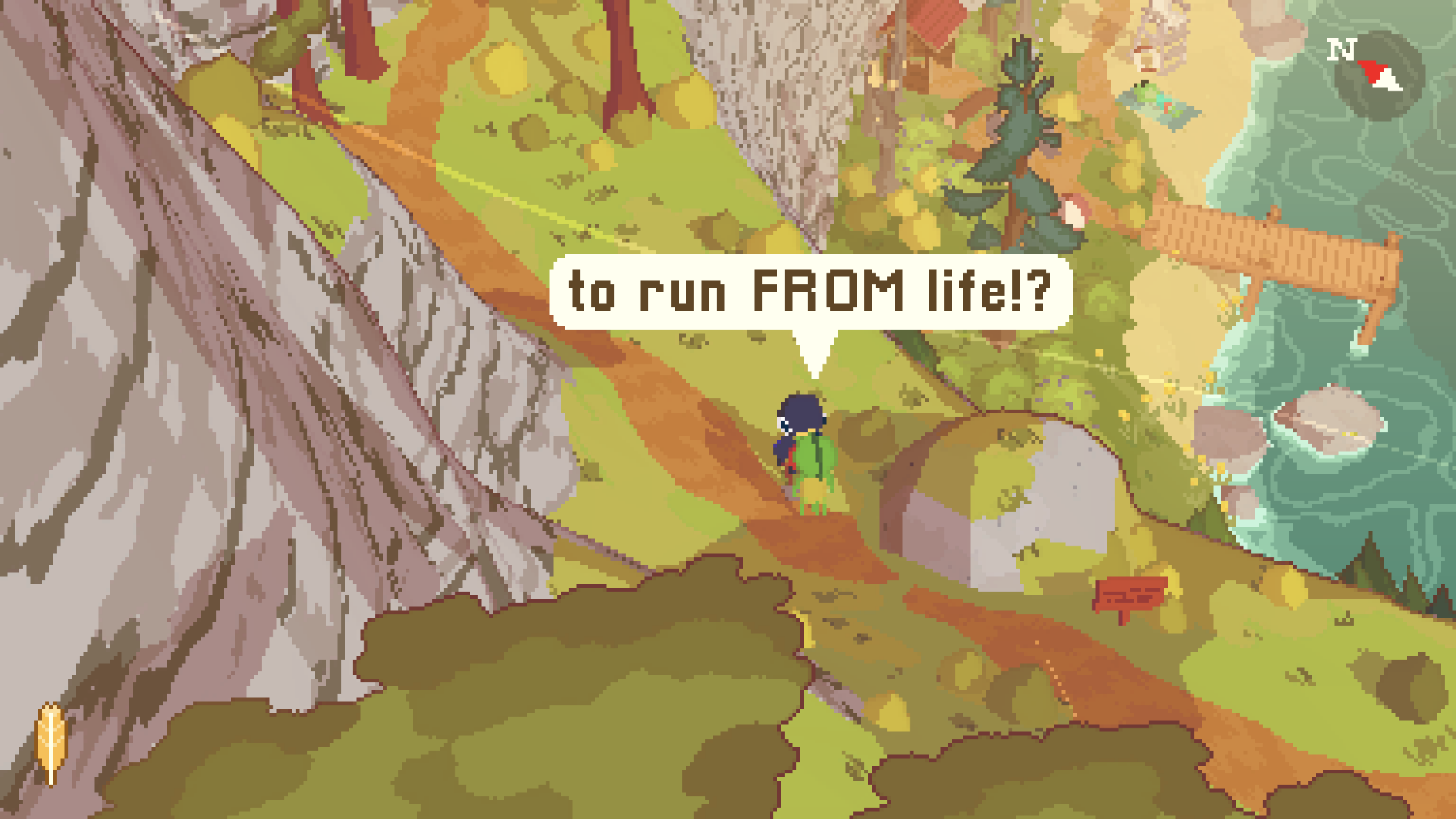
However, the true joy of the game exists outside of the main quest. You could reach the top of Hawk Peak by simply collecting coins through exploration and interacting the bare minimum with other characters. The first time you talk with characters, they will often give you some surface level information or background, which is all you need to reach the top of the mountain. But push deeper, and you get to learn more about each of the character’s motivations. For example, the first time you talk to a marathon runner, they tell you they’re a professional that runs marathons around the world. However, when you catch up again, they share how running potentially serves as a distraction from worrying about greater problems.
To learn more about each of these characters takes deliberate effort. You discover one artist painting the coastline who you must follow to several different locations to learn more about them. In future conversations, while they initially simply seem critical of their work, you learn they have an underlying desire to prove themselves through their art, if you are willing to make the effort to find them. Similarly, if you take the effort to talk to a character that initially seems hostile, you learn that they were simply trying to make more money off their student depth. Unlike other walking simulators, the stories don’t form a single embedded narrative that a player discovers over the course of the game. However, together, these micro-narratives contribute to a solid theme. While on the surface, characters may seem unbothered, through connection, they can both reveal and grow from their problems.
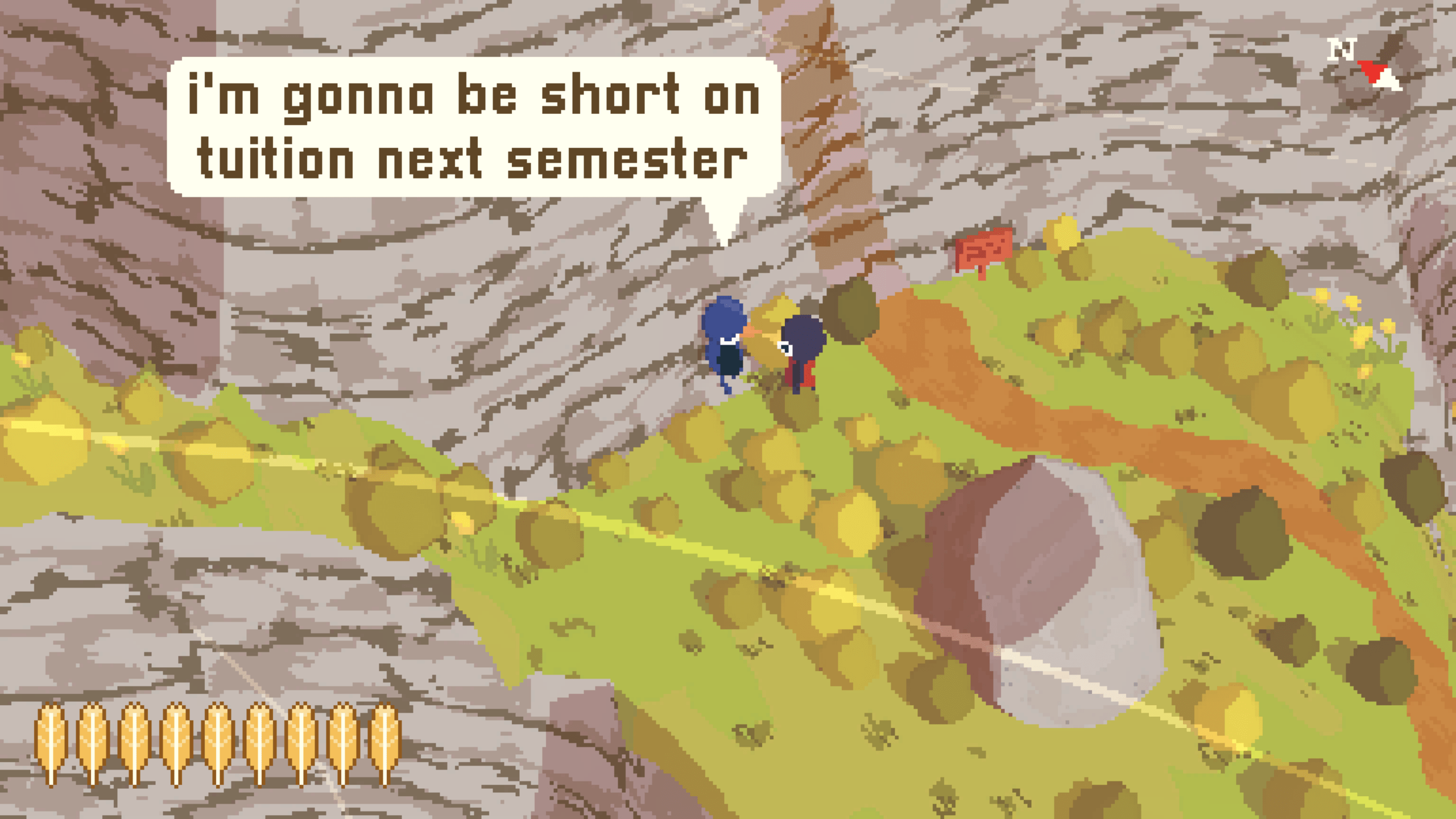
This is solidified by the conclusion of the key objective. When you reach the top of Hawk Peak, you learn that the phone call Claire has been waiting for was from her mom who had just had a uncertain surgery. Despite Claire’s numerous conversations with players throughout the game, you never learn more about this, until she reaches the top. Yet, this parallels your interactions with the other characters: only after pushing deeper can you learn more, something the other NPCs never do. Claire is able to overcome her own “mountain” and they helps other people over come their own.
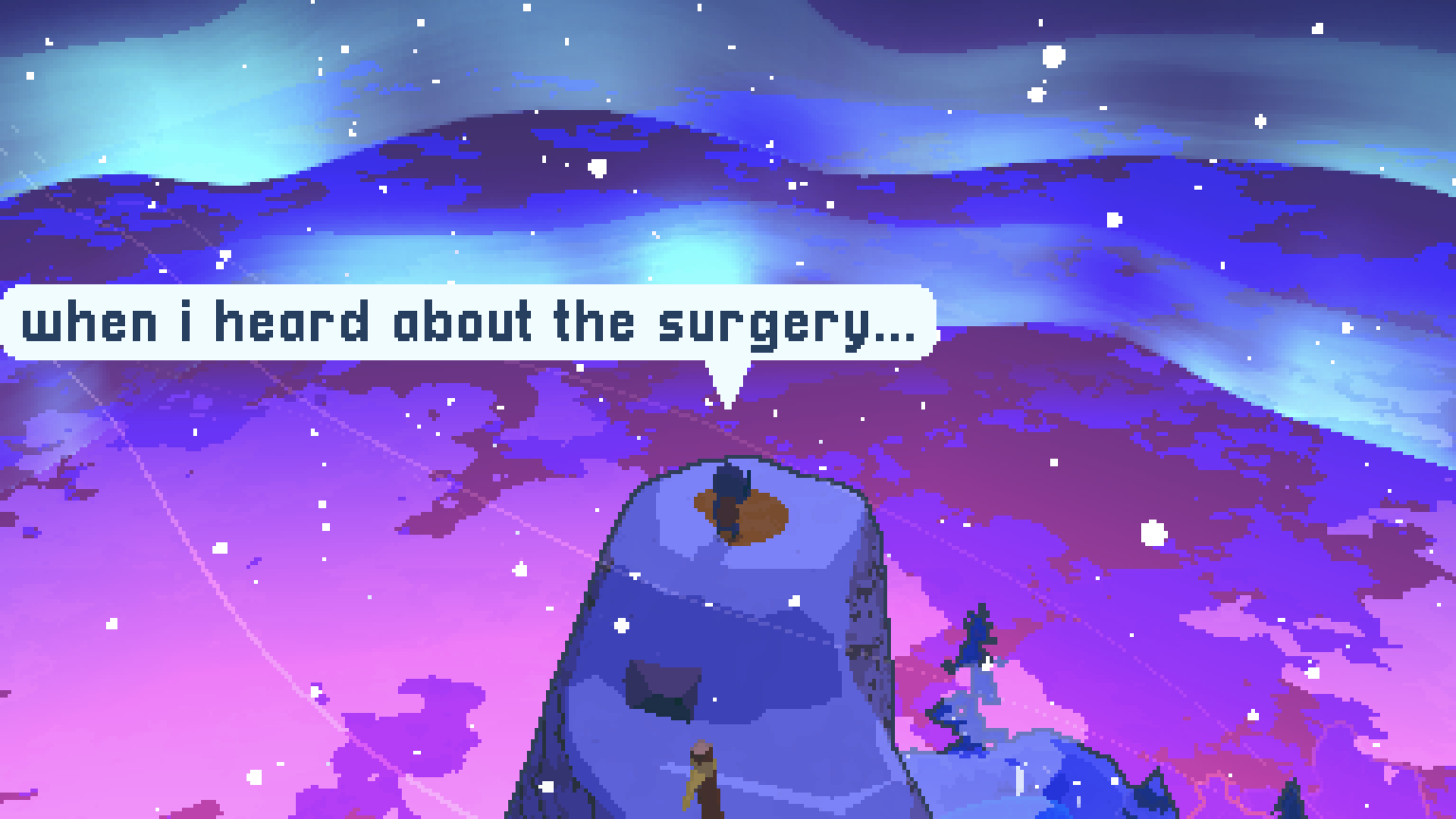
A Short Hike is a beautiful walking simulator that allows the player to learn through discovery, the importance of seeking connection and exploring the world around them. Through climbing a mountain physically, you learn that everyone is climbing their own mountain as well.
A Short Hike is almost opposite to the violent video games we played in class. There is no violence in the game, which strongly contributes to the themes of connection it encourages. The most oppositional you are able to be in the game is to politely decline other people’s requests or choose not to push further. I think by explicitly excluding violence, the game shows that you can reach your own goals while lifting up the people around you, rather than violently taking them down. Additionally, as a player, you cannot die, which matches the theme that tackling your problems is a continuous journey, and even though you make get knocked down, you can always get back up again.