BABBDI, developed by the Lemaitre Bros and free on Steam, is best suited for players who enjoy atmospheric, unsettling games and are comfortable leaving questions unanswered.
Most walking simulators hand you a story and ask you to move through it. BABBDI hands you a life you don’t remember living, populates it with people who know you intimately, and asks you to walk away from it. Walking here doesn’t just tell the story. Walking is the alienation the story is about.
BABBDI is a free, first-person walking simulator on Steam. You begin in a grey, decaying city with one objective: leave. No combat, no puzzles, just movement and conversation. The designers stripped everything down so that walking and dialogue are the only tools through which meaning is made.
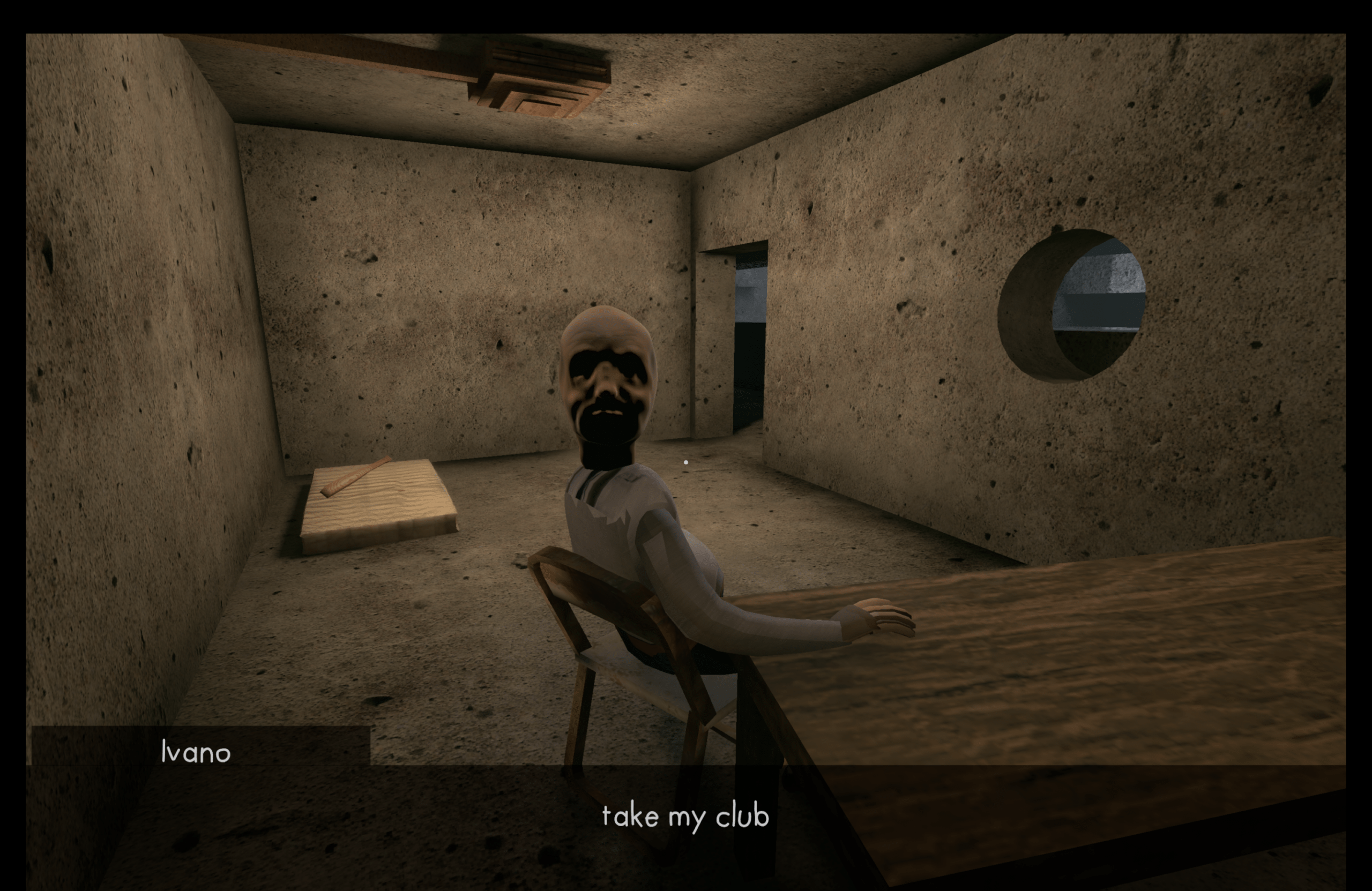
The game’s most disorienting design choice is the NPCs. Characters speak to you with familiarity, as if you are an old friend with a history. A character named Holfred sits in a corner room and says: “I remember when you were just a child.”
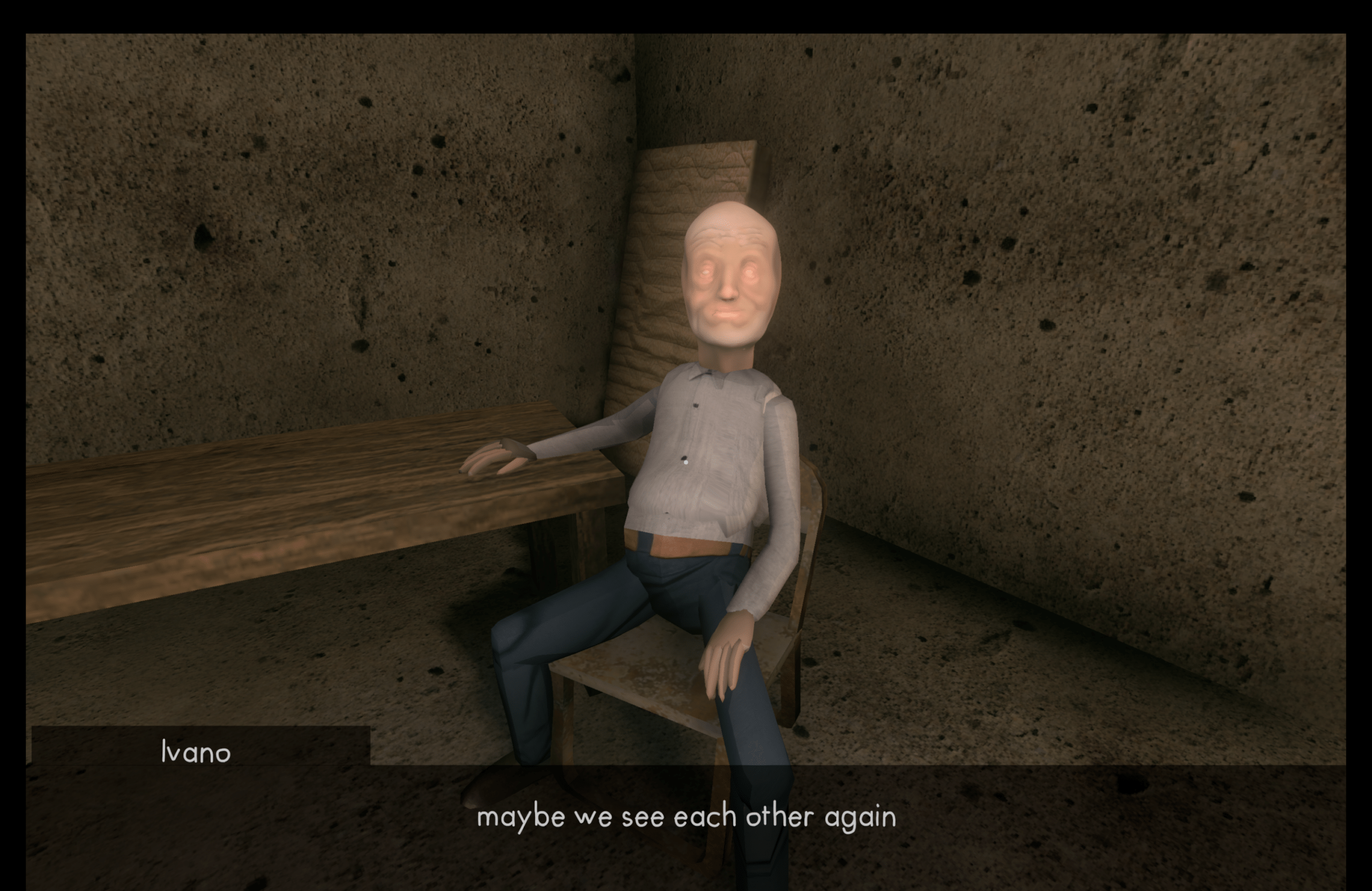
The player has no memory of Holfred. No backstory, no flashback. You are simply standing there being remembered by someone you have never met. The character you embody has a past that belongs to this world, but the you playing has no access to it. Walking toward Holfred was supposed to bring me closer to understanding. Instead, it deepened the gap.
This is the dynamic the game consistently produces. You move toward answers and find that each step widens the distance. Gone Home uses environmental clues to gradually close that gap, rewarding close attention with emotional payoff. BABBDI inverts this. The narrative is not withheld for dramatic effect. It is withheld because your character is already a stranger to their own life. Walking does not build toward revelation. It accumulates disconnection.
The core mechanic is walking, with minimal interaction beyond NPC dialogue. This produces dynamics like wandering through repetitive spaces and getting genuinely lost, not as a puzzle, but as disorientation. Those dynamics generate competing aesthetics: discovery when you stumble into a new room, sensation as you move through dark corridors that seem to go nowhere, and frustration when you circle back somewhere you have already been.
The formal elements reinforce this. BABBDI is single-player with no explicit rules beyond leaving. No map, no waypoints, no scaffolding. That is not a flaw. It makes you feel what the protagonist presumably feels: moving through a world that refuses to explain itself to you.
What distinguishes BABBDI in the genre is what it removes. The Stanley Parable uses a narrator to actively shape interpretation, so you are never alone with your confusion. Gone Home leaves environmental clues that reward attention. BABBDI offers neither. No narrator, no readable environment. Meaning is entirely player-driven.
That is a bold choice with real limits. Most games use light as a signal of importance. A lit room, a glowing object, a lamp in the dark all tell the player: something here matters. BABBDI uses that same visual language and then offers nothing.

I walked into this room expecting the lamp or the objects on the table to mean something. They did not. No dialogue triggered, no item to pick up. This reinforces the point: even the signals you have learned to trust from other games do not work here. There is a difference, though, between disorientation that feels meaningful and disorientation that makes you want to quit. A system where finding hidden objects unlocks shortcuts to new areas would make exploration feel earned rather than random, strengthening discovery while keeping the game’s ambiguity intact.
In violent games, force gives the player a tool of assertion. When something threatens or confuses you, you can push back. BABBDI removes that entirely. The effect is not comfort, it is exposure. Holfred’s familiarity, the decayed environments, the cryptic dialogue: none of it can be fought. You can only stand there and receive it.
The psychological unease hits harder without a release valve. In a violent game, aggression is a kind of answer. In BABBDI there are no answers, only the next strange face remembering something about you that you do not remember yourself. The Lemaitre Bros built a game where helplessness is structural. Removing violence does not make BABBDI gentler. It makes it more unsettling, because it closes off the one instinct that usually lets players feel in control.
BABBDI will not satisfy players who want closure. But that frustration is the point. The game uses walking to make you feel what it is like to move through a world that has already written you a history you cannot access. The mechanic and the message are the same thing. If you are someone who can sit with a question that never gets answered, it is one of the more unsettling games in the genre. You will still be wondering who Holfred is long after you have left.