
Game Name: Coup
Game’s Creator: Rikki Tahta (published by Indie Boards & Cards and La Mame Games)
Platform: Physical tabletop
Target Audience: Individuals aged 13+ who enjoy social deduction, strategy, and bluffing
Coup is a social deduction card game where players receive two cards, each representing a character with unique powers. Players must manipulate, bluff, and bribe their way to maintaining influence. The last individual standing is declared the winner.
First and foremost, I must say that I have mixed feelings about Coup.
In this game, each player plays for themselves. Individuals can either play truthfully and perform actions that align with the cards they hold, or they can bluff by claiming to have a card they do not possess for personal gain or to put others at a disadvantage. These mechanics invite players to employ strategic decision making, convincing communication and mannerisms to protect themselves. This creates the dynamic of hidden information and skillful deduction where players must evaluate risk, trust, and chance of bluffing.
As a newbie to the game, I naturally chose a fairly risk averse approach. One of my cards was “Duke” and I decided to perform only actions associated with that card. Many of my teammates, who were also playing Coup for the first time, took a similar approach. As a result, the game became stagnant where players repeated their action of choice, making the player interaction dynamic limited. This made the game feel quite uninteresting, as it eventually became more about chance than strategy – making the aesthetic experience, what the game felt like emotionally, to be flat and repetitive. We were all simply waiting for someone to accumulate seven coins to launch a coup against another player, which ultimately resulted in a last person standing outcome.
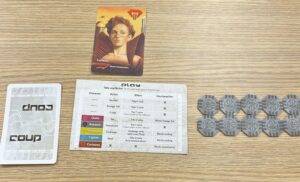
Image 1: I had gained 10 coins, had one of my cards eliminated, and was waiting to ‘coup’ another player
Reflecting on this, I noticed that one of Coup’s potential flaws is its lack of built-in incentives to bluff. The mechanics do not inherently push players to take risks, especially when playing conservatively can keep you in the game longer. This undermines the intended aesthetic of uncertainty and deception. Adding a formal element such as an imposing penalty for multiple repeats of the same action or a reward for successful bluffs could encourage more varied gameplay and push players to engage with the system more dynamically.
During our second round of Coup, I experimented with a more deceptive strategy. I received Duke and Contessa but chose to claim Assassin and Ambassador in order to eliminate players and shuffle through the deck, allowing me to gain power. I focused on communicating and gesturing with confidence, knowing that hesitation or signs of overthinking could signal to others that I was bluffing. This paid off in the short term, while also introducing more thrill and drama to the game, allowing me to successfully assassinate two players without being challenged.
I appreciated how the game mechanics forced me to think quickly about whether and how to bluff, while also staying alert to other players’ actions to pick up on subtle clues. Eventually, while shuffling, I drew the Assassin card for real. At that point, I added another strategic layer by dropping hints that made it seem like I didn’t have the Assassin card. I think it is this ability to build layered, nuanced gameplay that makes Coup truly engaging. The way people communicate, which is what they say and how they say it, can reveal a lot about their intentions, which a mechanism this game facilitates well.
Another unexpected and fascinating moment came when a player invited me to launch a coup with them against another player, with the goal of canceling out both of that player’s cards. This introduced a new level of complexity based on mutual trust and the hope that the person you’re aligning with is, in fact, cooperative.
However, Coup’s formal element of player elimination, where a player is permanently removed from the game after losing both cards, can create a frustrating experience. When another player launches a coup or successfully assassinates you, there is no way to protect yourself or stay in the game, which can lead to a dead end and leave players feeling discouraged. I think the game would benefit from additional mechanics that allow players to work toward re-entering the game or receive help from others to revive themselves. Perhaps, allowing for immunity cards or powers others possess to revive eliminated players or their cards could be an interesting avenue to explore.
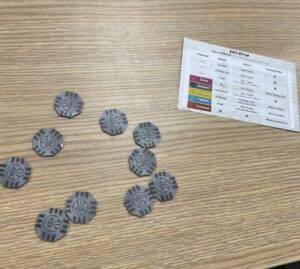
Image 2: The game got more interesting with deception and involved strategy. It also helped accumulate power and coins!
Another interesting area this game could explore is cooperation. Although my group chose to cooperate at certain points, the game itself does not directly support or encourage alliance-building. Introducing light cooperative dynamics or temporary alliances could add strategic depth and allow players to think beyond self preservation.
Ultimately, I find Coup to be a game I would gladly play again, especially when players share a mutual understanding that bluffing is part of the fun. The strategy and deception this game allows are what make it enjoyable. That said, as mentioned earlier, Coup can only be as fun as players allow it to be. I would have liked to see more mechanisms that actively encourage bluffing so that everyone, regardless of their risk tolerance, can fully engage in the experience.
Ethics Question:
One social norm that Coup responds to is comfort with risk-taking. It is well known that some individuals are more comfortable bluffing than others. Players who are more skilled at deception may feel more at home, while those who aren’t may shy away and lose interest. The mechanics of the game do not provide explicit incentives or encouragements to bluff, which could otherwise draw in more cautious players. Another social norm presented in the game is the acquisition of power, whether truthfully or through bluffing. This serves as a commentary on the idea of “fake it till you make it.” Even if some players receive more powerful cards, strategic bluffing can allow others to gain power and eliminate them. However, individuals who struggle with strategic or deceptive thinking may not enjoy the experience. Since the game is often played to help players get to know one another, the inability to revive yourself after being eliminated can leave players at a dead end, discouraging further engagement and interaction.