
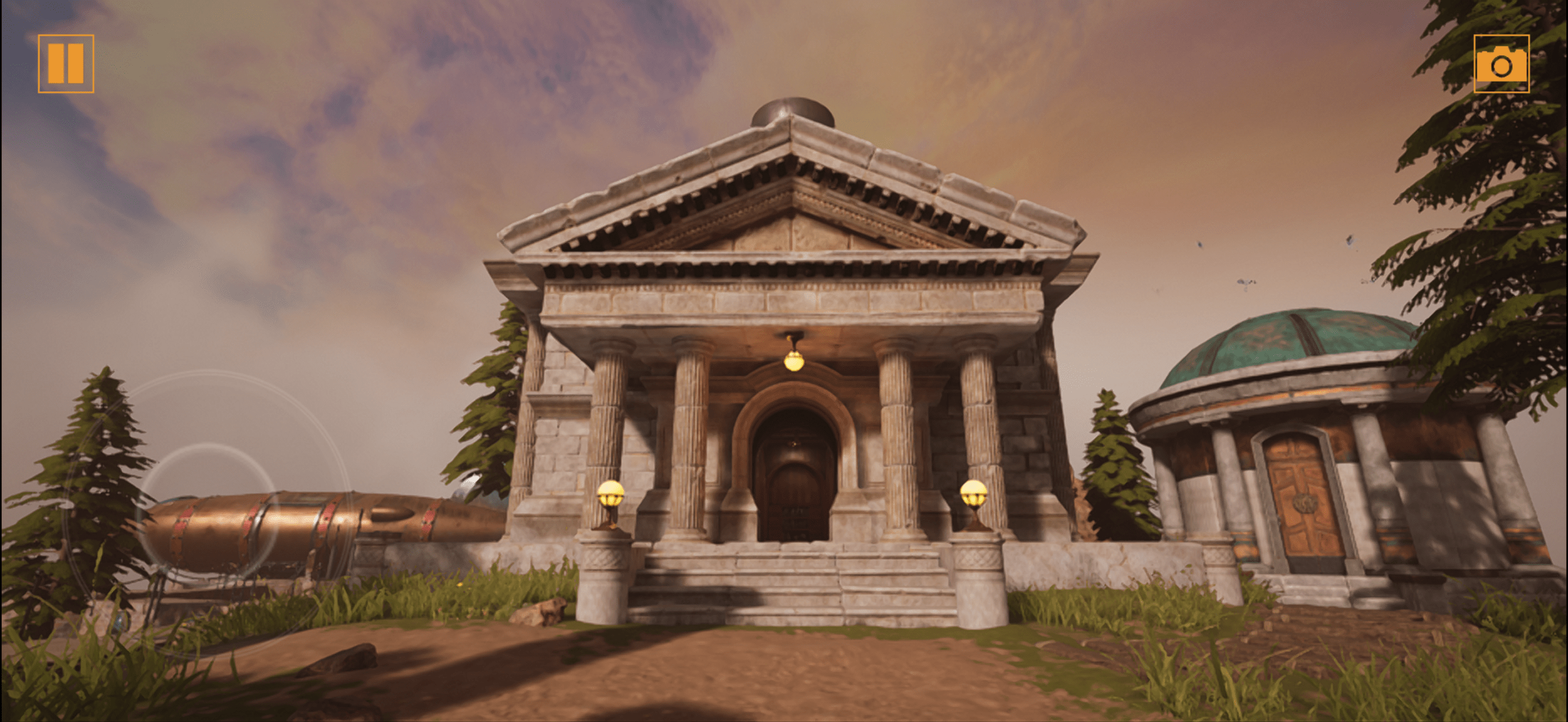
Myst by Clay Worlds is a walking sim-based Puzzle game with a mobile version distributed on Apple’s app store. The game allows for moving throughout an island and interacting with levels, buttons, maps, books, and other artifacts that provide clues and allow the player to unlock hints to solving the puzzle. Myst leverages narrative to effectively surface the underlying puzzle’s objectives and clues. However, the game’s diversity of narrative mechanisms reduces consistency that could have otherwise served to ensure struggling players solve the puzzle.
Myst begins with a narrative backstory. The player is introduced to the world by hearing about a powerful book that has been lost, and presumably, is meant to be found again.

Beginning cutscene introducing book
The narrative subtext that “the ending has not yet been written” implies the goal of the puzzle: to find the lost book. The object of the puzzle thus surfaces through the narrative. The game mechanic of an initial cutscene as the introduction to the puzzle, rather than allowing the player to explore the environment first, communicates a clear goal.
The island motivates the player to explore. There are dwellings to enter, levels to pull, and tunnels to explore. Through this walking simulator, the player is able to uncover clues such as boats, levers, and tunnels that tie back to the overarching narrative.
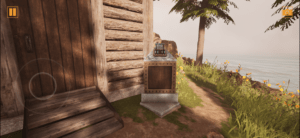
Lever to pull next to the house
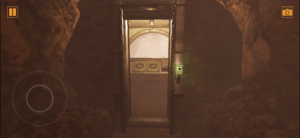
Secret door at the bottom of a tunnel
Myst integrates puzzle into the artifacts visible throughout the environment. Interaction with these artifacts surfaces narrative story that introduces clues to advance solving the puzzle. For instance, the library contains two books, one red and one blue. Each mention finding a page of that corresponding color, advancing the puzzle objective.
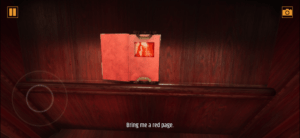
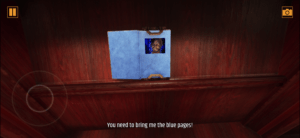
Red and blue books with narrative story
The puzzle is thus guided by the narrative story, woven through the environment of the walking simulator and cutscenes. However, there is no consistent method of delivery for the narrative.
The story begins as a cutscene while further clues reveal themselves through objects on the island. Later, interactive maps offer clues of where to go next. In particular, which levels to turn on.
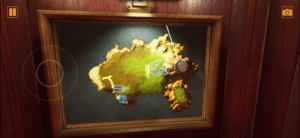
Map with clues for locations
This guides the player to areas that offer hidden passageways and rooms, keeping the player on their feet to look for clues.
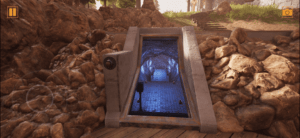
Hidden passageway by boats
However, the diversity of narrative delivery mechanisms contributes to the difficulty of the game and a lack of communicated progress.
The cutscenes transition to map elements, which transition to hidden books.
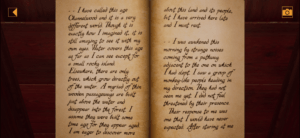
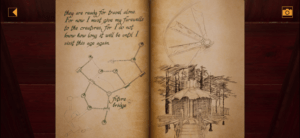
Books with narrative and clues
This means the player lacks a consistent way to measure their progress. When they find new passageways, there is no communicated measure towards success. When new levers are turned on, there is no additional cutscene unlocked. Even if there was, since there is a large diversity of narrative delivery mechanisms, it would not be clear what progress was made. Thus, the diversity of methods actually takes away from the player’s feeling of progress throughout the game.
Considering ethics, a new challenge also arises from this format. The player most familiar with puzzle games benefits the most, and players who are unfamiliar or less skilled have much greater challenge. There is a lack of “training wheels” or consistent feedback that the user is on the right track. If the narrative was only conveyed with one mechanism, like a cutscene, it would convey to the player that every time a new cutscene was unlocked that they are making progress. Instead, every new book or lever has unknown impact. The puzzle thus assumes the user has seen the type of puzzle game before, and does not need this guidance. This results in Myst being less accessible as a game to audiences who have less experience or access to digital games.