

Like most people, I grew up around games. Some of my earliest memories are playing Lego Star Wars: The Complete Saga in my living room with my siblings and cousins wrapped around me, guiding me through like I was their Padawan, everyone else having beaten the game on their own time, or miraculously outwitting my parents in Chinese poker, a mess of greasy cards scattered around the dinner table in victory. In middle school, my now-brother-in-law introduced me to League of Legends, and I’ve made some of my closest friends at school by spending weekends on my computer on the Rift, playing through the shoes of a formidable magical dragon or some other beast of the sort. I’ve explored my identity through MMORPGs like Guild Wars 2, and found community today through a shared nostalgia of Pokémon, Minecraft, and Super Smash Bros 2.
Games have connected me emotionally, physically, and spiritually to the most important people in my life, and CS 247G has uniquely empowered me to make them. And, for some time in high school, I wanted to make them. I tried, but ultimately failed at making a finished video game, either losing the motivation, getting frustrated with Unity, or just giving up because of my complete inaptitude for art. I decided game development was not for me, and I put it in a little box for me to dig up when I had the time, energy, and money to invest into it after I got my big boy job.
Making an analog game for P1 was my first real, concrete stab at making something “fun” with my own hands. Collaborating with my teammates to create what would eventually become Shrimp Game was, equivalently, 7-year-old me jumping for joy at building something that would be deeply enjoyable and connect communities the same way I was connected to my parents with Chinese poker. The way the cards moved around the table could surmount any language barrier, the same way fun in Shrimp Game was through the universal language of numbers and a sneaky eye at the pool next to yours.
If P1 was exciting for 7-year-old me, boy-oh-boy was P2 a step up. To make a video game come to life was deeply satisfying for me. Implementing all the concepts we learned in class, from narrative architecture to formal elements to the role of architecture into Unity, a language and software I only recently learned last summer from my research project, was not easy. For example, when translating the role of architecture into our game, I found myself wondering if I wanted architecture to be a barrier to the rest of our store, or an opportunity to explore the space surrounding it–to emphasize the gameplay loop, I used Rigidbodys to block the rest of the store off, helping the player stay grounded in the narrative and their mechanics at hand (mortar and pestling, potion brewing, inspecting ingredients). I found myself struggling with implementing logic and systems we had written and conceptualized on paper, but were much easier said than done in Unity, especially when putting together the potion system. However, each “win” of a mechanic was immensely satisfying, and as our wins snowballed into a playable and enjoyable game, we created Midnight Concoctions, a raunchy lovechild containing the genetic DNA of each member of Team Rakali (and a trace of Ryan Loo’s banter), and it serves perfectly as my first digital game.
Getting each feature to work exactly as intended, iterating on them from playtest feedback, and seeing people laugh and have fun at my game time-traveled me to younger Ryan, who buried his little box of game development dreams, and compelled him to unearth this box and realize his dreams and not wait for an undetermined point in spacetime where he would feel enough impulse to just make fun things with his hands and brain and team, and therefore empower him to pursue game development as a more serious hobby, passion, or maybe even job (apologies for the Arcane-esque Butterfly effect run-on metaphor that might not fully transfer).
Finally, thank you Butch, Ryan, Mai, Lucas, Noe, Christina, and Nina for giving me the tough love to grow as a notetaker, a collaborator, a game designer, and most importantly, as a human. I have been your Padawan of sorts, sketchnoting and critically playing and meeting deadlines and checkpoints, and through each endeavor I have learned something new about this immensely human space, this space of play, this space of compassion. This has been my favorite class at Stanford by far, and I’ll keep it with me for the rest of my life, especially as I work on my next game 😉


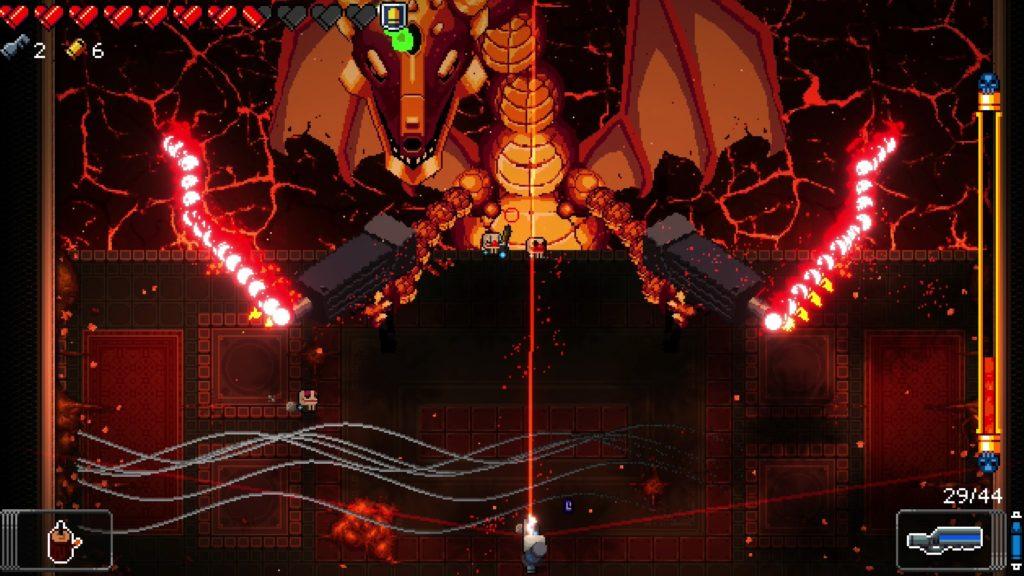
You’re welcome, and I’m glad you found your inner gammaker! Let me know what you make next.