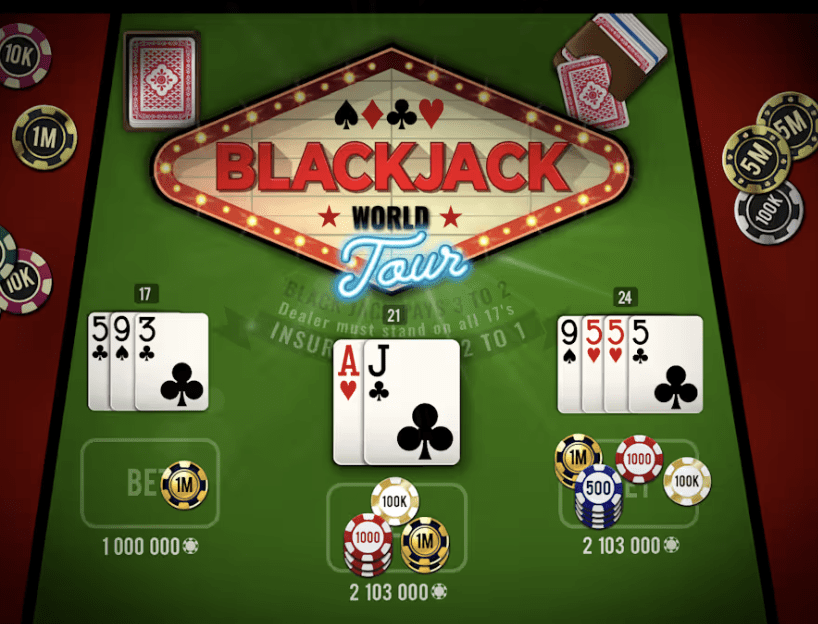
I played Blackjack, a casino game with an unknown founder inspired by a French game (Twenty One). The game is played by people aged 18+ who are casual gamblers, strategic gamers, and even pop culture enthusiasts. Blackjack is a game played by 2-7 players (2 minimum and 7 maximum). I played this game with a computer, for a total of 2 players, digitally on the Washington Post. Blackjack seems to reward strategic skill/thinking but actually uses randomness, feedback loops, and decision making to create an illusion of control which causes addictive behavior.
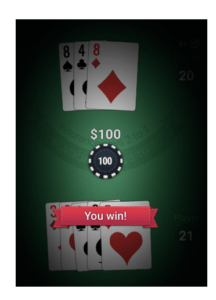
Fig 1: I won with a total of 21 while the AI had 20, which made me feel like my strategy was working.
Throughout playing Blackjack, I felt a variety of emotions. Specifically, when winning narrowly, I thought “I think I have been paying attention to the cards and my technique is working” (Fig 1). This is because Blackjack has frequent decisions points like hit, stand, and split create the feeling of control over outcomes and the fact that your choices matter. Fast game loops that come with immediate rewards also cause people to play more even if rewards are unpredictable.
Besides this, after losing for many rounds, I thought “I am bound to get the next one” because I thought that a win was due. Besides this, I was impacted by near misses. I noticed that when I busted 1-2 points over, I felt that “I made a good decision and will definitely win next time” (Fig 2). In other words, the games invoke reactions that make them persist and commit to another round as they think that they will win the next round, leading to adduction. This leads to an illusion of control and agency as players think they can influence chance even if outcomes are uncertain. The aesthetic of challenge or wanting to beat the system leads to addiction.
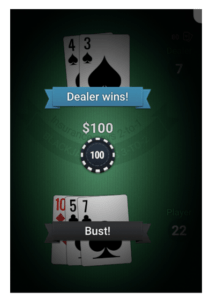
Fig 2: I busted with a total of 22 (just one point over 21) and felt that I could have beaten the dealer’s 7 if I had drawn a more favorable card.
Randomness also played a huge role in making me want to play the game more. Because Blackjack consists of unpredictable card draws, I felt like I could change the outcome of the game in any round even if I faced many losses. Uncertainty made me more invested as playing another game provided me the opportunity to think “that my strategy is improving”. This feeling of anticipation and the possibility that the next outcome will be rewarding leads to suspense, excitement, and hope that you may beat the system. Successful risks also made me feel “more powerful”, and made me dwell on the possibilities that may have occurred if I stayed longer.
Compared to some other games that use chance, Blackjack uses strategic decision making which makes the players feel more in control than games that rely just on chance. Roulette and slot machines are based solely over chance and players do not have any control on the outcomes. On the other hand, in Blackjack players make choices between hit, stand, and split which can make the win feel earned and losses feel redeemable/temporary. Specifically, when playing Blackjack, I thought “I should have done a stand instead of a hit (Fig 3)” when I busted and felt that I was learning when to hit/stand, or developing a skill to perform well in the game.
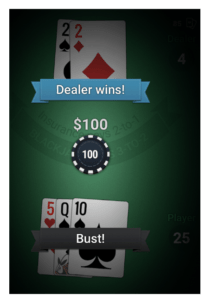
Fig 3: I felt that I should have chosen to stand instead of hit, since staying with my hand may have allowed me to win.
Compared to board games with chance like a rolling die, Blackjack has faster rounds with quick rewards which can make repetition/playing more rounds feel more compelling. Compared to Poker, Blackjack has less long term strategy but both games consist of competition and decision making. Nonetheless, Blackjack is powerful compared to other games because it changes the chance associated with the game into an experience that feels meaningful instead of just random. Blackjack combines uncertainty, perceived control, and quick feedback loops to make the game more engaging and addictive than other chance based games.
To avoid the detrimental effects of Blackjack, the game could display outcome probabilities before and after decisions. For example, before hitting, it could show the chance of busting based on visible cards, and after each round explain whether a choice improved or reduced the odds of winning. This would have helped me while playing the game as instead of assuming “I will definitely win the next round (Fig 4)” I would have thought “that decision had a 20% success rate so it makes sense why I lost.” Probability feedback introduces transparency, reduces the illusion of control, and leads to more informed decision making, making the game consist of learning or mastery.
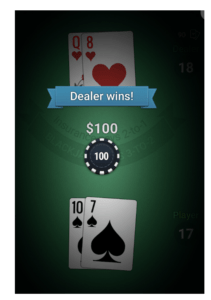
Fig 4: After losing three rounds in a row, I expected that I was more likely to win the next round, but I ended up losing again.
Using chance in games is morally permissible when randomness creates excitement. Randomness should be transparent and balanced with choice rather than having “hidden systems” that encourage playing forever. For example, in Catan, dice rolls create unpredictability and keep rounds exciting. This encourages creativity and social interaction without making players feel that the next round will recover previous losses.
Chance is morally impermissible when mechanics exploit and encourage ongoing engagement. This can be caused by mechanics seen in Blackjack like rapid loops with rewards, near misses, hidden probabilities, or systems that encourage chasing losses and repeated play. This leads to obsession and false hope as people feel like losses can be recovered. Overall, this encourages people to continue playing because of anticipation.