Game: It’s just a burning memory
Precise
For players
This game unfolds through a non-linear, gradually revealed structure. The following text first briefly introduces the player’s experience process and then elaborates on the stories of the four parts arranged in chronological order.
As a player, at the beginning of the game, you will explore the fragmented memories of the protagonist Gregor through a memory operating system. The contents of the first part (background story) and the second part (Gregor’s unforgettable day in age 24) will be presented in a fragmented manner at this stage. Your main task is to piece together a complete story about betrayal, rescue, and revolution.
As you collect more memories, you will find that they are full of inexplicable contradictions – the confusion of timelines and the misplacement of character relationships. This is how the game leads you into the third part (Gregor’s later years). You will gradually realize that what you are exploring is not a simple memory, but the chaotic inner world of an Alzheimer’s patient.
When Gregor’s life trajectory gradually becomes clear, the game will reach its most critical turning point: you will discover that you are not an outside observer, but the core character of the story – Camellia. Your goal will also shift from “exploration” to “healing”: attempting to save your beloved husband Gregor by deleting the implanted traumatic memory.
The fourth part of the game is the climax of the emotional experience. When you try to execute the “delete” command, Gregor’s consciousness will awaken deep in his memory. As Camellia herself, you will have a conversation with him and ultimately witness how love can transcend time and resist aging.
First part
The story takes place in a totalitarian country called “X”. Under the leadership of the “General”, the country is embroiled in an aggressive war against its neighbors. Years of military defeats have sapped the morale of the troops on the front lines. To reverse the situation, the General initiates a secret project called the “Iron Man Program“. This plan aims to use cutting-edge “memory erasure technology” to selectively remove soldiers’ fears and traumas, transforming them into fearless and emotionless war machines.
Growing up in a border city, Gregor and Camellia were childhood sweethearts. Camellia, with her scientific talent, entered a research institute in the capital and participated in memory-related research. However, when she realized that her work would be used for the inhumane purpose of the “Iron Man Program“, she resolutely chose to rebel, taking the core research results and beginning her escape. As a result, she became the most wanted traitor in the entire country.
Second part
The protagonist, Gregor, a young gendarme, is faced with a conflict from the very beginning: he has been given an official mission by his father to arrest the scientist Camellia, who has been labeled a traitor by the state. However, deep down, his true desire is to find his childhood sweetheart before anyone else and uncover the truth behind her defection. This internal conflict between his identity and his emotions forms the core of his struggle. He cannot openly search for her because his every move is under surveillance, especially by his colleague Billy, who is loyal to the general. The last thing he wants is for Billy to get to her first.
To achieve his goal, Gregor takes a series of actions: using his soldier identity to move around the city and gather information from potential informants. His resources are very limited: an official wanted poster with Camellia’s photo and a childhood photo he privately keeps of her. He must decide whether to trust the people at the resistance base (a bookstore), a choice that will completely deviate him from his duty as a gendarme. When he receives a secret letter from Camellia – “If you lose your memory, are you still you?” – and finally meets her in the cabin.
After learning the dark truth of the “Iron Man Program“, Gregor’s choice is no longer a wavering between loyalty and personal feelings, but a decision between serving a dehumanizing regime and rising up for humanity. His goal is now completely changed: to help Camellia escape the country at all costs tonight. He scouts the route through the sunflower fields at the border but encounters the worst event on his way back – Camellia has been captured by Billy. In the confrontation in the interrogation room, as the flames of revolution ignite outside the window, Gregor makes his final choice: he engages in a life-and-death struggle with Billy and accidentally causes his death. This leaves him with no way back. He leads Camellia through the fields towards freedom and finally faces the pursuers and his father alone by the river, concluding with a speech and being arrested.
Third part
Before the revolution that swept the country succeeded, the arrested Gregor became the last experiment of the old regime. They used the half-finished product of the “Iron Man Program” to forcibly implant a false memory in his mind – “I killed Camellia with my own hands.”
After the revolution, Gregor regained his freedom and miraculously reunited with Camellia, who had changed her name to Carol. He was very happy, but also realized that the painful memory in his mind was completely fabricated. They started a family, but Gregor kept the implanted memory as a secret deep in his heart.
As time passed, Gregor, in his old age, developed Alzheimer’s disease. The disease mercilessly eroded his ability to distinguish reality, and he began to fail to recognize his son and even his lifelong companion, Camellia. He was forever trapped on August 31st of the year he was 24, and every day he repeated the action of searching for and “saving” Camellia. The implanted “murder” memory also tormented him more and more frequently as his cognitive ability declined. To help her husband, Camellia decided to restart the research of memory.
Fourth part
As Gregor fell into a coma due to an accident, the narrative perspective shifted to Camellia herself. Camellia successfully developed a “memory representation tool” and delved into the depths of Gregor’s chaotic consciousness, re-experiencing the thrilling day when he was 24 and witnessing the confusion caused by Alzheimer’s disease in his later years.
At the end of her exploration, Camellia discovered the memory forcibly implanted by the old regime that had tormented him for fifty years: “I killed Camellia with my own hands.” According to Camellia’s scientific judgment, this memory had become entangled with other memories. The only way to completely remove this trauma was to erase everything about “Camellia” from Gregor’s life. She decided to carry out the deletion, hoping that Gregor could be relieved of his pain – even if it meant forgetting herself.
Camellia executed this cruel “cure” plan, and all the files in the system turned into garbled text, with only one remaining – a memory of Gregor meeting an unfamiliar old lady. Gregor’s consciousness awoke in the system. He saw a sense of familiarity on the old lady’s face and seemed to remember that this was Camellia decades later. He realized that he was no longer a young man and began a conversation with Camellia through the computer screen. Gregor refused to forget Camellia and told her: “I didn’t age because of you, but because of you, I had the courage to face aging.”
Eventually, Camellia chose to respect this complete memory that carried love and pain. The system files gradually recovered and unlocked new files – all the keywords were strung together into a long memory, which was every memory Gregor had of Camellia from his childhood to old age. In the end, the machine shut down. Camellia seemed to hear Gregor’s soft voice calling her name in reality.
Map
The horizontal axis represents the game progress.
The vertical axis represents the expected player attention investment (a high value indicates surprising content that captures the player’s attention).
Font color: Orange represents positive emotions, such as happy and romantic scenes. Blue represents negative emotions, such as sad and tense scenes.
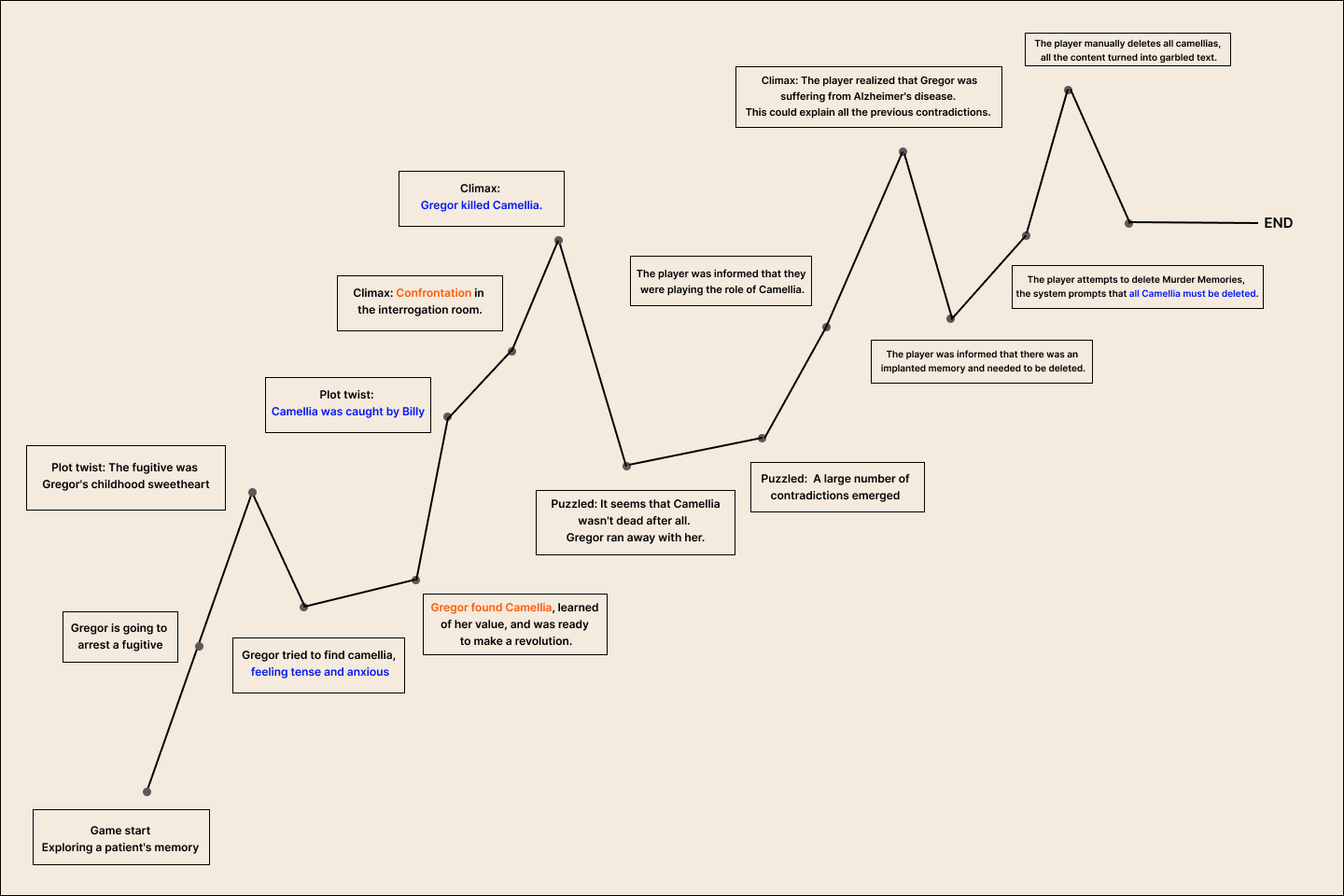
Figure 1: Plot map of It’s just a burning memory
Plan
Current progress
- Complete storyline
- Game framework development (basic functions)
- First version of story writing (board game version)
TODO
High Priority
- Add: Ending Text (Dialogue, memories with Camellia)
- Add: Instruction File (The file Camellia left for herself, a guide for the player)
Medium Priority
- Iterate: All memories and files (write the “outline version” first based on the new story outline)
- Develop: Garbled code system, selection input system, shutdown effects, deletion system, start and end interface
Low priority
- Iterate: All memories and files (polishing, more detailed narration)
- Develop: Implement all content
- Develop: Optimize interaction experience
- Add art and music materials
Schedule
- Before October 22: Complete high-priority tasks, and start refactoring for medium-priority tasks.
- Before October 24: Medium-priority development tasks.
- Before October 25: Complete Medium-priority development tasks. Complete low-priority tasks.
- October 26: Obtain the final version. Testing(at least 5 players), and collecting feedback.
- October 27 – 29: Make revisions based on feedback.
- October 30: Write the description.
- October 31: Submit.