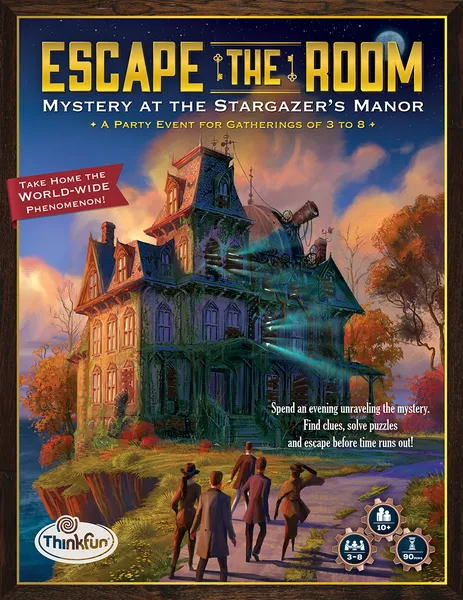
I played Escape the Room: Stargazer’s Manor, a cooperative board game designed by ThinkFun for 3–8 players, targeting families, casual players, and puzzle enthusiasts. The game recreates the experience of escaping an astronomer’s house by solving a series of puzzles. Its mechanics of manipulating physical objects create dynamics of investigation, observation, and backtracking, ultimately producing the aesthetics of Fantasy, Discovery, Challenge, Narrative and Sensation. The puzzles rely on the narrative to be meaningful (comparing to pure logic tests), and add to the narrative by recreating and revealing the astronomer’s experience.
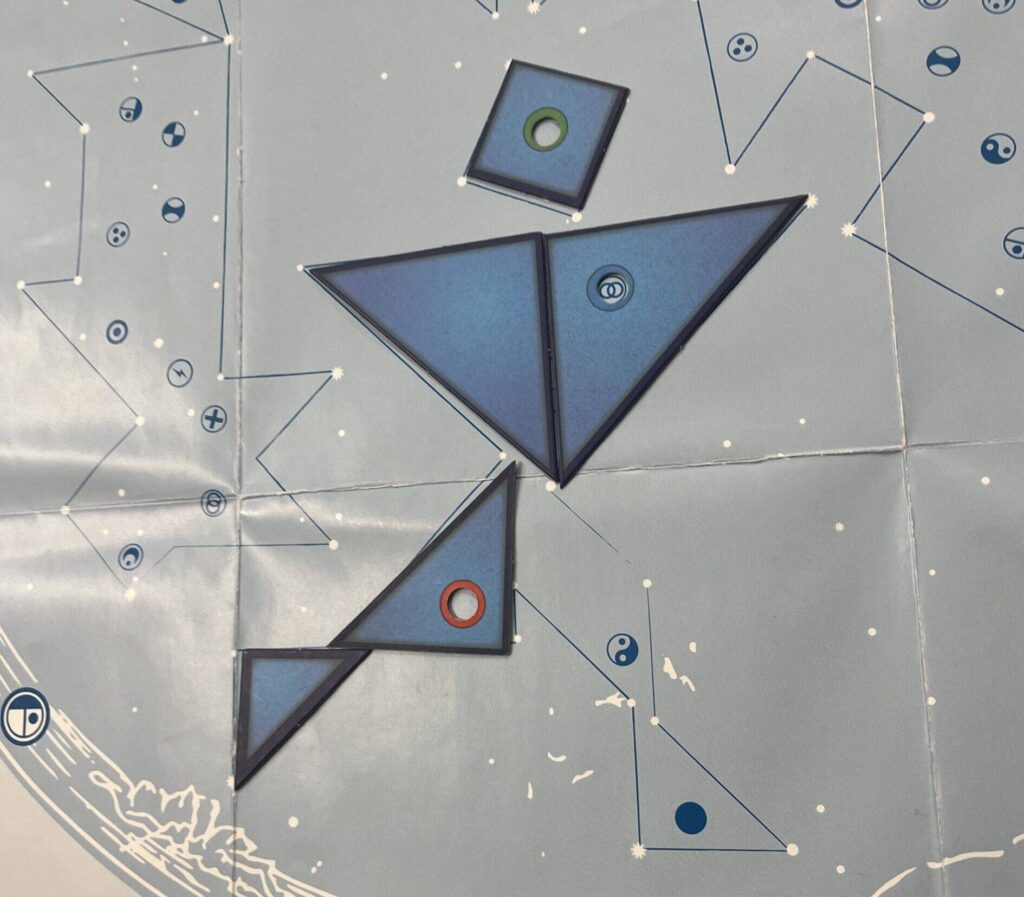
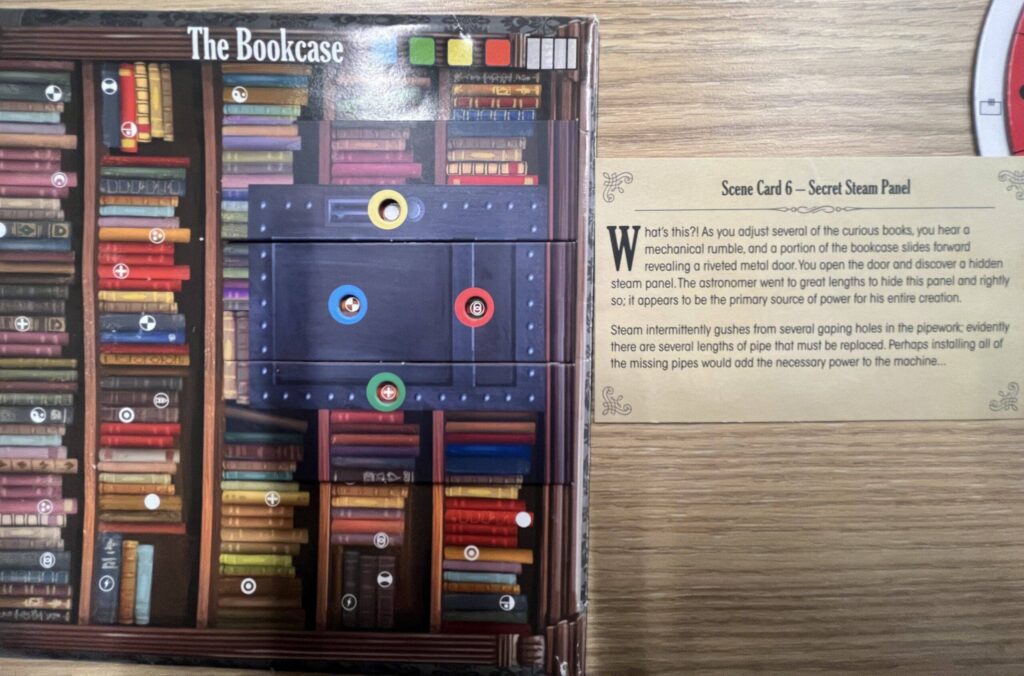
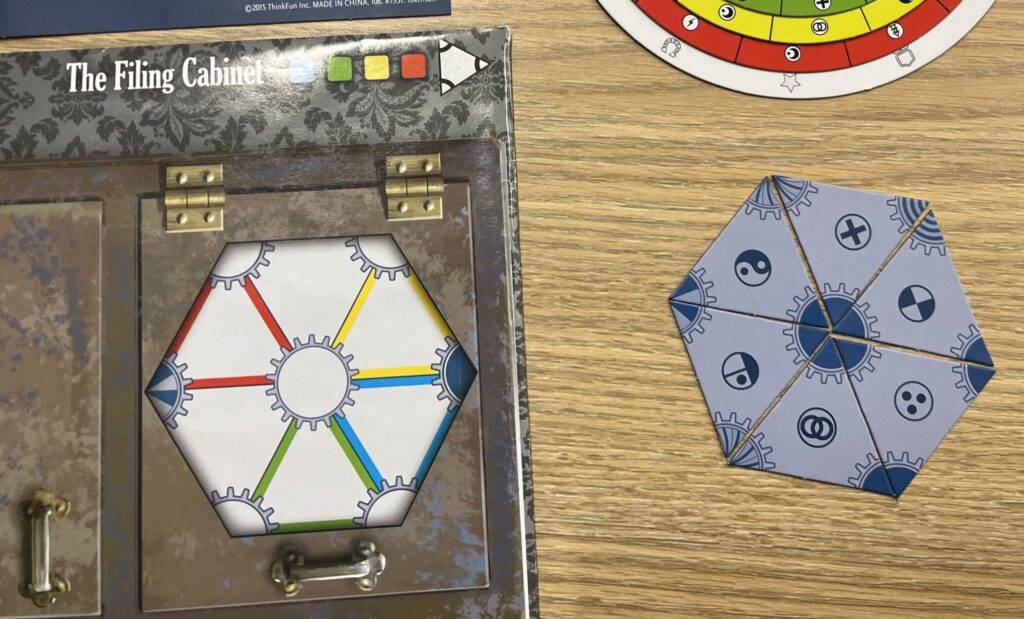
The puzzle mechanics closely imitate the actions performed within the story. One puzzle asks players to arrange angular pieces on a constellation map and identify symbols revealed through small holes, recreating the experience of aligning a telescope and peering through a narrow viewing lens. Another requires players to slide strips across a bookcase to reveal a hidden door, as if they were moving books. A later puzzle involves placing eight pipe cards, rotating a circular valve, and tracing the network, encouraging players to inspect the machinery as if they were repairing it themselves. These mechanics create a dynamic of careful observation and experimentation, making players feel like investigators rather than only puzzle solvers. As a result, the game evokes the aesthetics of Fantasy by placing players in the astronomer’s role, while the physical manipulation of puzzle pieces also creates a sense of Sensation.
The game builds suspense by delaying the meaning of many clues. Players encounter newspapers, photographs, and symbols that remain unresolved for several levels. Players also collect one telescope piece in each level, creating a continuous sense of progression until they can finally assemble it. Unused clue make players look forward to the later chapters, but may also create confusion. For example, I tried using the year 1866 much earlier because I assumed it had to be important. While this uncertainty often mirrored the experience of investigating a real mystery, there were also moments when it disrupted my immersion. I even wondered whether the game had been misassembled by the previous group, briefly breaking the magic circle. Nevertheless, once the delayed clues finally became meaningful, the resulting “aha” moment was especially satisfying. These mechanics create a dynamic of anticipation and curiosity that strongly supports Discovery and Challenge.
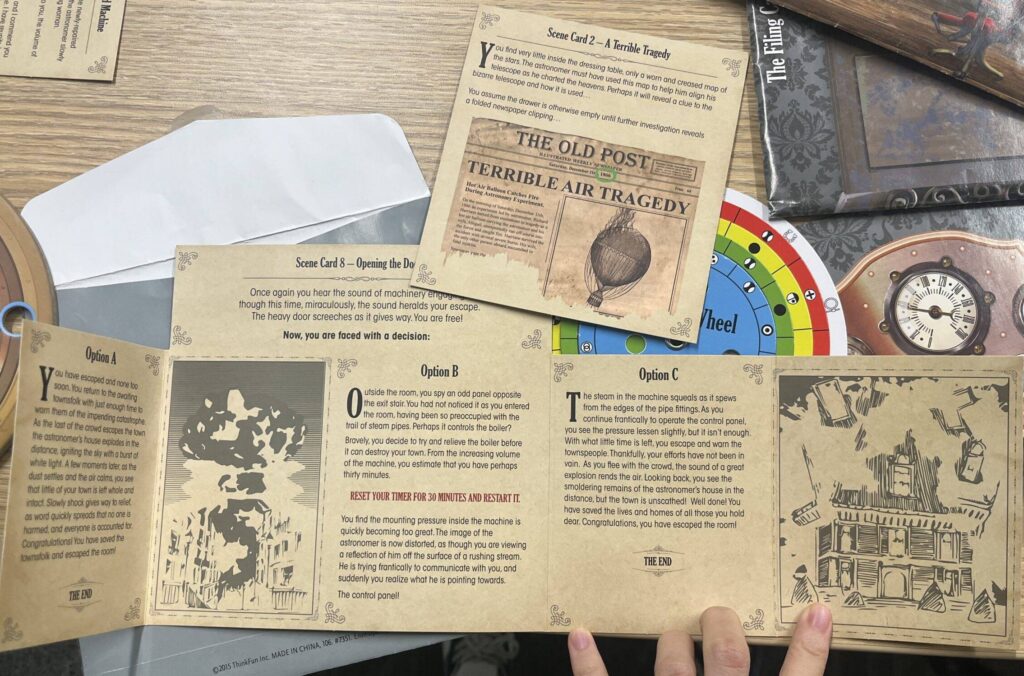
The final puzzle ties the narrative together especially well. It uses clues hidden across earlier levels, including the constellation map, the newspaper, and the photographs. Before this point, I was primarily focused on solving each individual puzzle. The final challenge forced me to revisit these objects and examine them carefully, viewing them as pieces of a larger story. This backtracking mechanic creates a dynamic of reflection rather than simple recall. Players get to see the big narrative of the astronomer’s life, therefore combining Narrative and Discovery.
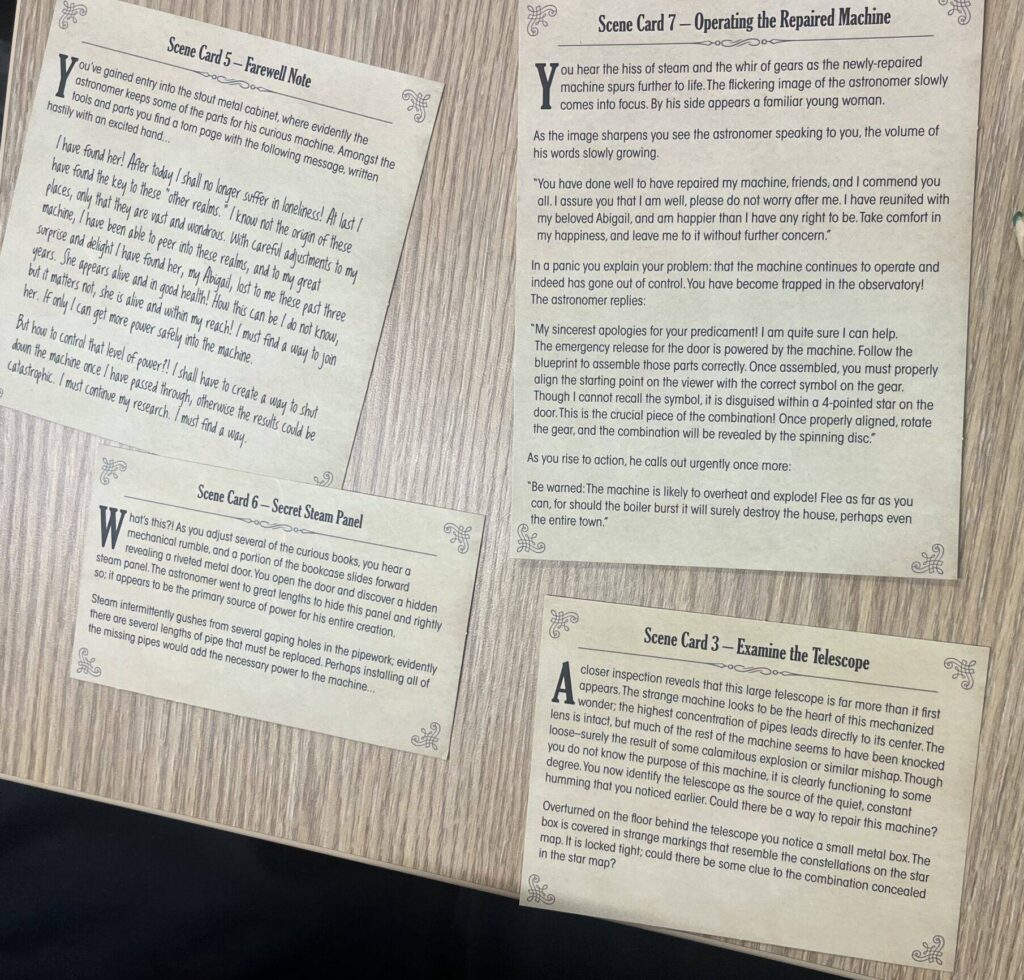
Interestingly, the game also contains “meta-puzzles” of deciding what to do next. Players must determine which envelope to open by interpreting the scene cards (e.g., “you see object X”) or matching between the puzzle and images on envelopes. This mechanic turns progression into part of the narrative, making players feel as though they are moving from room to room and deciding where to investigate next. The scene cards further strengthen immersion by describing environmental details, including sounds and other sensory cues. Combined with the puzzle boards, constellation maps, and envelopes, these mechanics reinforce Fantasy and Narrative by encouraging players to physically interact with the fictional world.
Although Stargazer’s Manor is designed as a cooperative game, I played it alone and felt that additional players were unnecessary. Most puzzles involve manipulating a single physical object, meaning that only one person can meaningfully interact with the components at a time while others mainly observe or offer suggestions. I actually preferred playing alone because it allowed me to remain continuously engaged with both the puzzles and the story at my pace. I suspect larger groups may reduce immersion by turning some players into spectators rather than investigators. The game also gives players agency by allowing them to either escape immediately or continue solving an optional final puzzle. It makes the ending feel like a player choice rather than a predetermined sequence of puzzles. The time limit mechanism also added pressure and strengthened the theme of escaping.
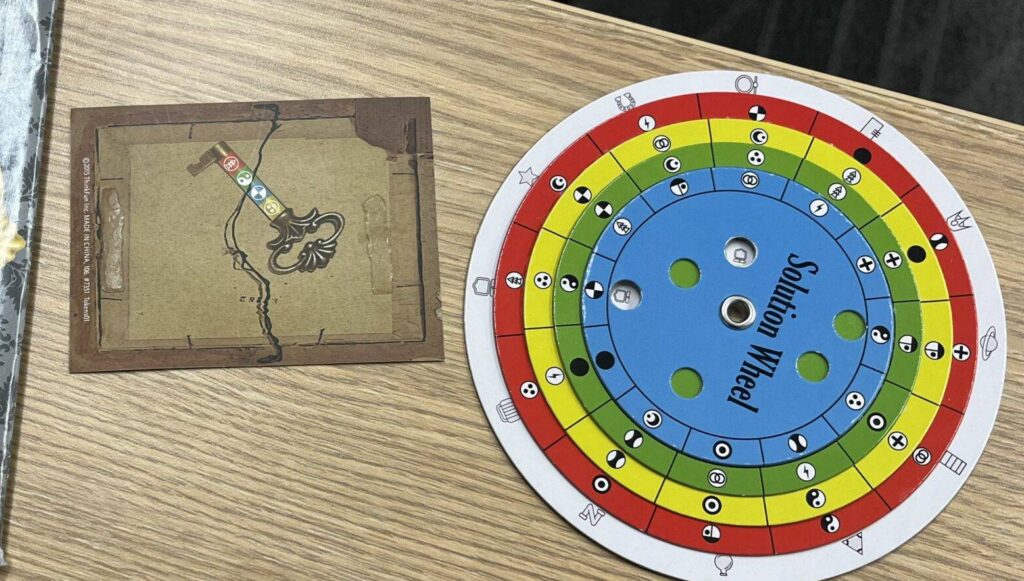
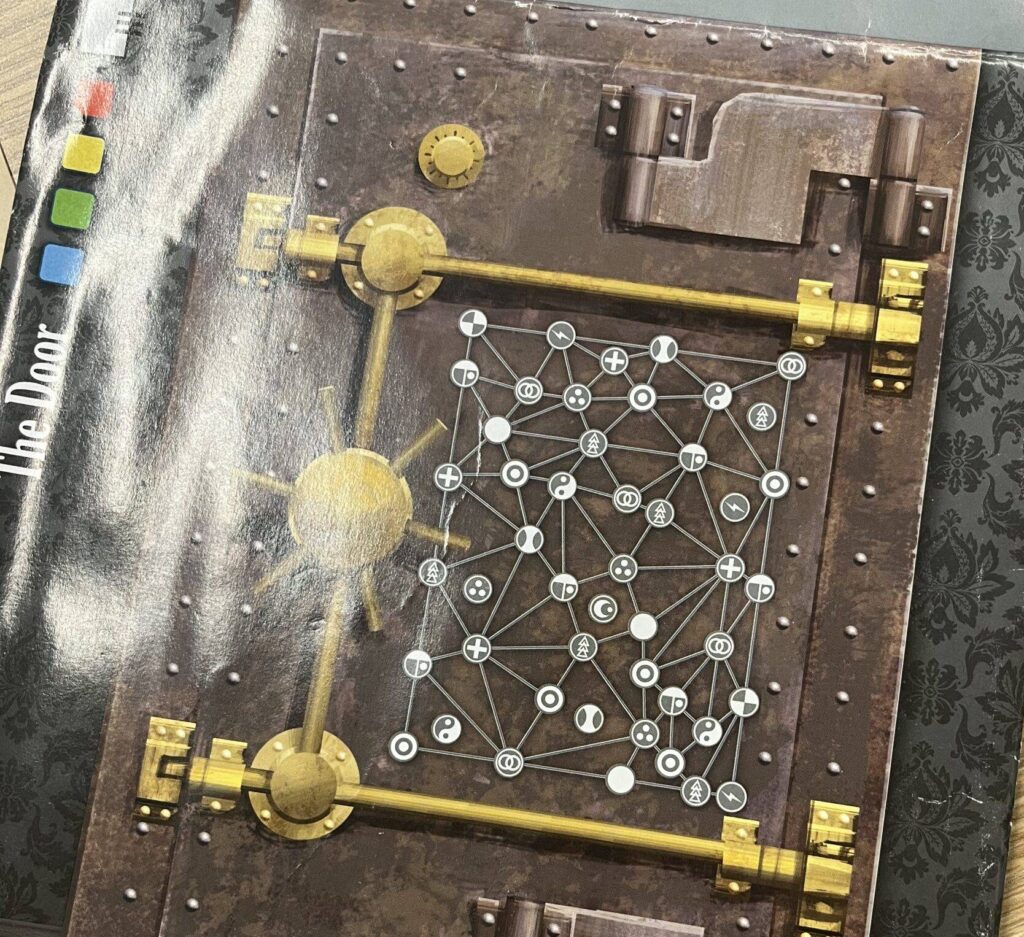
One ethical issue raised by the game is accessibility. Players have to have typical color vision to use the solution wheel and decode. Some improvements could be alternative labels, textures, or patterns instead of only color-coding. The game also assumes strong visual-search abilities. For example, I spent a long time searching for the four-pointed star on the observatory door and eventually gave up. This challenge may unintentionally reflect the experience of astronomy, where identifying constellations requires careful visual searching. However, the puzzle may unintentionally privilege players with stronger visual-search abilities, while players with attention difficulties may struggle to notice subtle clues even when they understand the underlying logic. Finally, the game assumes familiarity with escape-room conventions, such as keeping every clue and expecting objects to become relevant later. New players may overlook important information or become confused when clues do not have an immediate purpose. These assumptions shape who can fully enjoy both the game’s mechanics and its narrative.