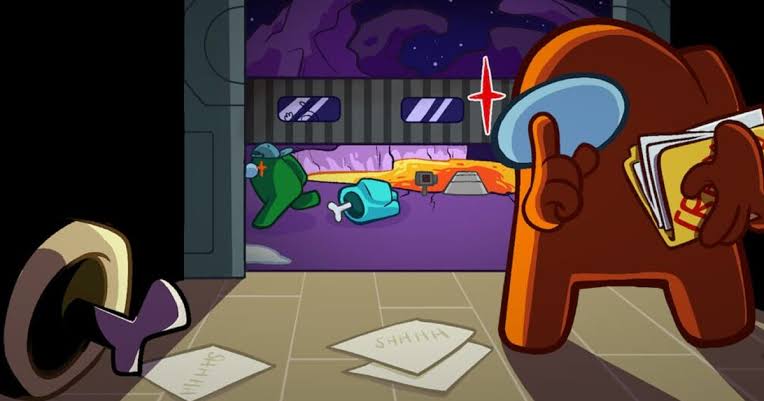
Developed by the American game studio Innersloth, Among Us is a 2018 online multiplayer social deduction and bluffing game. Targeting primarily casual gamers, teens, and young adults, the multiplayer game is available across PC, mobile, and consoles (mobile used for this playtest). Functioning as a digital folk game, it has simple rules but innovates by using digital space and map positioning to drive interaction. The zero-sum, team-versus-team conflict cycles between a real-time task phase and turn-based emergency meetings. Players manage limited resources (votes, lives) within strict boundaries: map walls, limited line-of-sight, and a communication blackout outside of meetings. The game touches on many of Marc LeBlanc’s “8 Types of Fun:” Social Fellowship is clear, but Challenge (checklists under the threat of elimination) and Fantasy (adopting roles in a sci-fi setting) also play roles.
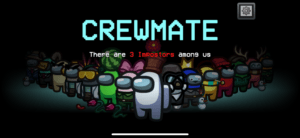
The game lacks scripted dialogue beyond the opening text: “There are [N] Impostors among us” (hence the title). From there, mechanics and unscripted chat during meetings isolate and test social instincts. As a social deduction and bluffing game, Among Us forces players into high-pressure communication and magnifies a player’s unique default role within a group: The game’s mechanics and structure, like the discrete task checklists, restricted line-of-sight map, and abrupt emergency meetings brought out my highly analytical and non-confrontational default role as a Crewmate, but also exposed my clumsy ability to bluff as an Impostor.
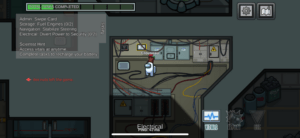
First, the core mechanics emphasize a checklist of discrete maintenance tasks. These include multi-stage assignments (e.g. downloading data in “Communications” and uploading it in “Admin”) or timing tasks (e.g. “Electrical”), and items related to specific Crewmate jobs like “Scientist.” These triggered my inclination toward a systematic “workhorse” role focused on clearing the task board rather than engaging in social paranoia.
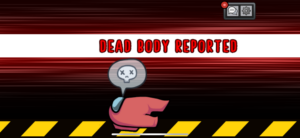
Second, the limited line-of-sight map and meeting mechanics magnified my non-confrontational group role. Among Us isolates players with limited line-of-sight on-screen and in-map (everything else beyond is in complete shadow), gating the game’s core social dynamics (arguments and voting) behind either the “dead body report” mechanic or the emergency meeting button centrally located in the Cafeteria. During the roaming phase, I stayed heads-down to myself rather than investigating others or checking “Vitals.” This extended into my communication style: in meetings, I withheld accusations unless I had undeniable proof, like witnessing a kill or someone “venting.”
Lastly, Impostor mechanics–venting, killing, sabotage–dismantled my non-confrontational playstyle, making me paralyzed when forced to deceive. Once the round starts, the game gives the Impostor aggressive skills like stabbing, jumping through a system of vents between rooms, and critical sabotages (e.g. “O2” or “Reactor” meltdowns). However, these mechanics paralyze cautious players, and I found myself often instead nervously mimicking a “workhorse” routine rather than utilizing the evil skills to attack targets. This led to moments of failure: While trying to “fake” tasks such as the “Swipe Card” in “Admin,” I realized the game’s global green task progress bar exposed my non-Crewmate identity when it failed to increase during a faked task, which quickly led to accusations.
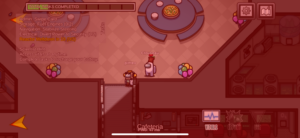
One clever design decision is the implementation of a strict voting timer. This time constraint intentionally sabotages any chance at logical deduction in favor of loud community members and chaos, forcing premature decisions. Players panic, accuse, defend, and fight, which brilliantly punishes the exact behavior I sometimes leaned on too much: overly cautious, non-confrontational players who need the time to present verified facts.
Conversely, a potential design flaw is the inclusion of visual tasks and global task bars. UI elements like the MedBay scanner provide visual certainty of innocence, bypassing the core social deduction dynamic entirely. An improvement could be to disable visual tasks to force reliance on human psychology, but I also see the value it provides in pushing more clumsy Impostors like myself to improve their deceptive skills.
Compared to genre peers like Mafia or Secret Hitler, what differentiates Among Us is its reliance on spatial mechanics: While Secret Hitler is purely spoken and requires aggressive debate out loud, Among Us grounds its bluffing in (digital) movement and physical space and movement.
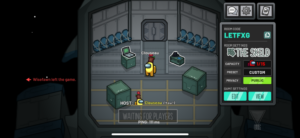
Among Us also asks important ethical questions: In everyday life, lying breaches trust, but deception in a game context like Among Us does not constitute a moral wrong because of the concept of the “magic circle.” This boundary forms the moment players enter the lobby, customizing bean-shaped astronauts with silly floaties, setting a low-stakes tone. When the match starts, every player is buying into a shared social contract that, temporarily, the usual rules of reality are suspended: In that outer-space context, lying isn’t intentional deceit, but instead a sort of performance or willingness to engage in fun.
Ultimately, Among Us is a social experiment testing communication under stress and low information. Forcing players to aggressively defend themselves or falsely accuse friends exposes players’ natural instincts in groups, especially my rigid reliance on a “don’t-rock-the-boat” strategy–one that appears in many other games, whether it’s playing defense on the soccer field or refusing to “shoot the moon” in Hearts.