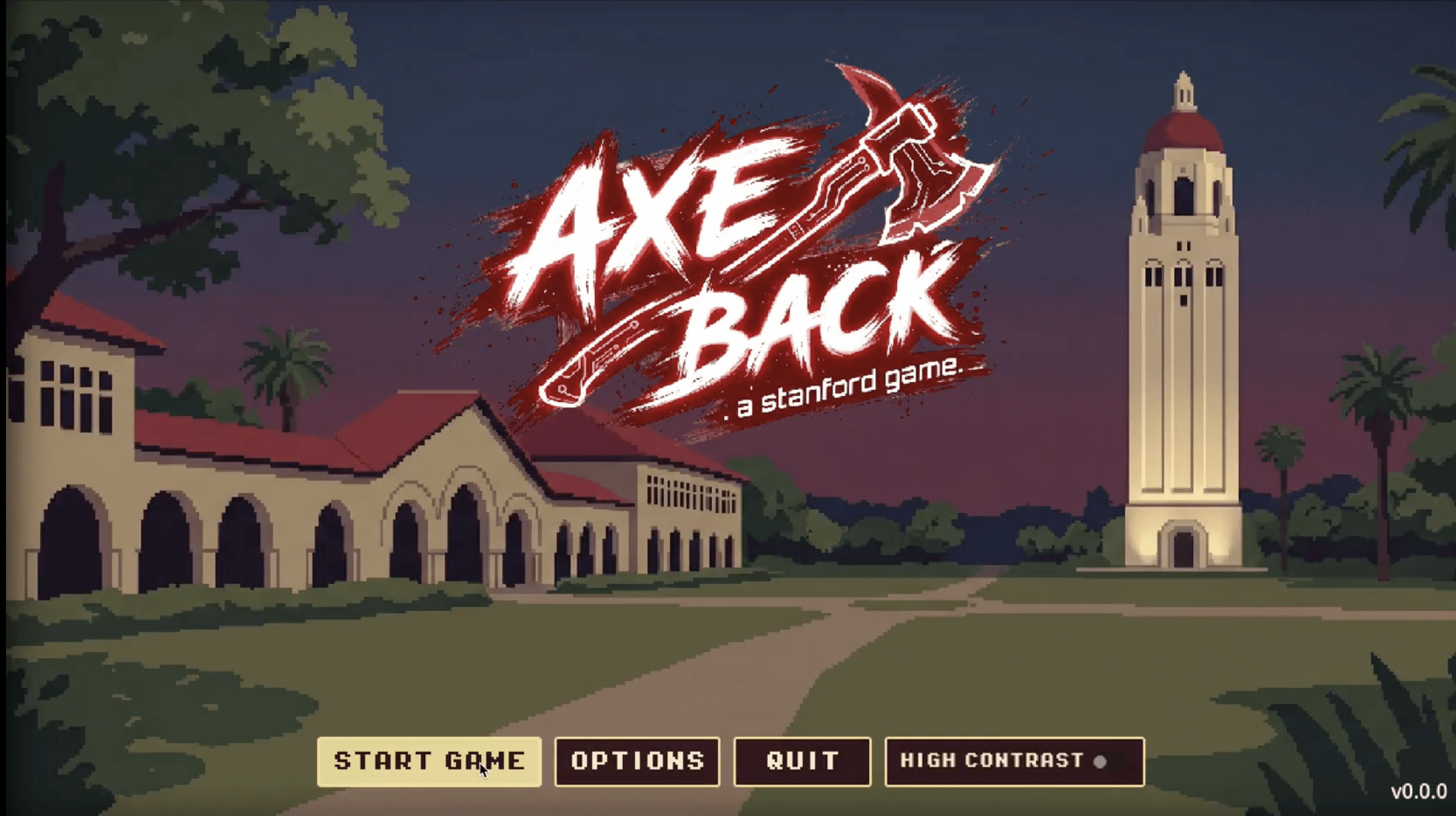
AXE BACK
Tagline: Marcus has been missing for four days. The Stanford Prison Experiment never ended.
Team: Bathyergus — Agam, Graham, Ji Qi, Luca
Artist’s Statement
Axe Back is a 2D platformer wrapped in Stanford history. You play as J., a Stanford undergrad whose roommate Marcus has vanished. A crumpled note, a hand-drawn map, and four days of silence lead you from your dorm room to the Stanford Dish at 1 AM, and then underground, into tunnels that shouldn’t exist. The premise is simple: the Stanford Prison Experiment of 1971 never ended. It moved Axe Back, cycling new student subjects every semester, and Marcus is the latest.
Our platforming is modeled on Celeste, a minimal move set (run, jump, dash) made deep through hard-but-fair, where death is how you learn. But where Celeste uses its mechanics to explore anxiety and self-doubt through abstract mountain imagery, we use the same loop to explore something different: institutional grounded in real history. We wanted to build a game that uses real Stanford geography and real psychological history to create dread that feels plausible. The dorm room isn’t there to appeal to the college feel, it’s an investigation scene where every object deepens the mystery. Every recovered document the player collects tightens the narrative knot. By the time you read “It never ended. It just moved underground,” sitting in your chair, gasping, feeling uncomfortable, and unable to stop playing.
Concept & Originality
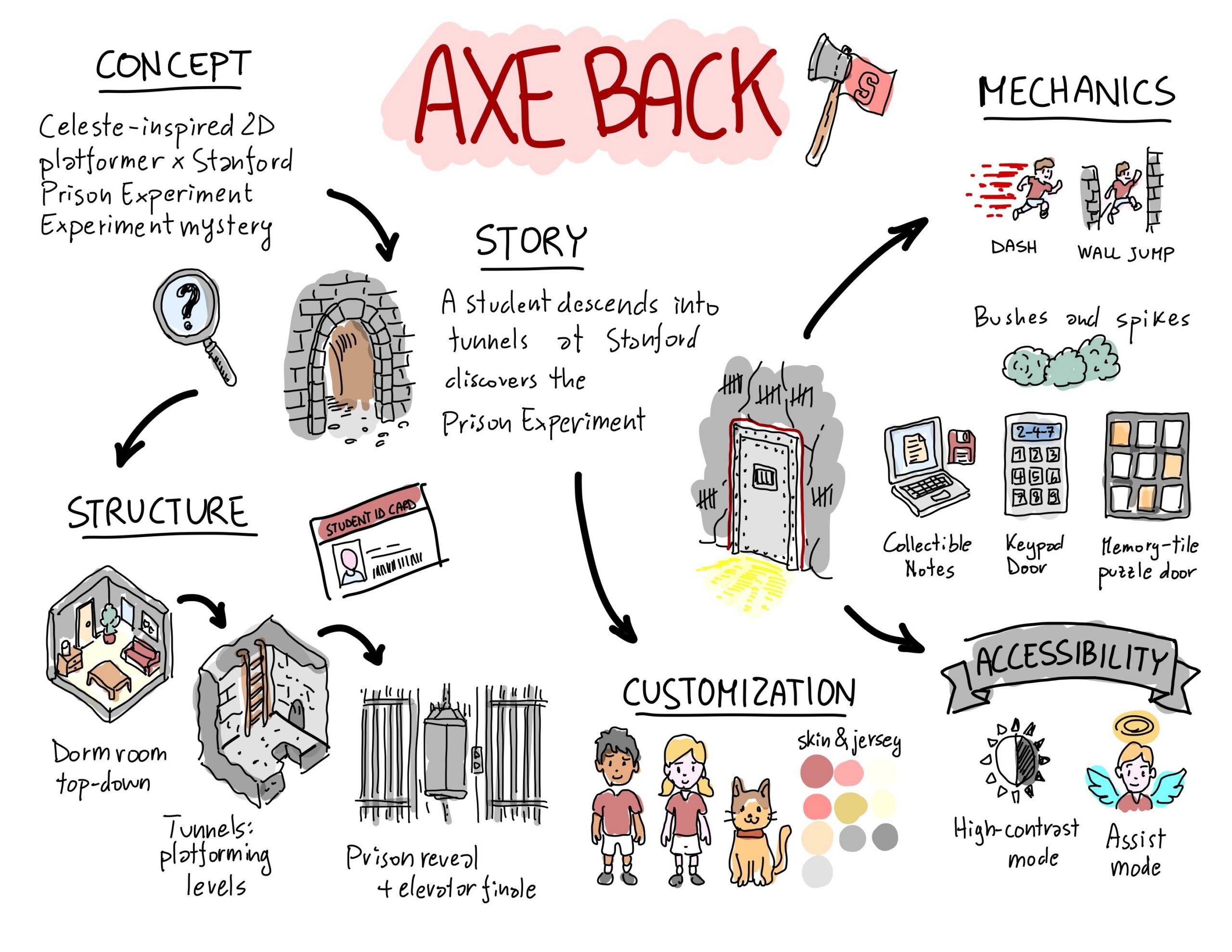
Axe Back is a narrative-driven 2D platformer that combines precision movement, environmental storytelling, and investigation. The player begins in a dorm room that functions as an interactive mystery scene: objects such as the bed, desk, laptop, photos, and door reveal clues about Marcus’s disappearance before the game moves to the Stanford Dish trail at 1 AM and eventually underground into tunnels marked by old psychology-experiment signage.
Our mechanical inspiration comes Celeste: a small move set becomes deep through tight rooms, fast respawns, and repeated mastery. However, Axe Back models by grounding the experience in Stanford-specific history. Rather than using an abstract mountain or fantasy world, the game uses recognizable campus spaces, the legacy of the 1971 Stanford Prison Experiment, and recovered document.
The central twist is that platforming and investigation are interdependent. Collectible documents replace traditional coins, each revealing story information while also supporting puzzle progression. The player is not simply collecting items for score; they are building a case. Keypad doors, memory locks, and sequence puzzles require players to synthesize evidence from documents, NPC dialogue, and environmental clues before progressing. In this way, the level itself becomes the story: movement opens new areas, evidence unlocks gates, and each challenge pulls the player deeper into the mystery.
Initial Brainstorming
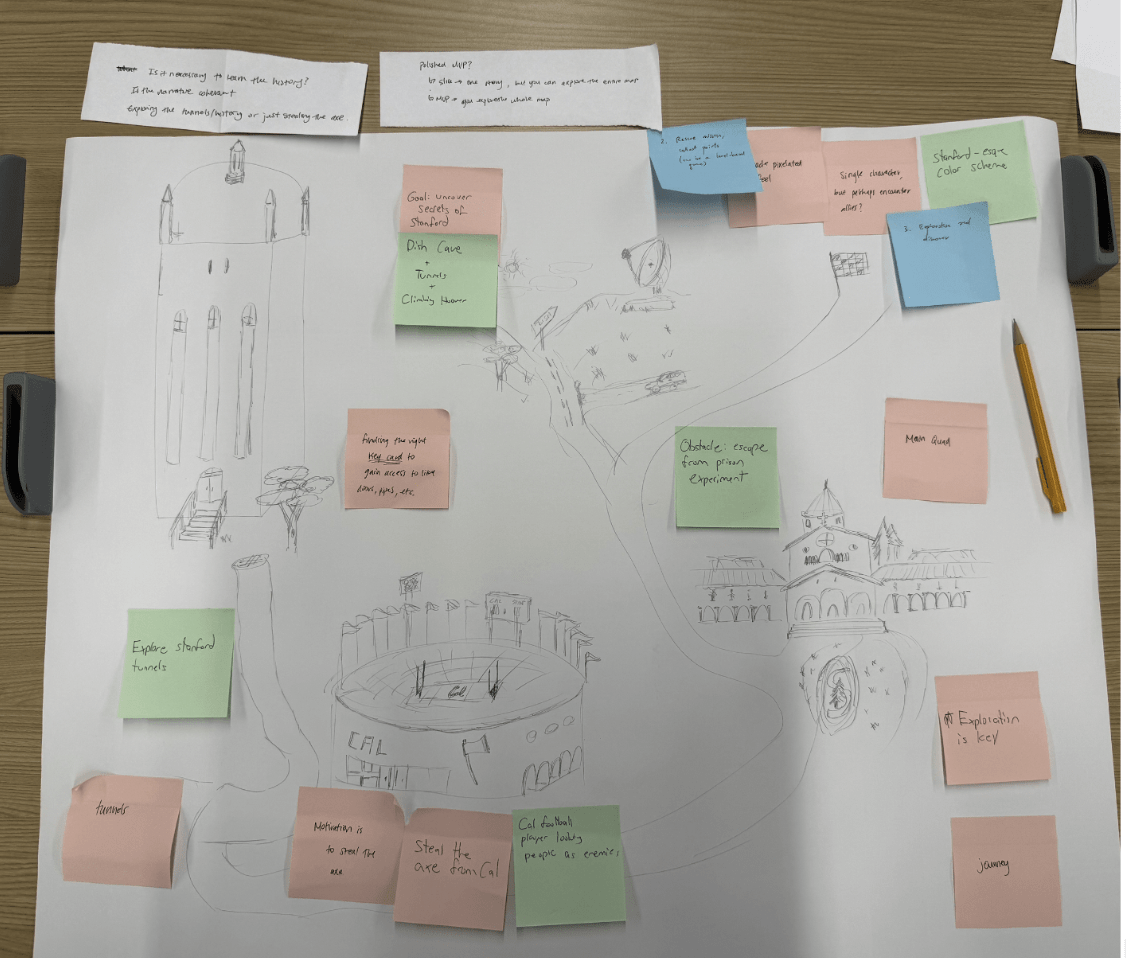
Our initial brainstorming centered on a Celeste-inspired 2D platformer rooted in Stanford mythology, especially the Axe rivalry, campus landmarks, and underground tunnel lore. Early versions of the story were much larger in scope, following a freshman trying to recover the Axe from Cal as a way of honoring their late brother and reconnecting with Stanford tradition. We imagined the full game as a four-act journey from the Dish, through campus and the steam tunnels, and eventually into Cal’s stadium. Over time, we realized the emotional core was strongest when the absurd heist premise was grounded in real Stanford places and a personal promise. This helped us narrow the project toward a focused vertical slice that could test the core experience: tight platforming, Stanford-specific worldbuilding, and a mystery told through notes, environmental details, and movement.
Scope Statement
This project is a vertical slice.
We scoped Axe Back to a single, fully realized Act 1, covering the dorm investigation, the Dish trail, and the initial descent into the underground tunnels. Rather than building a broad but shallow experience across multiple acts, we chose to make one act feel complete: a polished investigation scene with five interactive objects, a full platforming level with collectible story documents, NPC encounters with gated dialogue, three puzzle archetypes (keypad, memory, sequence), working assist mode and high-contrast accessibility, and bookending cutscenes that establish the conspiracy and end on a cliffhanger. The goal was to prove out the core experience, does investigating drive the narrative, does platforming feel urgent, does the story stick, so that this slice represents the tone, pacing, and emotional arc of the full game, not just its mechanics. Everything that made it into Act 1 is polished.
System Model (Mechanics of Magic)
The core loop operates on two interlocking cycles. In the investigation loop, the player collects recovered documents and NPC testimony that advance the narrative and unlock gates — the keypad door, for instance, requires synthesizing three room numbers (2, 4, 7) into the code 247. In the traversal loop, the player navigates hazards using run, jump, and dash, with instant respawn at checkpoints and Red Bull pickups that refresh the dash mid-air.
The two loops feed each other: platforming reaches new areas, documents found there unlock the next gate. The one persistent stat is the evidence log (notes + NPC testimony), which determines what doors open and what dialogue is available. The system diagram should show: Enter area → Platform through hazards → Collect document / Talk to NPC → Evidence log updates → Reach gate → Gate checks evidence → (pass) Proceed / (fail) Explore more → Loop.
Formal Elements & Values
Players: Single-player.
Objective: Investigate Marcus’s disappearance by collecting evidence, solving environmental puzzles, and navigating the underground tunnels beneath the Stanford Dish. The act ends when the player reaches the elevator exit and triggers the outro cutscene.
Move set: Run (fixed speed), jump, one directional air-dash that recharges on landing. Dash can be refreshed mid-air by collecting Red Bull. No combat, just pressing E to examine objects, talk to NPC, or interact with puzzle interfaces.
Hazards (no combat): Spikes and tangled grass are obstacles that instant-kill on contact.
Resources & structure: Per-checkpoint instant respawn with no lives and no game-over. The evidence log (recovered documents) is the primary progression resource, gating puzzle doors and NPC dialogue.
Puzzles: Three archetypes — keypad (enter a numeric code synthesized from collected clues), memory lock (Simon Says tile sequence), and the platform itself. Each puzzle type has configurable difficulty staging, attempt limits, and lockout behavior.
Accessibility: Assist mode (toggled in pause menu) disables all hazards. High-contrast mode recolors all UI text and backgrounds for visibility. If the player dies repeatedly, the game proactively offers assist mode via an in-game banner.
Outcome: Reach the exit to trigger the Act 1 outro, which reveals the scope of the conspiracy and sets up Act 2.
Values: Hard-but-fair, death is expected, and never punishing. Investigation as agency where the player earns progression through evidence. Accessibility as a design concern, not an afterthought.
Target Audience & MDA
Target audience: Players who enjoy narrative-driven exploration games (Gone Home, Firewatch) and players who enjoy tight 2D platformers. Secondary audience: anyone with a connection to Stanford who will recognize the real locations and history. Designed so that the story is the primary draw and the platforming is the delivery mechanism, not the other way around.
Mechanics → Dynamics → Aesthetics
Mechanics: Run/jump/dash with instant-kill hazards and immediate respawn; point-and-click object investigation; collectible documents that advance a persistent evidence log; NPC dialogue gated by evidence; three puzzle archetypes with difficulty staging and lockout; assist mode toggle.
Dynamics: The investigation scene creates tension as each object deepens the mystery. Transitioning to the platforming level shifts the player into a state of urgency, but the need to collect documents forces them to explore rather than rush. NPC gates create moments of reflection (“go back and find more evidence”) that slow the pace just when the player wants to push forward, heightening anxiety. The puzzle doors reward synthesis — the player must connect clues across multiple documents rather than brute-forcing a code. Assist mode creates a dynamic where players self-select their challenge level without judgment.
Aesthetics:
- Primary — Narrative / Discovery: The core aesthetic is uncovering a conspiracy. Every document, every NPC line, every environmental detail adds a piece. The player is building a story in their head as they play.
- Primary — Challenge: The platforming demands precise timing and pattern recognition. Death-and-retry creates a rhythm of mastery.
- Secondary — Submission / Flow: Once the player internalizes the move set, the traversal loop becomes easy.
- Secondary — Sensation: The tonal shift from anxious dorm room to moonlit trail on the dish to underground mystery is designed to be felt physically.
Accessibility & Inclusion
Assist mode fully disables hazards, making the entire story accessible to players who struggle with precision platforming. High-contrast mode is available in every UI scene (intro, cutscenes, dialogue, journal, puzzle doors) and recolors text and backgrounds for low-vision players. The game offers assist mode after repeated deaths rather than waiting for the player to seek it out.
Worldbuilding & Narrative
Setting
The game is set on Stanford University’s campus. The dorm room is intimate and still, Marcus’s untouched bed, scattered papers, a locked laptop. The Stanford Dish trail at 1 AM is open, moonlit, and eerie. The underground tunnels are the heart of the mystery: concrete corridors labeled with faded psychology-experiment signage (Psychology Wing, Observation, Archive, Section C – Holding, Control Zone B).
Narrative Architecture
The narrative follows the “embedded narrative” model where the story has already happened, and the player reconstructs it through environmental evidence. The dorm room is pure embedded narrative: every object tells you something about Marcus and his state of mind before he vanished. The platforming level shifts toward “emergent narrative” as the player’s own experience of navigating the tunnels, encountering NPC, and piecing together documents creates a personal version of the investigation.
Story delivery is entirely environmental and diegetic. There are no cutscenes during gameplay. Within the level, story arrives through recovered documents, NPC dialogue, and environmental details.
Narrative Arc
The tonal arc moves through four phases: anxious mystery (dorm room: “where is Marcus?”) → trespassing thriller (the Dish trail at 1 AM: “I shouldn’t be here”) → mystery reveal (the underground tunnels: “this is real, this is happening now”) → conspiracy hook (the outro: “a camera, red light blinking, they know I was here”).
Thematic Grounding
The fictional element is rooted in real history and real geography. The Stanford Prison Experiment of 1971, terminated after six days due to psychological harm, is the factual foundation. The “what if it never ended” premise feels plausible precisely because the real experiment was so extreme. The Stanford Dish is real; the tunnels are fictional.
Puzzle & Level Design
Investigation Scene (Dorm Room)
The dorm room functions as a pre-level puzzle space. Five interactable objects are arranged spatially to create a natural investigation flow. Each object has three to four sequential lines, unlocked by repeated interaction, so the player is rewarded for being thorough. The room teaches the core investigation verb (press E to interact).
Platforming Level (Dish Trail → Tunnels)
The main level transitions from the surface (moonlit trail, open sky, natural environment) to underground (concrete tunnels). This spatial descent mirrors the narrative descent, the deeper you go, the worse it gets.
Documents are distributed across the level as collectibles, replacing traditional coins. The first four documents are explicitly puzzle-relevant: they contain the three room numbers (2, 4, 7) needed for the keypad door. This teaches the player that documents aren’t just for show, they’re mechanically necessary.
Puzzle Gates
Three puzzle archetypes gate progression, each justified narratively as security systems within the underground facility:
Keypad Door: The primary puzzle of Act 1. The player must synthesize information from documents into the code 247. If the player tries the keypad before collecting enough evidence, they will soon realize they are missing something.
Memory Door (Simon Says): A 3×3 grid of tiles flashes a four-tile sequence. The player must repeat it using mouse clicks. Three attempts are allowed before the pattern regenerates.
Sequence Door — The player presses option buttons (EAST / NORTH / HOLDING) in the correct order, derived from NPC testimony.
NPC Design
NPC serve distinct mechanical and narrative roles:
The Maintenance Worker (midway through the level) is a tutorial NPC. He drops a Red Bull pickup and teaches the dash-refresh mechanic: “See that Red Bull I dropped over there? It should help you get across. After you grab it, while you are midair, double-tap Shift for another boost.”
Difficulty & Pacing
Difficulty is managed through hazard density (increasing as the player descends underground). Pacing alternates between high-intensity platforming sections and low-intensity investigation moments (reading documents, talking to NPC, solving puzzles), creating a tension-and-release rhythm. The assist mode toggle provides a player-driven difficulty floor that removes hazards entirely without removing the story.
Learning & Design Thinking
MDA Framework: We defined our target aesthetics first, Narrative/Discovery and Challenge, then worked backward to the mechanics. The recovered-document system exists because “uncovering a conspiracy” requires the player to actively assemble fragments, not passively receive exposition. The dash-and-die platforming creates urgency that makes exploration feel dangerous rather than leisurely. Evidence gates and NPC requirements emerged as the natural dynamics from those mechanical choices.
Pacing and difficulty curves: Rather than a linear ramp, the level runs on intensity waves, platforming sections spike the challenge, investigation moments (documents, NPCs, puzzles) let the player breathe. The tension-and-release rhythm mirrors the narrative arc and was tuned directly through playtesting.
Onboarding without a moderator: Every tutorial moment is embedded in the fiction. The dorm room teaches the interaction verb and evidence-collection mechanic without a single tutorial popup. The Maintenance Worker teaches the dash-refresh diegetically: “See that Red Bull I dropped over there?”
Embedded narrative (Jenkins): The dorm room is Jenkins’ embedded narrative in its purest form — the story already happened, the player reconstructs it through objects. The tunnels layer that with emergent narrative as the player’s own path through them becomes part of the story.
Scoping: The MVP/vertical slice distinction directly shaped our decision to build one polished act rather than four rough ones. See Scope Statement.
Balancing chance and skill: Each puzzle type tests a different skill, the keypad is pure deduction, the memory door adds reaction, the sequence door requires NPC testimony. No puzzle involves chance; every failure is a learning opportunity.
Ethics of game design: No lives, no game-over, no timers, no lost progress. Accessibility is structural, not optional. The game’s subject matter, a real experiment that caused real harm is treated as horror, not spectacle.
Skills Developed
Narrative Design in a Game Engine: Building the recovered-document system required us to learn how to deliver story through game mechanics rather than cutscenes. The story_fragments dictionary in game_manager.gd, the add_note_from_coin() function, and the NotesJournal UI (styled as a Mac Finder window) were all built from scratch to support environmental narrative delivery.
Puzzle System Architecture: Designing three reusable puzzle archetypes (keypad, memory, sequence) with configurable difficulty, attempt limits, lockout behavior, and NPC-gating prerequisites taught us how to build modular, data-driven game systems rather than one-off scripts.
Accessibility Implementation: Building assist mode and high-contrast mode required us to think about accessibility as a system-level concern — assist mode touches hazard collision, enemy detection, and the death-counter banner. This was new territory for the team and deepened our understanding of inclusive design.
Testing & Iteration History
Iteration 1 — Testing the Playable Core
Who tested: Two CS247G students (Student A, Student B) and Butch.
Guiding questions: What kind of fun does the game create — mastery, frustration, exploration, story curiosity, or something else — and does that match our intended experience? Are the platforming puzzles challenging in a satisfying way, or do they feel unfair, unclear, or overly punishing?
What went well: The dash mechanic was immediately and consistently praised. Student A said the dash was “so fun” and described the experience as engaging because it felt like problem-solving: “It’s fun to try to figure it out.” Student B, who described themselves as not usually a platformer player, said they were “having fun just trying to get through the game,” which suggested the core loop had broad appeal. Players were motivated to keep retrying difficult sections rather than giving up. Early visual work also landed — Student A praised the character animations and noted an emotional attachment to the player character.
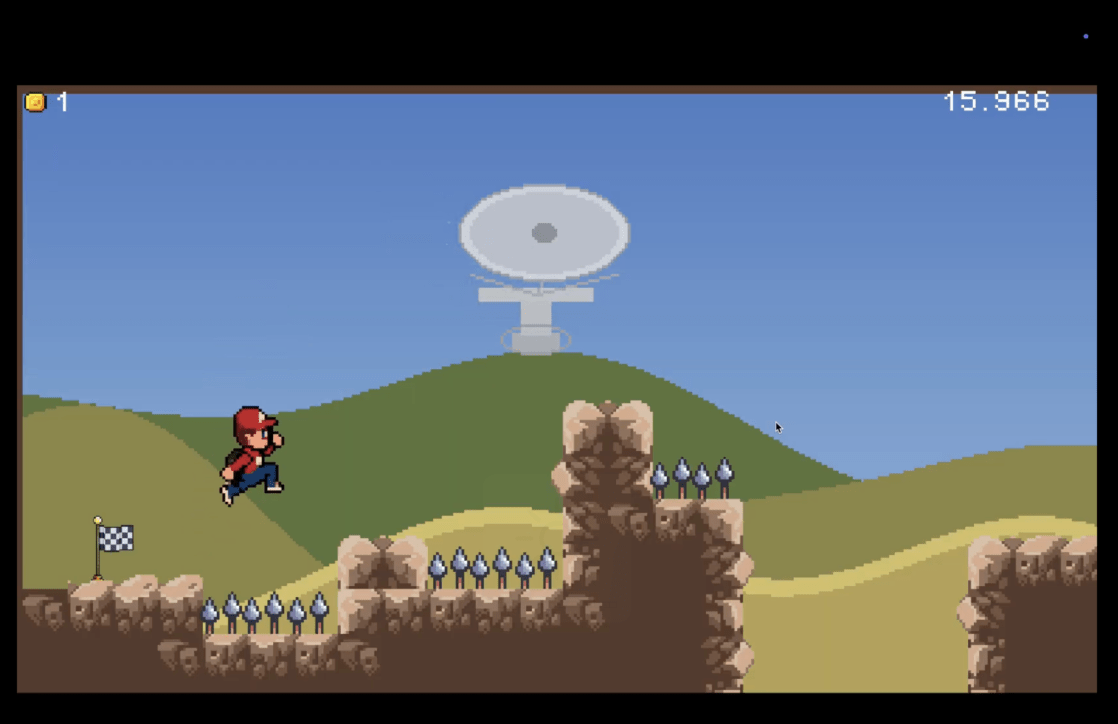
What didn’t: The type of fun players were experiencing didn’t match our intent. We wanted a narrative platformer where difficulty, exploration, and story curiosity coexisted — but players consistently described the game as a rage-platformer. Student A said “I’m experiencing a little rage bait right now” and Student B said “This feels more of a rage platformer.” Butch crystallized the problem: “You need to choose what type of fun you’re going for.” Beyond tone, the difficulty curve was too steep too early — Student A said “it just gets too hard too fast,” and Butch agreed the game needed “a more generous learning curve.” Controls were also unclear: players didn’t know what moves were available until the team told them mid-session (“I’m still unsure about the exact scope of what my abilities are”). Hitboxes eroded trust — Student B noted that visually it looked like picking up an item should work but didn’t, and Butch caught a kill-box delay that killed the player after they’d already cleared the hazard. Coins created confusion rather than guidance: players either gave up on them or didn’t understand what they were for.

Changes made and why: We kept the dash mechanic because it was the strongest part of the prototype by every measure. To shift away from accidental rage-platformer energy, we redesigned the early level sequence to be more forgiving before difficulty escalated — directly responding to “too hard too fast” feedback from both Student A and Butch. We added explicit onboarding for movement and dash abilities because players didn’t know what they could do without being told mid-playtest. We tuned hitboxes for spikes and pickups to match visual expectations, addressing the trust-breaking feedback from both Student B and Butch. We also began reconsidering coins as a system — the question of what collectibles mean mechanically and narratively became a thread we’d carry into every subsequent iteration.
Iteration 2 — Testing the Dorm Opening and Narrative Onboarding
Who tested: One CS247G student (Student D).
Guiding questions: Does the new dorm-room opening make the narrative feel more grounded, personal, and motivating? Do players understand the key controls and affordances through the level itself — interact prompts, diagonal jumping, dash signs, checkpoints?
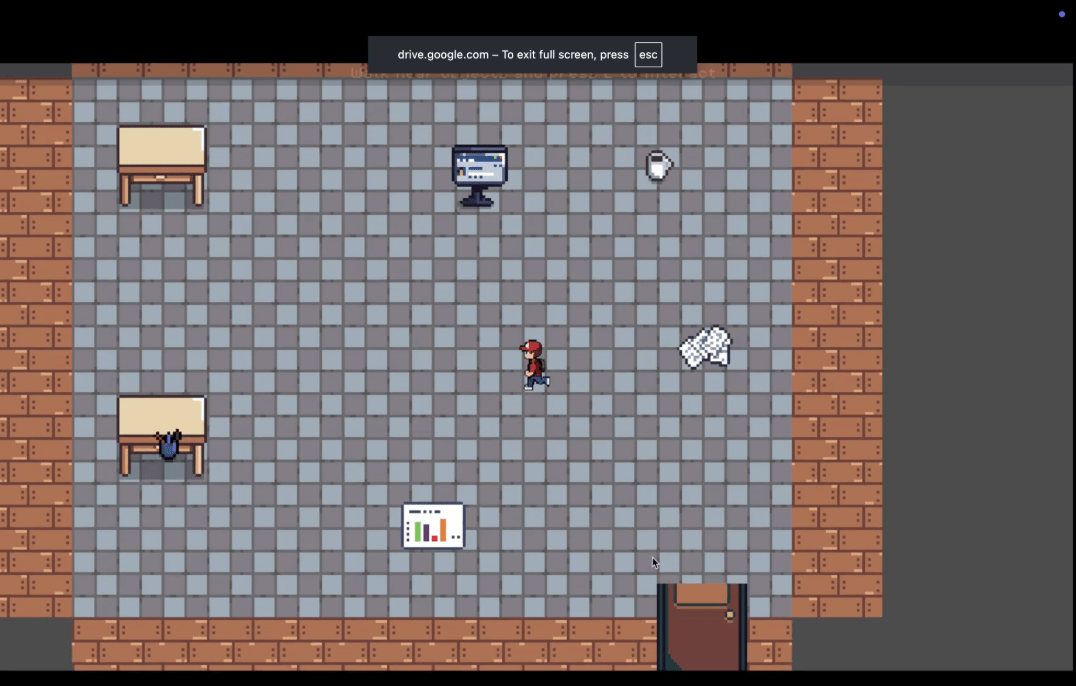
What went well: This iteration produced our clearest sign that narrative was beginning to work. Student D said “I actually want to know the narration. I’m curious how this plays out” — a significant shift from earlier playtests where players were ignoring the story because the platforming demanded all their attention. Spreading narrative throughout the experience via checkpoint pop-ups (rather than front-loading it) was the likely driver: the player stayed curious because the story kept unfolding. Student D also responded positively to specific spatial moments — the spring mechanic (“Ah, that’s fun”) and the tunnel environment (“Inside the tunnels is cool”) — suggesting the game was beginning to create a real sense of place. From a narrative architecture standpoint, this was a turning point: the player was experiencing the world through spaces and progression, not just reading story before playing.
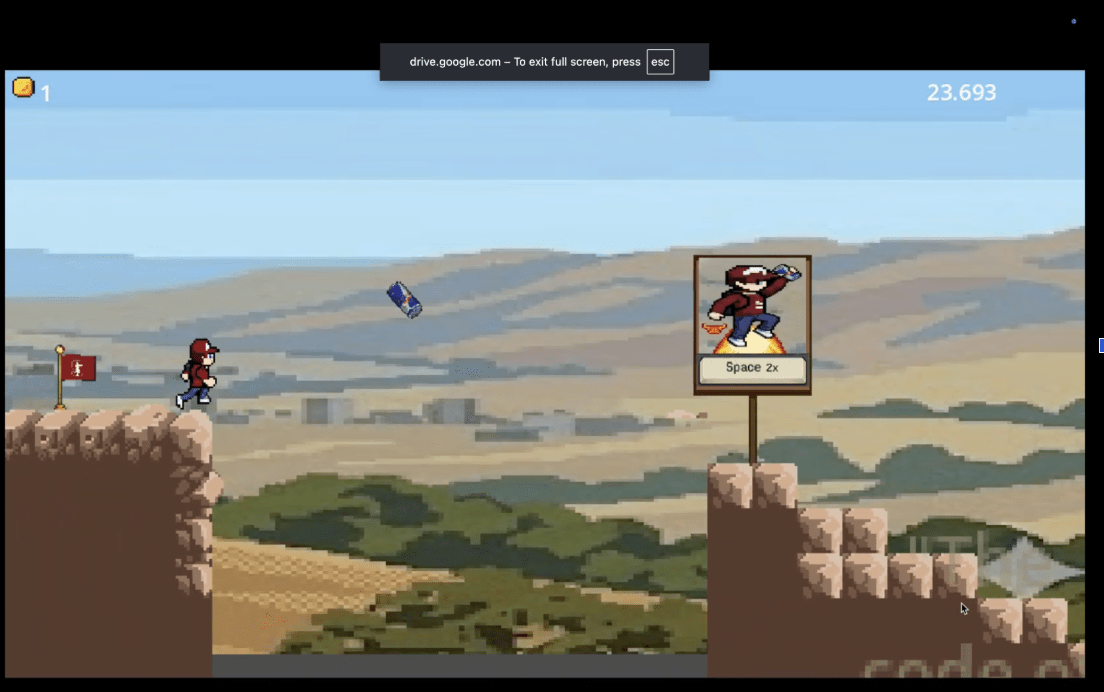
What didn’t: The dorm room itself needed polish. It was too large, with too much empty walking, which made the opening feel slower than intended. It also lacked enough decoration to read as a real dorm room rather than a generic interaction space. Control onboarding still had gaps — Student D struggled with diagonal jumping because nothing in the level explicitly taught combined inputs. Several small UI failures compounded this: the player character’s sprite covered the “press E” prompt, making it unreadable without moving, and one tutorial sign gave the wrong keybind (“space x2” instead of “shift x2”). These felt minor in isolation, but Butch’s earlier framing held: when an interface gives wrong information, the player stops trusting the game.
Changes made and why: We kept the dorm-room opening because the narrative curiosity data was compelling. We tightened the space to reduce empty walking and added Stanford-specific environmental details to make the room feel inhabited and connected to the protagonist. We corrected the “space x2” sign to “shift x2” and repositioned the interact prompt so the character sprite no longer covered it — small fixes, but essential for player trust. We added clearer signage for diagonal jumping to address the gap between what the level expected players to do and what the level actually taught them.
Iteration 3 — Testing Player Agency, Hint Systems, and Narrative Integration
Who tested: Butch and one CS247G student (Student E).
Guiding questions: Does the journal/laptop system make the narrative accessible without disrupting the flow of platforming? Do players understand the purpose of Red Bulls, hint mode, notes, and other affordances without designer explanation? Do the adjusted spike placements, hitboxes, and Stanford-themed visuals make the platforming feel challenging, fair, and cohesive?
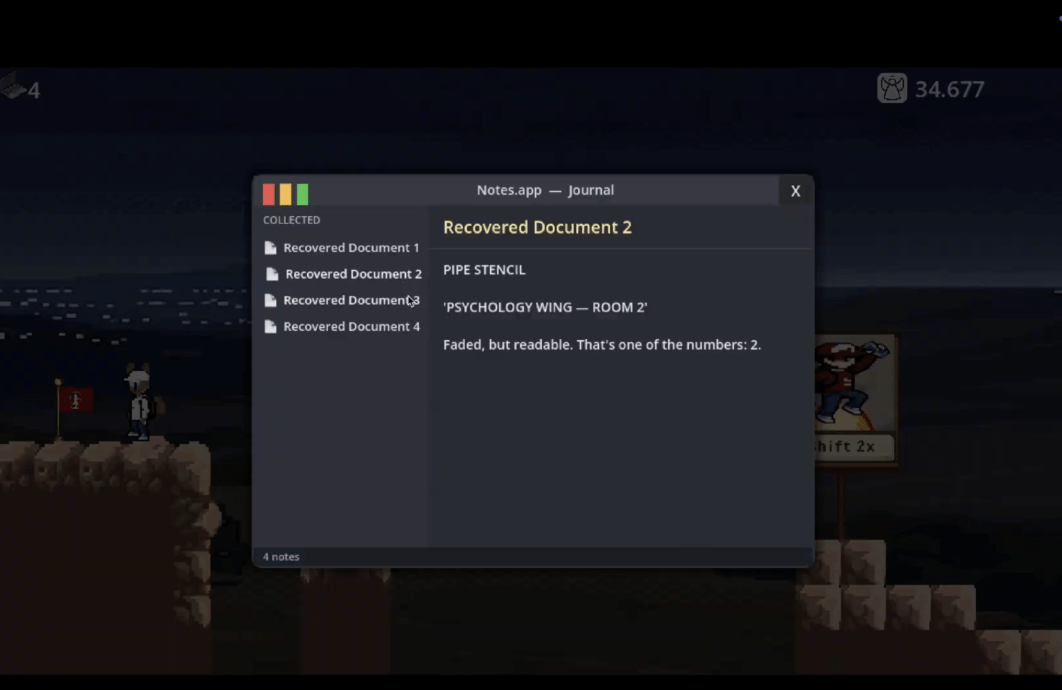
What went well: The laptop/journal interface was well-received — Student E said “I like this. I like this aesthetic here.” More importantly, Butch responded positively to the note-based puzzle: “I think the first puzzle is really good.” This confirmed that our recovered-documents system was working not just as flavor but as a mechanic — players were using narrative objects to solve puzzles, which is exactly what we’d designed for. Assist mode was the clearest overall success: Butch said “I think it’s much better… assist mode made it so that way even if I got frustrated I knew that I could resort to it.” The hint system, Stanford checkpoint flag, avatar customization, and environmental humor (the fire alarm, the vending machine on the cliff) were all received positively, suggesting the game’s identity was becoming more distinct.
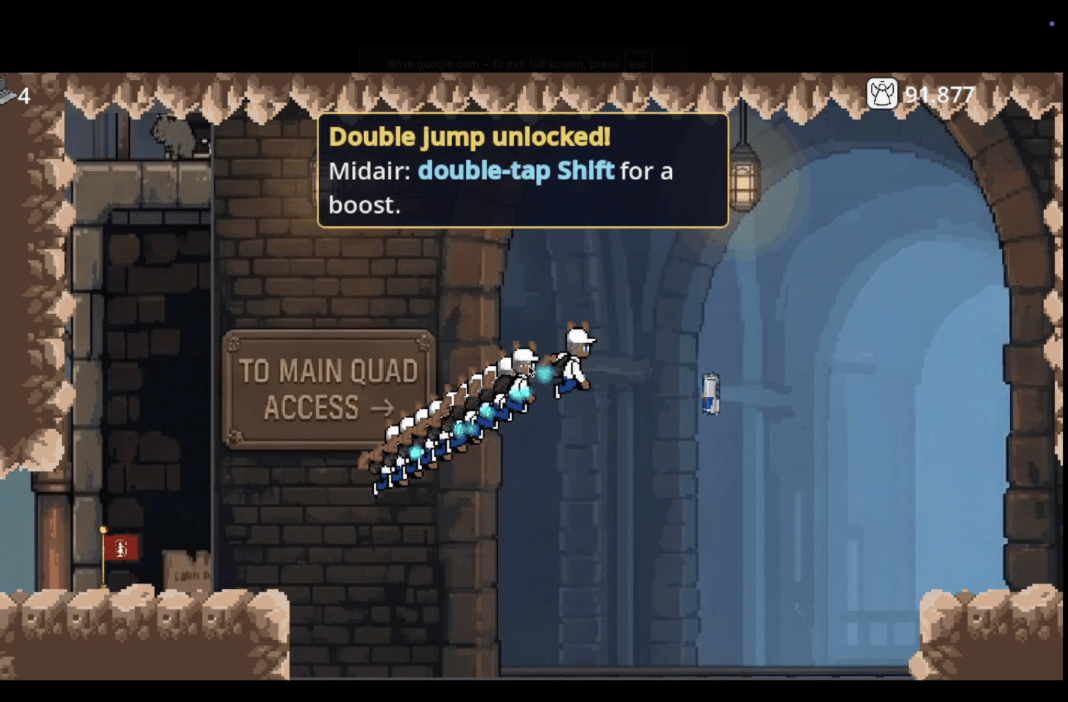
What didn’t: Narrative integration was still the biggest unresolved problem. Butch said “there’s still not enough narrative” and identified a structural disconnect: “the experiment going on and going to chase after your brother are still two disjoint narrative paths at the moment.” Student E noticed this too, describing the game as feeling “kind of disconnected” because platforming, puzzles, and reading each felt like separate modes rather than a unified experience. Giving players access to narrative (via the journal) is not the same as embedding narrative into the level — this became the clearest design lesson of the iteration. Affordances also still needed work: the hint pop-up appeared too early and too often, making it feel patronizing rather than helpful (“it’s almost like saying, ‘Oh, you really suck at this game'”). The Red Bull instruction used the phrase “double tap” when the actual input felt more like pressing shift again — a small wording issue that caused players to form the wrong mental model of the mechanic. Players also accumulated large numbers of notes but couldn’t distinguish story notes from guidance collectibles, since both used the same icon. Hitboxes had improved but still didn’t fully match visuals — players were clipping through spikes in ways that felt inconsistent. Butch also flagged a ludonarrative dissonance issue with Red Bull vending machines in the tunnels: “Why is there just a Red Bull vending machine in the dungeons?” The mechanic made sense as a gameplay tool; it didn’t yet make sense as part of the story world.
Changes made and why: We shifted hint mode to time-based triggering (rather than death-count-based) and limited it to appearing once — addressing Butch’s feedback that repeated hints feel intrusive and disrespectful of player agency. We changed Red Bull instructions to appear only on the first pickup and rephrased the wording to describe the actual input correctly. We created separate icons for story notes and guidance collectibles, directly fixing Student E’s confusion about why they had 21 notes but couldn’t read past 13. We began connecting the two narrative threads (the experiment and Marcus) more explicitly, and restructured the note-based puzzle so the journal becomes more naturally discovered through play rather than treated as a separate reading mode. We also added short contextual justifications for gameplay objects in the world — beginning to address the ludonarrative dissonance Butch identified around Red Bulls and NPC.
Final Playtest Notes
- Really liked Accessibilty of Color Blind mode for his IRL brother
- Liked the touch of the dish, felt a personal conneciton to the game
- Wished the inspection button in the dorm was a little more obvious (1:17)
- Felt morally conflicted about using Assist mode because “didn’t like to cheat”
- Said they were a non platformer player, was very hard but that made the ending more worthwhile
Accessibility Notes
Axe Back includes two accessibility systems:
Assist Mode is toggleable from the pause menu and disables all hazards (bike racks, environmental obstacles) and enemy detection. The game treats assist mode as a legitimate way to play, not a concession, his makes the entire level traversable without precision platforming, ensuring the story is accessible to all players regardless of motor skill. If the player dies repeatedly, the game proactively offers assist mode via a banner, removing the friction of seeking it out and the stigma of “giving up.”
High-Contrast Mode is a visual accessibility toggle that recolors all UI elements — intro text, cutscene panels, dialogue boxes, the NotesJournal, and puzzle interfaces, for improved readability.
These systems were designed as first-class features, not afterthoughts, and are referenced throughout the codebase as structural patterns rather than per-scene overrides.
“If This Were a Full Release…”
The full vision for Axe Back extends across four acts:
Act 2 — Professor Morrison: J. seeks out Professor Morrison, the one faculty member who might know the truth. The act would introduce a new location (Morrison’s office, a campus building at night) and a new puzzle archetype (dialogue-based persuasion — convincing Morrison to help by presenting the right evidence in the right order).
Act 3 — Return to the Tunnels: Armed with Morrison’s knowledge, J. returns underground with a plan to free Marcus and the other subjects. The act would expand the tunnel map, introduce new hazards (security patrols with flashlight cones), and deepen the horror with direct encounters with the ongoing experiment.
Act 4 — Escape: The rescue and escape sequence — freeing Marcus, evading the experimenters, and getting proof to the surface. The act would culminate in a choice: expose the experiment publicly (risking institutional backlash) or destroy it quietly (protecting the subjects but leaving the system intact).
The camera blinking at the end of Act 1 (“They know I was here”) is the narrative thread that would drive the remaining three acts — the player is no longer an investigator but a target.
The Game
Build: [PLACEHOLDER — Link to itch.io or embedded Godot build]