The Waiting Pet
Artist’s Statement
Our game is a narrative escape-room experience in which the player gradually uncovers their true identity. The story begins with the player waking up alone in an unfamiliar house as a hungry dog with no understanding of who they are or why they are there. By solving environmental puzzles and searching for food, the player slowly discovers hidden magical rooms, shapeshifting potions, and traces of a forgotten past.
As the game progresses, the player gains access to transformation potions that allow them to become different animals. Each form changes how the player interacts with the environment and creates new emotional connections to the world. After transforming into a cat, the player gains the ability to jump across spaces that were previously unreachable. This transformation also hints that these abilities and experiences feel strangely familiar, suggesting that the transformations are not random. Later, after reaching the second floor and solving more complex puzzles, the player transforms into a fish and begins to recover fragmented memories.
We intentionally begin the game with very limited narrative information. At the start, the player only knows that they are a dog who has awakened without memories. Additional text and story fragments are introduced gradually throughout exploration, allowing players to uncover the narrative at a slower and more comfortable pace. We wanted discovery to feel natural rather than overwhelming, especially for players who are less interested in narrative-heavy games.
Eventually, the player learns that she was a witch who created transformation potions to escape a growing witch hunt in the village. During her escape, a mistake caused her to lose all of her memories and remain trapped in animal form. However, we intentionally avoid overly negative wording in order to create an experience suitable for players ages 12 and above. Our goal is not to portray trauma directly, but to explore themes of escape, curiosity, resilience, and self-acceptance in a way that younger audiences can emotionally understand.
The ending reflects this emotional journey. After recovering her memories, the protagonist decides to stop running and finally stand up for herself and others who have been misunderstood or excluded, rather than continuing to hide from the villagers. Inspired by the history of witch hunts, we wanted to reimagine this story with a more hopeful ending—one centered on courage, self-acceptance, and speaking out against prejudice.

Target audience
Our target audience is primarily teenagers and young adults ages 12+ who enjoy exploration, mystery, puzzle-solving, solo gameplay, and escape-room experiences.
Game mechanics
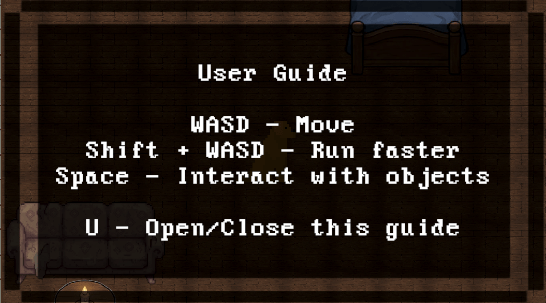
Our game uses a simple and accessible control scheme designed to support focus on puzzle-solving rather than mechanical precision. Players move using WASD, run with Shift, and interact with objects using Space, while a minimal user guide can be accessed at any time by pressing U. This straightforward interface ensures that players can quickly understand how to play, allowing more cognitive space for exploration and problem-solving.
Game map

Bedroom
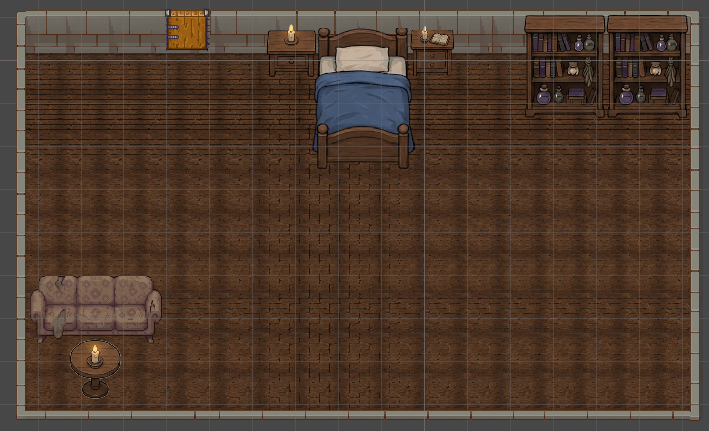
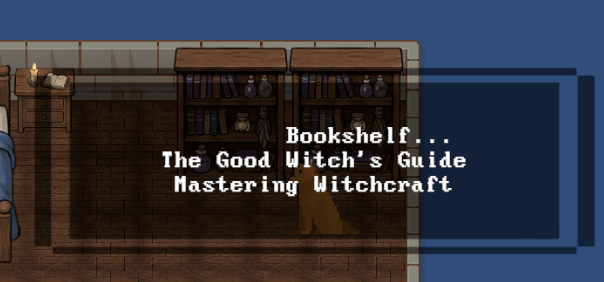
The Bedroom serves as the player’s introduction to the world. At first glance, it appears to be a simple single-occupancy bedroom containing basic furniture such as a sofa and a bookshelf. We intentionally designed this space to reveal the story gradually rather than overwhelming the player with information. Early environmental clues are subtle; for example, the bookshelf contains several books about good witches, hinting at the magical themes of the game without explicitly explaining them. The room establishes an atmosphere of mystery and curiosity while encouraging players to begin exploring.
Living Room
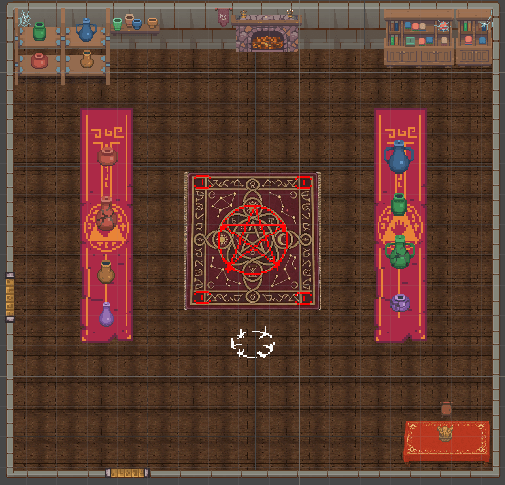
The Living Room expands upon the mystery introduced in the Bedroom. The space contains a single-person dining table suggesting that only one person lives in the house. Players may begin to wonder why there is no evidence of pets despite currently being a dog. This inconsistency is intentionally designed to create curiosity about the protagonist’s identity.
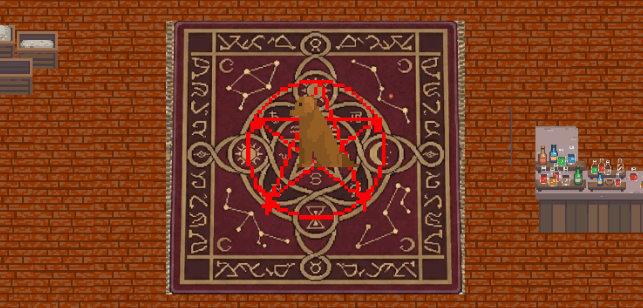
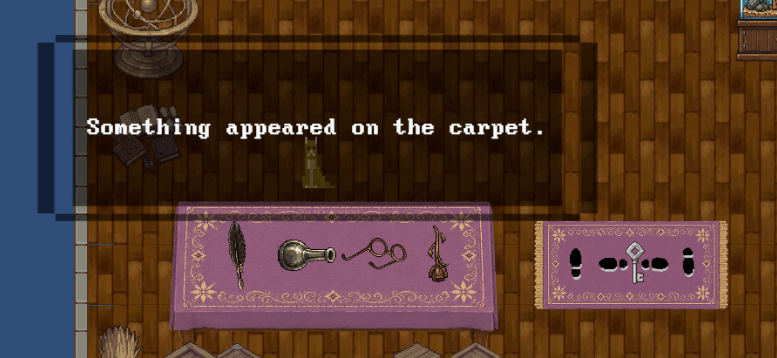
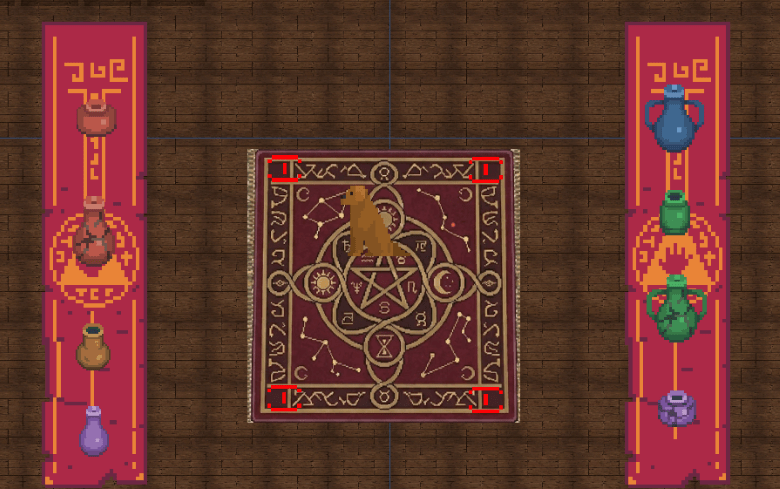
The room also contains a magical carpet puzzle that serves both gameplay and narrative purposes. The carpet introduces players to the idea that magic is an important part of the world. Once the puzzle is solved, a magical teleportation circle appears, granting access to the hidden Magic Room.
Magic Room

The Magic Room reveals the first major piece of the house’s secret. The room is filled with ingredients, notes, and notes related to transformation potions. Through a puzzle involving these magical materials, the player drink the potion that transforms them into a cat.
This transformation introduces a new gameplay mechanic: the ability to jump and reach previously inaccessible areas. Narratively, the transformation also creates a sense of familiarity. Players begin to feel that the experience is strangely familiar and receive subtle hints that something is calling them from the second floor of the house. At this point, reaching the upstairs area becomes the player’s primary objective.
Hallway
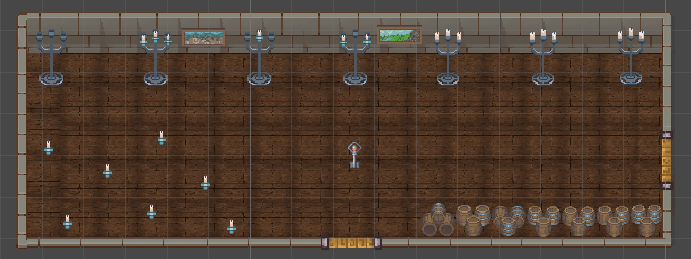
The Hallway functions as a transitional space between the house’s interior and exterior. The atmosphere suggests that it serves as an entrance area or foyer, leading players to believe that the outside world may be just beyond the door. The room contains a puzzle that must be solved before further progression. While the space itself provides limited narrative information, it reinforces the feeling that there is a larger world beyond the house and that the protagonist has been isolated for some time.
Outside the House

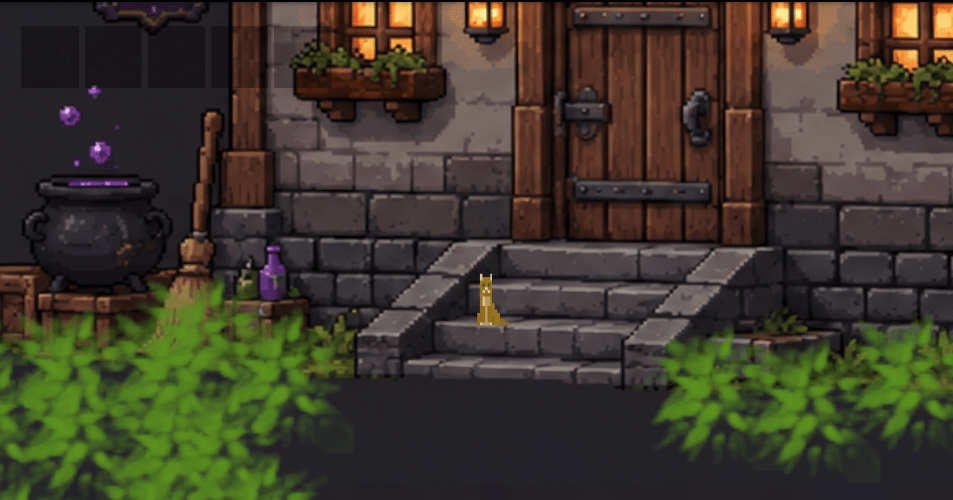
The Outside Area is intentionally small and restricted. Players can explore a pathway around the house and access a ladder leading to the second floor, but they cannot travel beyond the immediate surroundings.
This design choice supports the narrative. The player is not yet ready to leave the house because they still do not understand who they are. Instead of expanding outward, exploration continues upward toward the next stage of self-discovery.
Second-Floor Room

The Second-Floor Room contains stronger narrative clues than previous areas. Through environmental storytelling and text fragments, players receive additional evidence that the house belonged to a single resident and that no pets ever lived there. These clues further challenge the assumption that the protagonist is actually a dog.
The room’s puzzle rewards the player with a fish transformation potion. Solving the puzzle and using the potion allows the player to enter a nearby fish tank, unlocking the final stage of the game’s mystery.
Fish Tank

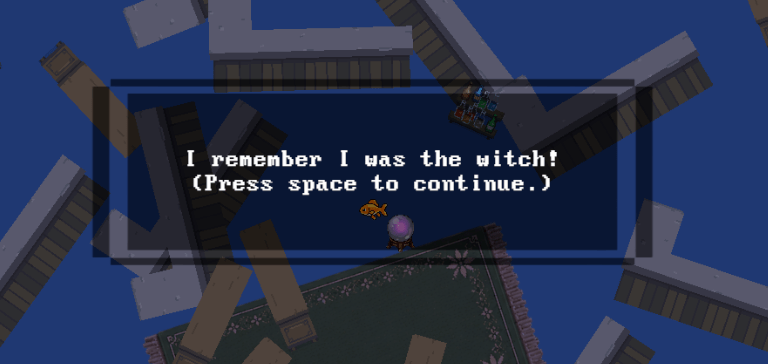
The Fish Tank serves as the game’s memory-recovery sequence and narrative climax. After transforming into a fish, the player enters a contained dreamlike environment where a series of magical crystal spheres reveal fragmented memories from the protagonist’s past.
Each memory provides additional context about the protagonist’s life, her magical abilities, and the events leading to her current situation. By exploring these memories and solving the final puzzle, the player eventually discovers the truth: she was originally a witch who used transformation magic to escape a witch hunt but accidentally lost her memories in the process.
This final revelation connects the game’s puzzles, transformations, and environmental clues into a complete narrative, allowing the player to fully reconstruct the protagonist’s identity and understand the meaning of their journey.
Game Concept
Initial Decisions About Formal Elements and Values
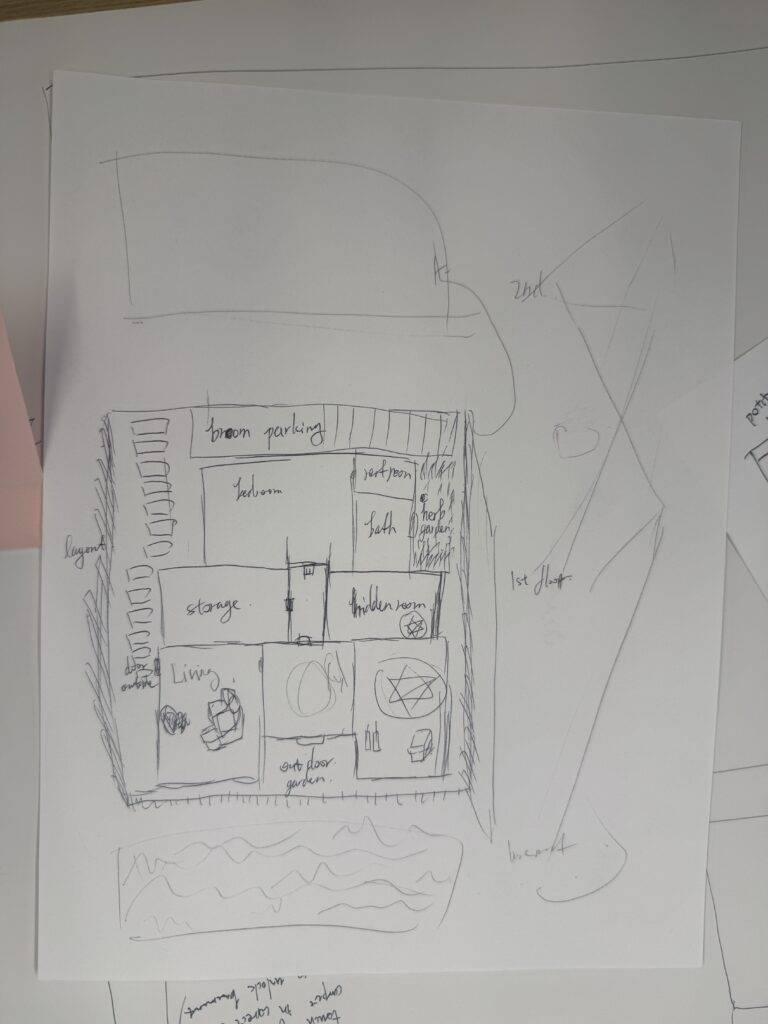
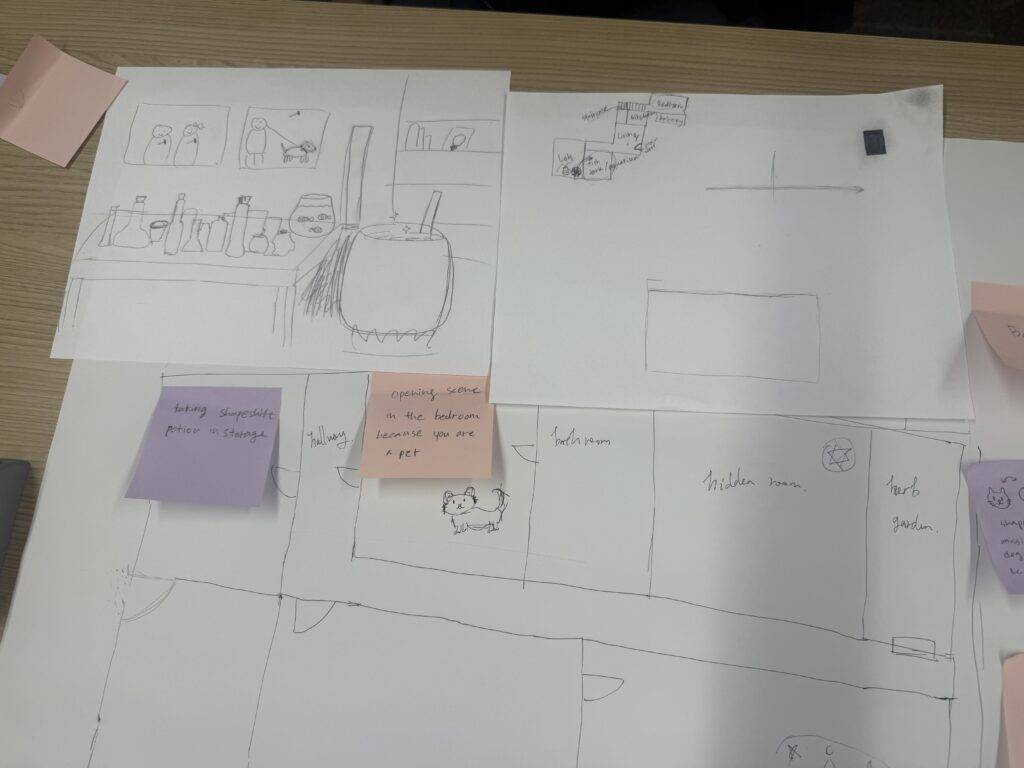
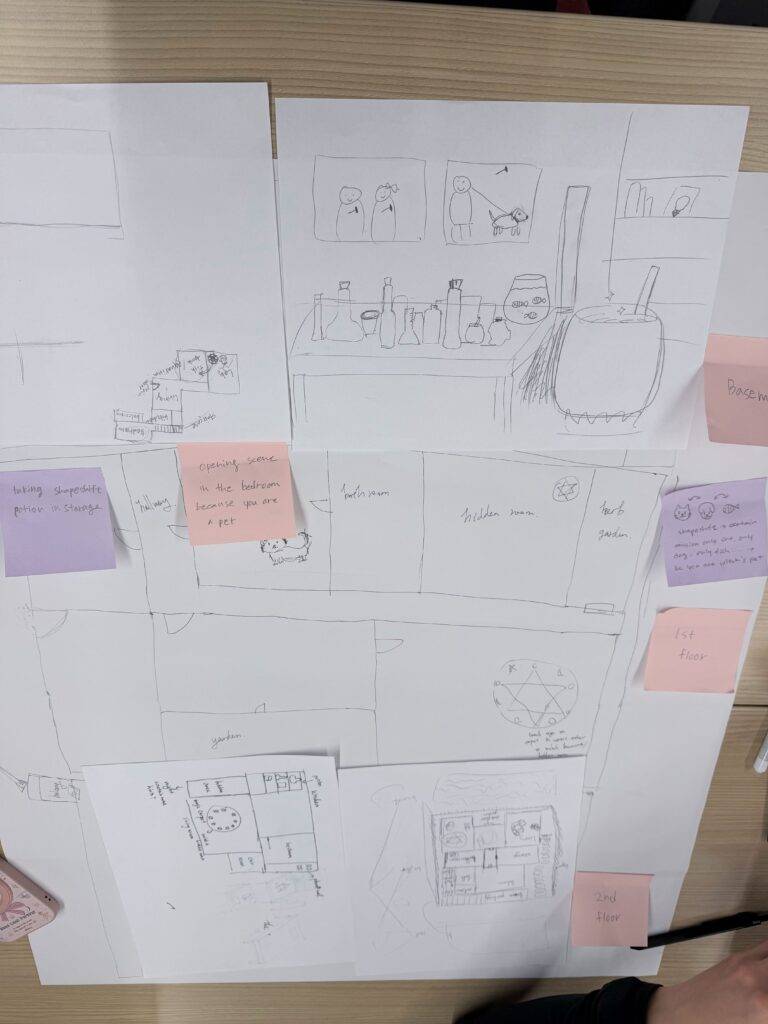
From the beginning, we decided to create an escape-room-style puzzle game centered around animal transformations. The player would start as a dog trapped inside a mysterious house and gradually gain access to new animal forms, each with unique abilities that unlock different ways of interacting with the environment. For example, the dog could dig, the cat could jump to reach inaccessible areas, and the fish would eventually allow the player to enter a memory sequence that reveals the truth about the protagonist. This progression gave us a clear structure for both gameplay and puzzle design.
As development continued, we expanded the narrative by introducing the historical inspiration of witch hunts. Rather than presenting the story immediately, we chose to reveal information gradually through environmental storytelling, notes, and memories. We wanted players to experience the satisfaction of uncovering both puzzle solutions and narrative clues. At the same time, one of our core values was accessibility for younger audiences. Because the real history of witch hunts contains violence and persecution, we revised several pieces of narrative text to avoid overly graphic or disturbing descriptions. Instead, we focused on themes of curiosity, resilience, self-discovery, and standing up against prejudice, allowing the game to remain suitable for players ages 12 and above.
Scope of the Game
Our project was developed as an MVP rather than a slice. Our goal was to create a complete and playable experience that demonstrated the core gameplay loop of exploration, puzzle-solving, animal transformation, and narrative discovery. While many features could be expanded in a full version, we focused on implementing the essential mechanics, puzzles, and story progression needed to communicate the game’s vision from beginning to end.

Objective

The Waiting Pet is a narrative puzzle-adventure game in which the player’s primary objective is to uncover their true identity.
The game is divided into several rooms and each room has environmental puzzles and narrative clues. By solving puzzles and reaching new areas, players unlock transformation potions that allow them to interact with the world through different animal forms. Each animal allows access to unreachable locations. As players explore the house, they discover fragments of memory and begin to understand their connection to the story.
In this sense, a secondary objective of our game is exploration. Players are encouraged to investigate the house, discover hidden magical spaces, and piece together environmental clues. Through these experiences, players eventually figure out that they were a witch who lost her memories while running away from a witch hunt.
Types of Fun

Our game primarily focuses on Challenge and Discovery through an escape-room-style puzzle experience. Players progress by observing their surroundings, finding clues, and solving puzzles that unlock new areas and mechanics. We intentionally designed the gameplay to emphasize problem-solving and exploration rather than action or mechanical difficulty, allowing players to experience the satisfaction of gradually understanding how different parts of the environment connect together. While the game contains a narrative about uncovering the protagonist’s true identity, this story serves mainly as a reward for exploration and puzzle completion. The final revelation that the player was originally a witch provides additional context and meaning to the journey, but the core source of enjoyment comes from solving mysteries, overcoming obstacles, and discovering what lies behind each locked door.
Narrative Architecture and the Use of Space
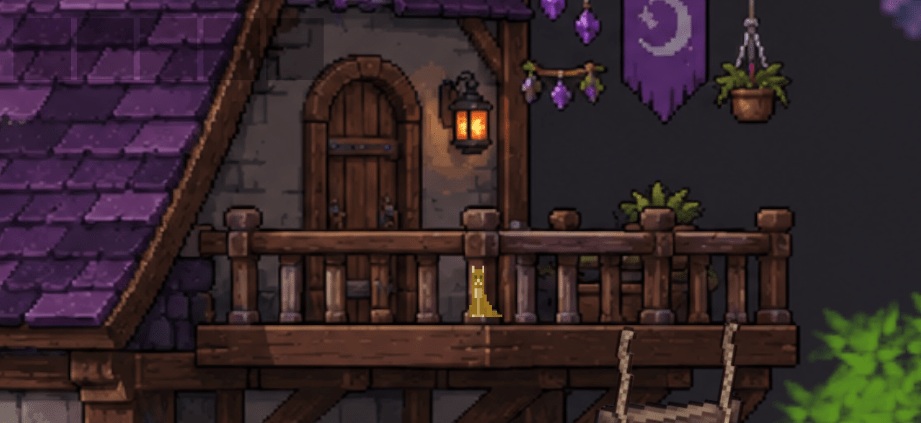
The Waiting Pet primarily follows Jenkins’ concept of an Embedded Narrative. The backstory is hidden in the environment, and players gradually reconstruct the narrative through exploration, puzzle-solving, and shapeshifting. The game also contains elements of an Enacted Story, since understanding the story cannot be done without player actions such as drinking potions and reading the diary.

Onboarding
Our onboarding was designed to introduce both the game’s mechanics and its narrative structure in a gradual and low-pressure way. Because our target audience includes players with different levels of puzzle-solving experience, we wanted the first few minutes of gameplay to feel intuitive and approachable rather than overwhelming.
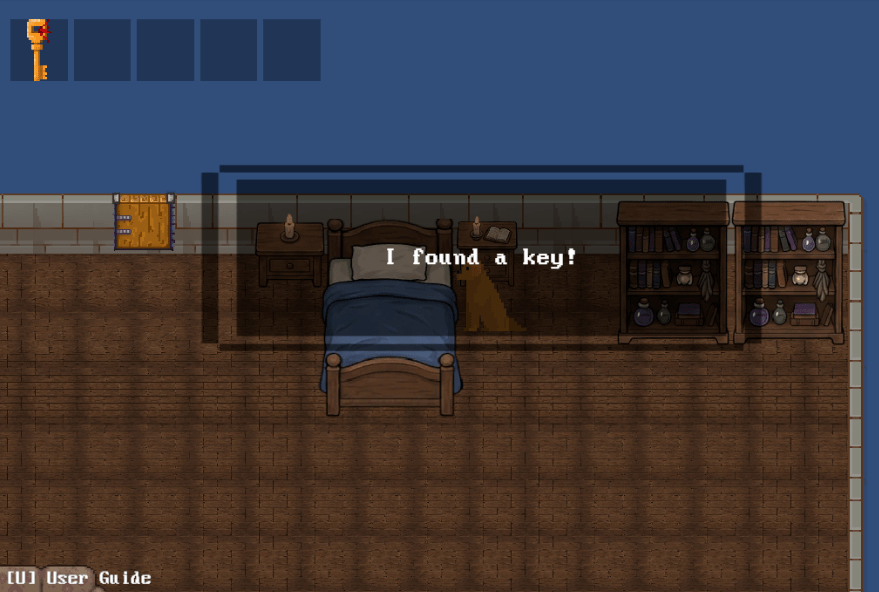
At the beginning of the game, players wake up as a hungry dog inside an unfamiliar house. Rather than presenting a large amount of exposition or backstory, we intentionally provide very little narrative information. The player’s immediate goal is simple and concrete: find food. This gives players a clear objective while encouraging them to explore the environment naturally.
The first puzzles are designed to be straightforward rather than complex logic. Through the first puzzle, players learn the core controls: movement and interaction with objects without requiring lengthy tutorials.
We also use the early game to teach players that narrative fragments are meaningful. Small pieces of text, notes, and environmental storytelling are introduced gradually throughout exploration. Initially, these story elements are optional and not necessary for puzzle completion. However, as players continue progressing, the narrative clues become increasingly important for understanding the protagonist’s identity and the meaning behind later events. This gradual approach encourages players to pay attention to story details without forcing extensive reading from the start.
Design and Process
Key Design Choices
One of our main design goals was to combine escape-room-style puzzle solving with gradual narrative discovery. We wanted players to focus primarily on exploring the environment and solving puzzles, while the story would emerge naturally through interaction with the world. This approach allowed players who enjoy puzzles to engage with the game even if they were less interested in reading large amounts of text.

Character Design
The order of the animal transformations was determined primarily by gameplay progression. We chose to begin with the dog because it provides a grounded starting point for exploration and puzzle-solving. The cat transformation comes later because its jumping ability allows players to reach the second floor and access areas that would otherwise be unreachable. Finally, the fish transformation serves as the last form because it enables the player to enter the fish tank, an environment that the other animal forms cannot access. We designed the fish tank as a magical memory space, similar to a memory palace, where players explore a series of magical crystal spheres containing fragments of the protagonist’s past. This allows the final transformation to serve both a gameplay purpose and a narrative one, leading players to the discovery that they were originally a witch.
Ability Design
Each animal form was designed around a simple ability that unlocks new ways to interact with the environment. The dog can dig, the cat can jump to reach higher locations, and the fish allows access to the final memory sequence. We intentionally kept abilities simple so that players could focus on puzzle-solving rather than learning complex mechanics.
World Design
The house was designed to reveal information gradually. Early rooms contain only small hints about magic and the protagonist’s past, while later areas provide stronger narrative clues. This structure encourages exploration and creates a sense of mystery, allowing players to slowly piece together the story as they progress through the game.
Puzzles and Level Design
Our puzzle design follows a gradually increasing difficulty curve, where each stage introduces slightly more complex reasoning and attention requirements. The first puzzle is very simple, requiring the player to find a key in the bedside table. The second puzzle asks players to push the correct objects into the correct positions. The third puzzle increases complexity by requiring the player to drink potions in a specific color order. The fourth puzzle is intentionally more challenging and includes misleading clues to encourage careful observation and critical thinking. The fifth puzzle further emphasizes narrative engagement by requiring players to pay closer attention to written text in the environment. Across all puzzles, we deliberately designed the experience so that players gradually learn that textual information is meaningful, which becomes essential for the final fish tank memory sequence.
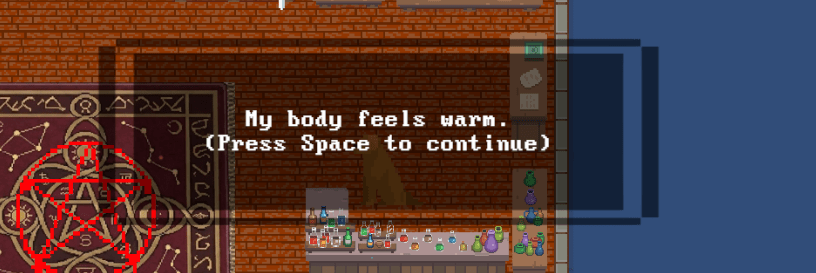
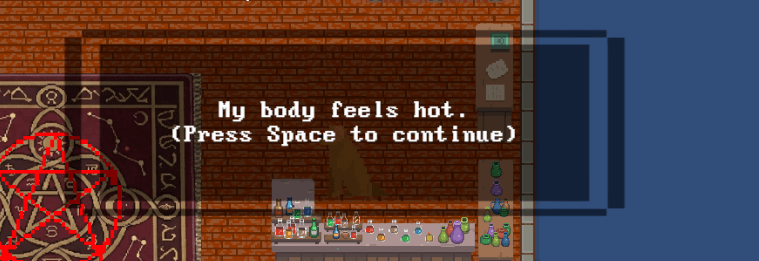
In addition to difficulty scaling, we implemented a layered hint system (except for the first simplest puzzle) to support different player skill levels. Skilled players can complete puzzles without assistance, while players who struggle are gradually guided through contextual hints. For example, in the “push the correct pot” puzzle, we observed that many players understood the goal but had difficulty identifying the correct object. We added a hint that explicitly indicates when the wrong pots are placed in the correct position. In the color-sequence potion puzzle, we designed an in-world feedback system where correct inputs trigger progressive physical reactions (feeling warm → hot → burning → transforming into a cat), while incorrect inputs reset the state with a “feeling normal” message, clearly signaling failure without breaking immersion. After the player transforms into a cat, if players fail to notice the key and leave the room, a contextual hint appears when they leave the room, reminding them of an object they may have missed. In the candlestick and rotating-object puzzles, we implemented time-based hints that activate if the player spends too long struggling, ensuring that progression is maintained without removing the challenge entirely.
We intentionally avoided giving direct hints about which potion should be chosen at the end. Earlier in the game, players drink a potion to transform into a cat, but for the fish transformation, we wanted them to identify the correct potion through exploration and environmental clues. This was an intentional level design decision. Therefore, players are not expected to realize they chose the wrong potion until they reach the fish tank. If the wrong potion is selected, they are directed back to continue the quest and find the correct one.
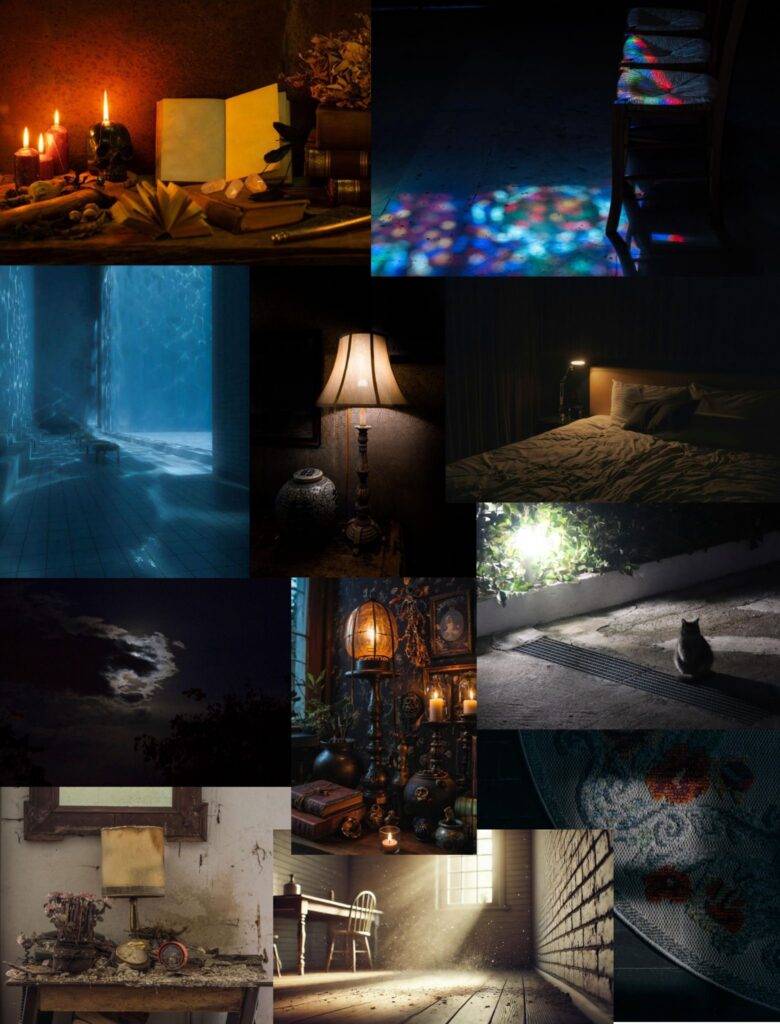
Moodboard
Testing and Iteration History
Our concept was a mystery-puzzle game in which the player controls a conscious, thinking animal and gradually uncovers why it can think at all. Dialogue is seeded throughout to hint at the protagonist embodying a “pet” searching for an “owner.” Early on we assumed players would intuit the puzzles from the space itself, with little hand-holding. Testing steadily pushed against that assumption, and the central arc of our iteration was learning how much guidance players actually needed, then building it in without erasing the sense of discovery.
We ran a series of playtests and treated every round as its own investigation, each driven by a guiding question. Our testers ranged from inexperienced players to confident ones. Each round below follows the same shape: the question we were asking, what we found, and the changes we made because of it.
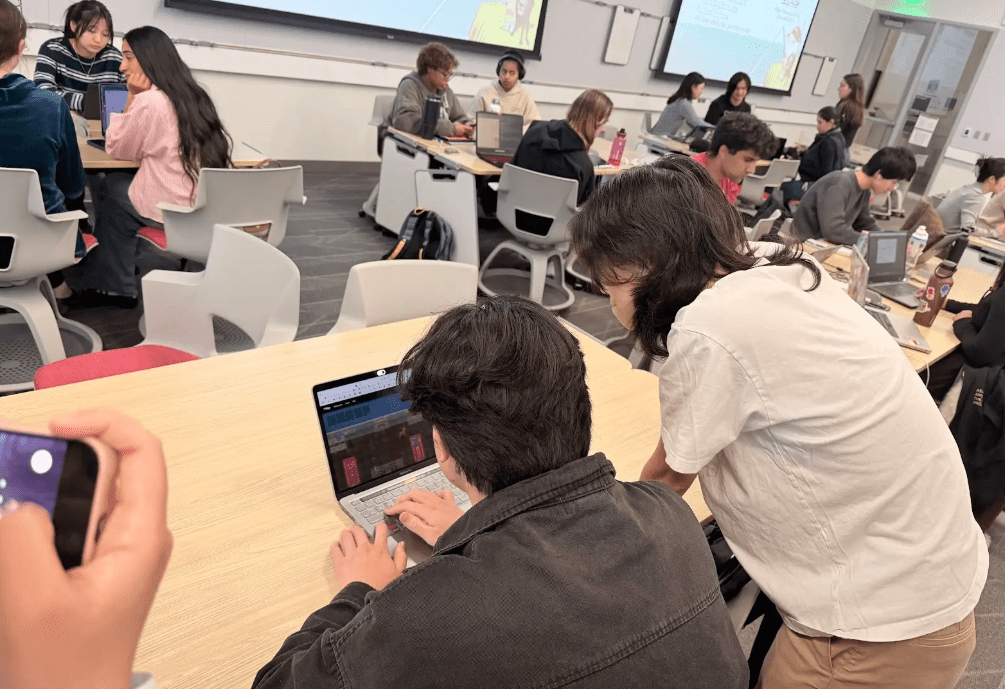
Playtest 1 — Can players read the space?
Our first question was whether players could understand what each puzzle asked without us explaining it, and the answer was mostly no. Players could not find the hint for aligning the living room items or for the gourd bottle puzzle. We also saw a character that was hard to pick out against the background, a bug where both rooms briefly showed before one hid, a jarring moment where the whole table disappeared after the key was taken, a confusing “Press 1, 2, 3” candlestick prompt with no clear reset, and several grammar errors.
We responded directly. We recolored the floor so the character stood out, since the low contrast made the protagonist hard to track. We added interaction dialogues to every item to hint at their next steps. We hid the next scene so its contents were not spoiled before arrival, fixing the visibility bug. Where the whole table used to vanish after the key was picked up, the bedside table and drawer now stay in place, because the disappearing furniture made players feel the world was being erased. We corrected the grammar and clarified the candlestick interaction, while deferring a full fix for the “Press 1, 2, 3” prompt until we had a cleaner solution.


Playtest 2 — Does the game move players forward on its own?
Next we asked whether progression carried players through the world without prompting. Several things worked: players found the first key and entered the locked room easily, the locked-door progression felt intuitive, and the protagonist’s internal thoughts clearly signaled the next goal. One player even talked herself through a shapeshift, going from “I’m a cat… does that get me on top of the thing?” to grab the object successfully.
The friction was about feedback and instruction. Players were unsure which potion to drink because nothing hinted at the color, and the “morning bright” cue was hard to associate with its color. A pot got stuck in the corner because it was unclear players had to leave and re-enter the room, dialogue-box patterns were hard to remember, and there was no keybind instruction for selecting or rotating objects. Labeling the entry door “locked” confused players about what the key opened, and drinking the potions in the right order gave no confirmation.
In response, we moved the first room’s key to the right-hand bedside table to nudge players into exploring, while keeping the opening puzzle gentle on purpose, because we wanted players to learn to look around the space before facing real difficulty. We removed confusing colors from the potion puzzle and added confirmation dialogues when the player drinks potions in the correct order. We also limited the range the player can move the pots so they cannot be pushed into corners. The deeper notes about missing confirmation and keybind hints fed directly into later rounds.


Playtest 3 — Does moving between rooms work reliably?
Here we asked whether transitions between rooms held up under normal play, and found that they did not. For transition between living room and magic room, because the teleport sent the player to the position of the white teleport marker, players who landed near it were immediately bounced back and forth in a loop. Additionally, after shapeshifting into a cat, players had no clear indication of where to go next.
We moved the teleport destination onto the magic carpet instead, which placed the player clear of the trigger and stopped the loop entirely. We also placed a key on the bookshelf in the magic room that can only be retrieved after shapeshifting into a cat, hinting that the key is needed to unlock something — and the only locked door is the one in the living room.


Playtest 4 — Where do players get stuck, and how do we guide them?
By the third round our question had shifted to where players got stuck and how to help without solving puzzles for them. Players stalled in the same places repeatedly, with Ryan blocked at the candle section and Noe at the pots puzzle in the living room. On the pots puzzle, players tried to place pots on an exact spot and used the wrong pots; on the barrel puzzle they latched onto the silver coloring instead of the arrangement and could not solve it even with hints. Players wanted more guidance toward the fish potion, were confused about the storyline, and found cues like the “wider side” movement direction and the lantern placement unclear.
These findings drove our most significant change: we began building a hint system into the sections where players consistently stalled, rather than relying on one-off fixes, and we added context about the storyline so players understood what they were working toward. We also reworked the candle interaction from a clumsy two-step dialogue into a single context-aware prompt that offers to take a candle when one is placed and to place one when the stick is empty. We kept the pot and barrel puzzle logic largely intact at this point, as we feel that meaningful challenge is central to what makes a puzzle game worthwhile.
Playtest 5 — Is the game playable for colorblind players, and what are we actually making?
This round focused on accessibility and identity. A tester reported that the pots were not distinguishable from one another, which pushed us to take color blindness seriously, since relying on color alone both excluded colorblind players and worsened the eyes puzzle for everyone. Where the pots had previously differed only by color, we changed their color and shape and added cracks, so players can now tell them apart without depending on hue. This round also led us to define our genre clearly as a mystery and puzzle game. While the game has the surface of a walking simulator, interaction is what drives success, and naming that helped us prioritize clarity of interaction over open exploration in every later decision.
Playtest 6 — Is the game suitable and engaging for children?
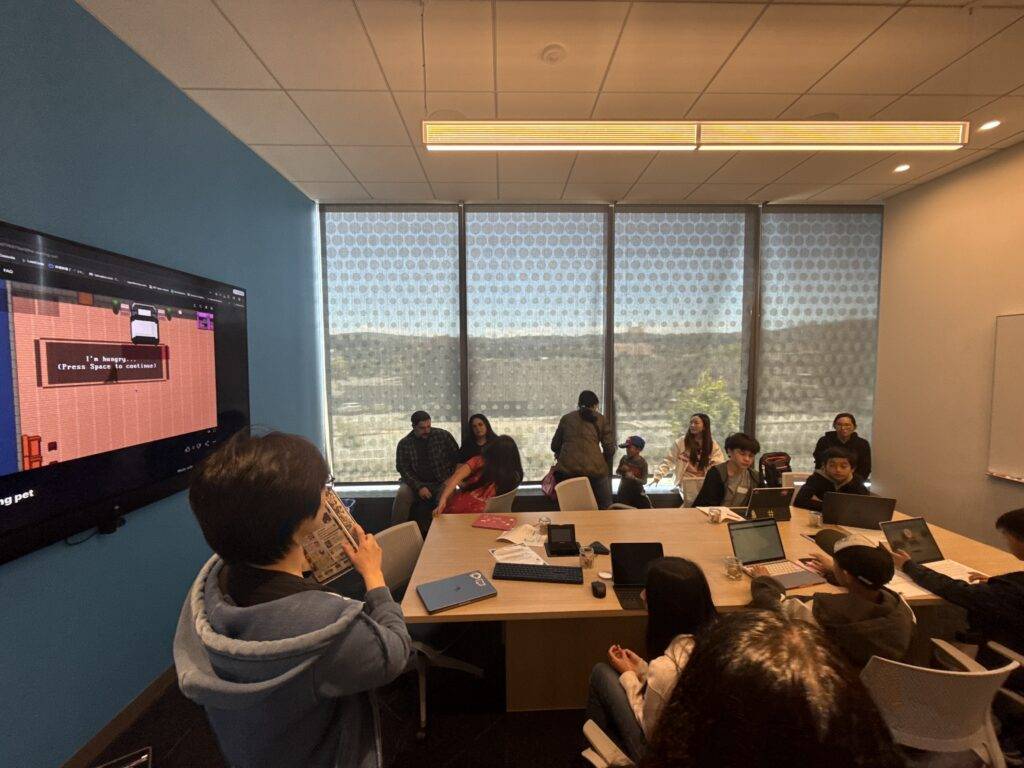
We ran a playtest with children aged eight to thirteen to test the game against a younger audience. Their main request was for music, and the session revealed that some of our wording was too violent for them, with earlier text describing burning things alive.
In response, we rewrote that language to be more accessible and age-appropriate. We added interaction sounds and background music that fit the game’s atmosphere, making the experience more engaging overall. This round genuinely shifted our sense of the project, expanding our vision from a puzzle game for general players to one that could welcome younger players as well.
Playtest 7 — Is the difficulty balanced across different players?
Continued testing showed that difficulty was uneven, with puzzles that were easy for some players and hard for others. The barrel puzzle was confusing for many testers, and players frequently covered the eyes with the wrong pots in the pots puzzle.
In response, we added more dialogues that appear when the player places wrong pots on the spot, hinting that they may need to reconsider their approach. We redesigned the candle puzzle by adding two fixed candlesticks that the player cannot change, along with two sets of barrels whose orientations correspond to the candles placed on those unmovable sticks. This directly hints that the candle placement relates to barrel orientation, not the silver rings on the barrels. The goal was to keep the puzzles satisfying for confident players while catching the ones who would otherwise give up.
Playtest 8 — Have we over-corrected, and what dead ends remain?
By this round, our worry had reversed, and we asked whether our hints had become too obvious and what dead ends still tripped players up. After internal discussion, we decided against adding more object hints or simplifying the puzzles further. Instead, we introduced a time-based hint system: if a player remains in a room for more than three minutes, we assume they may be struggling, and a more direct hint will appear. This preserves the challenge for experienced players while offering guidance to those who are genuinely stuck.
We noticed the second-floor ground color matched the cat’s color, making the character hard to see again, and changed one of them. We also found that single-line dialogue did not need a “press space to continue” prompt, so we removed it there and reserved it for multi-part dialogue. Most importantly, we closed a recurring dead end: players who turned into a cat sometimes left the magic room without grabbing the key and assumed the key belonged to the magic room itself. The protagonist now remarks on having seen a key-shaped item in the previous room, pointing players back without solving the puzzle for them.
Also, some playtesters found the final basement puzzle disorienting, because all the crystal balls share the same appearance, several players lost track of which they had already examined. To restore clarity, we introduced carpets with distinct designs beneath each one, giving players a reliable visual anchor to mark their progress through the space.
0:07 Fiona’s playtesting: She figured out that the player might be the witch who turned into a dog.
0:15 Demo Day playtesting: The player was confused about how to teleport. After she teleported, everyone laughed.
0:38 Jaduk’s playtesting: He figured out early in the game that the player was a human turned into a dog, even without many narrative clues.
0:46 Fiona’s playtesting: She found the hint “warm → hot → burning,” which led her to think she was doing the right thing.
1:49 Jinhyo’s playtesting: She said “meow” after the player turned into a cat.
1:52 Jaduk’s playtesting: He had an “Aha!” moment after he got the hint that popped up after spending 3 minutes in the hallway.
2:45 Anu & Avery’s playtesting: They understood the true objective/goal of the game.
3:13 Jaduk’s playtesting: He became even more convinced that the player was a human turned into a pet after reading the diary.
3:19 Anu & Avery’s playtesting: They figured out how to get into the basement and had fun moments after solving it.
4:07 Jaduk’s playtesting: He asked whether the game was about Nina and joked about it because our game’s title is The Waiting Pet.
Known “Issues” & Design Responses
Some concerns are addressed here through design rationale rather than code changes. On narrative, the TA felt the ending carries too much of the story’s weight; our response is to reinforce it mid-game through the protagonist’s running dialogue. The embedded pet-and-owner hints throughout are evidence that the narrative is designed to be understood progressively rather than revealed all at once. Our demo day playtester confirmed this: if players read carefully and interact with all objects, including those not directly tied to puzzles, much of the story is already there to be discovered.
For the concern that some players struggle to remember the shapeshifting potion order, our puzzle is intentionally designed not to require players to commit to the correct order all at once. Players can stop mid-sequence, return to the lab record to review the hints, and then resume from where they left off.
For the concern about the ‘wider side’ movement hint in the second-floor puzzle, we chose to leave it unchanged. We feel that ‘wider side’ is already a clear and intuitive cue, and each object in the puzzle has a visually unambiguous wider side. For players who still find it unclear, the time-based hint system serves as a gentle fallback.
Reflection
The clearest measure of our growth is how our worries changed. We began assuming players would read the space and intuit our puzzles, and early testing showed they could not, repeatedly stalling on the eyes, candle, and barrel puzzles and needing us to step in by hand. Over successive rounds we built a hint system, made our pots and interactions accessible, balanced the difficulty across a wide range of testers, and broadened the experience for younger players. By the later iterations, our concern had flipped entirely: instead of players being lost, we worried our hints had become too obvious. That reversal, level design, art, and narrative as strong for an MVP, is the strongest evidence that our design matured, moving from a space players struggled to navigate into one they could largely work through, and enjoy, on their own.