

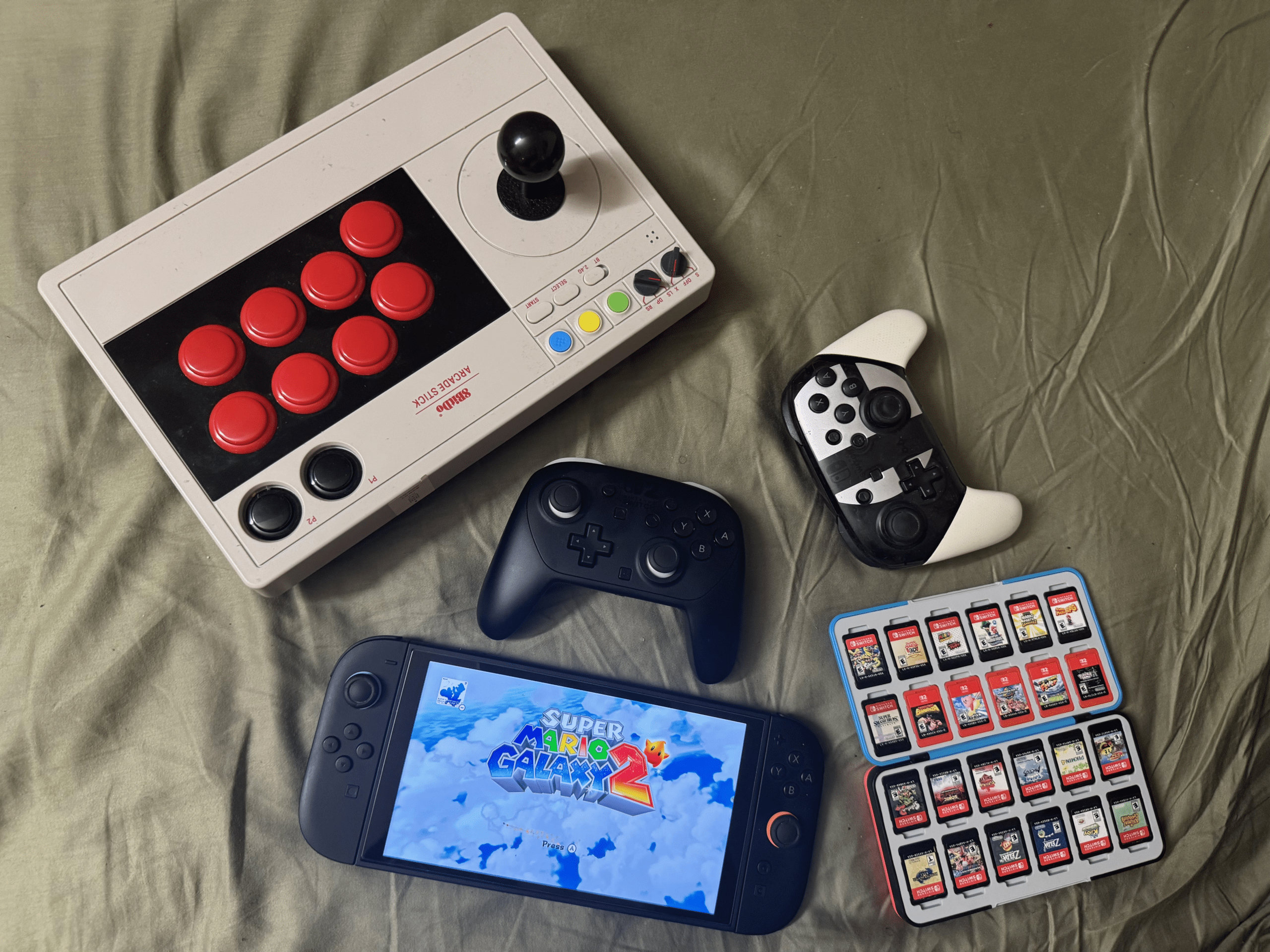
As the featured image may lightly suggest, I’ve played a LOT of games in my life: plenty of analog, but mostly digital. I probably wouldn’t refer to myself as a “gamer,” but I’m very well-versed in the medium. Because of this, I might have gone into CS 247G with a certain sense of hubris. “I play great games all the time,” I thought to myself. “I must have learned some things from all those hours, so it shouldn’t be too hard for me to design great games too.” I imagined treating the class as an easy elective of sorts: something fun to dedicate one or two hours a week on, between working on my more difficult assignments.
It took about two weeks for that conception to be disproven completely. Surprisingly, game design is actually rather complex and involved! I was a bit overwhelmed by the sheer number of deeply complicated choices that go into making a “good game.” During the iteration and playtesting process for both P1 (High Rollers) and P2 (Recursed), I often experienced a lot of “design paralysis,” unsure of what to do in order to create the most fun experiences for the players. Between the bigger project checkpoints and smaller weekly deliverables, CS 247G quickly became the class that I spent the most time and effort on this quarter. I was enjoying it, of course, but I was also seriously struggling with it as the weeks went by.
Thankfully, however, I wasn’t entirely wrong in my assumption that my wealth of game-playing experience would serve me well in CS 247G. In fact, it actively informed my design process for P1 and especially for P2. I had an idea of how platforming can create Fun as Challenge, because I had played Celeste and Super Mario Bros. Wonder. I had an idea of how interesting environments can create Fun as Discovery, because I had played Hollow Knight and Horizon Zero Dawn. I had an idea of how sound design and visual design can and should complement one another, because I had played Shovel Knight and Ori and the Blind Forest.
I frequently used the frameworks I learned about in class to break down the games I had played into their smaller components, and then I was able to take inspiration from those components to flesh out the mechanics, dynamics, and aesthetics of my own games. It was definitely still a struggle at times to help develop two games from scratch, but I think my reasoning and design skills grew a lot in the process: more so than I expected going into it. Furthermore, I came out of the class with a newfound appreciation for the games I’ve come to love over the years.
I’m sure my experience in CS 247G will certainly change the way I approach games in the future, but admittedly, I’m not entirely sure how. Maybe I’ll write a “Critical Play” of sorts on every new game I play, now that I have a greater sense of how they’re made. Maybe I’ll become inspired to make more games in my spare time, now that I have some experience using the necessary tools and concepts. Maybe I’ll finally actually play Slay the Spire this summer, which, according to the teaching team, may as well be the greatest game ever made by humankind. Who knows? I don’t. Not yet, anyway. What I do know is that my time spent in this class definitely has made me into a more cognizant, more intentional, more avid player and maker of games; and on that basis alone, I consider it a resounding success.



Fabulous! Of course I’m going to encourage you to make games.