

What 247G Taught Me About Play
Before taking CS 247G, I thought about games mostly as products, things that were either fun or not, well-made or not. I never thought much about why a game felt fun, or what it was actually doing to me as a player. Game design felt more like a technical craft. This class changed that.
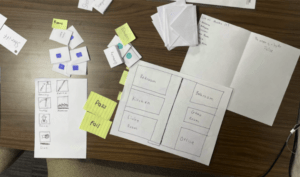
The most challenging and rewarding work was building two original games from scratch. The first was Séance, our analog social deduction game. Starting from nothing meant making every decision intentionally. Our first playtest was humbling. Rules that seemed clear on paper confused players instantly, the GM role was too burdensome, and information flow was so unbalanced that the Sheriff could identify the Suspect in the first round. We had to strip things down significantly between playtests, cutting the Scapegoat role, simplifying the clue system, and tightening what each role actually did. Watching our second playtest and still seeing players spend nearly ten minutes on rule clarification before round one even started taught me more about clarity in design than any reading could have.
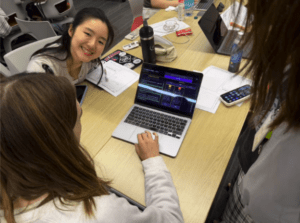
The second game, Westbrook High, was a different kind of challenge. It is a single-player mystery investigation game built in Godot 4, where the player steps into the role of a student council president trying to figure out who stole fundraising money. On top of all the design work, there was an entirely separate technical layer. Learning Godot while simultaneously trying to design a coherent clue chain, balance red herrings, and build a satisfying accusation system was a lot to manage at once. We also went through a major pivot midway through the project. Our original concept combined an Overcooked-style task management loop with a mystery investigation phase, and the two were fighting each other the whole time. Cutting the arcade layer entirely and rebuilding around a pure investigation structure was uncomfortable because it meant discarding weeks of work, but it was clearly the right call. The final game, with its free-exploration map, notebook system, and evidence chain built around three required clue groups, felt like something we could actually be proud of.
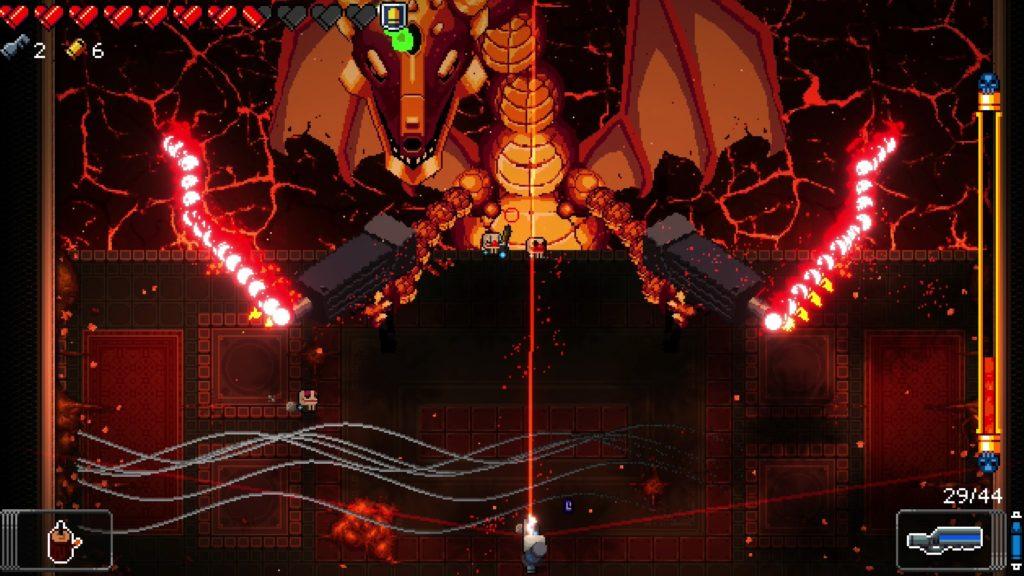
What both projects made clear to me was just how complex and intricate game design actually is. Before this class, I enjoyed games like Exploding Kittens or Monopoly and never thought twice about what went into making them work. Now I can see how hard it is to align incentives, ensure the game is both playable and repeatable, and remember that just because something is fun for the creator does not mean it is fun for the intended audience. Even something like scalability across player counts, how Exploding Kittens plays just as well with two people as with four, while actually shifting in character depending on the group size, is the result of deliberate decisions that I never would have noticed before. These little things make an enormous difference, and they are what separate a good game from a great one.
I grew most in my ability to look at a game and ask real questions about it. What is the player actually experiencing? What are the incentives, and do they hold up over multiple plays? Where does the friction come from, and is it the good kind? These feel like durable skills, and they have genuinely changed how I engage with games as a player.
If I keep working on Westbrook High, the next priority is giving the characters more emotional depth so the reveal lands at a human level, not just a logical one. The suspects are well-constructed as mystery devices but not yet fully alive as people. Longer NPC dialogue, more environmental storytelling, and a second case that pays off the world-building from the first would be where I start. The foundation is there. It just needs more time.


The phrase “Kill your darlings?” You’ve master ti! “We had to strip things down significantly between playtests, cutting the Scapegoat role, simplifying the clue system, and tightening what each role actually did.” I htink making somethign good is as much of what you choose not to put in a game (or anything) as what you do put in it. good work!