I played “with those we love alive,” a haunting and mystical game that explores themes of death, growing up, and violence through text-based scenes. “With those we love alive” is entirely played through interactive stanzas that allow the player to progress and customize the journey. The game was written by an artist called Porpentine and scored by Brenda Neotenomie. The game was released in 2014. The game was relatively high-concept, so I would say the target age demographic is people above the age of 14. I played the browser version of the game. In this critical play, I will argue that although the game is not explicitly feminist, “with those we love alive” creates a sense of solidarity through the inclusion of all femme characters, a matriarchal power structure, and distorted realities that transcend gender.
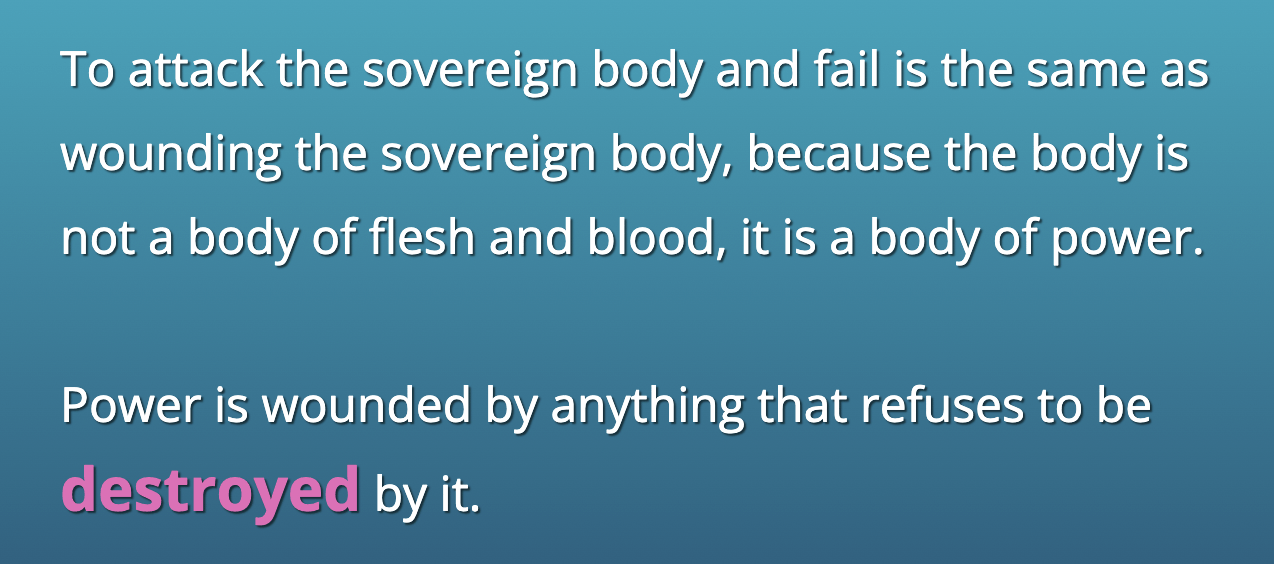
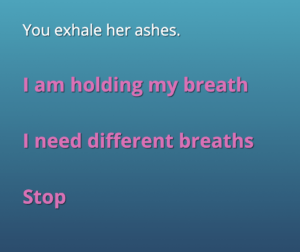
I will begin with the first argument about inclusivity and representation. Drawing on the chapter’s discussion of intersectionality, “with those we love alive” does a wonderful job of drawing from feminist and queer conceptions of the body and of society to build a setting laden with power structures, violence, and gore that do not invoke the masculine. In fact, the leader of the repressive society in which the game is set is a queen. Playing the game as a feminist, then, was quite straightforward because all the gendered characters in the game were referred to with she/her pronouns, suggesting a femme world, or at least a world where femme characters hold the power. Although stark and oppressive power structures exist, they reinforce the Empress’s power. Her introduction at the start of the game establishes the Empress as the most powerful character:

This brings me to the power structure of the game. Most of the gameplay is spent with the protagonist in servitude to the Empress. Her power is absolute, with the mechanics of the game restricting movement and progression so that the player has no choice but to obey her commands. The mechanics of the game structurally impose the player’s servitude through repetition and boredom, forcing the player to repeatedly sleep to receive their next assignment/order from the Empress. Each object that she commissions further exemplifies her power and authority, forcing the player to witness her power and control via their own repetitive actions. For example, one of the player’s first tasks in the game is to create a weapon for the Empress, implying her participation in violent combat. These continual glimpses of her power further construct the matriarchal power structure of the imagined society.
Lastly, “with those we love alive” uses fantasy and opaque language to transcend expectations of gender altogether. The mysterious “agents” and “dead people” who appear throughout the game, and even the protagonist/player, are genderless, creating an implicit dynamic where the only characters who hold femininity also wield the power in the game: the Empress and the lover. The Skull Empress holds power as the oppressive leader of the world the protagonist finds themselves in. The lover exerts power through her rebellion and victory, leading to the eventual end of the game and the escape of the militant/authoritarian society. The game’s skillful use of embedded narrative creates an immediate matriarchal atmosphere through the introduction of the Skull Empress, and by assigning the player a gender-ambiguous name and identity. From then on, the narrative becomes more emergent, allowing the player to select between objects and identities, but the preset options for character names are all gender-ambiguous. Language throughout the game draws on queer linguistic practice. The result is a play experience that to me felt distinctly queer and femme, despite the fantastical elements.
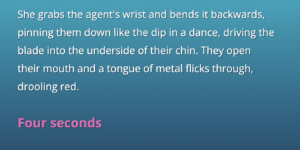

I do have a few critiques of the game. Although the cryptic language allowed for interesting interpretations and visualizations of the characters as related to gender, there were moments when I felt like I was grasping for plot details that never come. The cyclical nature of the game felt exhausting at times because discovery and sensation were the drivers of the game, so repetition undermined the main types of fun. I appreciated that the descriptions of the environment and the storytelling were one, creating a vivid and surreal sense of place and worldbuilding despite the lack of visuals. However, I felt that the game prioritized the environmental descriptions at times and sacrificed clarity of narrative, leading to moments of confusion. Unlike Monument Valley, for example, where the player witnesses their figure moving in space, the text-based nature of “with those we love alive” limited its capacity for the use of landmarks, environmental interaction, and direction. As a result, vague passages left me feeling lost and misdirected. To shape a smoother gameplay experience, the game designers could consider embedding more explicit narrative to guide the player’s actions, and the use of common landmarks could improve playability.
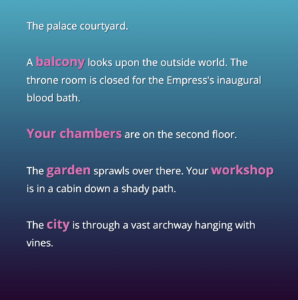
Overall, I found the experience of playing “with those we love alive” a surprisingly immersive, engaging, reflective journey. I thought the game’s exploration of gender and queerness felt authentic and natural, and I felt drawn into the mystical writing voice. I found the game moving and emotional, and I appreciated the underlying messages of hope, perseverance, and resistance.