Core Concept:
In 3026, everyone receives a Memory Core at birth. When a mysterious murder occurs, players act as detectives. They unlock memories and clues by exploring and interacting with environmental objects, and dive into the recollections of victims, suspects and witnesses. These conflicting, flawed memories must be pieced together to uncover the truth. It is a first-person sci-fi detective game with multiple endings.
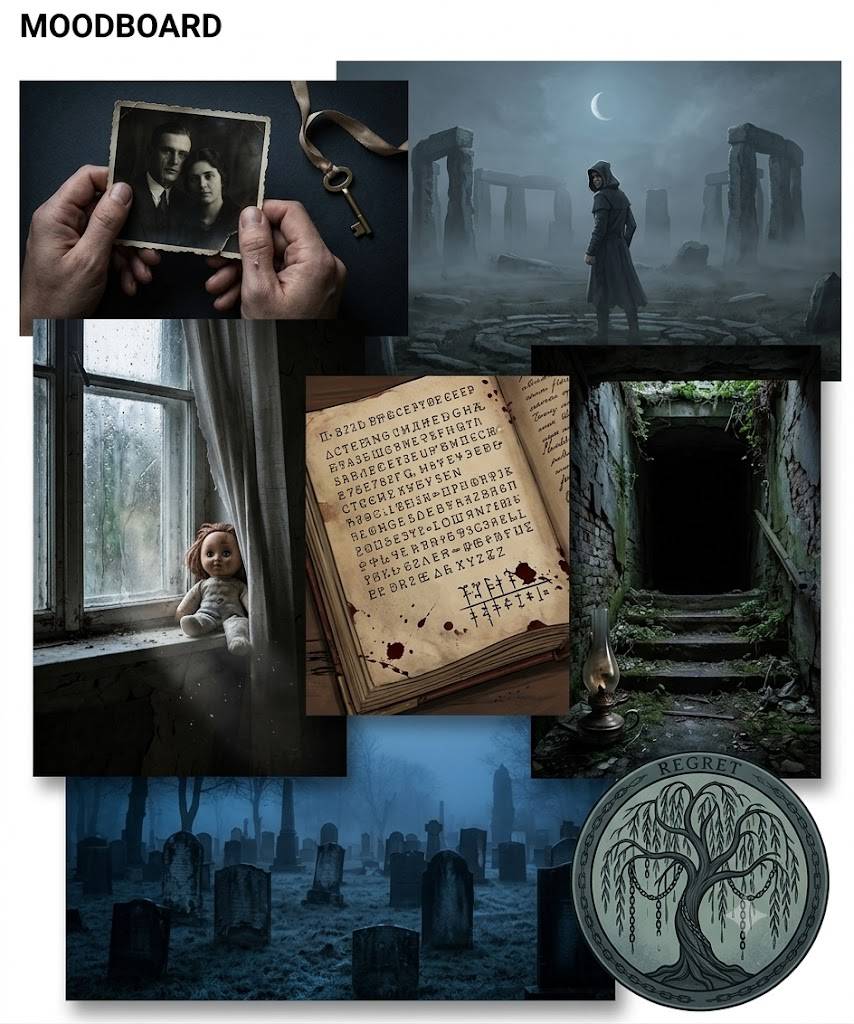
Moodboard:

Playlist:

- 14.3 Billion Years
- City of Tears
- Ancestral Tomb
- The Dead Zone
3 Directions for the game:
- Players explore physical rooms and interact with objects to trigger related memories. Different items unlock separate memory fragments to encourage environmental exploration. Certain items must be examined in order or combined to reveal full clues. Core fun comes from environmental puzzle-solving. Missing key objects creates information gaps and changes your deduction and ending.
- Players switch between viewpoints of different characters for the same incident. The same scene looks different through each person’s eyes. Shared objects act as portals to jump perspectives. Some vital memories are sealed and require emotional triggers to unlock. Players enjoy piecing together timelines from multiple views. The narrative reveals everyone reshapes memories for personal motives; uncovering repressed memories exposes the underlying conspiracy.
- Memories contain flaws and degrade the longer players stay inside. They hold lies, biases and missing information. Extended immersion blurs the line between the player’s perception and the witness’s recollection. Players cross-check memories and mark contradictions before evidence vanishes. It delivers tense deductive fun; the narrative explores that no memory holds absolute truth, and your choice of evidence leads to different endings.