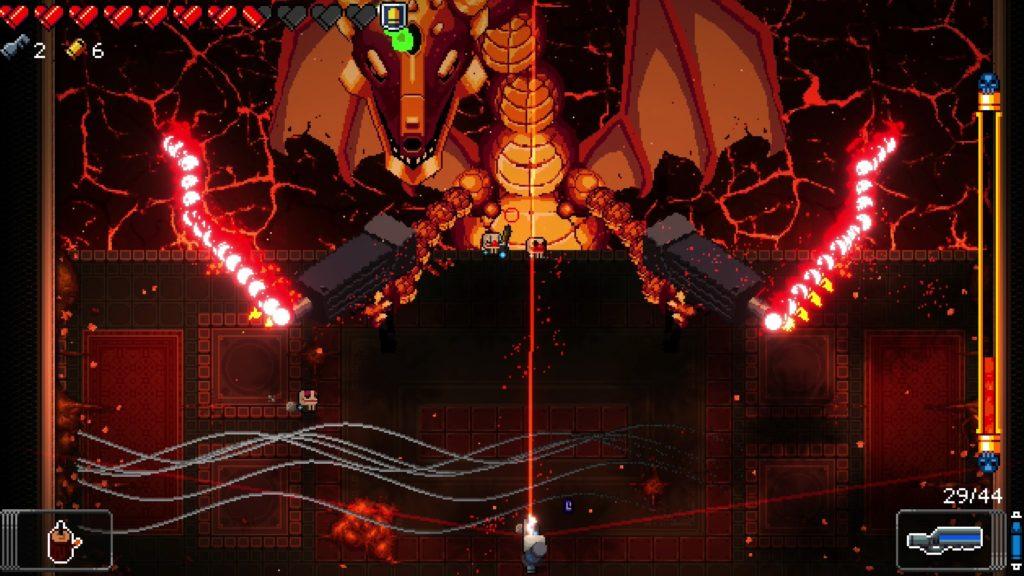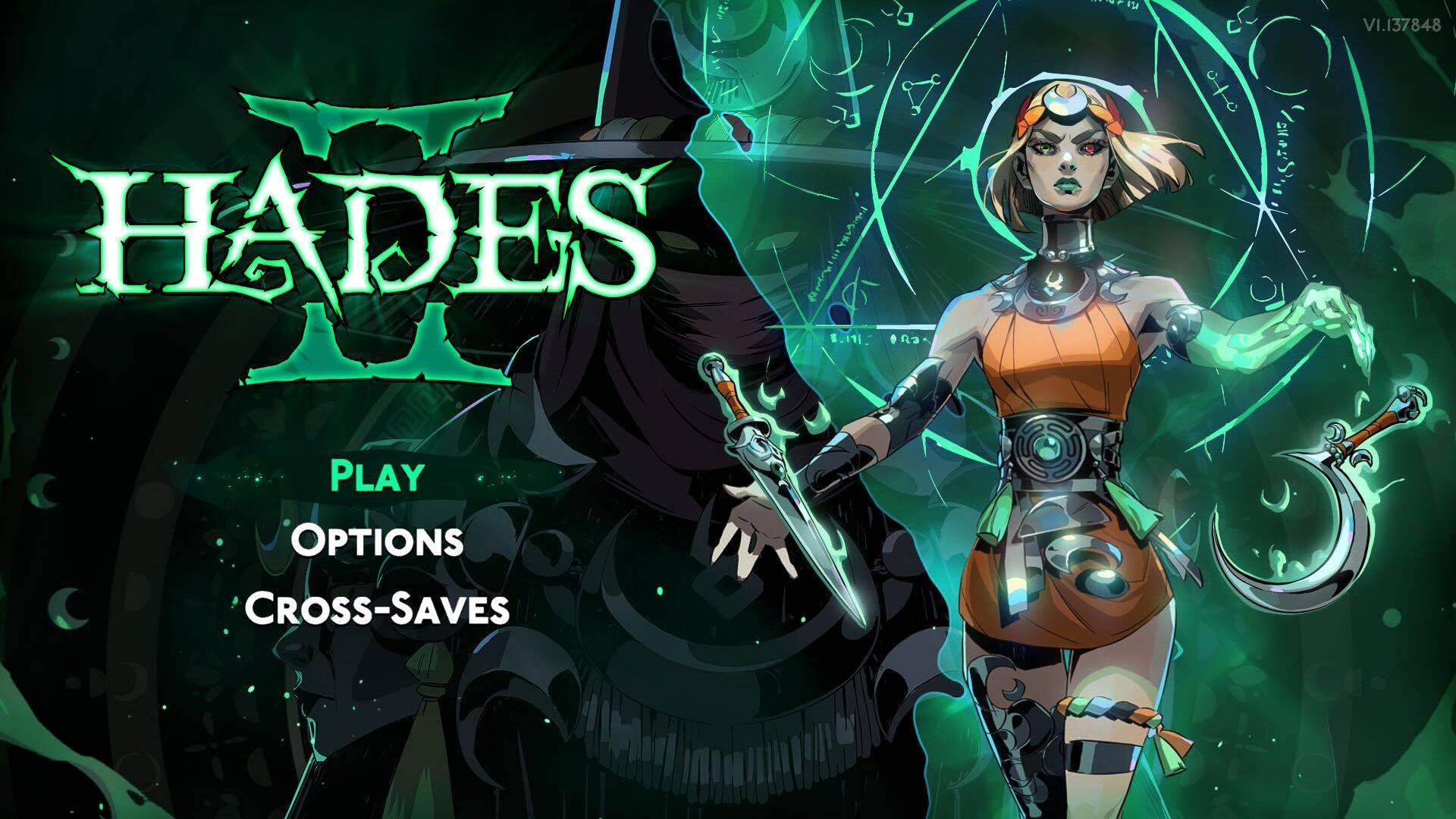
This week, I played Hades II, the sequel to Supergiant Games’ popular Hades. Released in 2025 on Steam and the Nintendo Switch, this game targets people who enjoy the replayability of roguelikes, fast paced action, and strong narratives woven through Greek Mythology. While Hades II relies heavily on player skill to advance to the endgame, I would argue that the element of chance in balancing is a greater driver of fun in the experience.
This theme of chance is embodied by the fact that you never really know what you are going to get, both in combat runs and in the seemingly endless dialogue options that exist with the various Non-Playable Characters. Even highly skilled players with hundreds of hours in the game can keep coming back because of the new interactions between gods, romantic evolutions, and combinations of boons that power up the way they play.
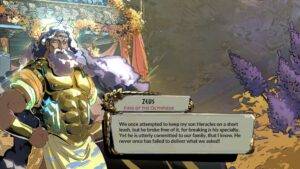
Example of interaction with a god in game.
Before diving into the mechanics, let’s consider this game through Bronfenbrenner’s ecological model to give an overview (As someone, studying early childhood education, I was pleasantly surprised to find Bronfenbrenner finding wider applications!). You play as the Main Character, Melinoë, a witch of the Crossroads. The Supporting Cast consists of the various gods, titans and shades that inhabit the world and whose storylines develop as you play. The Surroundings are mainly in the hub, where Melinoë’s bedroom, garden, shop and other resources exist to create a grounded sense of home amid the danger of runs. Society and Culture exists in the evolving relationships and storylines of the gods, and the Setting is split into the Grove (or hub), the descent into Hell, and the ascent of Mount Olympus. As a single player experience, the magic circle of this game exists entirely within the confines of the fantasy world.
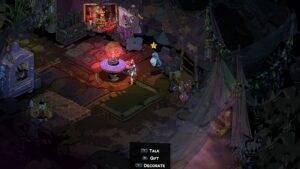
Melinoë’s bedroom, which players can customize over time.
The mechanics of the game are grounded in fast-paced combat through increasingly difficult levels. Players feel a high degree of autonomy as they are able to select one of six weapons, each with 4 variations, and randomly-dropped boons that visually and mechanically change their moves. In the example below, I picked up a fire boon from Hestia, which added flames to my attacks. With 9 boon-giving gods, and 6 other special gods, there are countless combinations of how a run could go, and this chance drives the endless replayability of the game.


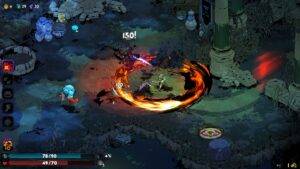
Choosing a fire boon represented by the red symbol in left image; selecting one of three random drops in middle image; visual impact on gameplay through fiery attacks in right image.
Player autonomy is further enhanced by the Fear system, which allows players to change their own difficulty settings at a granular level. Sliders that allow enemies to deal more damage, appear in greater numbers, and have deadlier movesets, are just a few of the ways the game allows players to calibrate their own challenge. This creates a dynamic balancing structure where the game does not need to adjust automatically to player skill, the player themselves decide im what ways difficulty is expressed. This balance is an impressive feat, as with so many options for weapons and boon combinations, it would be easy for players to eventually find “the strongest” option that they run every time, but each path feels balanced in that none are game-breaking. One could argue that the Torches are more beginner friendly than the Argent Skull, but in terms of power, player subjectivity drives which is better, because they are both viable options.
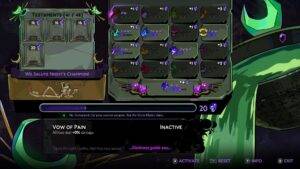
Fear System menu where players can change difficulty sliders in detail
The Fear system supports challenge as a main driver of fun, and the game also leans heavily into sense pleasure through Darren Korb’s enchanting soundtrack, the beautiful designs of each character, and the deep roster of voice actors. These aesthetics are also supported by the evocative, environmental narrative that brings Greek Mythology to life in an accessible and entertaining way. Trying to romance Eris, the goddess of strife, while developing the “uncle-niece” relationship with Odysseus is a fantastic way to give these characters new life. Even in interactions with these gods, chance plays a role in facilitating fun, as you never know what they are going to say or what quest they will send you on.
The roguelike nature of the game reminds me of Motion Twin’s Dead Cells, in that each run is different, but permanent upgrades persist between runs to create an overall sense of progress. The pain of starting over is mitigated by the satisfaction of becoming stronger overall. This mechanic is also present in Good Shepherd Entertainment’s Monster Train, where the deck you build to stop hordes of monsters taking over a speeding train resets in every run, but maintains permanent power ups.
Through this Critical Play, we have seen how despite the high skill ceilings that exist, chance is really the main driver of fun as seeing what new combinations are possible from the giant menu of options is central to Hades II’s replayability.
Ethically, this game pays much more attention to diverse representation than expected. Racially, the characters come in several hues, but there is a bias toward a traditionally “attractive” body type that I would like to see change in games moving forward. Having the majority of characters represented as thin with washboard abs with the exception of Hestia and Hephaestus (who are both represented as older) is part of a broader trend in gaming that creates an unrealistic body image ideal. I would like to see more diversity of body types in character design that show a broader range of physical expression.
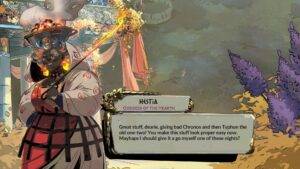
Illustration of Hestia, one of two non-traditional body types in the game.