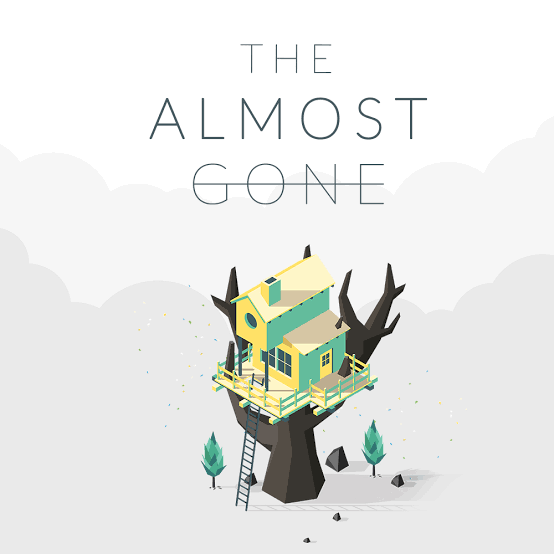
For this critical play I played The Almost Gone, a singleplayer puzzle mystery narrative by Happy Volcano. The Almost Gone’s puzzle mechanics are very simple to understand and successfully build off its narrative, but I found that some of its base mechanics were somewhat frustrating to understand at first, negatively impacting the experience of the game.
The puzzles in The Almost Gone are straightforward and simple, typical to see in most other puzzle games, but their close connection to the game’s underlying narrative elevates the player experience. From the very beginning, the player is tasked to solve basically the same puzzle: there is an object missing that players need to find (a key to a door, a missing handle), and players often must input passwords to obtain key items. Alongside the basic Information Puzzles, each puzzle also functions to add to the game’s story as each key item necessary to solve it is tied to the narrator or the narrator’s parents in some way. One of the best examples is in obtaining the key to the parent’s bedroom, where players must input a code to a safe.
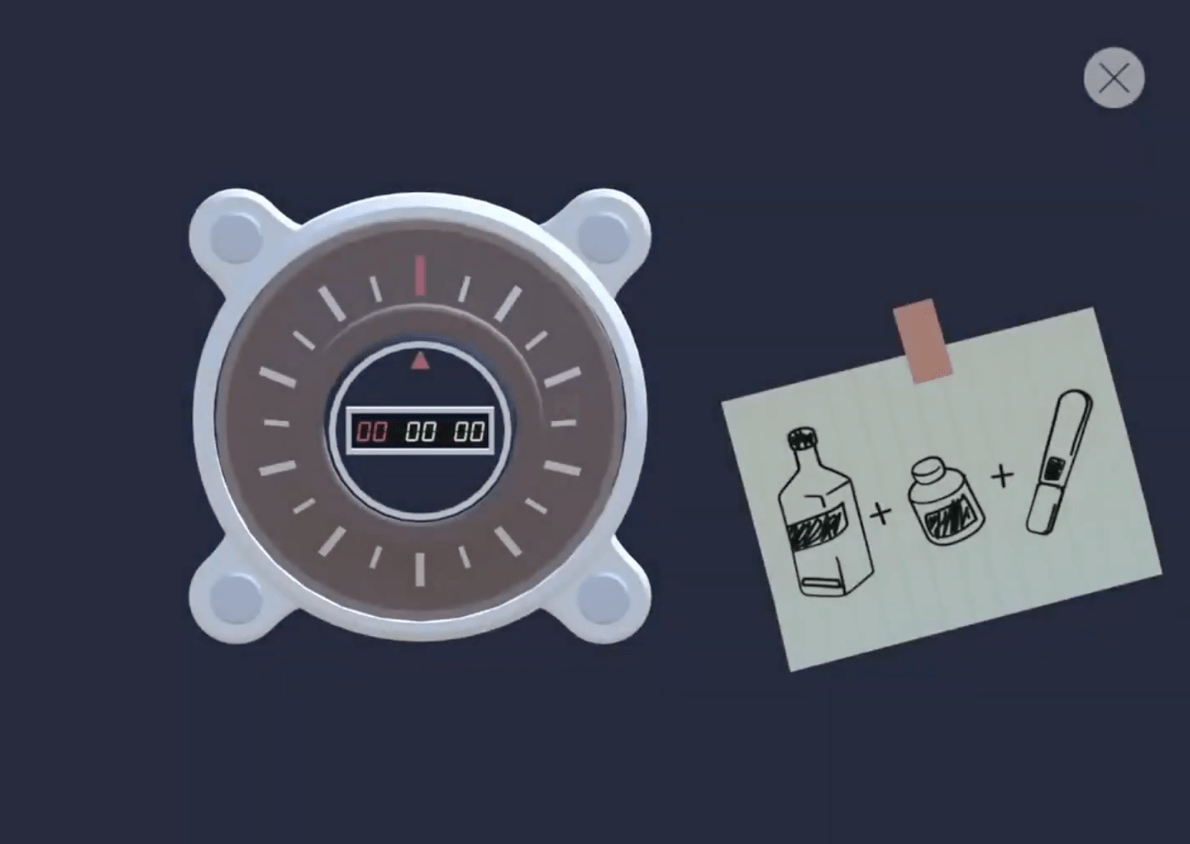
Rather than simply include the code in the nearby sticky note, the developers chose to hide the code in three seemingly unrelated items. However, each item tells its own story. The bottle and pills: the mother is mentally struggling and resorting to unhealthy habits to cope. The pregnancy test: the narrator’s parents’ relationship is heavily strained and on the road to divorce, to which the narrator believes the reason may be them. The Almost Gone does well in making each puzzle and its solution feel natural to the house environment and important for each character, which helps make the game’s experience feel more connected and cohesive overall.
In addition, The Almost Gone makes extensive use of red herrings to both make its puzzles more difficult and further embed its narrative into the player experience. The Almost Gone is a classic point and click game, so players are often clicking everything in each room to find clues. To streamline the process of accessing key items, the game highlights them in their own enlarged bubbles to the side, easy for players to access again. However, not all of these bubbles ultimately contribute to solving the puzzle at hand. For instance, the following room at the home’s entrance has 3 items highlighted.
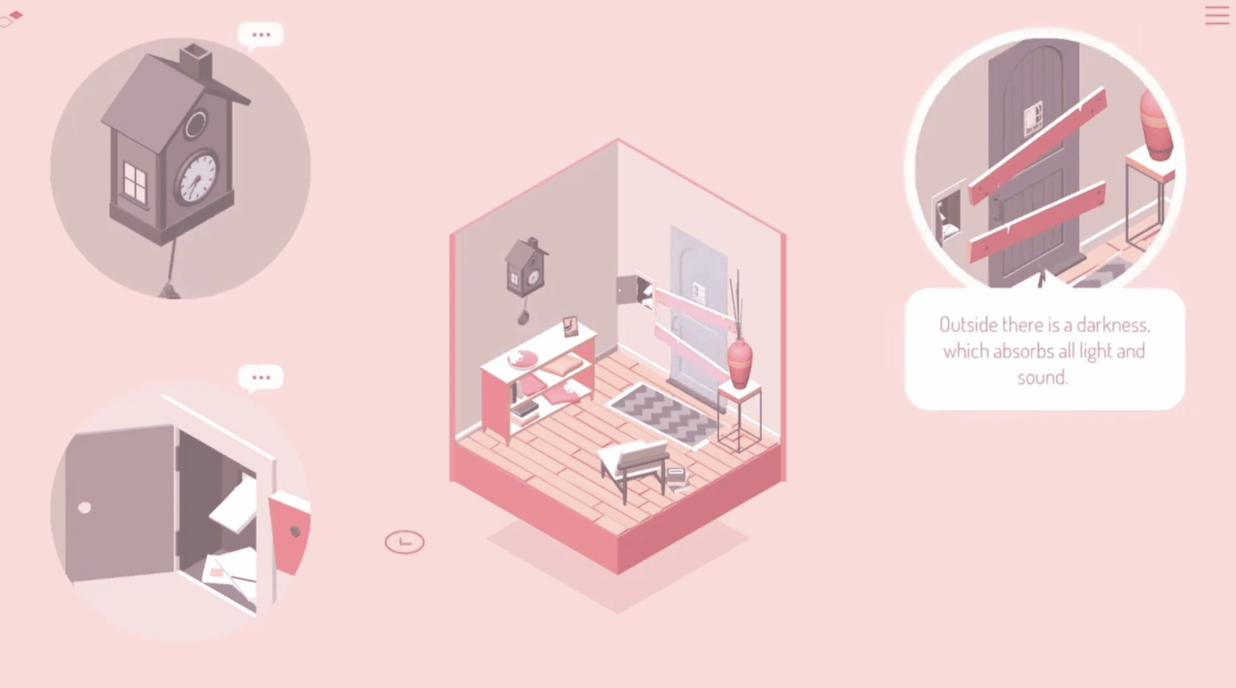
Out of all the items, however, only the door is truly important: the player will later tear down the planks with a crowbar. But the clock and mailbox are crucial in adding further context to the story. Specifically, the mailbox prompts the narrator to reminisce about how they were typically only tasked to open the mailbox by their parents, which they found offensive. These small additions add to the game’s narrative experience, helping the player learn more about the narrator, their parents, and this eerily empty world. Most objects in The Almost Gone will be useless in solving the puzzle (making puzzles harder to solve), but every object enriches the narrative experience in its own unique way. Nothing in the game that is interactable is there without reason, which makes the game experience far more interesting and enjoyable.
I did find some of The Almost Gone game mechanics to be rather frustrating at first. For example, opening the game’s inventory system was unintuitive for a MacBook player.
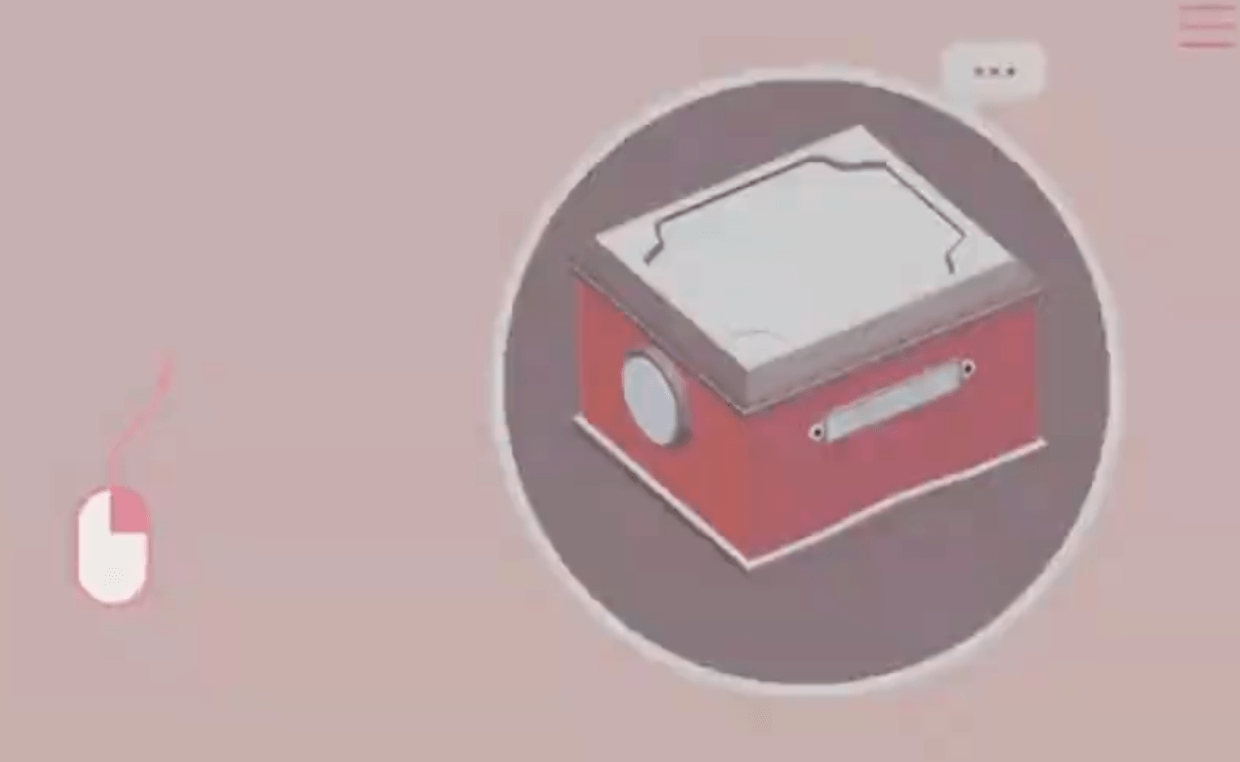
The game requires a right mouse click to open the inventory, but laptops use trackpads, so figuring out the correct button to use took a long time to figure out. This is also the only way for players to check their inventory, otherwise items are generally hidden. This can make it difficult to track what items a player has picked up, causing them to get stuck as they search for an item that was already in their inventory. These features could have been improved with different icons for users on different platforms as well as a visible inventory hotbar, perhaps tucked away in the corner that doesn’t obscure the player’s vision but serves as a reminder of the items they have collected that they may use for future puzzles.
The Almost Gone makes a few assumptions regarding player knowledge and household items. I specifically want to point out the telescope eyepiece and the police laser sight. The telescope eyepiece is necessary to obtain the key out of the narrator’s room. Similarly, the laser is necessary in finding additional toys to unlock the remaining neighbor’s mailboxes. Both of these I did not know immediately because I have never used a telescope or a gun before. To me, the telescope seemed functional, and I wasn’t sure why I wasn’t able to look into it initially. The only reason I was able to figure out the location of the laser was because of a heart icon on the back which matched an icon in the environment. These assumptions actively exclude anyone without strong interests in astronomy and weaponry, which can make puzzles difficult to intuitively solve for these people. However, I will also mention that The Almost Gone does well in addressing these player’s knowledge gaps. The item inspection mechanic allows players to press a button on the laser to turn it on, and the heart icon can help players use it properly even if they still don’t know what it does. The game tells users that the telescope is missing an eyepiece (I missed it), and it is the only item in the player’s inventory at that time. While there are some assumptions on player knowledge, The Almost Gone does well in filling in those gaps when necessary.