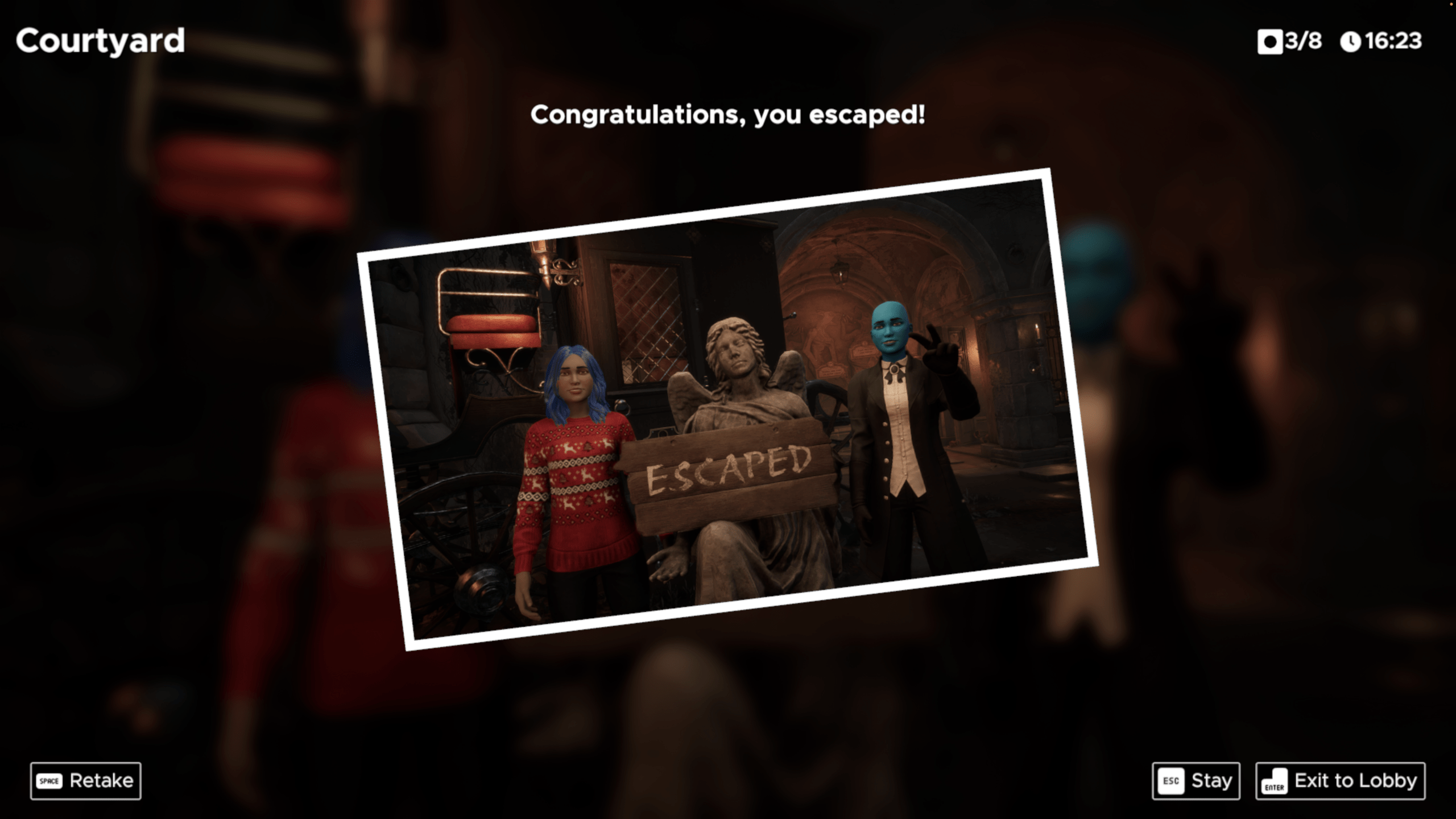
I played Escape Simulator 2 (ES2), specifically Dracula’s Castle, on MacOS through Steam, which was developed by Pine Studios and designed for a general audience interested in solving puzzles with no defined age limit. The game was designed for both singleplayer and multiplayer up to 8 players. I played the game in its two-player multiplayer form (with Jeffrey Cai :D) through Steam multiplayer while communicating over Discord.
Escape Simulator 2 forgoes narrative depth for clear direction and challenging puzzles, seen in the use and design of the environment. However, the ambient setting and architecture do provide an embedded narrative for players to infer.
ES2 is designed as an escape room first, narrative second. The game’s environmental design is a clear example of architecture primarily supporting the gameplay rather than representing reality or developing a story. On each of the three levels I played, there was a large locked door with indentations for some keys. While this serves no purpose narratively, it utilizes familiarity to inform the player of their main objective: escape through this door. Players understand by this that they are intended to find the indicated keys in order to break out.
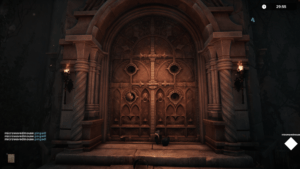
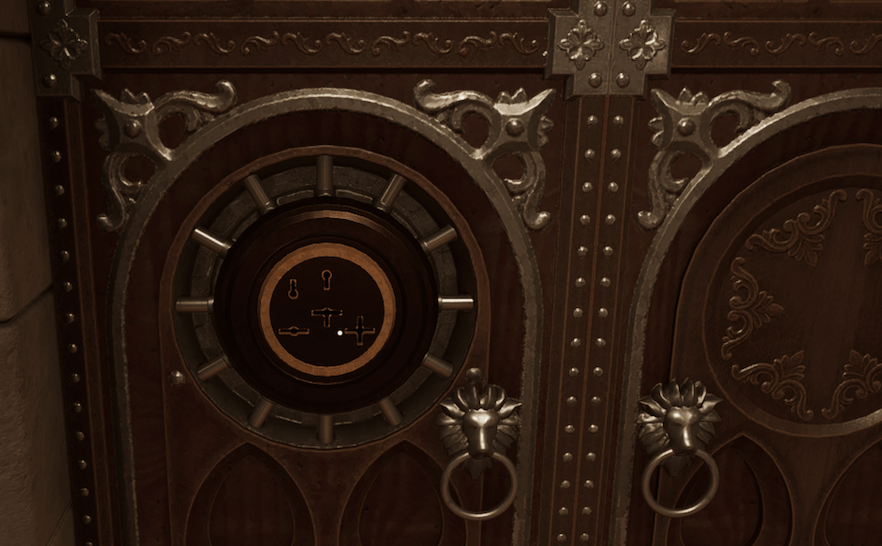
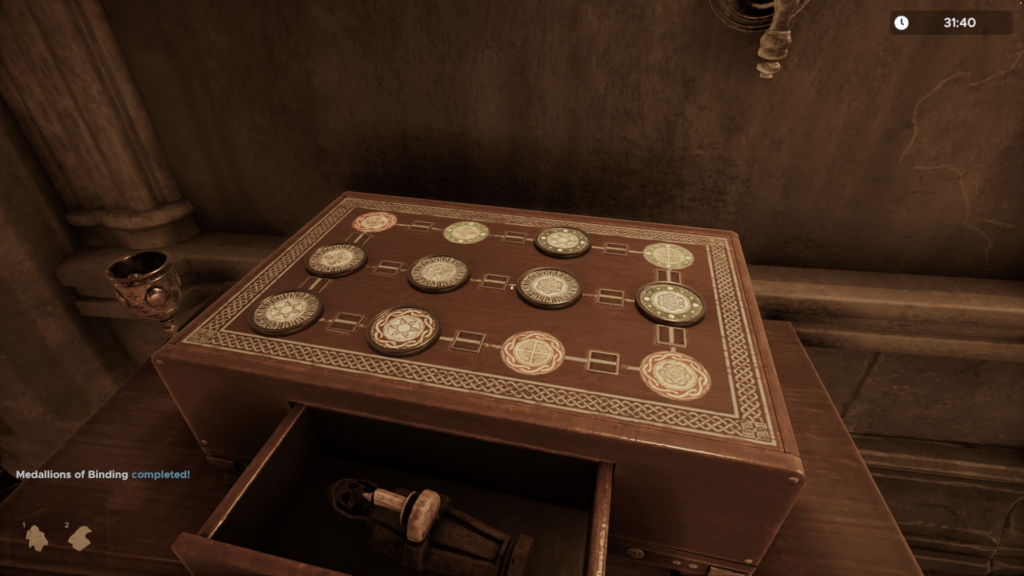
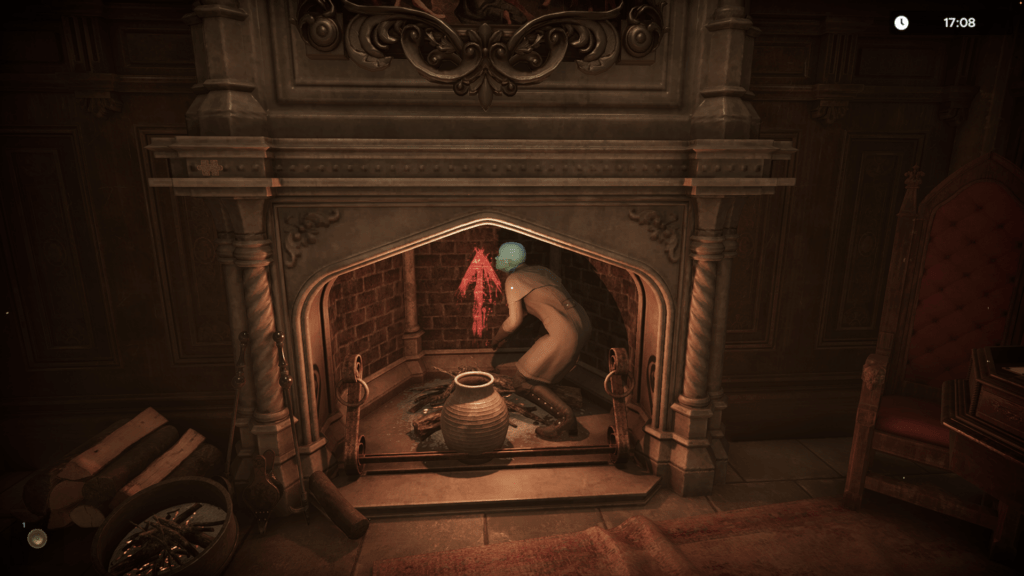
Similarly, the rest of ES2’s environment is designed to contain and guide players to the next puzzle, generally without regard to narrative consistency. For example, the puzzle box shown below can be solved by placing medallions randomly scattered around the room in a specific pattern: once solved, it opens to reveal a statue which is necessary for the next puzzle. Obvious guides appear after solving a puzzle to direct the player’s attention.
The architecture also serves as a constraint. All levels were played in a enclosed setting with an enforced boundary, which limited the area able to be explored.
These environmental choices are consistent with the main aesthetics of the game: challenge and discovery. The core mechanics for solving the escape room are finding and solving puzzles, which leads to the dynamic of the player searching the space for clues. If the space was unconstrained, the player would not be able to effectively progress through the story as it would be difficult to discover where the next clue was situated. Without clear guides, such as the arrow above, players may feel confused or lost on what to do next. Additionally, the choice to only lightly tie puzzles to an overall narrative allows for more creativity in puzzle design. A more realistic game may not allow for clever puzzles such as the puzzle box above as they wouldn’t tightly fit into the reality or narrative of the game. In this way, ES2 chooses to appear to the Achievers of Bartle’s taxonomy of player types by providing them with a clear pathway to solve clever challenges.
However, this directly comes at the cost of the game’s narrative aesthetic. Because puzzles take priority, ES2 does not allow you to enact a story. Instead, the narrative draws entirely from evocative spaces and embedded narrative. Specifically, being Dracula’s Castle, ES2 evokes the player’s understanding of Dracula and vampires throughout the game. Certain puzzles rely on and enforce this narrative. For example, one has players distinguish between vampires and non-vampires by showing their portrait in a mirror: vampires don’t appear in mirrors so their portraits appeared blank.
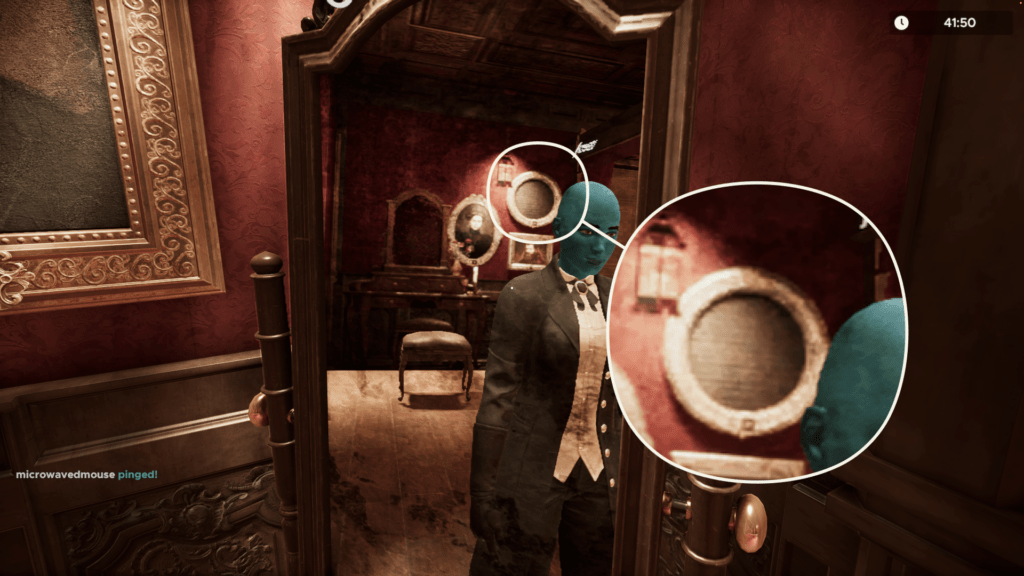
Furthermore, the architecture resembles classic gothic castles, leaning into architectural clichés to immerse the player in the story. These buildings appear at massive scale, making the player feel the grandeur and opulence of the former vampire occupants.
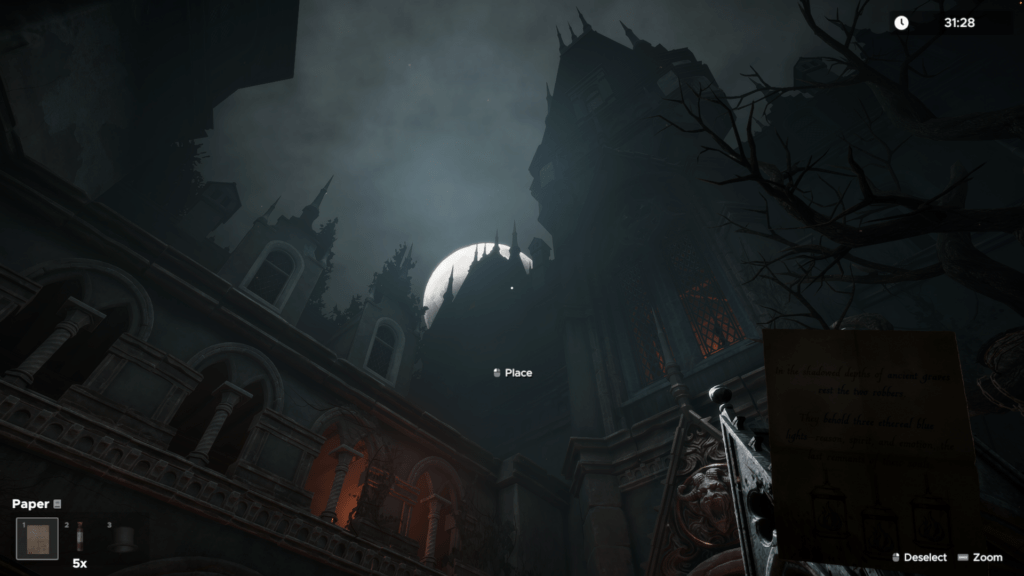
Puzzles also provide small elements of an embedded narrative. One puzzle contains a note from a vampire to their lover and another contains journal entries from a vampire’s travels. Both provide a little bit of narrative spice to make the player feel like they are exploring a vampire’s home.
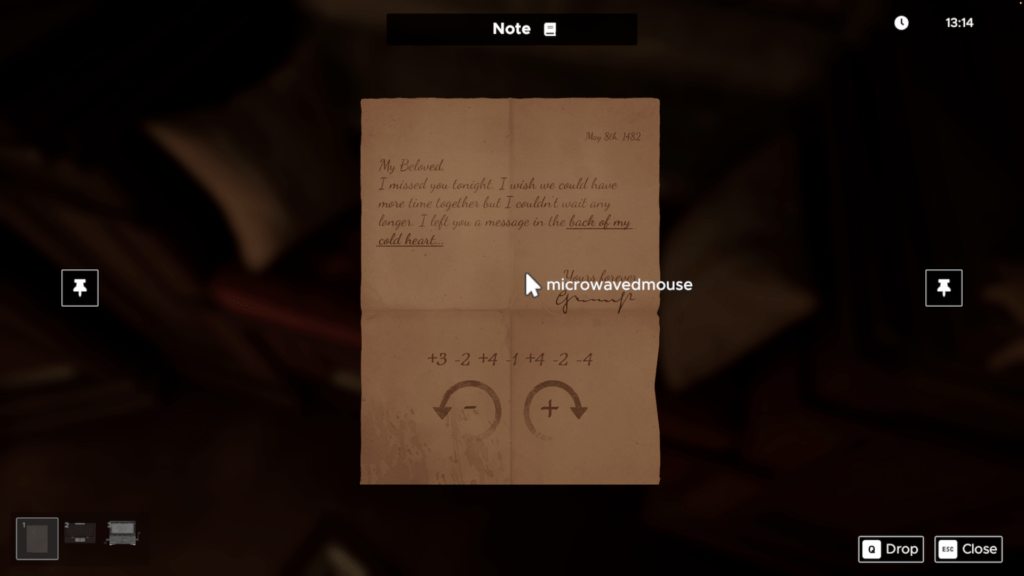
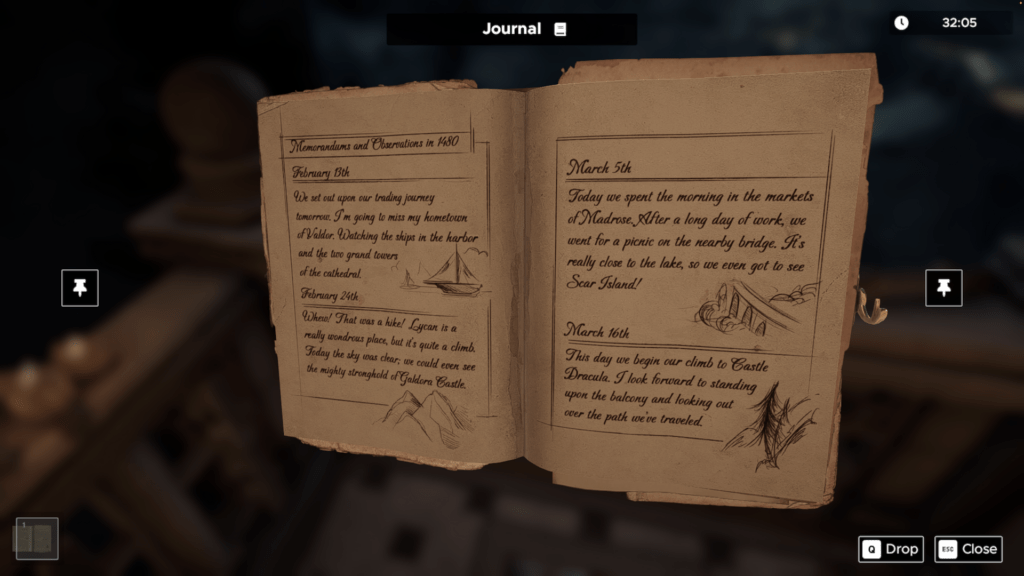
However, these pieces of narrative are constantly at tension with the overall objective. In both examples above, the main purpose of the object still to solve a puzzle. By the end of the room, the player is left with some enough incomplete parts of a narrative to feel an immersive setting, but not enough to piece together a consistent story.
Ultimately, Escape Simulator 2 lives up to its name: it simulates a real life escape room, albeit one unconstrained by both budget and the physics of the world. However, not unlike many escape rooms, it chooses to prioritize puzzles over narrative exploration, evident in its large reliance on evocative narrative and informational environment design to fill a setting, rather than a story.
As ES2 is relatively new, it is difficult to find first-hand accounts of how it addresses accessibility. However, based on my play-through and Steam content tags, it appears to be color blind friendly. I noticed that there were no puzzles that relied exclusively on color. For example, while the puzzle box described above had colors indicators, they also had separate patterns that described the same information. However, there were a few places where the game might not be as accessible. There were several flashing cutscenes without warning, which may not be a positive experience to everyone. Additionally, I noticed that during their tutorial, although I mouse using my left hand, the on screen indicators showed the incorrect button, which may be confusing.