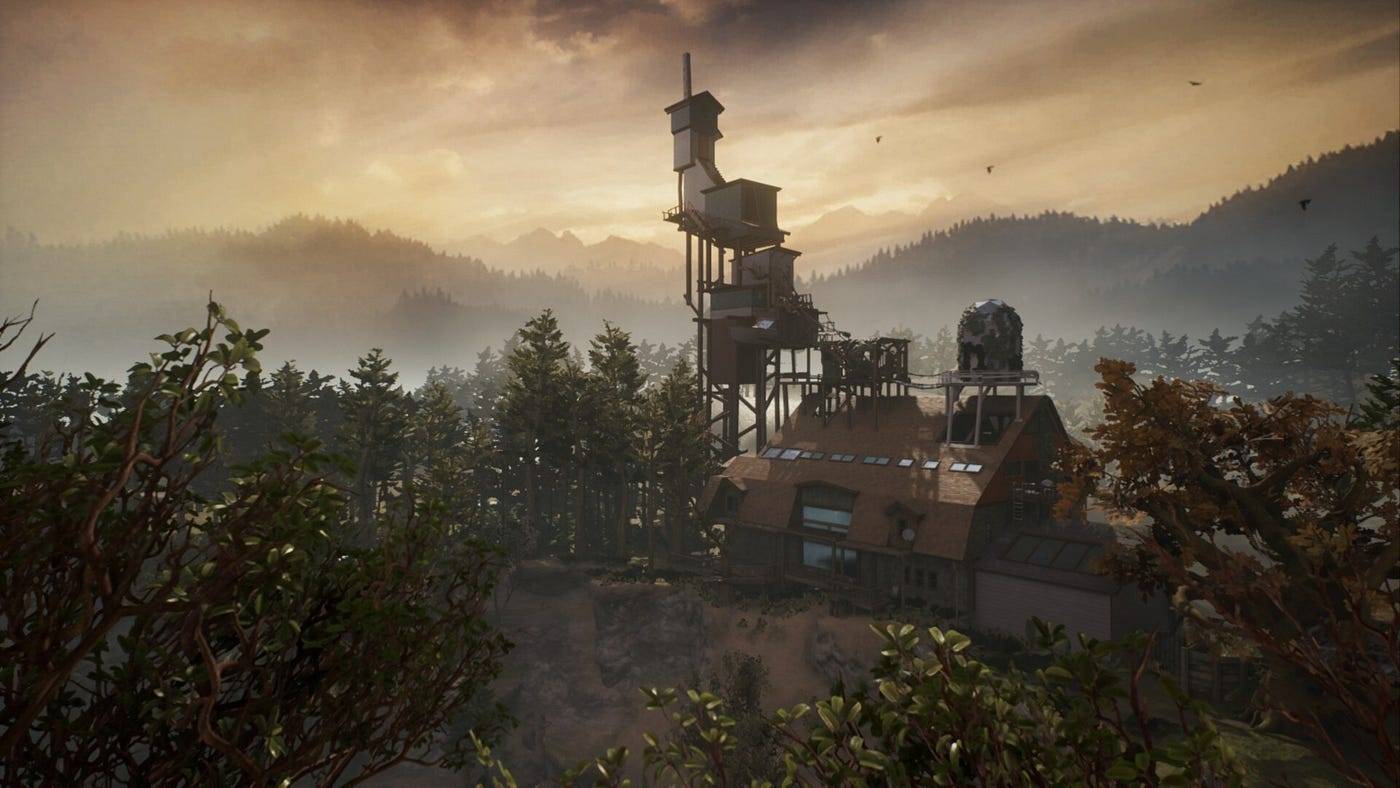
The game I chose for this critical play is What Remains of Edith Finch, a walking simulator developed by Giant Sparrow and available on PC, PlayStation, Xbox, and Nintendo Switch. The game is aimed at players who enjoy slower, narrative-focused games and are interested in exploration and storytelling over traditional gameplay mechanics.
My main takeaway is that walking in this game is not just movement. It is how the narrative is delivered, controlled, and experienced. The design uses space, limitation, and subtle guidance to make the player uncover the story rather than be told it directly.
The mechanics are very minimal. You walk, you interact with objects, and occasionally you do small actions. There are no clear instructions. At first, I actually liked this a lot. It felt like I had freedom to explore and figure things out on my own. There are small white dots that hint at objects you can interact with, but they do not tell you what to do. The narration appears as floating text in the air, which is supposed to be Edith Jr.’s thoughts. This was one of my favorite design choices because it connects movement and storytelling. You are literally walking through her words.
That freedom is somewhat illusory, though. The layout clearly guides you toward the next story beat, like being herded in a specific direction. I still felt agency, but the game was tightly controlling my path. This is actually a smart design decision because it creates the feeling of exploration without letting the player break the narrative.
The most interesting part of the design for me was the mini-games. Each family member’s story introduces a different mechanic. These are not just random gameplay changes. They reflect the character’s experience.
For example, in Holly’s story you turn into different animals. As a cat, you jump. As an owl, you glide. As a shark, you swim. As a strange sea creature, you move in a completely different way by slithering. These mechanics are simple, but they feel very different, and they help tell the story without using dialogue. You understand the character’s mindset through how you move.
Another example is Sam’s story with the camera. This is actually where I got really frustrated. I was just taking pictures of random things for about five minutes because I had no idea what I was supposed to do. There was no clear feedback or indication of progress. I could not exit the camera either, so I felt stuck. Eventually I realized I had to take a picture of his daughter, but it took way too long to figure that out.
This is where I think the design fails a bit. The game removes instructions, which is fine, but it does not always replace them with clear enough cues. The same thing happened with Gregory’s bathtub scene. I kept making the frog jump, but I had no idea where it was supposed to go. That frustration pulled me out of the experience. I was ejected from the magic circle–not by choice, but by confusion. That is a meaningful design failure, because the emotional weight of these stories depends entirely on the player staying inside the circle willingly.
So while the lack of direction is part of what makes the game interesting, it can also backfire when the player feels lost instead of curious. I think the game could improve by adding subtle hints without breaking immersion. For example, if I missed an exploration cue that was vital to continue the story, instead of wandering for 5 minutes and building frustration, the game could add a small arrow to redirect me back to where I should be.
What makes these frustrations worth examining is how other walking simulators handle the same challenge differently. While I haven’t played many, I have played Gone Home. Gone Home uses a single explorable house like Edith Finch, but gives the player slightly more freedom to piece together the story out of order through environmental clues and scattered notes. There is no one correct path, which means you are less likely to feel stuck — although conversely it also means the emotional payoff is less controlled.
In Edith Finch, violence and a lot of dark subject matter are essential parts to the narrative. Similarly, the shooting game Krunker.io is almost entirely based on violence. However, while Edith Finch is built around death, you are not performing violence in a competitive or skill-based way. Instead, the violent or disturbing moments function more like narrative motifs. They are there to make you reflect on what happened, not to test your reaction time or aim. Even in the animal hunting sequence, it does not feel like a typical action mechanic. It feels more like stepping into a mindset and understanding it from the inside. So it is not just about whether violence is present or absent. It is about how the game frames it. In Edith Finch, violence creates reflection. In Krunker.io, it becomes routine and almost invisible because you are doing it constantly without thinking about it.
Overall, I really enjoyed What Remains of Edith Finch. Even though I got frustrated at certain points, I think the design is very creative. Walking is not just something you do between important moments. It is the main way the story is told. The game proves that something as simple as movement can carry an entire narrative if it is designed well.