For this critical play, I played The Stanley Parable, a PC game by Davey Wreden and William Pugh. Prior to this, I had never played a walking simulator, nor is it a genre I felt a deep desire to explore. The Stanley Parable, however, uses walking to slowly deliver its narrative to its player, altering its message in response to the different ways a player may choose to walk through its world and highlighting different player’s approaches to video games.
The (very snarky) narrator in The Stanley Parable is the main factor propelling the story forward, providing direct narrative in response to user action . The narrator is the one the player first meets, setting the scene of the great mystery we are seemingly tasked with solving and directing the player to the ‘right’ areas. By walking through each room, you unlock more dialogue. By the doors closing when you enter a room, you are forced to think before proceeding. At a rudimentary level, having the narrator tell the story in chunks creates a dynamic where the player wants to continue walking onward to receive additional dialogue, building intrigue and resulting in overall entertainment from Discovery. It is very straightforward, and simply following the narrator’s instructions and making one major choice (turning on/off the mind control machine) will get you to ‘complete the game’ and receive the associated Steam Achievement in under 10 minutes. Thus, walking tells the story as you experience it.
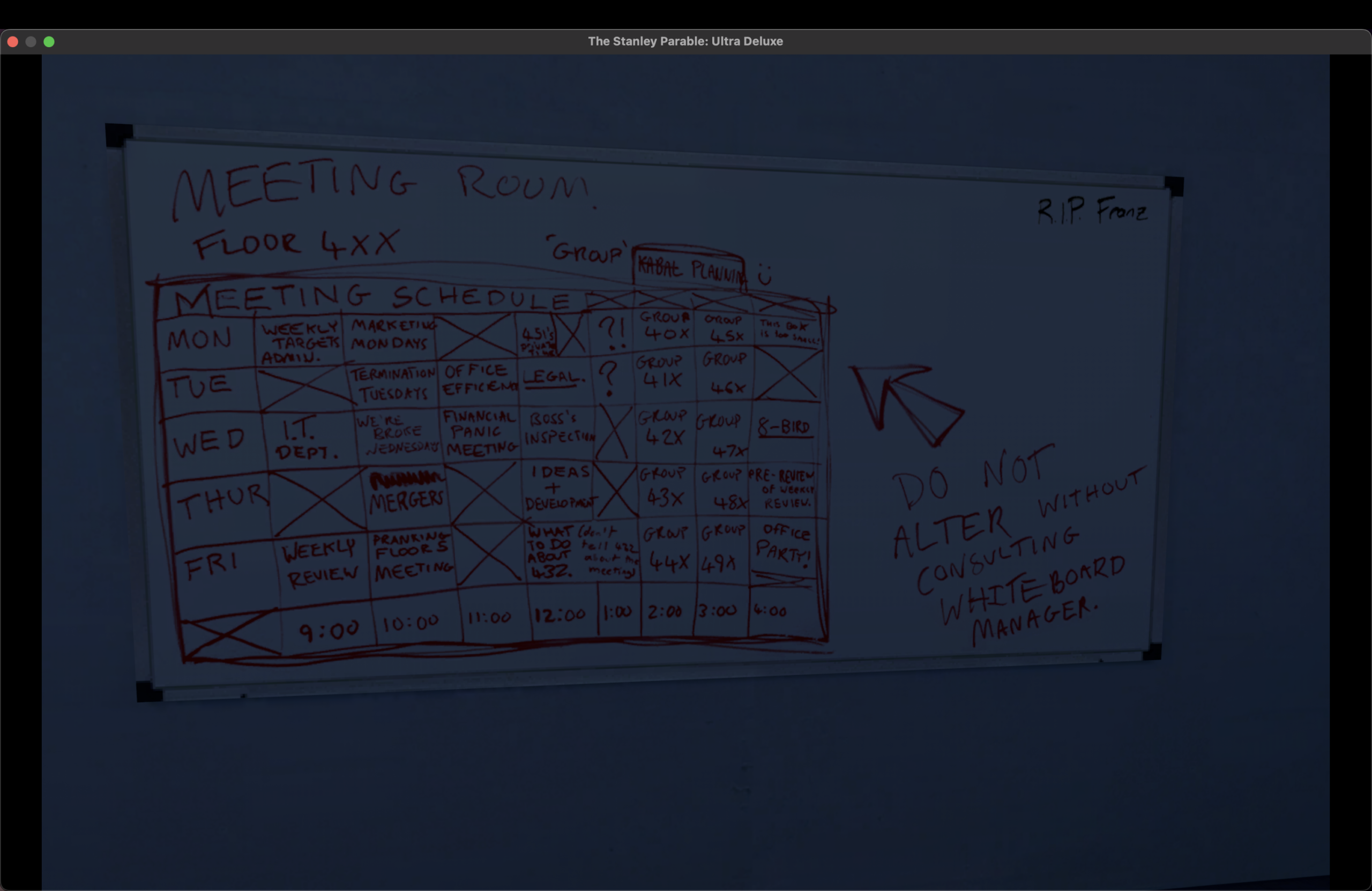
However, The Stanley Parable provides additional narrative should you choose to not follow the narrator’s instruction and walk in the other direction. The game takes advantage of varying levels of player experience (casual and veteran gamer) in order to evoke a narrative that most speaks to them. As an avid PC gamer, I’ve come to instinctually interact with and explore everything in a level prior to moving on, trying to gather as many clues as possible. However, the narrator immediately called me out, saying ‘Stanley is wasting time searching for his missing coworkers who aren’t here.” Trying to search for any clues in the environment is similarly futile: much of it is simply nonsense.
Choosing to walk to areas outside of the directed actions result in unique dialogue in response to the player’s actions. There are many, but I will highlight the ‘Escape’ ending that can be found outside the Mind Control room.
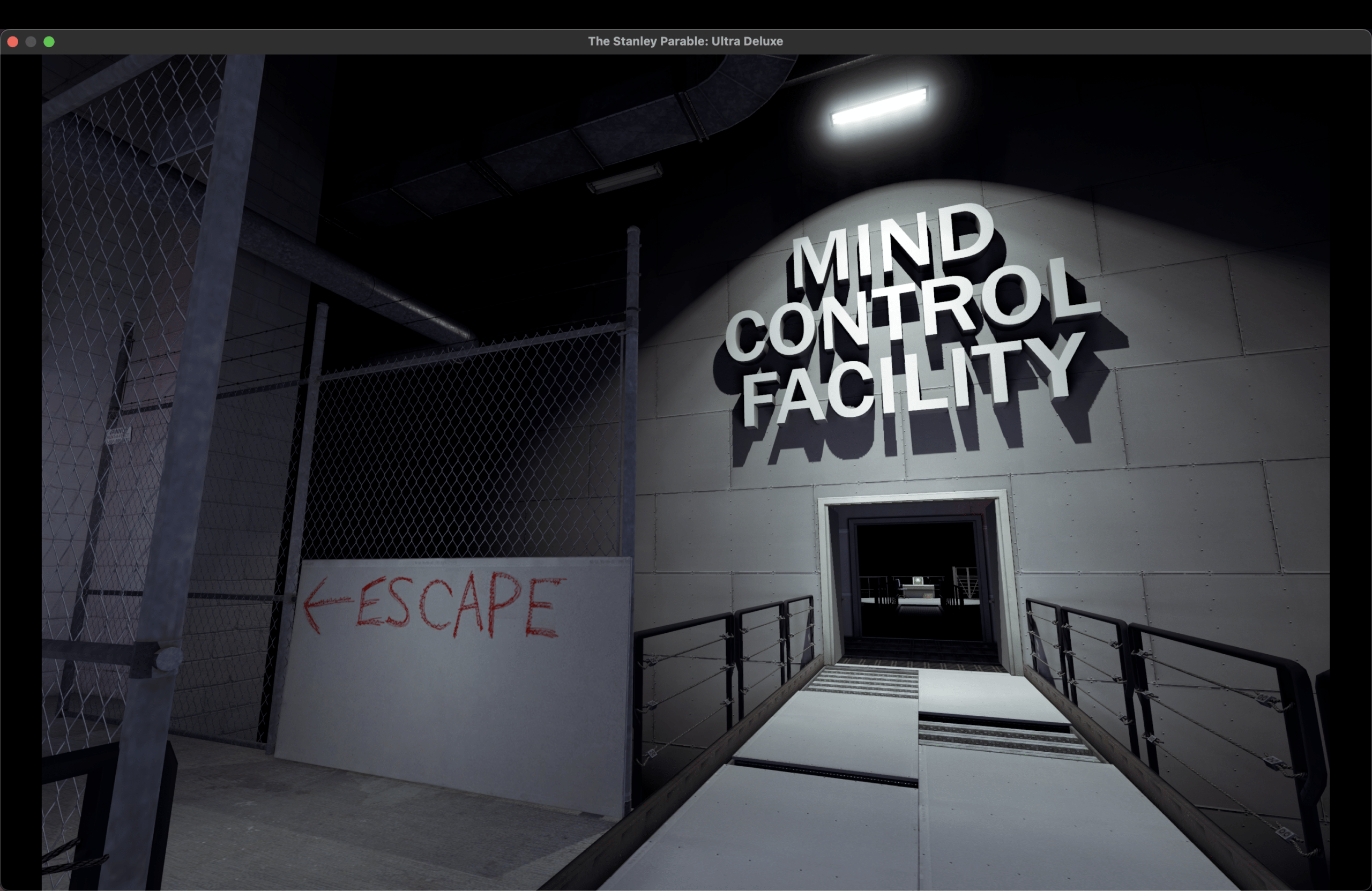
I chose to go down the ESCAPE hallway rather than the Mind Control Facility because that sounds bad! Immediately, the narrator begins saying ‘If you keep going down, Stanley will die horribly,’ and continues to reiterate this message the further you go, even highlighting the fact that the door is still open and you can return at any time. After committing to this route, the narrator will criticize the player for trying to act in a world that they do not fully understand, killing Stanley and restarting the game. By giving the players freedom to explore outside the straightforward route, The Stanley Parable can embed narratives targeted to specific groups of players in response to their inherent assumptions coming into the game. For casual gamers, they can easily reach the ‘good’ ending and are encouraged to replay for new information, but veteran gamers will be criticized and made fun of for first searching for ‘alternative endings.’ Such unique narratives for each player results in more impactful narrative messaging and ultimately encourages all players to continue playing to uncover new parables on approaching video games.
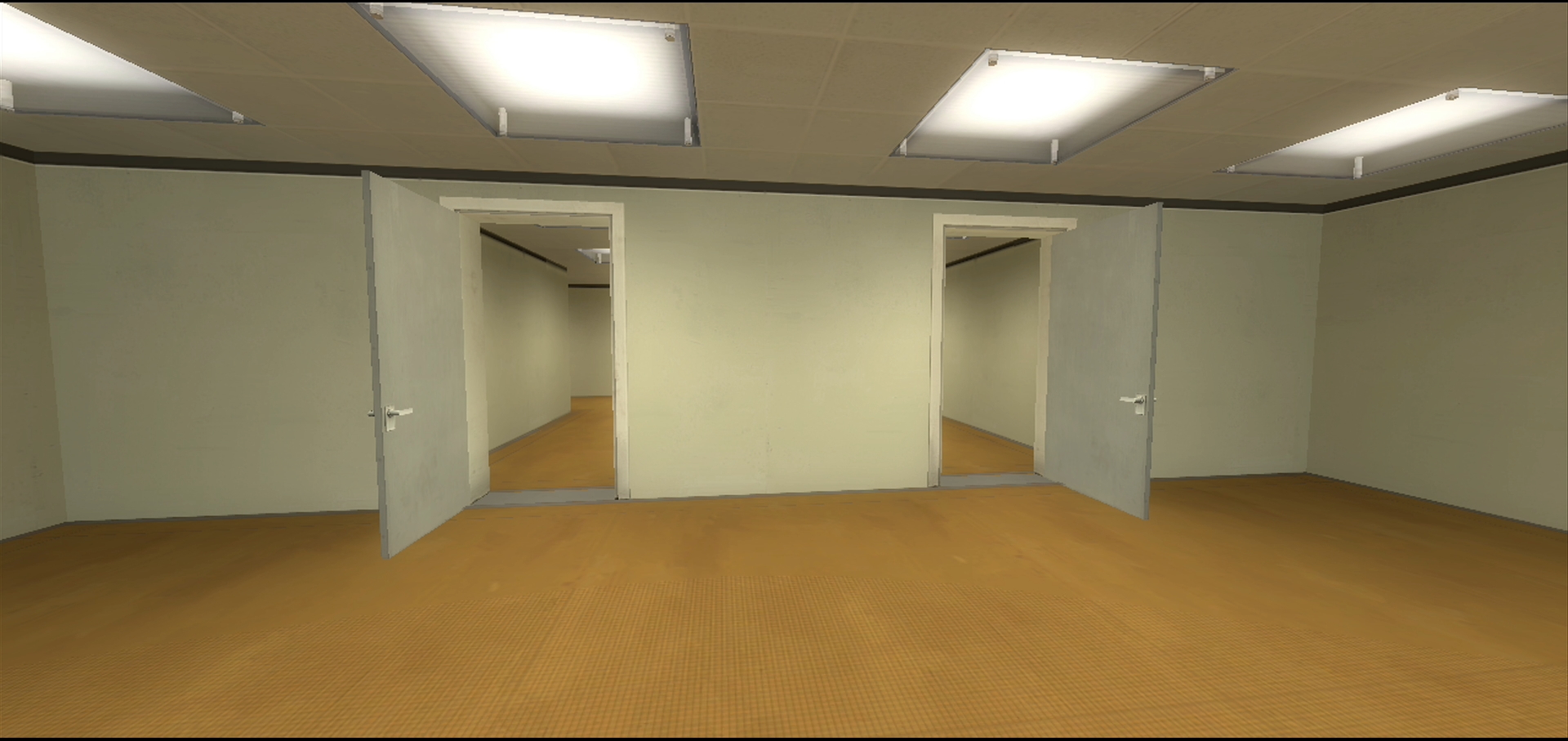
Choice in The Stanley Parable: players are instructed to go left, but are free to choose and craft their narrative.
In class, we played Krunker.io, a game that primarily included violence in its mechanics. Compared to games such as Krunker, I found walking sims like The Stanley Parable far harder to play: not because they are mechanically challenging but because they force you to deeply think and consider your actions.In violent games, human life and
thereby your actions are all quantified. Winning is determined by how many ‘kills’ you get, or whether you have a good Kill/Death ratio. Krunker, like many other shooters, assign additional‘score’ values for each kill you get or objective you advance. You gain more score the more ‘difficult’ your kills are: headshots, backstabbing, or kill streaks are a few common boosts. Mechanically, they are more challenging because you have to move, dodge, and shoot all while trying to complete the assigned objective. However, the true weight of your actions are unfelt: you are just trying to level up.

In walking sims, the narrative will often make you feel the weight of your actions. Oftentimes, it can be as simple as making choices irreversible, whether that be in game or real life (The Stanley Parable’s functional clock you set at the beginning that eternally ticks away reminds you of the time you have spent here rather than elsewhere). But often, some choices will result in harm/death to your player/another character in the story, and you are left rethinking your choice. In the Stanley Parable, the narrator hints that Stanley may not be you, “his own life is in someone’s control.” Taking this quote literally, that means that in cases such as the “Escape” route, you deliberately lead Stanley to his death, knowing full well he is his own being. While part of the violence is lost in The Stanley Parable because the player simply returns to Stanley’s starting office after each parable, it still forces them to consider what they’ve done. Mechanically, you only walk and interact. There is no ‘losing,’ but knowing your choices can change the trajectory of the story will force you to deeply consider the ramifications of your every decision.