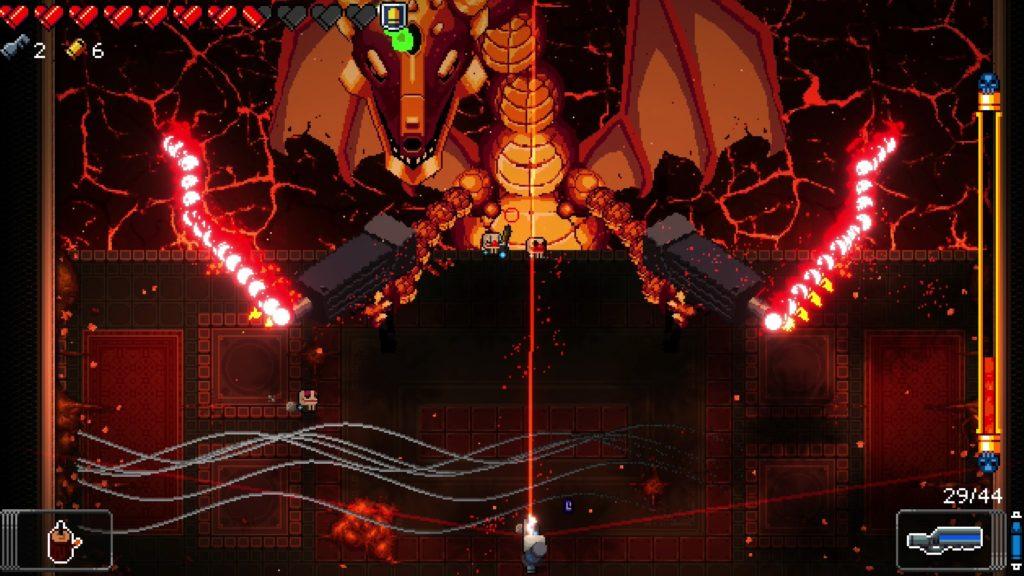
Yume Nikki, created by Kikiyama for Windows PC and Steam, is a surreal psychological horror exploration game aimed at young adults and players who enjoy eerie, interpretive gameplay. In Yume Nikki, there is no dialogue or particular goal that the player has to accomplish. This is quite different from the games I usually play, so I had a good time exploring and figuring out exactly what I was supposed to do (since there wasn’t a peculiar end goal). The plot became what I experienced as I walked through the different realities, ultimately leaving things up to my interpretation. In Yume Nikki, walking is the story that the player experiences. Every movement and action, although minimal, is what becomes the narrative.
The salon article mentions how these types of walking games, referred to as “walking simulators” are perceived as less-of because supposedly, “all you do is walk.” However, the article also highlights that these critics often forget what walking, as a mechanic, enables. I love Gao’s quote from the article, “even standing by something closeness to a story.” I think this quote encapsulates Yume Nikki and other walking simulators well because ultimately a game’s story can be expressed in more ways than just being directly communicated to the player. In Yume Nikki, the story emerges through the act of moving through unsettling spaces and noticing what those spaces have to offer the player. For example, as I walked around the dream worlds, each accessible through a special door, I kept seeing the same uncanny, circular figures that looked and seemed important, but I couldn’t interact with them and they couldn’t respond. This made the world feel more unreadable because these monsters just existed as part of the space instead of a character that directly provides context to the plot. The things I could interact with were often ordinary, mundane objects like room features and doors. I think this is what makes the game so effective, is that it teaches the player that the story will come through the unsettling gap between what one may perceive as “meaningful” and what actually responds. Sometimes the most moving artifacts in the world, whether real or not, are offered in silence.
When we take a look at the MDA framework to help explain how exactly this game works. From what we’ve learned: mechanics produce dynamics and dynamics produce aesthetics. The paper also argues that games should be understood through the behavior they create. In Yume Nikki, as mentioned previously, the core mechanic is to walk, inspect, enter doors, and collect Effects. This in turn creates the dynamic of the game, which is slow discovery and wandering. From there, those dynamics create the game’s aesthetics of discovery and some uneasiness. I felt some uneasiness playing the game because I’m used to games where I’m told what the character I’m playing is feeling, but here, the player performs the feeling by drifting through these different worlds.
Ultimately, Yume Nikki is different from any other game I’ve played because it feels like horror, but not horror in a traditional sense or the kind that I’m used to. In traditional digital horror games, story is told through combat, dialogues, or puzzles. For example, in Roblox, in the game “The Mimic” the player collects notes and tries to piece the message together, a puzzle game. However, none of that is present in Yume Nikki. I found myself asking “what does this mean?” far more than “how do I get past this?” in traditional horror games. However, I can see how this ambiguous functionality might not be suitable to different kinds of players. Some players may feel like they rely on some sort of cues and other mechanics to shape their experience. While I enjoyed Yume Nikki, I would probably want to see some sort of map in the top corners of where I am within the rooms, because I found myself going in circles.

In conclusion, the act of walking in Yume Nikki tells the story because walking makes the player inhabit the character’s curiosity and isolation. Movement itself is used to build meaning and every in-game artifact is part of the narrative because the player has to experience and interpret it themselves. Yume Nikki is different because the story is something that has to be uncovered. Walking is more than a mechanism, it’s the storytelling device.
Ethics
Playing Yume Nikki changed my view on how violence is used in games to create meaning, specifically within horror or intentionally violent games. In games like Krunker, violence is the main way to produce tension, and this is a common mechanic across many games. Due to this, it can start to feel like conflict must be expressed and resolved through defeating something, or winning a battle. Yume Nikki pushed back on this assumption because the game itself gave me a similar feeling of tension and uneasiness that I would see in a stereotypical violent game like Krunker, but there is no expression of force. Ethically, I think this is really important because it opens up a different relationship between the player and the game, specifically a relationship that is not built on the desire to conquer, but the desire to explore. The absence of violence made me play closer attention to the environment. This made me realize that games don’t need violence to be emotionally powerful. In the case of Yume Nikki, removing violent mechanics created a more ethically thoughtful experience.