What are the core mechanics necessary to make the game both as simple and as fun as possible?
- During the brainstorming phase, our group came up with a lot of potential mechanics. While many of these are exciting, we want to figure out what exactly the core mechanics are that are most necessary in our game. Prototyping will provide a good starting point to start playtesting and thinking about the results from inclusion/exclusion of different mechanics, letting us gain more insight into which ones we can cut and which we should keep. I envision quickly iterating through many prototypes where we include and exclude certain mechanics to see how that changes the game’s feel and fun. I will say, some of the impact of certain mechanics could end up being not super obvious, which might lead to some uncertainty, but overall this style of prototyping should hopefully help us narrow down from our large list of current brainstormed mechanics.
Will the phenomenon of “the tragedy of the commons” always occur naturally, and how will player incentives shift when they realize the phenomenon is happening?
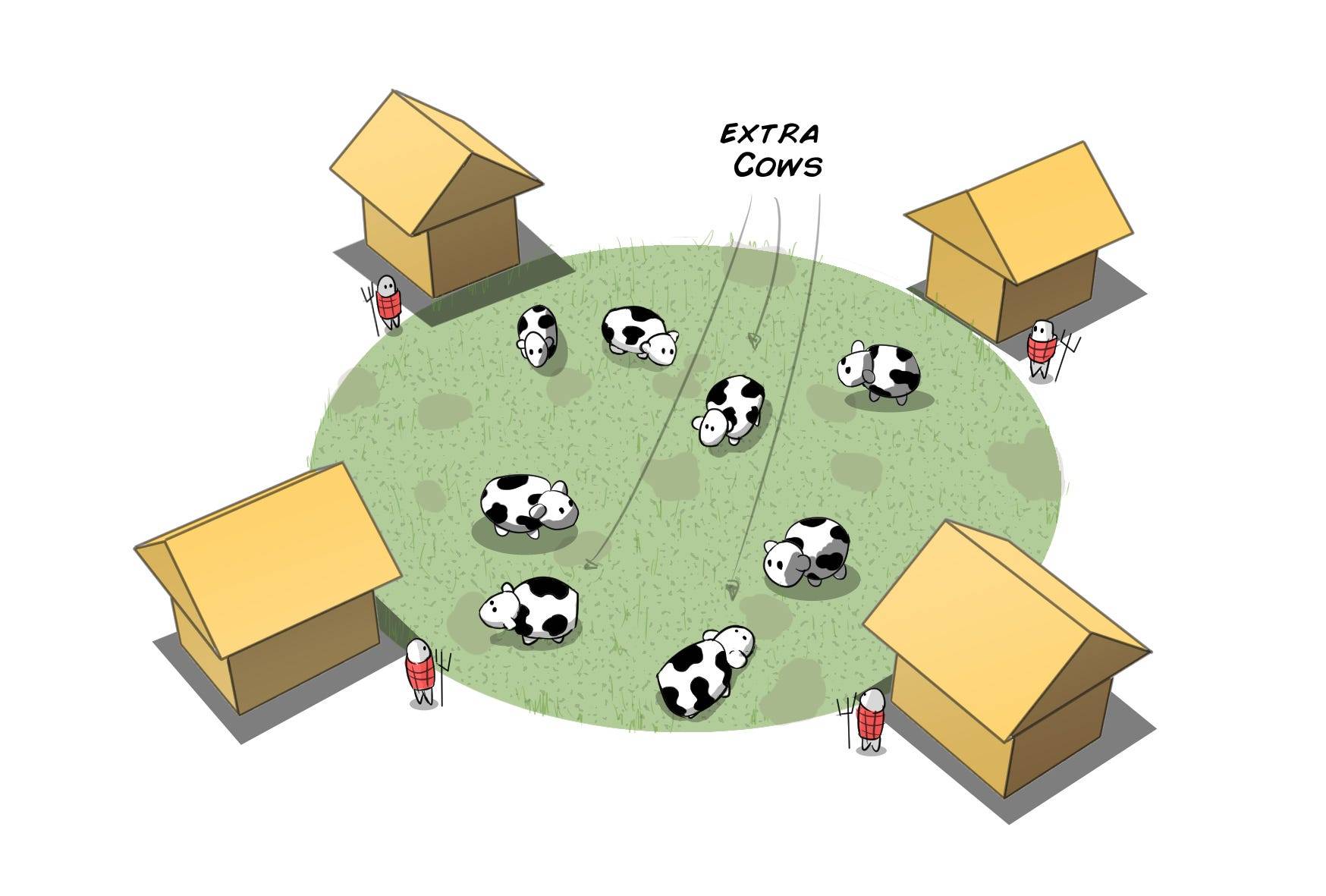
- Our game’s main goal from a design standpoint is to have players experience “the tragedy of the commons” within the bounds of the resource of the game. (To elaborate, tragedy of the commons is when there’s one common resource everyone has access to, but when certain people act with more greed than others, it depletes the resources leading to the detriment of everyone in the community.) Because this is the theoretical core of our game, we really want to make sure that it is actually felt, and comes across relatively consistently and naturally in the game. We will need to playtest through complete runs of our game, testing different mechanics (such as question 1 details the concerns about), to see if the tragedy of the commons consistently appears and how that changes player dynamics. I expect it to be relatively easy to induce (prompting players with cards to act more greedily), but that the right balancing to make it happen not too fast/slow, as well as what happens after a shared resource is completely depleted, will be the bigger concerns during our prototyping.
Is it better to have a whimsical, fun theme to draw players in, or a more serious theme that reflects the nature of the real-life issues that our game draws inspiration from?
- Our team has been struggling with choosing what theme and resource to use, debating between something more whimsical/fun to draw players in and communicate the fact that this is still a party game, or a more serious theme that prepares players mentally for the nature of the seriousness of the implications of the tragedy of the commons in real life. I’m very inspired by the video on early prototyping where the designer mentions creating multiple prototype “boxes” for the game, asking players what they’re most drawn to. It could be relatively easy and productive to prototype a few different themes and concepts for our game, ranging from more fun to more serious, and asking others which ones they’re most drawn to. I expect most people to be immediately drawn to a game that seems more “fun” at first-glance, but I’d be interested to see if there’s also players who choose the more “serious” theme (such as those who like resource-allocation, bluffing and deduction, or real-life implications in their games).