For this week’s critical play on mystery games, I’ve played Cube Escape: Paradox. Cube Escape: Paradox is a mystery / escape room game developed by Rusty Lake and released in 2018, available on PC via Steam and on mobile via iOS and Android. The game is designed for mature audiences of age 13+ due to its dark themes and surreal imagery.
This game takes place in a confined room full of locked drawers, doors, and apparent puzzles. The player must solve these puzzles to find keys and escape. What is most striking about the design is the simplicity of its mechanics: there is only one, and it is the click. Clicking does everything in this game — click on suspicious areas to investigate, click on items to apply them, click to combine inventory pieces. There is no keyboard input at all; investigation and action are collapsed into a single mechanic. This minimal input mechanism shifts the entire focus of the player to thinking. In MDA terms, the mechanic generates a dynamic of fragmentary deduction: the player holds clues in working memory and recombines them to figure out what to click next. The resulting aesthetics are Challenge — the puzzle-solving itself — and Narrative, since solving each puzzle metaphorically mirrors Dale’s act of recovering a fragment of his memory.
Mechanics aside, it is also worth noticing how narratives are told in this game. Dale, the main protagonist, wakes up in the room with no memory of what happened or why he is there. The game never explicitly explains the backstory, but the player is given ample clues that imply it. As the player progresses through puzzles, they uncover material showing that a woman named Laura was killed, and that Dale keeps witnessing hallucinations of either her or a dark, corrupted soul implied to be a version of himself. This is a clear use of embedded narrative — clues to the story are hidden within the game space, and the player must find them.
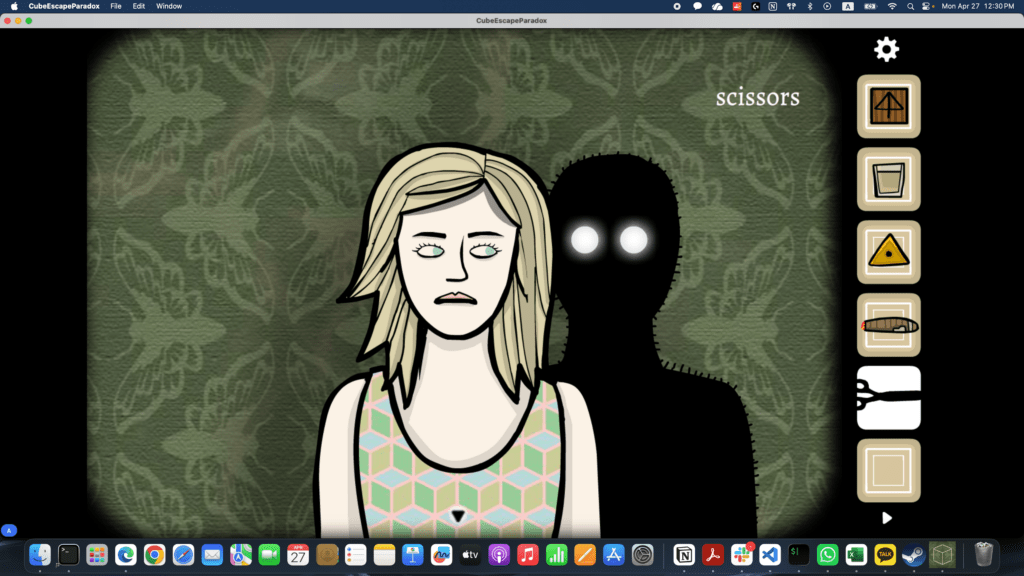
[Fig 1. Scene from chapter 1 – The scene shows Laura and the protagonist’s corrupted soul, strongly implying murder.]
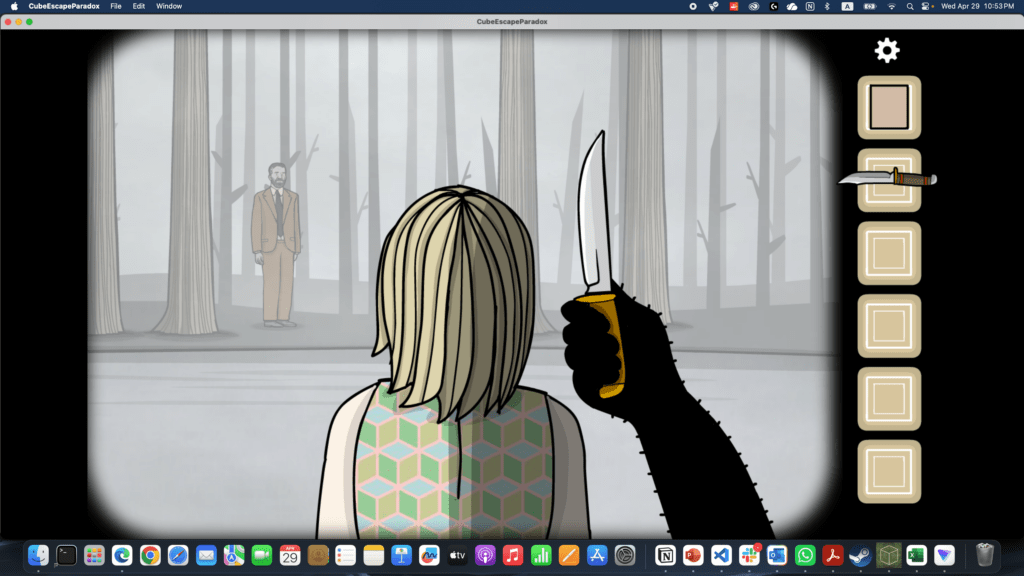
[Fig 2. Ending scene of chapter 2 – Dale accepts his corrupt soul and murders Laura. ]
What is more interesting, though, is how the architecture of that game space is itself the story. The room is strongly implied to be Dale’s mind. In Chapter 1, there is an entire sequence in which the player must shift spaces inside Dale’s head to escape. In Chapter 2, a series of surreal puzzles requires the player to slice open Dale’s head and switch between past, present, and future brains to collect the evidence needed to solve other puzzles. These mechanics only make sense if the room is mental rather than physical. The player isn’t merely seeing the room-as-mind metaphor — they are performing it through their actions.
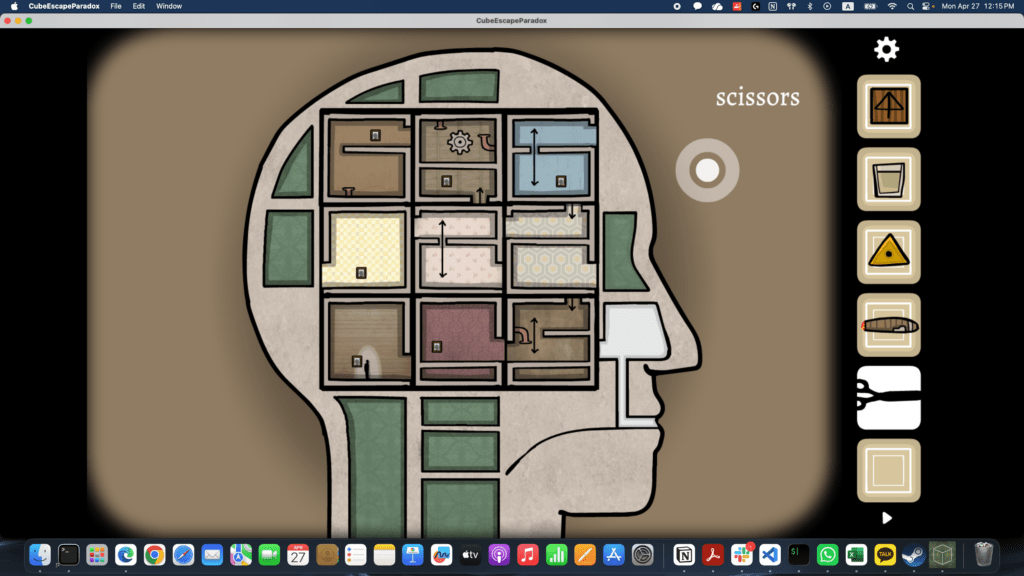
[Fig 3. Sequence from Chapter 1 – Escaping from a head.]
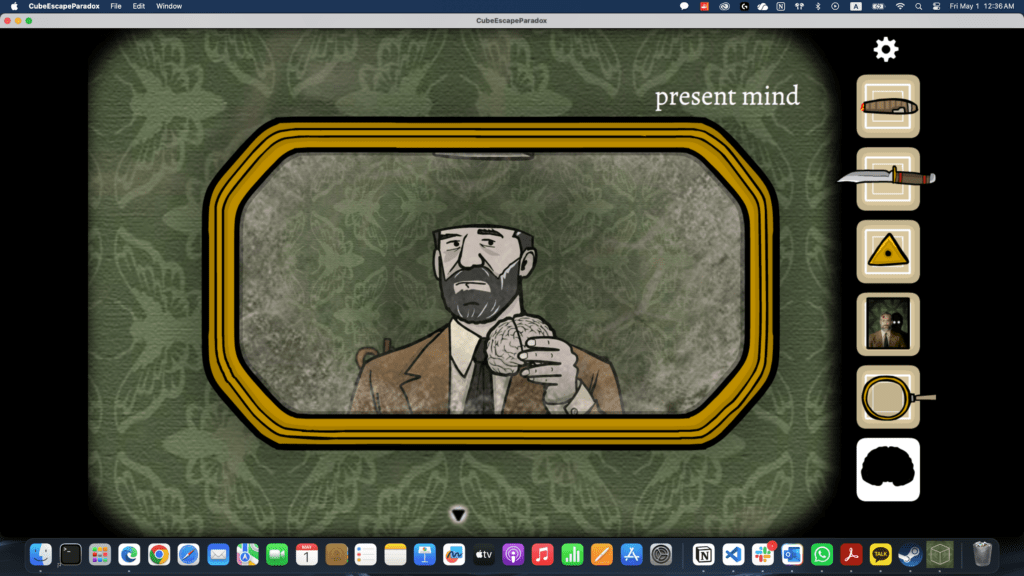 [Fig 4. Gameplay sequence from Chapter 2 – switching Dale’s brain to move between time.]
The strongest evidence comes from how the game ends. After the protagonist escapes the room — usually the ending point in other games of this genre — the puzzle continues outside it. If the player makes it through the maze, Dale falls into a trance and wakes up again in a similar-looking room, his memories lost once more. The game’s formal outcome is its starting state. The room signifies Dale’s unstable mind: he is repeatedly losing memory and oscillating between consciousness and insanity, and the gameplay of finding clues to escape represents his attempt to put the pieces together and regain sanity — an attempt the game shows him failing at, again and again. The architecture of the game space *is* Dale’s mind, and navigating it *is* the story. This is **enacted narrative** in its strongest form: the player’s act of solving puzzles is metaphorically identical to Dale’s act of recovering memory.
That said, one critical problem I’d like to point out is the game’s linear sequences. Some parts of the game — the TV channel sequence in Chapter 1 and the parents sequence in Chapter 2 — feel extremely repetitive and restrictive. These sequences follow a fixed pattern: the TV or the parents tell the player to inspect or solve some puzzle, and after doing so, the player returns for the next set of instructions. This repeats about five times. These sequences are clearly trying to produce enacted narrative, having the player perform actions that drive the story forward, but the linearity undermines the effect — it does not feel like actively uncovering a plot, only like following instructions. A better approach would be to present all of these tasks in parallel. The player would end up performing the same actions, but choosing the order in which to tackle them gives a much greater sense of autonomy, which would reinforce the enacted narrative the sequence is trying to produce. A parallel structure also better fits the metaphor the game has been building — real recall is associative rather than sequential, with fragments surfacing in whatever order they connect, not in the order they were laid down.
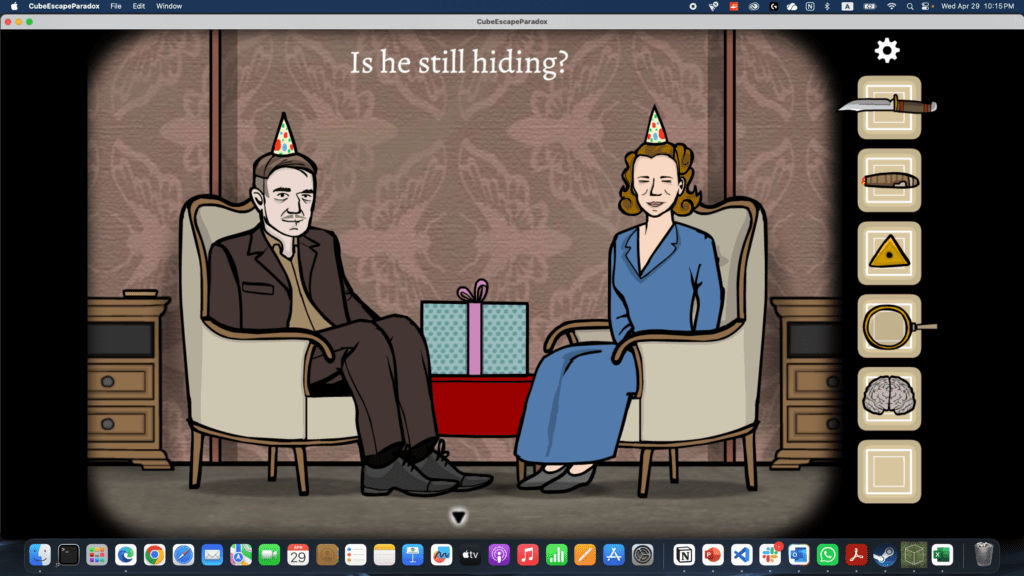
[Fig 5. The “parent” sequence from chapter 2.]
For the ethics analysis, the game does not provide any dedicated accessibility features — no colorblind mode, no text scaling, no remappable controls. However, the game’s core design vocabulary turns out to be accessibility-friendly by default. As can be see in figure 6, all audio clips are subtitled, which keeps narrative comprehension intact for deaf and hard-of-hearing players. Almost all visual pattern puzzles avoid color differentiation, relying instead on shape recognition and counting — operations that work equally well for colorblind players. As a player who does not identify as having a relevant disability, I am observing design patterns rather than lived experience, but the patterns themselves align with what colorblind-gaming and deaf-accessibility resources tend to recommend. That said, this strength is partial. For players with motor impairments (the game requires precise clicking on small targets) or visual impairments (no screen reader, no text scaling), the game offers little.
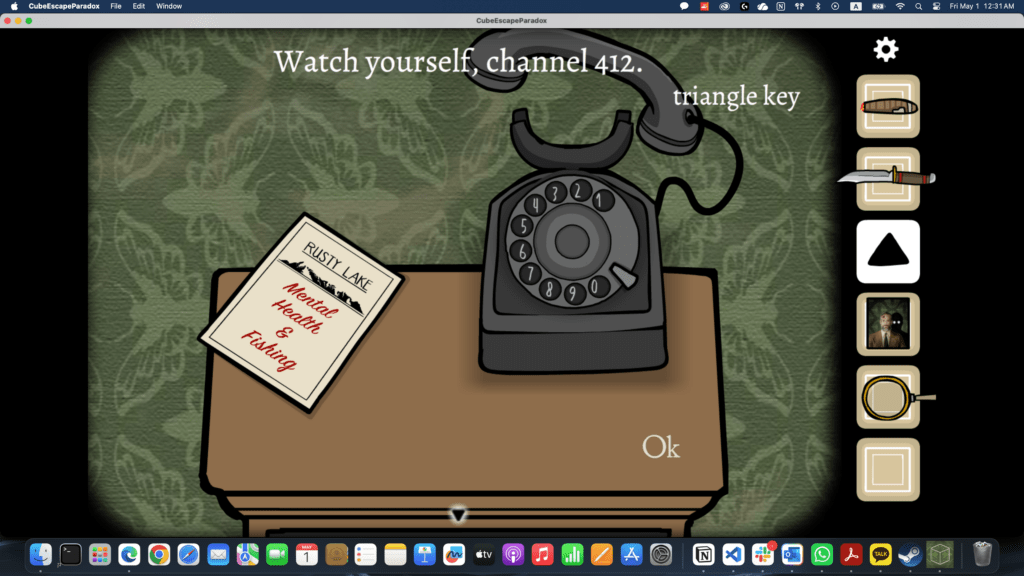
[Fig 6. Phone call sequence from the game – All audio clues such as phone calls or tape recordings have subtitles.]
Overall, Cube Escape: Paradox does something most games in its genre do not: it makes its architecture the story, and its single mechanic the act of telling it. Despite the linear sequences that occasionally weaken the enacted narrative, the game succeeds at a difficult design goal — turning every click into an act of remembering, and every piece of space into the inside of Dale’s mind.