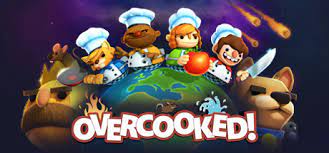

Members in my team all agreed on making a cooperative game against the game system or a hybrid co-op game between different teams. Since we haven’t decided the exact direction yet, I will use a general cooperative game as a baseline.
Does shared success or failure feel more impactful than winning or losing individually?
Cooperative games need a structure where players work toward the same goal. I think shared emotions are stronger because they add a sense of responsibility. If this is true, I expect players may have stronger emotional investment in the game. For this question, we can prototype the same game in two ways: one where players make decisions as a team (taking turns), and another where players act individually. We can then ask whether the sense of winning or losing feels different.
Does assigning roles to every player maximize immersion in the game?
Party games tend to make some players feel left out depending on the roles assigned. For example, some people may feel bored as a villager or if they die too early in Mafia. Therefore, we can add diverse roles—such as couples (who can die for their partner), a thief (who can steal others’ roles), or a spy (who finds the mafia at night)—and comparing this with a normal Mafia game. Assigning a role to every player will definitely increase the complexity of the game, but I believe it will also make the game more interesting and engaging for everyone. Especially for people meeting for the first time, it could help bring them closer more quickly.
Does limited interaction (e.g., only gestures or one word) make cooperation more fun?
Many social games use this mechanic to make gameplay more interesting. This can be compared to games like charades, where players communicate using gestures. I think if players already know each other, this will work well and create fun moments to look back on after the game. However, for people meeting for the first time, it may not help them get closer. One thing to note is that these games may not be suitable for long play sessions, since it can be tiring to constantly think and come up with shared ways to communicate.