Some of my favorite stories are the ones that make me cry. Many times, video games will have small parts that move me, especially in short animations or cut scenes. (My brother will always make fun of me for tearing up at the opening sequence of Battlefield V). However, a game where narrative is not just one small part, but instead the core aesthetic of the game itself, is What Remains of Edith Finch.
WRoEF is an example of a specific genre of game I’m very drawn to, where the lines between game and story become blurred. Especially with my personal background in creative writing, these digital extensions of stories are exciting to me as ways to incorporate mechanics and dynamics that bring the player into actively engaging with the progression of a narrative, making it more impactful.
WRoEF does an extremely good job of engaging the player mechanically and dynamically to promote its aesthetics of narrative and discovery. Mechanics such as the bounds of the physical space the player is allowed in, as well as the transitions between “reality” and “past,” lead to dynamics such as walking through the house and embodying past characters that let the player discover secrets about the story at their own pace.
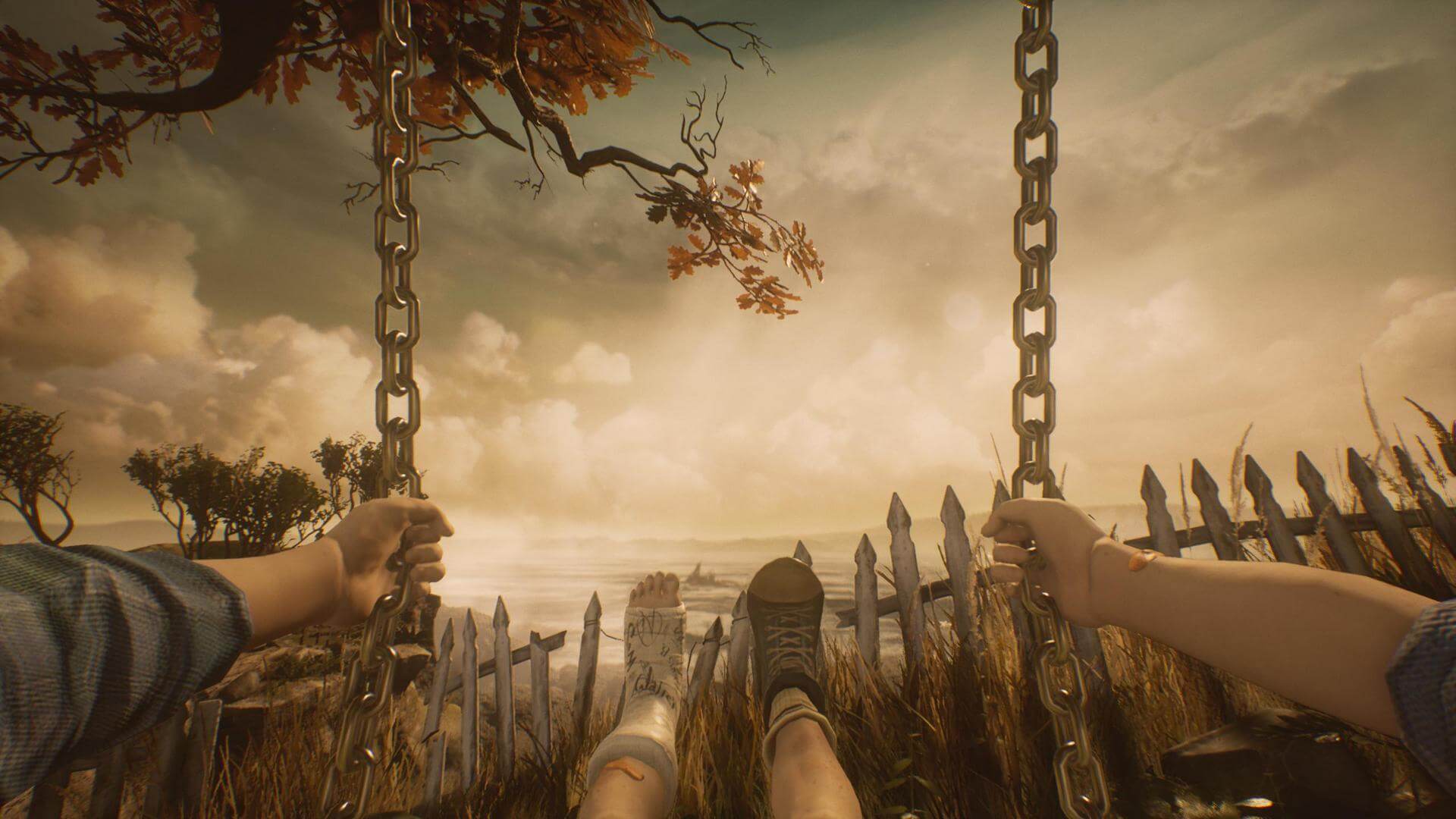
[Spoilers.] Playing through the deaths of each of the characters first-hand gives the player agency in a way that is painful and inevitable. I will always remember sitting on the swing, knowing what I needed to do to keep the story progressing. There was beauty in looking out over the sea as the music played. There was dread knowing that it was never meant to last, and that I would be the one who pulled the trigger. [Spoilers end.] I’m less-often emotionally impacted from games than some other art forms, but when I am, the effect is like no other.