

I can’t believe it’s all over! The class, at least. I feel like there is still so much to learn and make.
Before taking this course, I think I used to believe game design started in front of a computer screen, with programmers making textures and maps and fantastical UIs. I used to believe that digital games had to start with a private game engine, and physical games were a total black box churned out by boardgame companies.
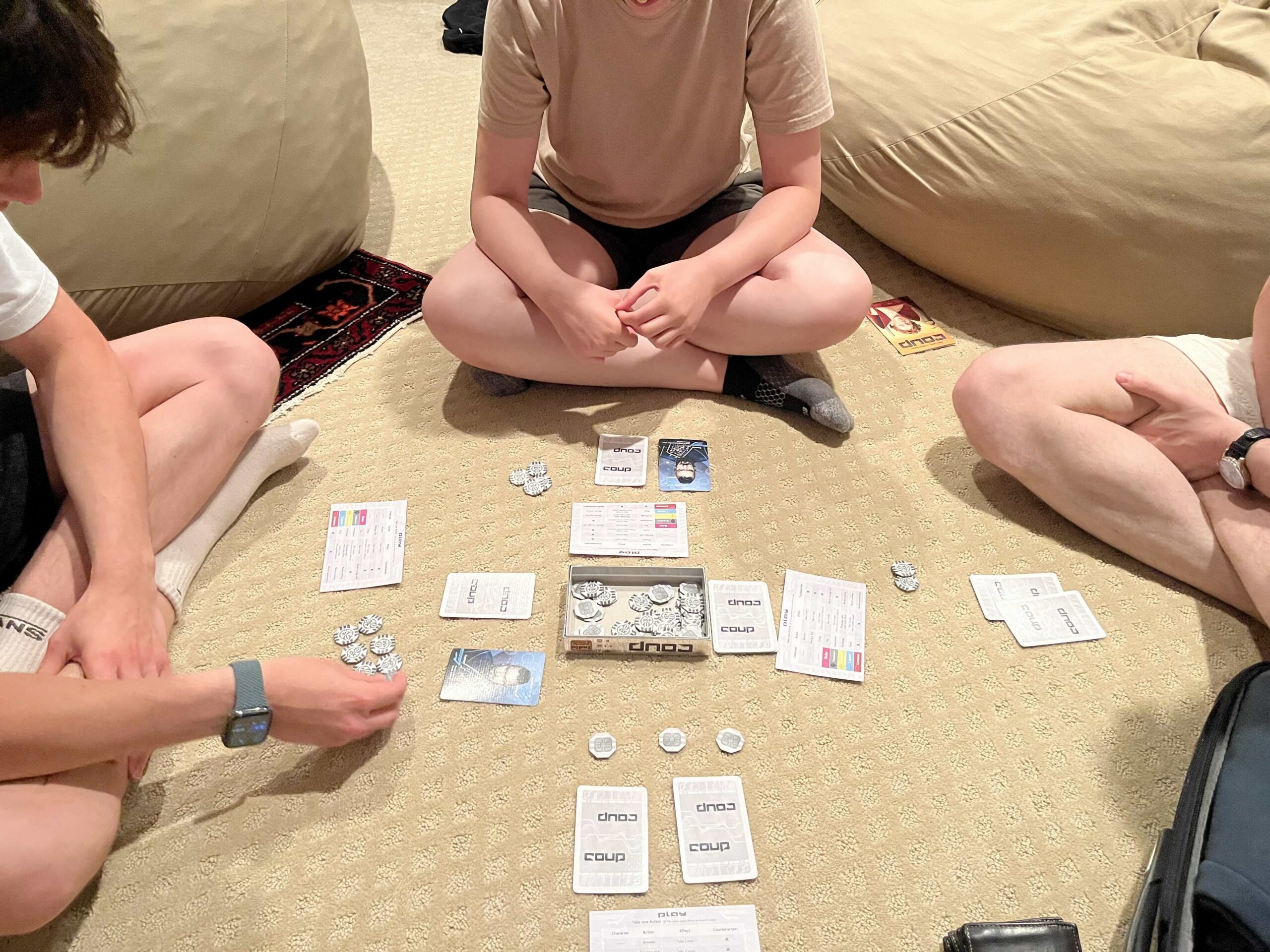
As much as I’m reluctant to admit it, I seem to have grown somewhat accustomed to living under academia – and it was a pleasant experience to find game design boiled down, viewed under a critical and questioning lens. I appreciated how there was an effort to identify the objective and subjective elements of the discipline, and most of all I appreciated how it all seemed to be focused on making a better game – making something more fun, more enjoyable, more human. A particular turning point for me was not too far into the class, after we learned the formal elements of game design and identified some things games are and aren’t. I found myself visiting relatives out-of-state and playing Coup (yes indeed for a Critical Play) – and it clicked to me that I understood the mechanics of each card, of each action, and the dynamics they helped to create. I could see how I could do such a thing, how I could make a game like Coup. Games were no longer a black box; they were something people could make, and something I could make. I played Coup a few more times that vacation just to relive that feeling – even on the car-ride to the airport!
Returning to class, I was invigorated to learn what there is to know about game design and to try my hand at making something! It was then that I would learn my next important lesson: Great games are a big thing – and big things often require a team of talented people to make. And teams, they can be a tricky thing to manage. Teams amplify the goods and the bads of things – a necessary step to make something bigger and better than any one person could hope for! But while that means amplifying the wonderful product at the end of the day, it also means amplifying everything you let slip by. Communication, check-ins, and leadership were skills to be learned alongside game development theory. They let each of us be as good in each skill as the most talented member of our team is, and let us all be game development gurus.
I am so used to my work only being seen and appreciated by peers in exactly the esoteric discipline I’m studying. It was so rewarding to see people unfamiliar with my games pick them up and engage with them. It was so nice to see them smile and laugh! To see that I made something fun, that games are no longer a black box, that games are bits of fun I can package and make for others. I hope to continue making games – and knowing I have friends who are interested in the same, I feel like I have a community to keep growing into.

When you suddenly realize you can make a game, it’s magic! It’s like you just got a superpower, and I’m glad I got to help you get there. Keep playing in everything you do!