For this critical play analysis, I played Super Mario World by Nintendo on the web (the Internet Archive). It’s a 2D platformer that follows Mario and Luigi as they attempt to rescue Princess Toadstool and restore order. The intended audience includes younger players, families, and fans of action-platformers. This audience is reflected in the game’s intuitive controls, bright visuals, and minimal text. Because it was designed for a broad demographic the gameplay emphasizes learnability, flow, and a sense of progression over complex storytelling. However, Super Mario World still invites players to emotionally invest in its world by tying its core mechanics to a clear narrative structure and by using design principles that encourage mastery and exploration. Through the integration of level design, aesthetic consistency, and feedback systems, Super Mario World creates emotional engagement without relying on traditional narrative devices.
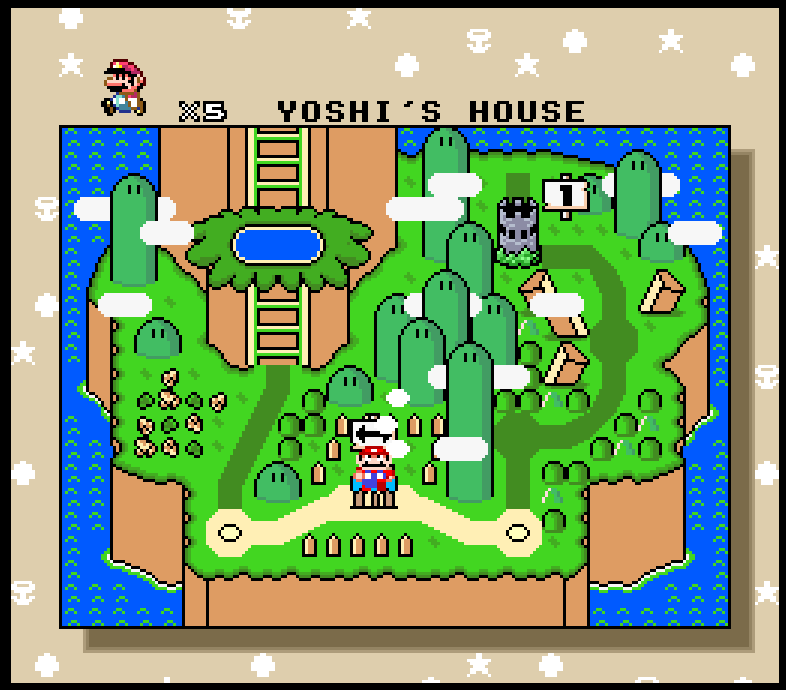
One of the primary ways the game engages players is by tying player actions to a meaningful sense of narrative progression. The central mechanic of running and jumping through levels to defeat enemies and reach a goal may seem simple, but its implementation encourages a deeper dynamic of personal responsibility for saving the world. Each of the game’s seven regions culminates in a boss battle with Bowser, to accomplish the goal introduced at the beginning: save Princess Toadstool (Figure 1). This design creates a recursive dynamic of order being restored, which results in an aesthetic of heroism and purpose. The world map changes as castles are destroyed or bridges collapse, reinforcing the idea that the player’s efforts are permanently transforming the game world. This mechanical-narrative alignment makes the player feel like an agent of positive change, not just someone completing arbitrary levels.

Figure 1: Goal introduction
The game also invests players in its world through subtle but effective world-building rooted in the psychology of exploration and consistency. For instance, the introduction of Yoshi in the first level immediately creates an emotional bond through both function and animation (Figure 2, 3). Yoshi adds gameplay depth by providing new abilities, but he also makes the world feel more alive, especially when players are forced to choose between keeping Yoshi and saving themselves in dangerous situations. These emergent moments of moral tension build affective relationships between players and game characters. Similarly, hidden exits and secret paths reward players not just with progression but with the joy of discovery. According to world-building theory in games, players are more likely to emotionally invest in spaces that reward curiosity and demonstrate internal logic. Super Mario World’s consistent visual language, music, and physics engine create a world that feels stable, believable, and worth exploring.
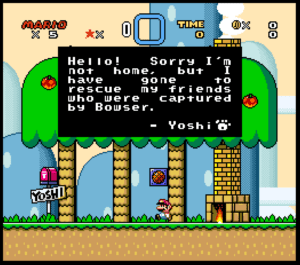
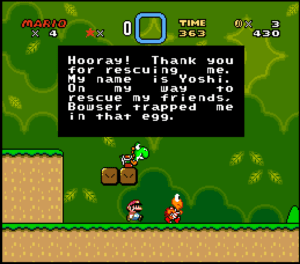
Figure 2: Yoshi introduction
If I were to iterate on the game, I’d explore adding cooperative multiplayer elements or more player-driven customization. While the game succeeds in its aesthetic of challenge and discovery, it could expand to include aesthetics of fellowship and expression. For example, introducing a “World Builder” mode or allowing players to customize Mario’s path through the world could shift the experience from linear progression to creative exploration. These additions would support emergent play styles and allow players to engage with the world in new ways, increasing replayability and deepening emotional connection. Conversely, if the game had been designed for a more mature or narrative-focused audience, it might have benefited from a more complex storyline or dialogue. However, such additions could risk disrupting the game’s elegant simplicity.
One ethical consideration in Super Mario World relates to the treatment of Yoshi. While Yoshi is presented as a loyal and beloved companion, the game allows players to abandon him mid-jump to save Mario from falling. This mechanic is useful from a gameplay perspective but introduces an implicit moral tension: Is it acceptable to treat allies, especially of a different species (or D&D would say race), as disposable tools for survival? This raises broader questions about how character utility in games can conflict with their narrative or emotional framing. Designers should be aware of how mechanics encode values, even unintentionally, and consider how those values shape player attitudes toward in-game relationships.