Overview
I played Wizard 101, an online roleplaying game where you play a novice wizard running around trying to uncover and defeat evil forces. This game is free to download and play on your computer (website signup is required), or your can play it on a variety of game consoles. While the chat feature is restricted for children under 13, I would say this game is appropriate for ages 8+. The target audience for this game would be anyone looking for a fun embedded narrative. While previous weeks’ critical plays featured escape rooms that required players to really lock in, this game seems to present less cognitive burden due to the heavy guidance provided by the game.
Thesis
This game invites the character to care about the world through intentional character customization, robust supporting characters, thoughtful onboarding, rich societal engagement, and vivid game detail.
Intentional Character Customization
The character creation process for Wizard101 was structured well to get players invested early on. My biggest critique is that I didn’t feel I had significant agency over the physical representation of my character. I could only swap between predefined characters, but I think this is tied to micro-transactions later in the game (bummer). I felt the short questionnaire probing at how we interpret power, play, and fun was a great way to sort players into wizard types and help them build a sense of identity and, therefore, investment.

This is the closest I could get to a character that looks like me.
Robust Supporting Characters and Thoughtful Onboarding
Many of the early characters, namely the Headmaster and Malistaire, firmly orient the player within the game. Players very quickly establish their initial status in the game (novice) and their allegiance (good vs. evil). Several of the early phrases help construct a mental model of the world. The concept of “a very, very distant world” suspends reality and allows us to throw out some of the preconceived notions we may have about the game. The repetitiously uplifting rhetoric about how we have a lot of potential helps players connect more deeply with the world through their mentee relationship with the headmaster. Players have confidence entering their first duel because they have the support of the master; this thoughtful onboarding leaves them well-equipped to both duel in the “real world” and take on this mission in support of their newfound mentor.
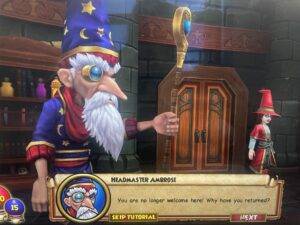
The Headmaster admonishing Malistaire.

An early victory to deliver a taste of good triumphing over evil.
Rich Societal Engagement
This game presented very clear concepts of good versus evil. There was rich engagement with different characters that played very different roles, which helped establish the idea that the entire community was coming together to fight these evil forces. The dueling featured elaborate rune casting, which helped build up the idea of this foreign world and how to interact with it. Completing quests for NPCs resulted in winning objects that you could then put on–almost as a physical reminder of the lengths you had already gone to support the community.

Everyone is incredibly welcoming, folding players into the community right away.
Vivid Game Detail
The game featured incredibly detailed scenes that truly help you to feel immersed and invested in this fantasy world. The early quests required you to run back and forth around this town square. This design choice helps players to feel as though they know the town really well by the time they have completed the first few challenges. Running around this beautiful landscape imbibes players with a sense of awe, pride, and defensiveness about this wonderful landscape they have come to know.
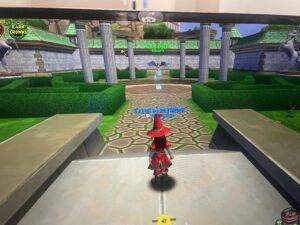
Beautiful cutaway scenes that feature elaborate sculptures.
Ethics
This game left a lot to be desired in terms of character customization. There were very few skin tones available, and virtually no body variation. This game gets an F- in inclusivity and diversity of characters. I think the game missed out on a really big opportunity to allow players to build a representation of themself. While it may have been a design choice made to preserve overall aesthetics and, by extension, the embedded aspect of this fantasy world, I do believe it is possible to have both. I would have loved to see player customizations that included different skin tones, body types, accessibility aides, facial structures, etc. This game felt incredibly euro-centric, which was a bit of a bummer.