

“Fiximupim” concept map for the system:
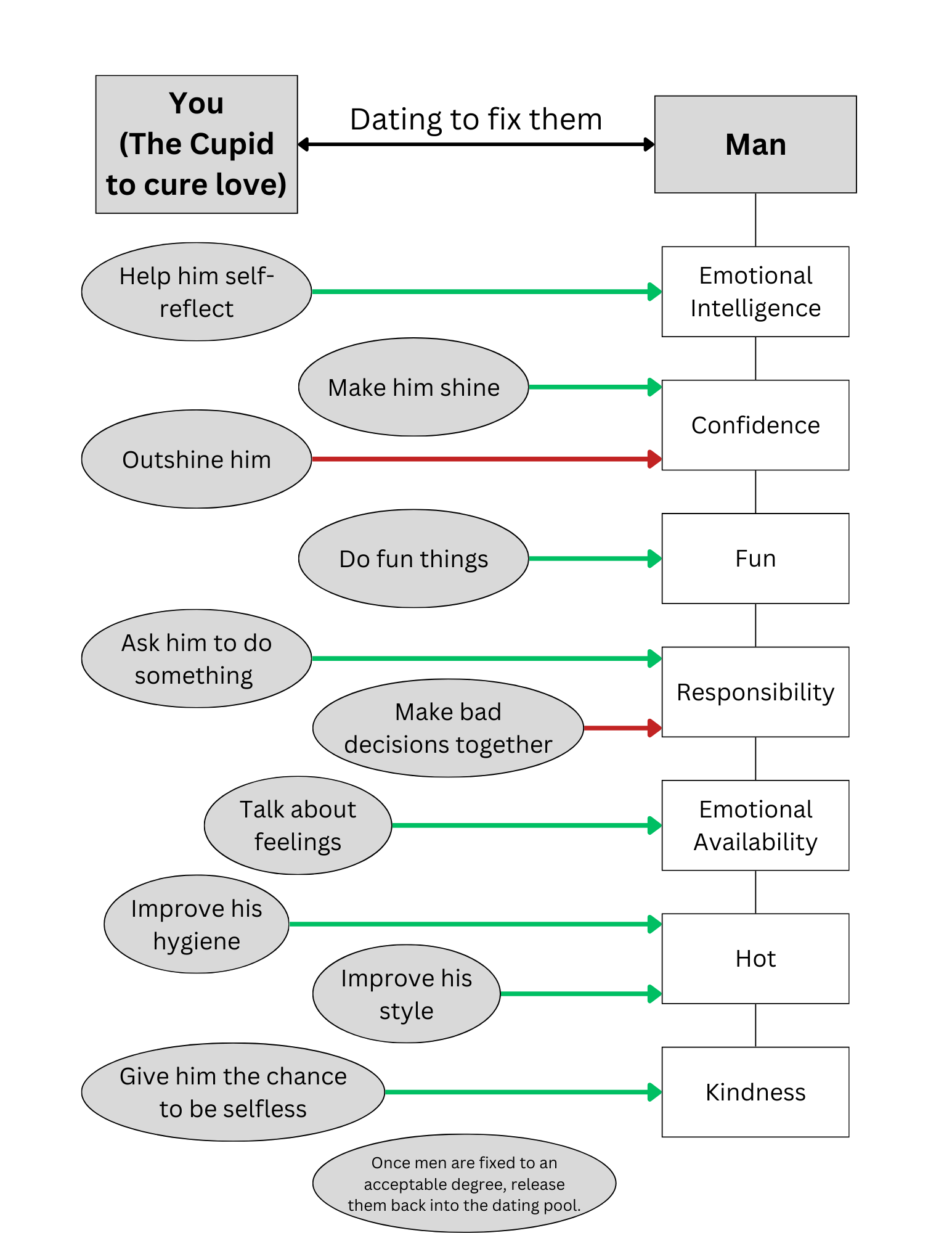
“Fiximupim” concept map for the game:
- Core Gameplay Loop: Includes Character Selection, Trait Management, Activities, and Conversations as central components.
- Trait Management: Details the six traits (e.g., Emotional Intelligence, Responsibility) that players aim to adjust during gameplay.
- Activities and Conversations: Outline the specific ways players can interact with and influence character traits, such as by visiting locations like the bar or engaging in specific dialogues.
- Scoring Feedback: Connects activities and conversations with the scoring feedback system, showing how players receive responses based on their choices.
- Completion Arc and Date Objectives: Represents the final outcomes of each character “fixing” arc, leading to either success or the return of the character to the dating pool.

Both maps represent the main idea of “fixing” men through various interventions, capturing the process of dating and developing traits. The concept of “Fiximupim” serves as the central focus in both, connecting the various categories of actions that influence a man’s traits.
One key abstraction is the reduction of complex emotional and behavioral processes into simplified categories like “Trait Management” and “Men Type Selection” in the first map and specific actions like “Help him self-reflect” or “Give him the chance to be selfless” in the second. These abstractions make it easier to visualize the process of changing behaviors through structured interactions rather than detailed psychological intricacies.
The two maps share similarities in categorizing the types of actions (activities, conversations) and their effects on specific traits like confidence, responsibility, and emotional intelligence. Both maps connect certain actions directly to specific traits, showing a cause-and-effect relationship between behaviors and personality development.
However, the first map uses a color-coded structure, emphasizing different clusters (traits, activities, and men types) in a more organic, interconnected way. This layout captures the multifaceted approach to character development. The second map, by contrast, has a linear flow that shows the transformation process, guiding the viewer step-by-step through each action and its intended impact on the man’s traits. This layout represents a more direct, sequential pathway to “fixing” the men before “releasing” them back into the dating pool, adding a procedural dimension absent from the first map. Together, these maps provide complementary perspectives on the same theme.
