Skip to content
The Mechanics of Magic

The Mechanics of Magic

Game Design Writings by Students at Stanford taking 247G and 377G

  • Library
    • CS247G Community Game Design Resources
    • Game Design Resources
    • Graphic Design for Game Designers
    • Graphic Design Resources
    • Chapter 11 from Game Balance
  • Read Write Play
    • Hollow Knight: RWP 4 2023
    • Mystic Messenger: RWP 6 2023
    • Undertale: RWP 3 2023
    • What Remains of Edith Finch: RWP 5 2023
    • Catan: RWP1 2023
    • 80 Days: RWP 2 2023
  • 247G Syllabus
    • The Formal Elements of Game Design
    • Design for Play | Week One | Lecture A
    • Design for Play | Week One | Lecture B
    • Design for Play | Week Two | Lecture A
    • Design for Play | Week Two | Lecture B
    • Design for Play | Week Three | Lecture A
    • Design for Play | Week Three | Lecture B
    • Design For Play | Week Four | Section A
    • Design For Play | Week Four | Section B
    • Design for Play | Week Five | Class A
    • Design for Play | Week 5 | Class B
    • Design for Play | Week 6 | Class A (no class)
    • Design for Play | Week 6 | Class B
    • Design for Play | Week 7 | Class A
    • Design for Play | Week 7 | Class B
    • Design for Play | Week 8 | Class A
    • Design for Play | Week 8 | Lecture B
  • Serious Play Study Group Overview
    • Study Group Week by Week Breakdown
      • Formal Elements of Games
      • Final Reflection Essay
    • [Optional Material] What is fun?
    • Project 1: Those Who Play, Teach
      • READING Visual Design of Board Games
      • Pitch Your Teaching Game
      • Sketchnote: Playtesting Boardgames
      • Sketchnote: Erin Hoffman // Wind, Not Sand: Mapping Dynamic Emotion Across a Product Landscape
      • SketchNote: MDAO
      • Critical Play: Write up your game of FLUXX
      • [Optional Material] Playtesting
      • OPTIONAL Board Game Usability
    • P2: The Future We Deserve
      • Critical Play: A Mechanic and a Story to Tell
      • Interactive Fiction: Tiny Playable Prototype
      • Introducing Interactive Fiction
      • Map and Premise
      • Critical Play: Story AND Storytelling games
      • Essay or Sketchnote: Rise of the Video Game Zinesters
      • Sketchnote: Art of game design- Story
      • [Optional Material] Emergence and Progression
      • Essay or Sketchnote: Rise of the Video Game Zinesters
      • Project 2 Reflection Essay
      • Share what you Learned: Writing Excuses Podcast
      • Values at Play & P2 Peer Grading
    • P3: The Game of Unexpected Consequences
      • P3 Concept Doc
      • Playable prototype
      • Working With System Dynamics (mindmap the reading, apply it to your game)
      • Mapping Systems
      • Sketchnote/Response for Rules & Tutorials
      • Project 3 Check-in
      • Project 3 Reflection Essay
    • P4: Refine a game
      • Sketchnote/Response for Playtesting with Strangers
      • Read: Mechanic is the Magic
  • On Sketchnotes
  • Printing at Stanford

Category: Critical Play

Critical Play: Mysteries

May 8, 2021

For this week’s critical play, I played Year Walk, a horror-mystery-puzzle game developed by Simogo. Although this game was initially released for iOS and…

Critical Play: Life is Strange

May 2, 2021

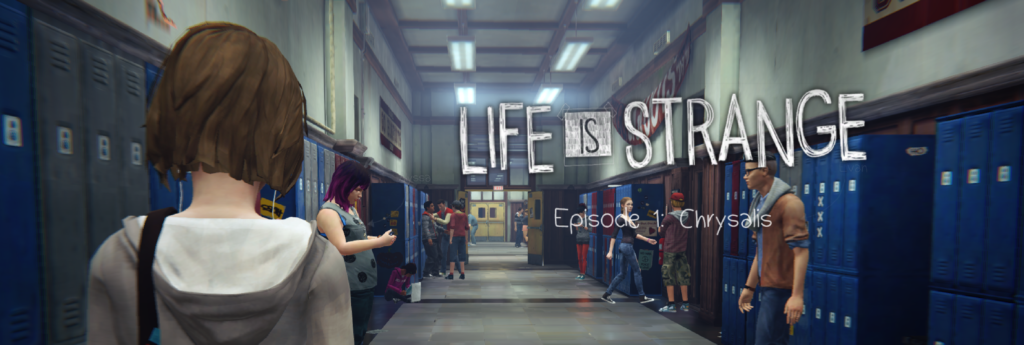
About the game This week I played the first episode of Life is Strange on my Mac via Steam. Life is Strange was developed…

Critical Play: Walking Simulators

April 30, 2021

The Sailor’s Dream is developed by Simogo AB, and is available on the App Store for the iPhone, iPod touch, and iPad. I managed…

Critical Play: Walking Simulators – Journey

April 29, 2021

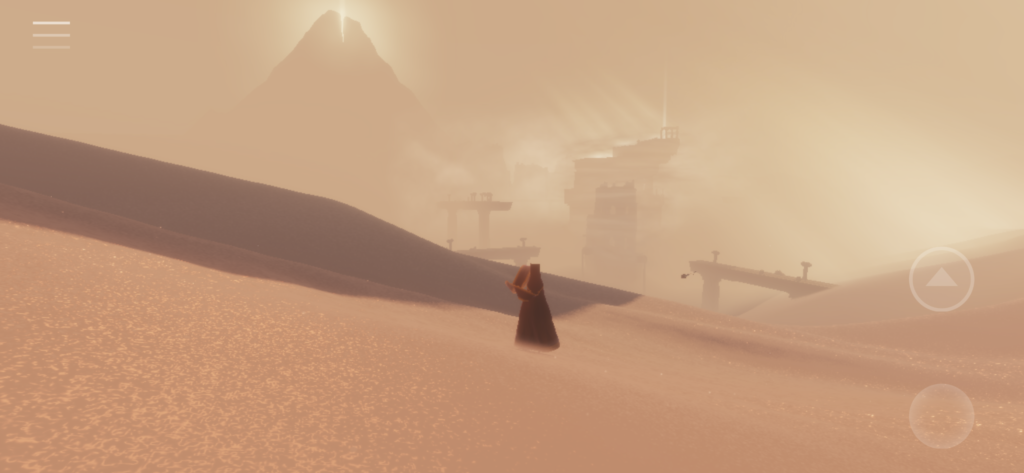
Name of game: Journey Creator: thatgamecompany and Santa Monica Studio Platform: I played the game on iOS. The game is originally released on PlayStation….

Critical Play (Walking Simulators): Dear Esther

April 29, 2021

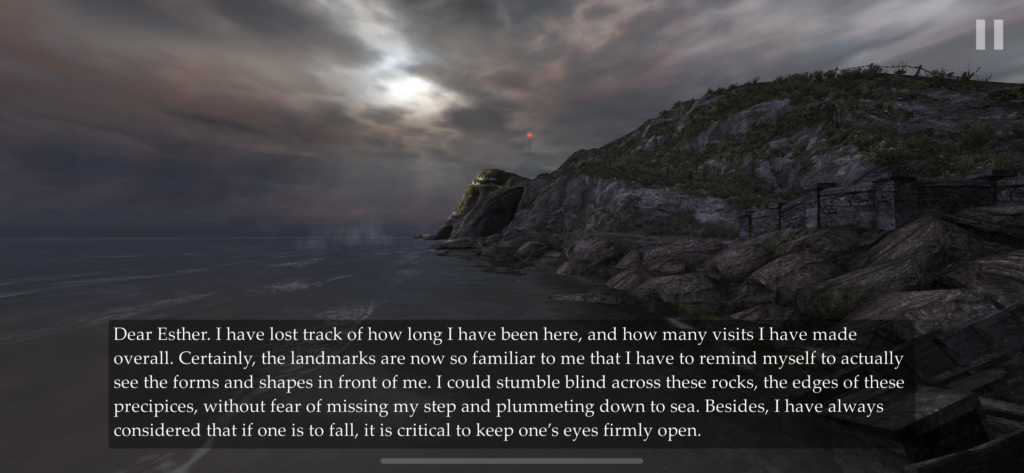
Dear Esther is a single-player walking simulator created by The Chinese Room, first released on February 14, 2012 on Windows and May 15, 2012…

Critical Play – Walking Simulators (Stanley Parable)

April 29, 2021

The Stanley Parable is a single-player walking simulator by Galactic Cafe. It is playable on PC, MacOS, and Linux. The intended audience seems to…

Critical Play: What Remains of Edith Finch

April 29, 2021

Introduction and Audience For this assignment, I played What Remains of Edith Finch, a game developed by Giant Sparrow, on the PC. In my mind,…

Critical Play: Walking Simulators

April 29, 2021

How Walking Tells the Story in Places In Places, the “story” behind each sketch and place is that it is a digital 3D painting…

Critical Play: Walking Simulator – Firewatch

April 28, 2021

Game: Firewatch Developer: Campo Santo Platform: Steam Target Audience: Teens, Young Adults, and older Firewatch is a first-person walking-simulator mystery game that has the…

Critical Play: Walking Simulators: The Sailor’s Dream

April 27, 2021

Game Summary For this assignment I decided to play The Sailor’s Dream. The narrative of this walking simulator game is of a man, a…

Walking Simulation: What Remains of Edith Finch

April 25, 2021

The game This week, I started to play What Remains of Edith Finch on my Nintendo Switch. It is a game developed by Giant…

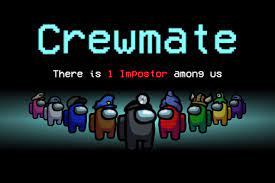
8 Among Us characters standing in a line, with text "There is 1 imposter among us"

Critical Play (Bluffing, Judging..): Among Us

April 24, 2021

Among Us Among Us is a multiplayer game set on a spaceship. The graphic design features bold colors and simple curved shapes for the…

Critical Play: Bluffing, Judging and Getting Vulnerable…

April 21, 2021

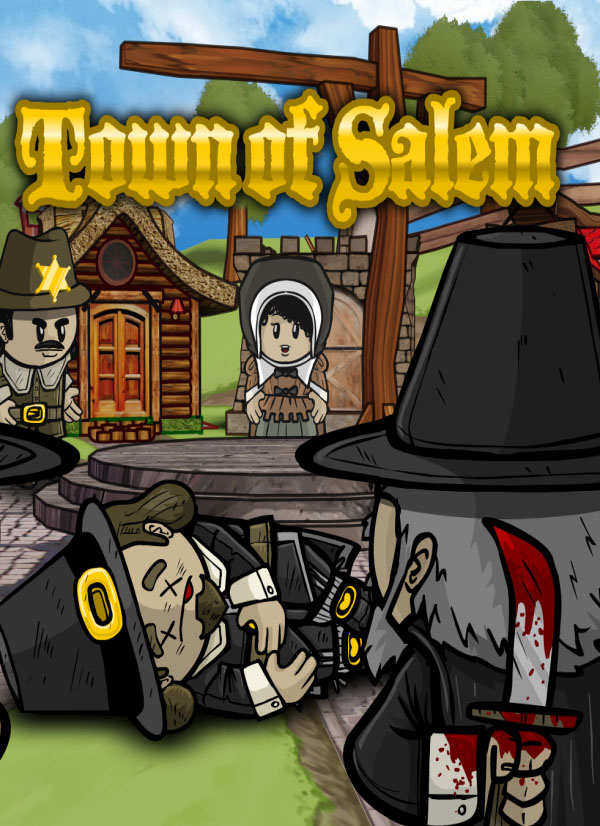
Critical Play of Town of Salem In the deception game Town of Salem (a popular mobile and web version of Mafia), players assume roles of town…

Critical Play: skribbl.io

April 21, 2021

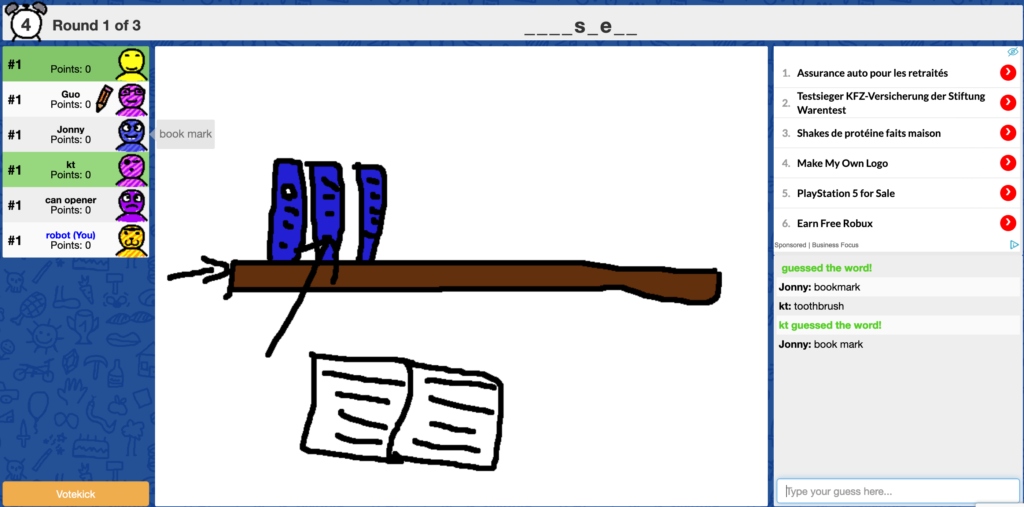
The kind of fun that is most prominent in skribbl.io is Fellowship. Its formal elements are: Players – no limit on number of players….

Critical Play (Getting Vulnerable): We’re Not Really Strangers

April 20, 2021

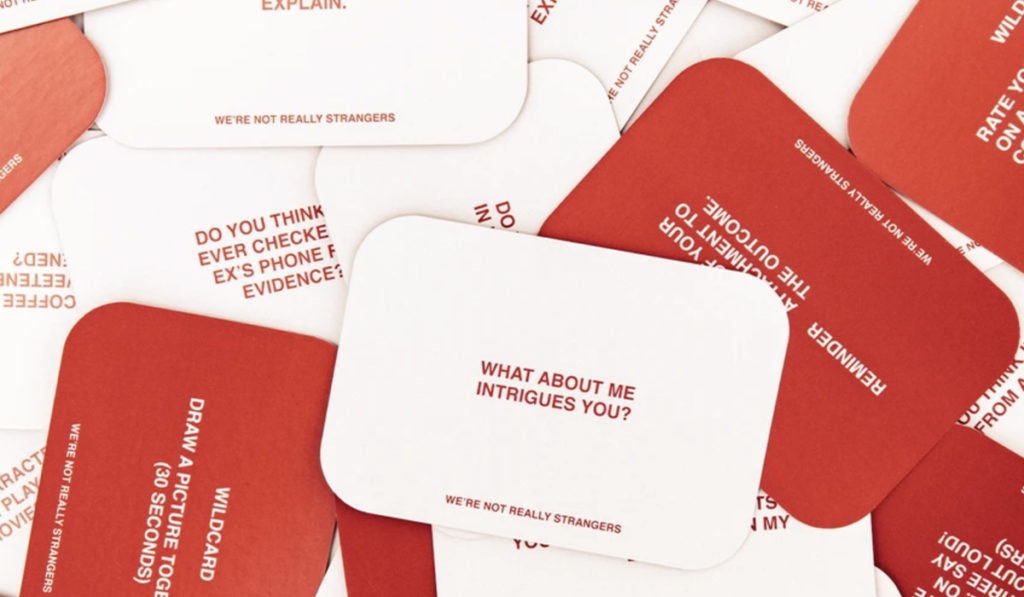
Inspired by our in-class playtest of this card game as well as Daniel Cook’s “Game Design Patterns to Build Friendships,” I sought to replay…

Critical Play: We’re Not Really Strangers

April 20, 2021

Introduction We’re Not Really Strangers is a purpose driven card game with three levels, Perception, Connection and Reflection, which allow the players to deepen…

Critical Play: Bluffing, Judging, and Getting Vulnerable – Cards Against Humanity

April 20, 2021

Cards Against Humanity is an adults-only game for players mature enough to handle the provocative (but often hilarious) topics and answers. The goal is…

Critical Play: Bluffing, Judging and Getting Vulnerable (Skribbl.io)

April 20, 2021

Skribbl.io is an online pictionary-like game that has (at least at my workplace) become a Friday-afternoon staple during shelter-in-place. Let’s take a look at…

Critical Play: Bluffing, Judging and Getting Vulnerable: Coup

April 20, 2021

Coup is a board game whose themes are deception, bluffing, and battle of wit. Formal Elements Players Coup supports 2-6 players. In each game,…

Critical Play: Bluffing, Judging and Getting Vulnerable with skribbl.io

April 20, 2021

Background Information Skribbl.io is an online multi-player drawing and guessing game. Creator:@ticedev Link to game: https://skribbl.io/ Formal Elements of the Game 1. Players Each…

Posts pagination

Previous 1 … 77 78 79 80 Next

Welcome to the Stanford HCI Game Design Blog.

Currently this blog holds two formal classes being taught by Christina Wodtke as well as Independent Study Work. In winter of 2022, cs377g was cancelled because of covid-19 uncertainty, and became a study group. You can follow along by looking at the SGSG syllabus and weekly break down.

CS 247G: Design for Play(SYMSYS 195G)

A project-based course that builds on the introduction to design in CS147 by focusing on advanced methods and tools for research, prototyping, and user interface design. Studio based format with intensive coaching and iteration to prepare students for tackling real world design problems. This course takes place entirely in studios; please plan on attending every studio to take this class. The focus of CS247g is an introduction to theory and practice of the design of games. We will make digital and paper games, do rapid iteration and run user research studies appropriate to game design. This class has multiple short projects, allowing us to cover a variety of genres, from narrative to pure strategy. Prerequisites: 147 or equivalent background.

CS 377G: Designing Serious Games

Over the last few years we have seen the rise of "serious games" to promote understanding of complex social and ecological challenges, and to create passion for solving them. This project-based course provides an introduction to game design principals while applying them to games that teach. Run as a hands-on studio class, students will design and prototype games for social change and civic engagement. We will learn the fundamentals of games design via lecture and extensive reading in order to make effective games to explore issues facing society today. The course culminates in an end-of- quarter open house to showcase our games. Prerequisite: CS147 or equivalent. 247G recommended, but not required.
SGSG: Serious Games Study Group

  • Library
    • CS247G Community Game Design Resources
    • Game Design Resources
    • Graphic Design for Game Designers
    • Graphic Design Resources
    • Chapter 11 from Game Balance
  • Read Write Play
    • Hollow Knight: RWP 4 2023
    • Mystic Messenger: RWP 6 2023
    • Undertale: RWP 3 2023
    • What Remains of Edith Finch: RWP 5 2023
    • Catan: RWP1 2023
    • 80 Days: RWP 2 2023
  • 247G Syllabus
    • The Formal Elements of Game Design
    • Design for Play | Week One | Lecture A
    • Design for Play | Week One | Lecture B
    • Design for Play | Week Two | Lecture A
    • Design for Play | Week Two | Lecture B
    • Design for Play | Week Three | Lecture A
    • Design for Play | Week Three | Lecture B
    • Design For Play | Week Four | Section A
    • Design For Play | Week Four | Section B
    • Design for Play | Week Five | Class A
    • Design for Play | Week 5 | Class B
    • Design for Play | Week 6 | Class A (no class)
    • Design for Play | Week 6 | Class B
    • Design for Play | Week 7 | Class A
    • Design for Play | Week 7 | Class B
    • Design for Play | Week 8 | Class A
    • Design for Play | Week 8 | Lecture B
  • Serious Play Study Group Overview
    • Study Group Week by Week Breakdown
      • Formal Elements of Games
      • Final Reflection Essay
    • [Optional Material] What is fun?
    • Project 1: Those Who Play, Teach
      • READING Visual Design of Board Games
      • Pitch Your Teaching Game
      • Sketchnote: Playtesting Boardgames
      • Sketchnote: Erin Hoffman // Wind, Not Sand: Mapping Dynamic Emotion Across a Product Landscape
      • SketchNote: MDAO
      • Critical Play: Write up your game of FLUXX
      • [Optional Material] Playtesting
      • OPTIONAL Board Game Usability
    • P2: The Future We Deserve
      • Critical Play: A Mechanic and a Story to Tell
      • Interactive Fiction: Tiny Playable Prototype
      • Introducing Interactive Fiction
      • Map and Premise
      • Critical Play: Story AND Storytelling games
      • Essay or Sketchnote: Rise of the Video Game Zinesters
      • Sketchnote: Art of game design- Story
      • [Optional Material] Emergence and Progression
      • Essay or Sketchnote: Rise of the Video Game Zinesters
      • Project 2 Reflection Essay
      • Share what you Learned: Writing Excuses Podcast
      • Values at Play & P2 Peer Grading
    • P3: The Game of Unexpected Consequences
      • P3 Concept Doc
      • Playable prototype
      • Working With System Dynamics (mindmap the reading, apply it to your game)
      • Mapping Systems
      • Sketchnote/Response for Rules & Tutorials
      • Project 3 Check-in
      • Project 3 Reflection Essay
    • P4: Refine a game
      • Sketchnote/Response for Playtesting with Strangers
      • Read: Mechanic is the Magic
  • On Sketchnotes
  • Printing at Stanford

Archives

  • July 2026
  • June 2026
  • May 2026
  • April 2026
  • March 2026
  • December 2025
  • November 2025
  • October 2025
  • September 2025
  • June 2025
  • May 2025
  • April 2025
  • February 2025
  • December 2024
  • November 2024
  • October 2024
  • September 2024
  • June 2024
  • May 2024
  • April 2024
  • December 2023
  • November 2023
  • October 2023
  • September 2023
  • August 2023
  • June 2023
  • May 2023
  • April 2023
  • March 2023
  • February 2023
  • January 2023
  • December 2022
  • September 2022
  • August 2022
  • July 2022
  • June 2022
  • May 2022
  • April 2022
  • March 2022
  • February 2022
  • January 2022
  • June 2021
  • May 2021
  • April 2021
  • September 2020
  • February 2017

Recent Posts

  • Sketchnote: Game Design Patterns for Building Friendships – Yunming Huang (Lucy)
  • Critical Play: Competitive Analysis
  • Sketchnote: Game Design Patterns for Building Friendships
  • Sketchnote: Game Design Patterns for Building Friendships
  • Game design pattern for making friendship sketch note

Recent Comments

  • Christina Wodtke on Short Exercise: Learning to Play closely
  • Christina Wodtke on Short Exercise: Learning to Play Closely – Fruit Ninja
  • Aksel Kolasinski on Hi! I’m Mathias
  • Aksel Kolasinski on Self Introduction – Cameron H
  • Jinhyo Huh on Final Reflection – Leo Sui

Categories

  • P2: The Empathy Machine
  • Featured
  • Project One
  • milestone
  • P2: The Future We Deserve
  • mindmap
  • P1: Social Games
  • CS247G
  • Assignments
  • P1: those who play, teach
  • Lectures
  • P2: Games In Space
  • Critical Play
  • P3: The Game of Unexpected Consequences
  • Project Two
  • Project Four REFINE
  • P4: Refine a Game
  • Sketchnotes
  • Project Two: The Future We Deserve
  • From the Instructor
  • Project Three: The Game of Unexpected Consequences
  • ReadWritePlay
  • 377G: Serious Games
  • SGSG

Meta

  • Register
  • Log in
  • Entries feed
  • Comments feed
  • WordPress.org

Meta

  • Register
  • Log in
  • Entries feed
  • Comments feed
  • WordPress.org
Copyright The Mechanics of Magic. All rights reserved. | Theme by SuperbThemes