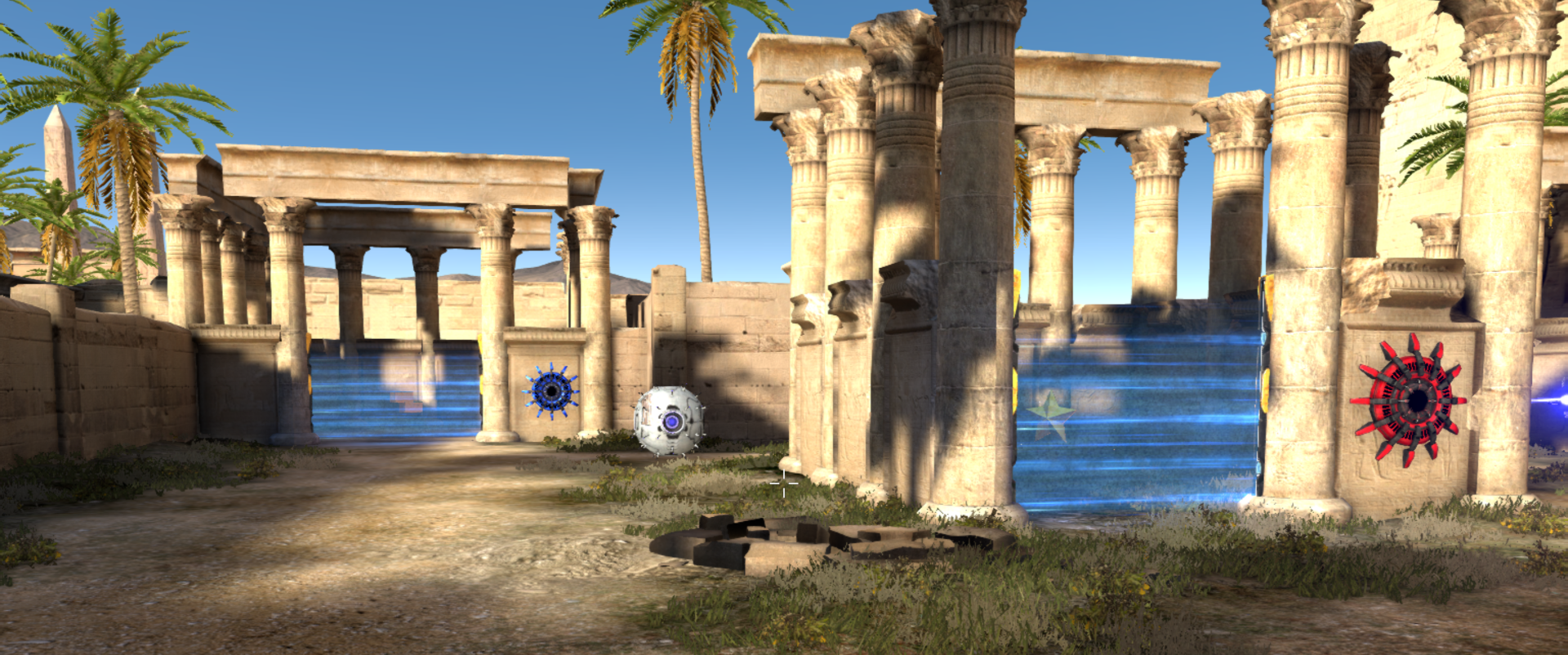
The game that I decided to analyze for this critical play was Talos Principle, which is a puzzle game(shocking) where the player controls a person/robot(the distinction is relevant to the story) and completes multiple puzzles set out as tests made by a god to gain objects to further progression. The tests are placed within old crumbling ruins that look to have a roman/greek background, otherwise there is some industrial concrete buildings with almost minmalist architecture. This is contrasted first with high tech themeing on the puzzles such as lasers, guns, floating proximity explosive orbs and fancy light gates. Then both factors are contrasted on a old computor looking monitor the player can interact with which is all done by a console line in english. The narrative in Talos Principle is not woven into the direct mechanics of the game, but into the dynamics that they create. The fact of using jammer to pass a light gate or a turret gun does not directly impact or work for the narrative. However the fact that you are doing that in a controlled enviroment obviously designed by someone for you to solve the puzzle does. There are 2 major questions that are posed within the game, what is it to be human if all that is human can be reduced to mechanical explanations, and obeity. You are told by a voice in the sky calling itself Elohim to solve these puzzles and progress in its name, along with not exploring a central tower that you can find when playing the game. On the previously described monitors the player converses with something called milton, which encourages you to disobey Elohim and explore the tower, and also is the one you argue with about the main characters humanity. As you solve the puzzles, doing the exact task set out before you and nothing else like a machine, the arguments of Milton are left to hang and influence you. The gameplay loop feeds into the questions posited by Milton, as doing the puzzles feels like answering the question that you are in fact not a person and just a robot following the orders given to you. There is an extra dynamic set up that enhances this back and forth, which is getting a special collectible which are stars. The reason they play into it, is because often the process of getting them asks you to break from the conventions set by the game and how the puzzles are designed otherwise. This is because in most puzzles, they are confined to an area by walls and a gate that prevents you from taking elements from the puzzle into the rest of the game. These stars however can often involve the interaction of elements of different puzzles beyond thier barriers, giving it a feel of rejecting the intentional design whilst doing it.
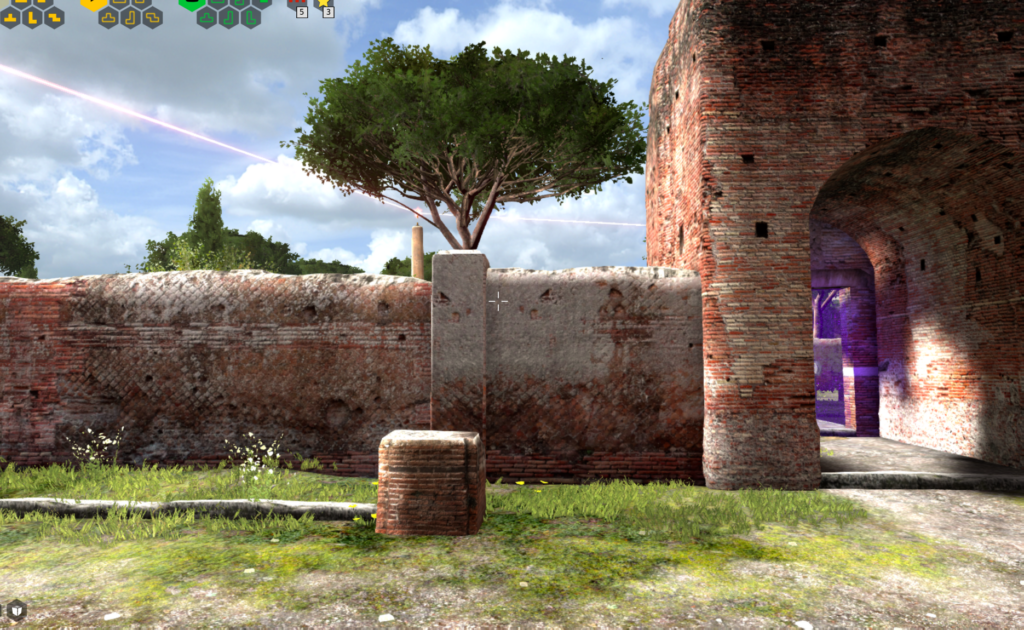
How the lasers leave the area the puzzles are within
On note of the ethical question, the mechanics involved in the direct puzzle solving and the actions taken with them are not explicitly connected to a culture beyond what has been built as conventions in video gaming over the past multiple years. What there is an abundance of interation with christian and greek mythos, along with general use of symbols/representation of technology and computers that has built up over the past few years. Use of a fully terminal interface with computers, use of 1s and 0s, and stylized glitching of the world or visuals. There is the parrelel on themes of temptation with the tower and the apple of knowledge, then greek names are used information the player gathers with what I assume is some signifigance as I havent explored that part of the game as much.
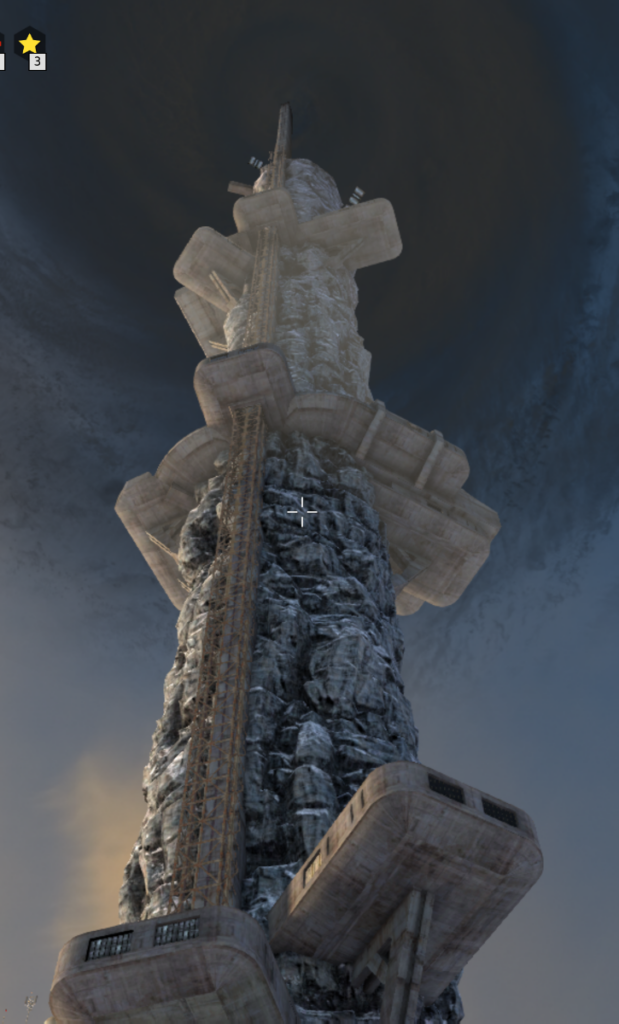
The tower the character is told not to explore
Back to the mechanics, the informational design and how it teaches the player to use each item is both intuitive and diagetic in a way that doesnt break immersion and allows the player to know how and what each item does. A lot of the assumptions it wants the player to work out of are ones that it gives the player itself, it builds the mechanics and standards into the player to then have them challenged by each puzzle after.