This week, I played 2 games that were similar in format but left vastly different marks on me. The first game I played was Queers in Love at the End of the World (Queers in Love), created by Anna Anthropy, and intended for a broad LGBTQ+ audience. The second one I played, with those we love alive (Love Alive), was created by Porpentine, and while it’s also intended for a queer audience, it’s more specifically tailored for a transgender audience (and even more specifically, a trans girl audience.) I played both games on my MacOS computer on the browser (Itch.io or just Safari.)
Both games are interactive text-based games that alters the narrative through your choices. For both games, these simplistic mechanics strip down the game to its barest bones, leaving very little distinction between playing them and reading a book, and therefore sharing the main type of fun that books have, which is narrative. Unlike a book however, there are methods for expression through the choices you have a player, which both games handle similarly on a surface level but differ greatly on quality of execution. I will be analyzing these differences based on Shira Chess’s theory of the Mechanics of Feminism in her book Play Like a Feminist.
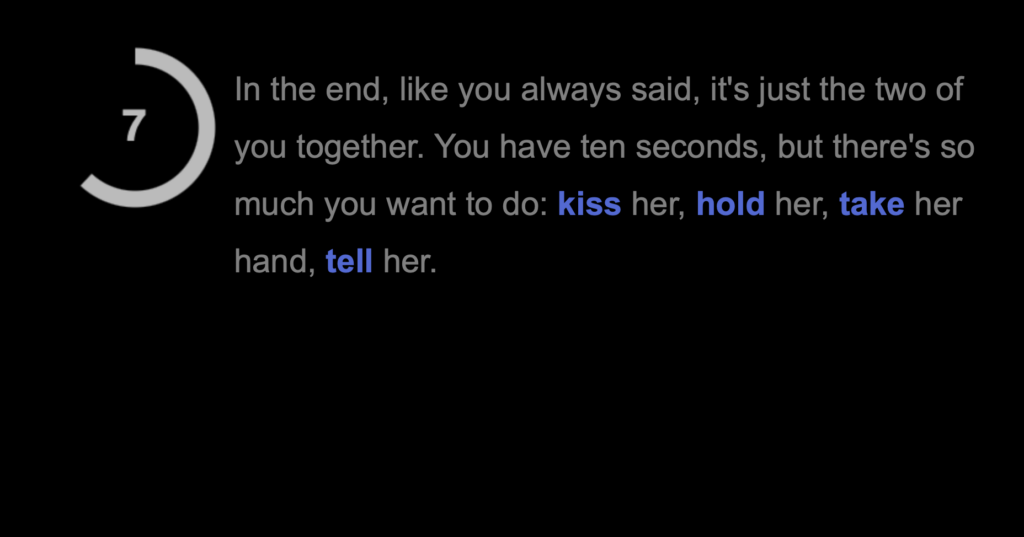
In Queers in Love, you have 10 seconds to love a girl before the world ends (Fig. 1). The timer on the left, the core mechanic, creates a feeling of urgency as you play through each ending, often positive and hopeful, before ultimately being wiped away. If you take too much time to read the text, you can just try again.
This is a classically feminist game on the “telling of stories” level. You are two queer people confessing your love for each other with the urgency of the end of the world, a literal representation of the end-of-world realities many queer people face in their lives. It also seems to fulfill the Mechanics of Feminism, allowing the player to choose the crucial actions they take right before they die. And yet, it fell flat for me. Why?

In Play Like a Feminist Chess states that agency is “a training mechanism for a world where we often feel like we have more will, agency, and voice than we might really have.” The agency you have in Queers in Love is very little. The world will end no matter what you do, which you could say is an apt metaphor for a doomed reality, but my real problem in the game is the choices you have before you die. If you look at figure 1 and 2, you will see that you basically have no choice but to love her. Every choice given is basically the same (softly vs slowly vs fiercely vs hungrily (??)), leading you to a pleasant conclusion. I actually think there are only two real choices in this game: let the timer run out on its own, not confessing to her, or pick one of the numerous given options. Player agency here is very surface level and doesn’t let you meaningfully challenge what is happening, not serving as an effective “training mechanism”. The game doesn’t meaningfully explore emotions like why someone wouldn’t even confess their feelings at the end of the world, or different reactions that aren’t an unchallenged romance.

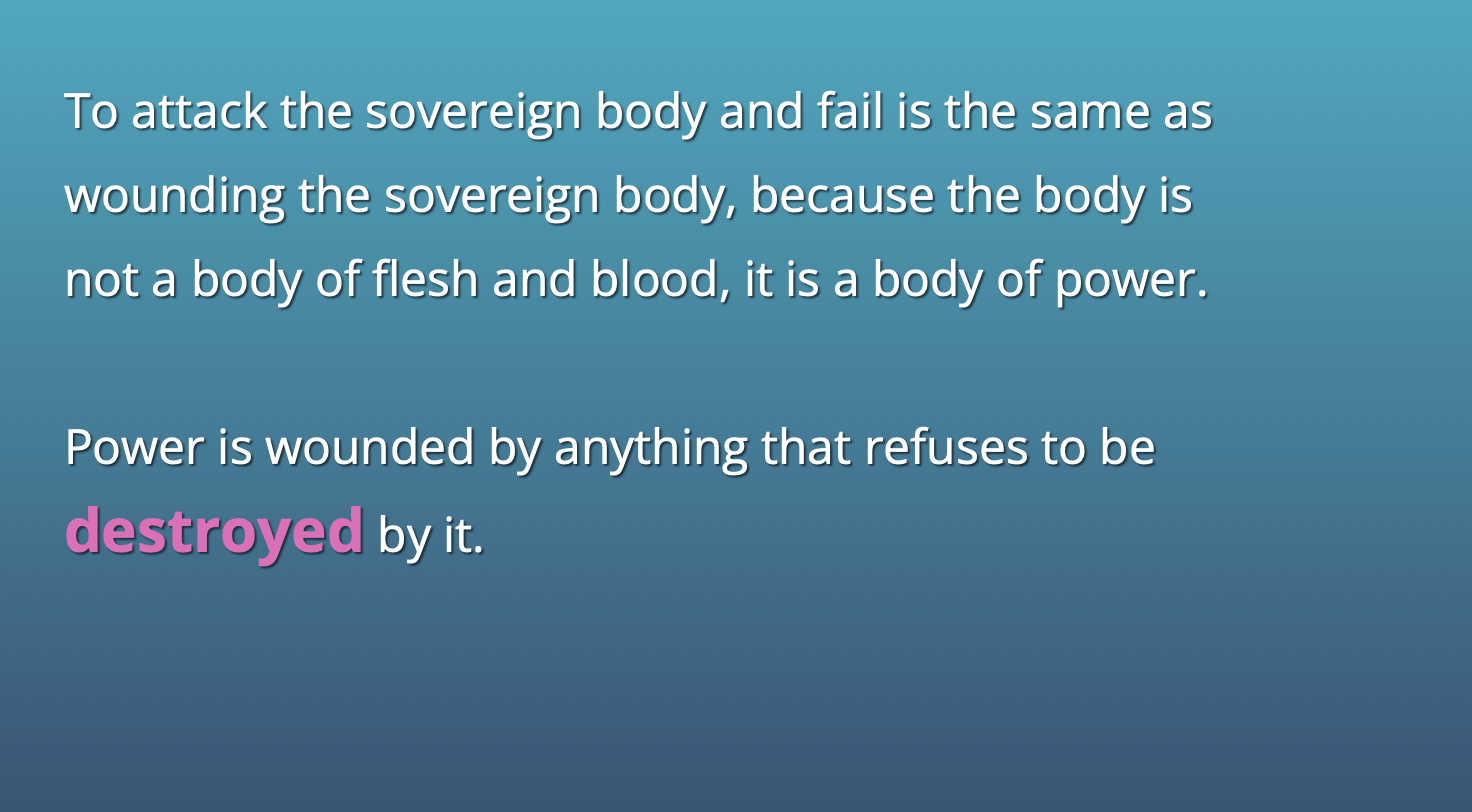
On the other hand, Love Alive (OUGHHHHHHHOGUHGOUHGOUHGOUH) is essentially a Sci-Fi Fantasy short story wrapped in a game format, AND YET its ability of expression seems much greater than that. As artificer Mia, a trans woman, you stay in a palace crafting things for the Empress, a source of oppression and violence for humans living under her reign. While you can customize your own character to some extent (customization as a method of feminism), what gagged me about the game is how this “customization” feature plays out through multiple channels; for example, you can customize the oppressing Empress’s appearance through clicking the keywords, how you make the very artifacts that help the Empress stay in power (Fig. 3 and 4), and more standard avenues as well like how the main character chooses to act during events.

Player agency in Love Alive is much more effective than Queers in Love because even though the changes you are able to make may seem similarly surface level, the fact that you are able to enact any change at all to these large, opposing forces does signal your ability to affect the narrative. There are so many opportunities and different “flavors” of change a player can enact, that it may imbue a player with the audacity in real-life situations to enact change in the real world, which is further pushed by the final choices the main character makes to escape the palace for a more hopeful future. Not only do these choices aid player agency, but it also allows the player to sit with and reflect on their choices, an action which Chess covers as a boon to the game Life is Strange, where the “audience is not passive” because of their reflection. Here, having to physically slow down as you pick what words to inscribe on an object the Empress might kill people with lets you really understand what you’re doing. You have deep power, both in being complacent and in hoping for something better.
While I think these games may not be equal in quality, I still believe that both have merit in their own ways. Queers in Love is a story for more general audiences that may help straight people understand the queer experiences as well, while Love Alive is much stranger and speaks to an audience that is “in the know”. Both games are needed to fight the masculinity onslaught!