
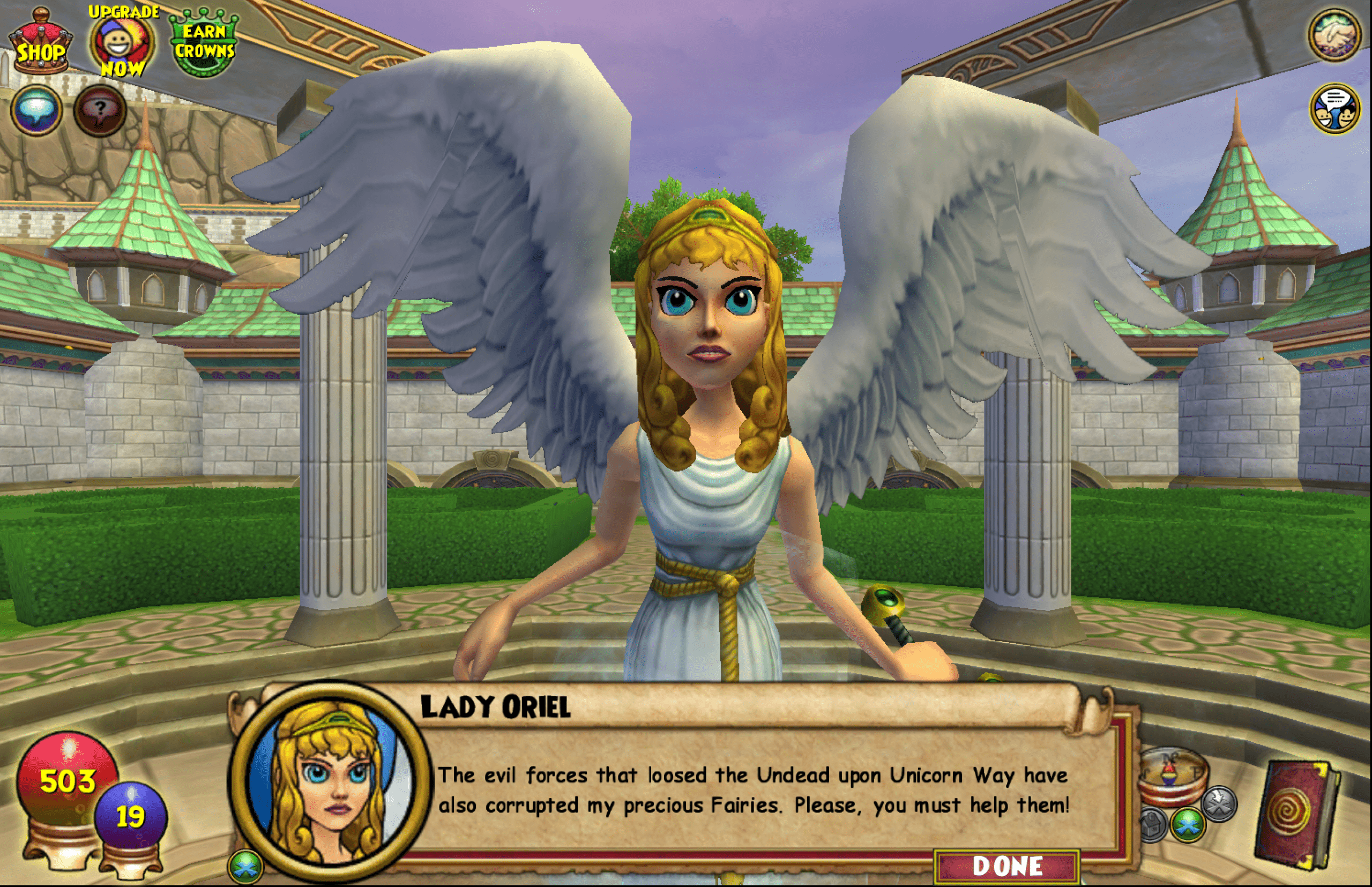
The game I chose for this critical play is Wizard101, an MMORPG created by KingsIsle Entertainment and available on PC and Mac. The game is primarily aimed at younger audiences and casual players, but its colorful environments, progression systems, and narrative structure also make it engaging for older players interested in fantasy exploration and cooperative gameplay.
Wizard101 invites players to care about its world by combining narrative world building with formal gameplay systems that make the player feel like an active participant. Rather than presenting the setting as a static backdrop, the game uses progression, visual identity, music, and social mechanics to make the world feel alive and personally meaningful. At the same time, some of its design decisions weaken immersion by interrupting narrative flow.
One of the design choices I like most in Wizard101 is how the game frames the player as a wizarding student. Instead of throwing the player directly into an epic fantasy war, the game begins with a familiar structure, school life, and even has users design a personal avatar. The mechanics of leveling up and collecting spells create dynamics of gradual mastery and exploration, which then produce the aesthetic feeling of belonging within the world.
The environments are also extremely important in building emotional investment. Each world in the game has a distinct cultural identity, architecture, and soundtrack. For example, Wizard City feels warm and welcoming, while places like Marleybone feel more dangerous. The game communicates these differences visually and musically before the player even understands the lore. This reflects Gabriela Pereira’s ecological approach to world building because the setting is always filtered through the player-character’s journey. The world matters because the player experiences it directly through quests, movement, and progression.
The quest structure also encourages players to care about the world by making them feel responsible for protecting it. Early quests are small and personal, like helping citizens defeat minor enemies like skeletons or fairies that are taking over a small town. Over time, the stakes increase as the player faces larger threats connected to Malistaire, the game’s main villain. This gradual escalation is important because it mirrors the player’s own growth. Instead of immediately becoming “the chosen hero,” the player earns that role through repeated effort.
However, Wizard101 also has noticeable weaknesses that can damage immersion. The biggest issue is repetitive combat. While the card-based battle system is creative at first, many fights become formulaic after long play sessions. In narrative terms, this weakens the pacing because dramatic story moments are often interrupted by repetitive grinding. Compared to games like World of Warcraft, which offers more combat variety and larger-scale cooperative raids, Wizard101 relies heavily on repetition to extend gameplay time.
Another major flaw is the game’s monetization system. Portions of the world are locked behind payments or subscriptions. This creates a strange contradiction in the design. The game wants players to emotionally invest in the world, but the paywalls constantly remind players that access to the world is conditional. This breaks immersion in the magic circle because economic systems from the real world intrude on the fantasy experience. A possible improvement would be allowing players to unlock more areas through gameplay achievements rather than requiring purchases.
Compared to other MMORPGs, like World of Warcraft, Wizard101 differentiates itself through its accessibility and educational fantasy theme. Many MMORPGs focus heavily on large-scale warfare and highly competitive systems, while Wizard101 uses a school-based structure and turn-based card combat that feels less intimidating to younger or casual players. The game’s visual style is also more colorful and storybook-like compared to the darker aesthetics of many fantasy games. This makes the world feel welcoming rather than overwhelming.
From an ethical perspective, Wizard101 presents an interesting depiction of the body and identity. The mechanics depict the body less through biology and more through magical education and social roles. A wizard’s strengths are connected to the school they study rather than physical traits like strength, age, or race. For example, Fire wizards specialize in aggressive damage while Ice wizards focus on defense and protection. These abilities are learned through Ravenwood professors, which suggests that knowledge, discipline, and education are more important than natural biological advantages. This creates a more inclusive system because power is based on player choice and effort rather than inherited traits.
However, the game still reinforces some limiting ideas through its customization and progression systems. Character appearances are mostly cosmetic and do not strongly affect gameplay, but the available body types are very limited. Characters generally appear young, healthy, and physically able, with little representation of disability, aging, or different body structures. If I were to mod the game’s mechanics, I would introduce more diverse character customization options and mechanics that reflect different physical experiences without reducing a character’s effectiveness.
Overall, Wizard101 succeeds at creating emotional investment through world building, progression, and player identity. Its strongest feature is the way it makes players feel like active participants in a magical educational world rather than passive observers. Although repetitive combat and monetization weaken immersion at times, the game’s accessible design, distinctive aesthetic, and emphasis on personal growth help it stand out within the MMORPG genre.