


During WWII, my great-grandfather — my Zeyde — fought in the Polish army, aiming to resist occupation and protect his family. One day, in the middle of battle, my Zeyde’s captain told him his plans to surrender.
My Zeyde, desperate, pleaded with him: “Sir, we can’t surrender. I’m Jewish — they’ll kill me.”
“If we don’t surrender they’ll kill us all,” his captain replied.
At that moment, my Zeyde pulled out his gun, shot, and killed his officer. Despite his efforts, his unit ended up surrendering anyway; he survived by hiding under a pile of dead bodies and pretending to be dead himself.
Although I’m very proud of my Jewish heritage, I’ve always struggled with this story, unsure of what to think.
Throughout playing Papers, Please, this story remained in the back of my mind. Overall, to me, Papers, Please, uses procedural rhetoric — as defined in Ian Bogost’s “Persuasive Games” — to explore the tension between personal morality and authoritarian pressure, but, most of all, remind us that moral agency and even personal responsibility is a privilege.


Symbol of Arstotzka of Papers, Please (left). Symbol of Nazi regime — the Reichsadler (right).
While procedural rhetoric is the game’s primary source of persuasion, it is aided by visual — and even auditory — rhetoric. Papers, Please, immediately immerses players in the oppressive feeling of an authoritarian regime. The soundtrack carries a dark, marching rhythm, while the stark, blocky font resembles Soviet-era typography and mirrors Cyrillic lettering. The red eagle imagery parallels that of the Nazi regime and the game presents communist iconography. The game’s 1982 setting further grounds it in the atmosphere of late Soviet authoritarianism. Together, these choices create a sense of repression that prepares the player for the game’s later procedural pressures.


With that said, when I began my role as an immigration officer, I held onto a slight hope that, despite the game’s clear intent to oppress, I would be able to balance the rules with my own personal morality, giving each person’s case the care it deserved. However, by the end of my first day, that hope was almost entirely gone. The first time I tried to let in an “unqualified” person, I received a warning, which eventually led to fines. Furthermore, because I spent a lot of time on each case, my salary was incredibly low — not even enough to afford even the most basic necessities like heating, food, or medicine.

The “next day,” I took a different strategy, better minding my time. While the cases grew more personal and complicated — shaped by escalating political tensions and terrorist attacks — I decided that if any case took too long, I would, unfortunately, reject them. While this was not exactly my ideal moral choice, I thought it would at least save me from the fines. However, to my surprise, I still received fines for denying though who deserved passage.
It was at this moment that I stopped feeling a tension between personal morality and obedience because, in all honesty, I felt powerless. The cases were too complicated to do quickly, and, while making the “wrong decision” led to a fine, not getting through enough people also risked the survival of my family. As Nagel explains in “Ruthlessness In Public Life,” “Public figures are not supposed to use their power openly to enrich themselves and their families” (https://www.bsg.ox.ac.uk/sites/default/files/inline-files/ruthlessness_in_public_life.pdf). However, at this point, I couldn’t do so even if I tried. With the rules of survival, qualifications for border entry, limited salary, and other game regulations, the procedure was crafted in such a way that my agency was an illusion, at odds with even basic survival.
While some may disagree, noting that, even then, I had the agency to choose death over obedience or — as Hannah Arendt may define it — support, morality seems to bend to different rules when survival is at stake. In “Personal Responsibility Under Dictatorship,” even Arendt explains, “the act of state is tacitly likened to the ‘crime’ an individual may be forced to commit in self-defense, that is, to an act which also is permitted to go unpunished because of extraordinary circumstances, where survival as such is threatened,” (https://grattoncourses.wordpress.com/wp-content/uploads/2016/08/responsibility-under-a-dictatorship-arendt.pdf). Arendt argues that this explanation is inapplicable to crimes committed by the totalitarian government and their servants because “these crimes were in no way prompted by necessity of one form or another,” (https://grattoncourses.wordpress.com/wp-content/uploads/2016/08/responsibility-under-a-dictatorship-arendt.pdf). However, in this game, there was a necessity: there was no option to switch jobs or even take bribe money. When I lost the game — for which I lasted a grand total of 52 minutes — all of my family was dead. My son’s survival hinged on my ability to get him medicine, my wife’s on my ability to pay for heat.
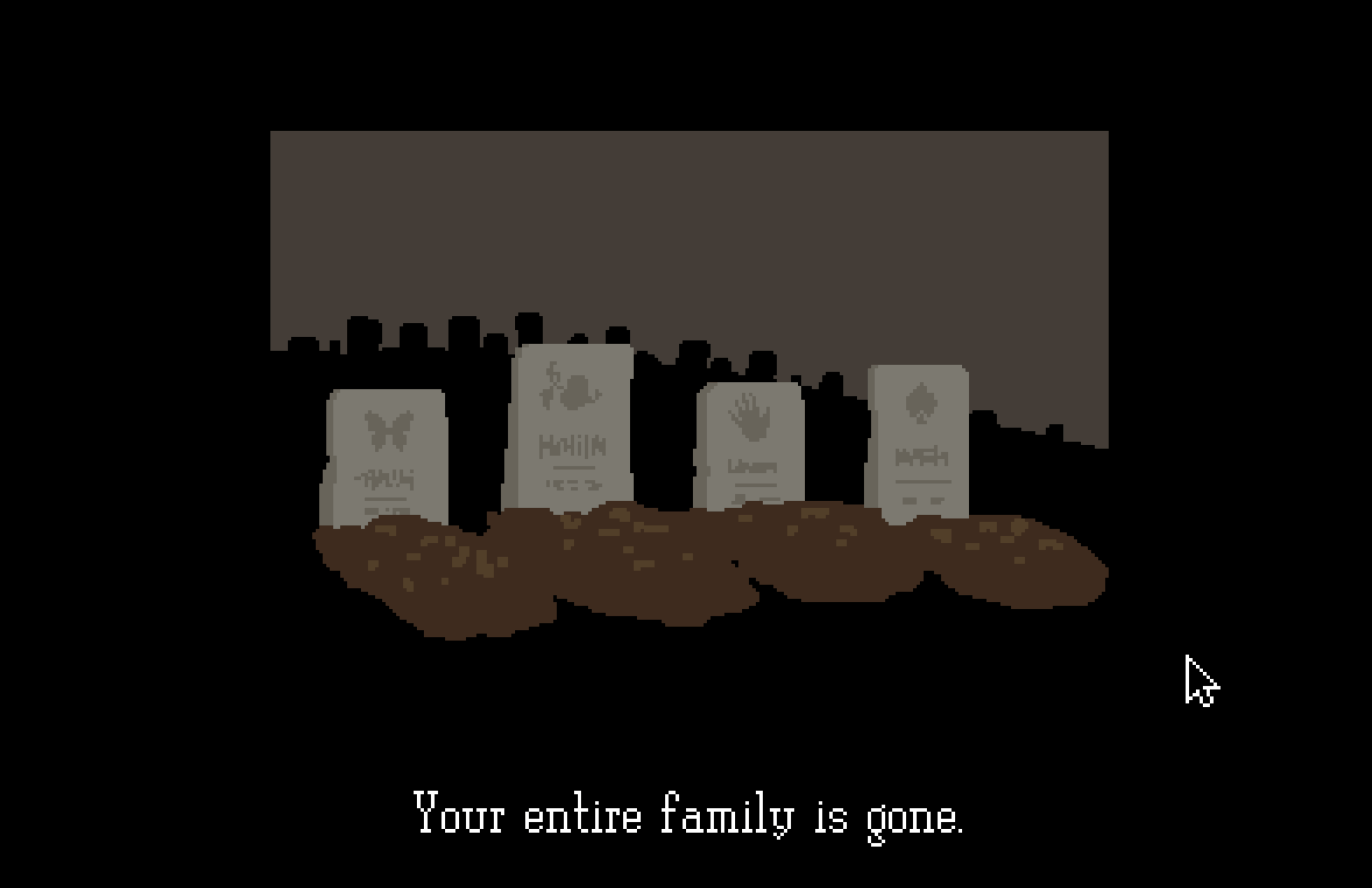
Perhaps a weakness of this game is in its lack of other options. There was a lack of — as Bogost puts it — an ability for players to raise procedural objections. However, “such a wholesale revision might imply a different simulation entirely, one that would be outside the expressive domain of the artifact,” (https://direct.mit.edu/books/monograph/4392/chapter/187827/Procedural-Rhetoric). In other words, “artifacts subject to dissemination need not facilitate direct argument with the rhetorical author […] Instead, they invite other, subsequent forms of discourse,” (https://direct.mit.edu/books/monograph/4392/chapter/187827/Procedural-Rhetoric).
Overall, while I began Papers, Please by weighing personal morality and public morality, the game’s procedure was designed such that, for me, it became more about lack of agency, exhibiting that such agency depends upon the privilege of safety.

Its true, the game is rigged. Some situations are impossible. Did experiencing this impossible outcome change your freeings about your Zeyde’s choines?