
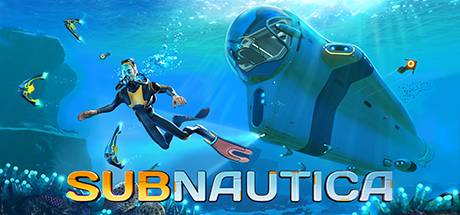
Subnautica
Developed by Unknown Worlds Entertainment
Played on PC (2018), later also Switch, PS4, Xbox
Players (E10+) who enjoy exploration, crafting, survival mechanics, and being terrified/in awe of deep water (softened by a fun narrative).
I have a sliiiiight fear of deep dark unknown waters…as any sane person does! Subnautica should be my nightmare. Instead, it’s one of my favorite games. (Anxiety inducing, palms sweating, at times nausating but beautiful game!)
My central argument is that Subnautica invites players to care about its world by making survival contingent on understanding that world. You cannot brute-force your way through. You must learn the ecosystems, respect the dangers, and in doing so, develop an emotional attachment to the planet that traps you—and eventually saves you. The game uses what Gabriela Pereira calls an ecological approach to world building, where the environment is not a backdrop but an active participant in the story.
In Subnautica, the world teaches you through experience. You crash-land with no weapons, no map, and no hand-holding. You discover the Safe Shallows first: colorful coral, peeper fish (<3), sunlight filtering through the water. It feels almost welcoming, tropical.

The Aurora (your crash-landed ship) explodes fairly early in the game and with it comes a radiation suit. And for me, in my first ever playthrough way back then, the curiosity to approach the ship with the suit and nothing else…I am not recreating that for this critcal play </3
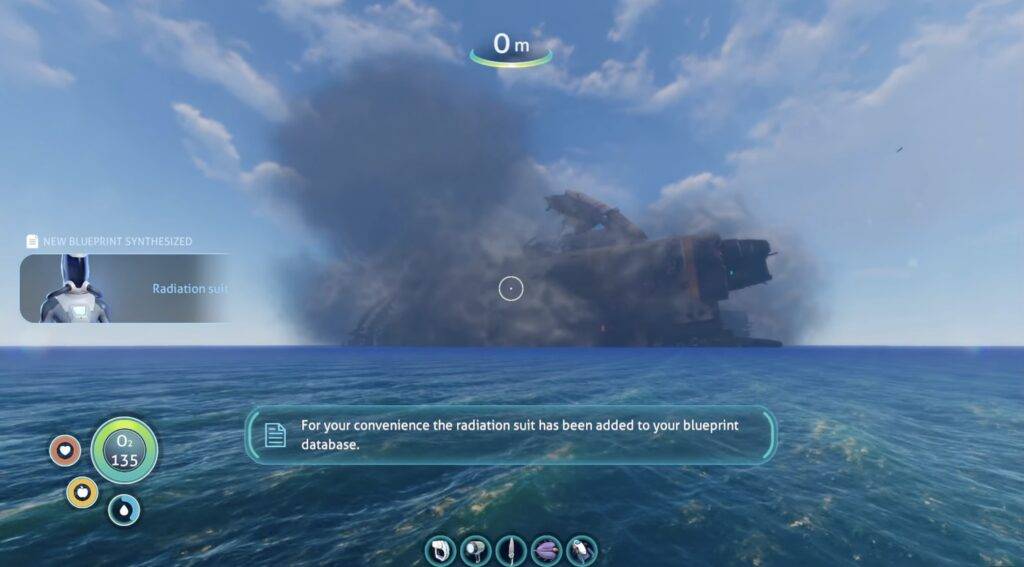
But in the decision to venture further, deeper. The water darkens around the Aurora. The sounds change. You hear a creature roar, unlike anything you’ve heard before. I’ll leave below the audio I heard second before I hastily closed the game like a weenie.
Henry Jenkins would call this embedded narrative—the story is not explicitly told to you. It is waiting for you in the environment, embedded in the sounds, the lighting, and your own dread.
Subnautica has almost no NPCs. You are alone. Your character’s fear is your fear. When you run out of oxygen and your vision blurs, that panic is yours. When you see a massive shadow pass beneath you, that hesitation is yours. If your character is a filter for how the reader engages with the story’s world, in Subnautica, there is no separation. You are the filter. This creates empathy through identification. You care about the world because your survival depends on it.
The game’s resources are basic: water, food, oxygen, health. At first, they are scarce. You learn where to find bladderfish for water, peepers for food. The conflict is not a villain—it is the planet itself (and your fragile human body). The boundaries are depth and fear. You cannot go deeper until you build better equipment, and you will not want to go deeper until you have faced the terror of what lives there. This creates a progression that feels earned, not given.
Subnautica balances multiple aesthetics. Discovery—uncovering the Precursor story, finding Degasi survivor logs. Challenge—managing oxygen while exploring wrecks, avoiding leviathans (multiple classes of them actually). Narrative—the mystery of the planet unfolds through PDAs found in the environment. Submission—those quiet moments in the Safe Shallows, watching fish swim past your seabase window. You are not always in danger. Sometimes you just exist in the world. That is when I care about it most.
What differentiates Subnautica from other survival games is the absence of conquest. Minecraft allows you to build a slaughterhouse. You can trap villagers, breed them, name them, then kill them. You can build an iron golem farm that drowns golems automatically. You can choose to kill the Ender Dragon…but why? The game gives you no narrative reason. You do it because you can. Minecraft is a sandbox. It does not judge you.
In Subnautica, you cannot fight most threats. You can only run, hide, or learn to avoid them. This changes the relationship from “conqueror” to “guest”. When you need food, you can catch fish—but you can also build an alien containment unit (fish tank) and breed them sustainably! When you need water, you filter it. The game gives you tools to survive without destroying the ecosystem. You are not the hero of this planet. You are a visitor. And if you forget your place, the environment will swiftly remind you.
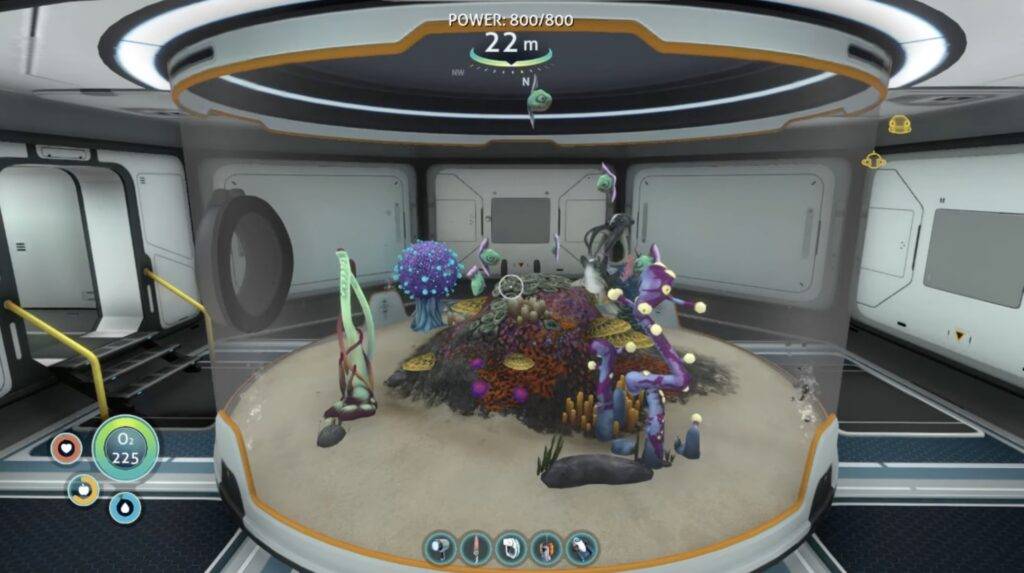
This design choice creates a different kind of care. In Minecraft, you can love the world because you built it. In Subnautica, you love the world because you need it. That need does not vanish when you reach the endgame. You still need water. You still need food. The planet never stops asking you to pay attention. Subnautica invites you to care about its world by making your survival inseparable from it. You cannot conquer Planet 4546B. You can only learn it, respect it, and eventually, maybe, leave it.
Ethics
As explored above, your body’s fragility is central to Subnautica. To uncover the story, you must go into increasingly demanding environments—deeper water, higher pressure, deadlier creatures—and adapt through technology, not brute force.
I would not mod this fragility away. It is not a flaw. It is the point (imo).
If I removed hunger, thirst, or oxygen, the game would lose what makes it special. Without those mechanics, you would no longer need to meaningfully engage with the ecosystem. You could swim anywhere, ignore the fish, ignore the dangers. You would become a tourist, not a survivor. The game’s central theme—that you are a guest, not a conqueror—depends on your body’s needs.
You care about the planet because your body cannot survive without it. Remove the body’s fragility, and you remove the relationship. The planet will always demand your attention. That is not cruelty. That is ecological storytelling. And I would not change a thing.